户外生活

Search documents
靠冲锋衣年入18亿,户外生意有多疯?
36氪· 2025-05-22 09:50
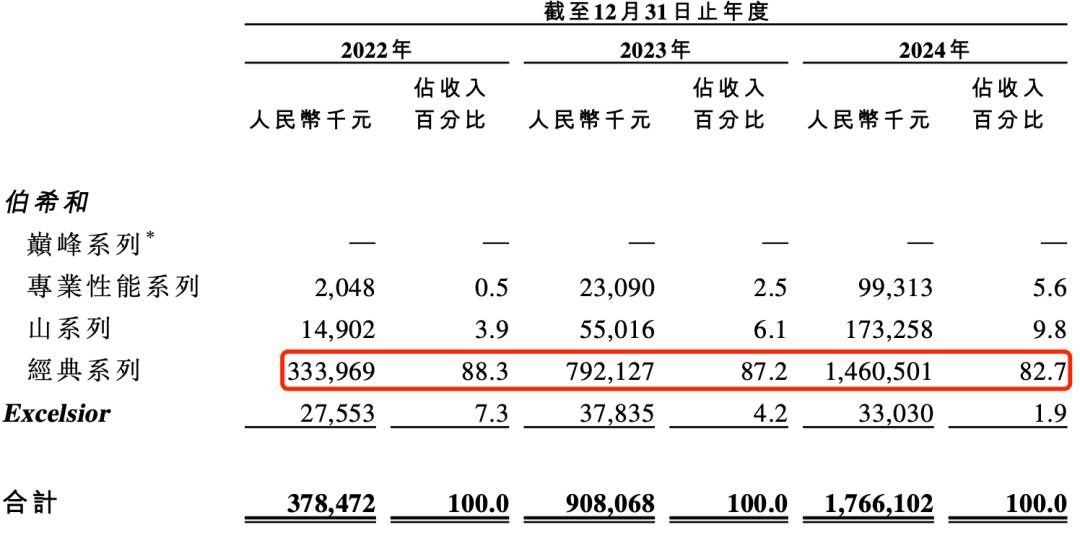
Core Viewpoint - The article discusses the competitive landscape of the outdoor apparel market, focusing on the upcoming IPO of the brand 伯希和 and its comparison with another brand, 蕉下, highlighting the challenges and opportunities in the sector. Group 1: Market Overview - The outdoor apparel market, particularly for sun-protective clothing, is experiencing rapid growth, with significant increases in search volume on e-commerce platforms and interest from capital markets [4][8]. - The market has seen a surge in competition, with various brands entering the space, including traditional outdoor brands, sports brands, and even fast fashion and underwear brands [7][26]. Group 2: Company Comparisons - Both 伯希和 and 蕉下 have adopted a direct-to-consumer (DTC) model and achieved impressive revenue growth, with 伯希和's revenue projected to grow from RMB 378 million in 2022 to RMB 1.766 billion in 2024, representing a compound annual growth rate (CAGR) of 140.21% [17][18]. - 伯希和's product line has expanded beyond its original focus on jackets to include a variety of outdoor apparel, while 蕉下 has similarly diversified its offerings [12][14]. Group 3: Financial Performance - 伯希和's revenue growth is accompanied by a significant increase in adjusted net profit, which is expected to rise from RMB 28 million in 2022 to RMB 304 million in 2024 [17]. - 蕉下 has also shown strong revenue growth, with its income increasing from RMB 385 million in 2019 to RMB 2.211 billion in 2022, despite facing challenges in the market [19]. Group 4: Competitive Challenges - Both companies face skepticism regarding their reliance on OEM manufacturing, which raises concerns about product differentiation and brand loyalty [35][36]. - The outdoor apparel market is characterized by low brand concentration, with 伯希和 holding only a 3.9% market share in the performance outdoor clothing segment as of 2024 [29][31]. Group 5: Strategic Positioning - 伯希和 aims to position itself as a high-performance outdoor lifestyle brand, while 蕉下 focuses on urban outdoor apparel, leading to different competitive strategies [10][40]. - The article emphasizes the need for both brands to establish long-term brand value beyond just sales growth, as they prepare for their respective IPOs [41].


靠冲锋衣年入18亿,户外生意有多疯?
创业邦· 2025-05-22 03:04
Core Viewpoint - The article discusses the rising competition in the outdoor apparel market, particularly focusing on the upcoming IPO of the brand 伯希和 (Bershka) and its comparison with the previously unsuccessful IPO attempts of 蕉下 (Jiaoxia). Both brands are positioned in the outdoor lifestyle segment, with a focus on direct-to-consumer (DTC) sales and rapid product line expansion to capture market share in a growing industry. Group 1: Market Overview - The outdoor apparel market is experiencing significant growth, with brands like 伯希和 and 蕉下 aiming to capitalize on this trend through innovative product offerings and marketing strategies [3][6][27]. - The competition is intensifying as various brands, including traditional outdoor brands and fast fashion labels, enter the market, leading to a crowded landscape [5][19][21]. Group 2: Company Comparisons - Both 伯希和 and 蕉下 started with a single product focus and have since expanded their offerings to include a wider range of outdoor apparel, with 伯希和's sales of jackets showing a compound annual growth rate (CAGR) of 144% from 2022 to 2024 [4][9][13]. - 伯希和's revenue is projected to grow from 3.78 billion RMB in 2022 to 17.66 billion RMB in 2024, with adjusted net profit increasing from 0.28 billion RMB to 3.04 billion RMB in the same period [13][14]. Group 3: Financial Performance - 伯希和's revenue growth is supported by significant investments from well-known institutions, including Tencent, which holds a 10.7% stake [17]. - The company has maintained a gross margin above 50%, but its net profit margin is relatively low, averaging around 13% from 2022 to 2024, indicating high marketing and operational costs [30][31]. Group 4: Strategic Positioning - 伯希和 aims to position itself as a "high-performance outdoor lifestyle brand," which may attract a different consumer base compared to 蕉下's focus on urban outdoor apparel [32]. - The brand's strategy includes expanding its product lines to include seasonal items and leveraging DTC sales channels, which accounted for 87.5% of its revenue in 2022 [22][23]. Group 5: Market Challenges - The outdoor apparel market is characterized by low brand concentration, with 伯希和 holding only a 3.9% market share in the Chinese mainland for outdoor jackets as of 2024 [24]. - The reliance on OEM manufacturing raises concerns about brand differentiation and competitive advantage, as many brands share similar production sources [29][30].

靠冲锋衣年入18亿,户外生意有多疯?
3 6 Ke· 2025-05-21 03:02
Core Viewpoint - The outdoor apparel market is experiencing rapid growth, with companies like BERSHIHE preparing for IPOs, following the trend set by previous attempts from brands like JIAOXIA. The competition is intensifying as more players enter the market, focusing on outdoor and sun-protective clothing [1][4][25]. Company Comparison - BERSHIHE and JIAOXIA share similarities in their business models, both utilizing direct-to-consumer (DTC) channels and ODM manufacturing to achieve significant revenue and profit growth, maintaining gross margins above 50% [2][12]. - BERSHIHE's sales of jackets have seen a compound annual growth rate (CAGR) of 144.0% from 2022 to 2024, with total sales reaching approximately 3.78 billion RMB in 2022 and projected to grow to 17.66 billion RMB by 2024 [3][12][13]. Market Dynamics - The outdoor apparel sector has become increasingly competitive, with brands from various segments, including outdoor, sports, and fast fashion, entering the market. This has led to a broader product range beyond just sun-protective clothing [3][20]. - The market for outdoor apparel is projected to grow significantly, with retail sales expected to increase from 539 billion RMB in 2019 to 1,027 billion RMB by 2024, indicating substantial growth potential for leading companies [24]. Financial Performance - BERSHIHE's revenue is expected to grow from 3.78 billion RMB in 2022 to 9.08 billion RMB in 2023, and further to 17.66 billion RMB in 2024, with adjusted net profit increasing from 0.28 billion RMB to 1.56 billion RMB during the same period [12][13]. - JIAOXIA has also shown impressive growth, with revenues increasing from 3.85 billion RMB in 2019 to 24.07 billion RMB in 2021, and maintaining strong performance even during market downturns [14][12]. Brand Positioning - BERSHIHE aims to position itself as a "high-performance outdoor lifestyle brand," while JIAOXIA focuses on "urban outdoor" branding. Both companies are attempting to differentiate themselves in a crowded market [4][28]. - The competitive landscape is characterized by low brand concentration, with BERSHIHE holding only a 3.9% market share in the domestic jacket market as of 2024, indicating room for growth [22][24]. Challenges and Strategies - Both companies face challenges related to marketing versus product development, with concerns about over-reliance on marketing and lack of technological barriers due to their reliance on OEM manufacturing [26][27]. - BERSHIHE's strategy includes expanding its product line to include seasonal items and enhancing brand value through differentiation, while also navigating the balance between maintaining a broad appeal and developing specialized products [8][29].
全网火爆的露营2.0,车主表示没那么简单
Hu Xiu· 2025-04-24 12:32
Group 1 - The article discusses the shift in camping culture from traditional, elaborate setups to a more mobile and convenient approach, termed "Camping 2.0" [2][5][21] - The new trend emphasizes the integration of camping with vehicles, particularly electric cars, allowing for a comfortable and flexible outdoor experience [8][20][22] - There is a growing market for modified vehicles that serve as mobile living spaces, reflecting a desire for personal space and comfort in outdoor settings [18][19][24] Group 2 - The article highlights the challenges and costs associated with traditional camping gear, which can be burdensome and expensive, leading consumers to reconsider their camping strategies [6][7][35] - It notes the emergence of a community around vehicle modifications for camping, with individuals sharing their experiences and solutions for creating comfortable mobile spaces [11][18][36] - The narrative also touches on the psychological aspects of this trend, where individuals seek escape from urban pressures through the use of vehicles as temporary living spaces [23][30][38]