
房屋保险制度

Search documents
加快推进城镇“老龄房”体检 郑州、南通等地试点“政府买单”
Xin Jing Bao· 2025-12-05 14:53
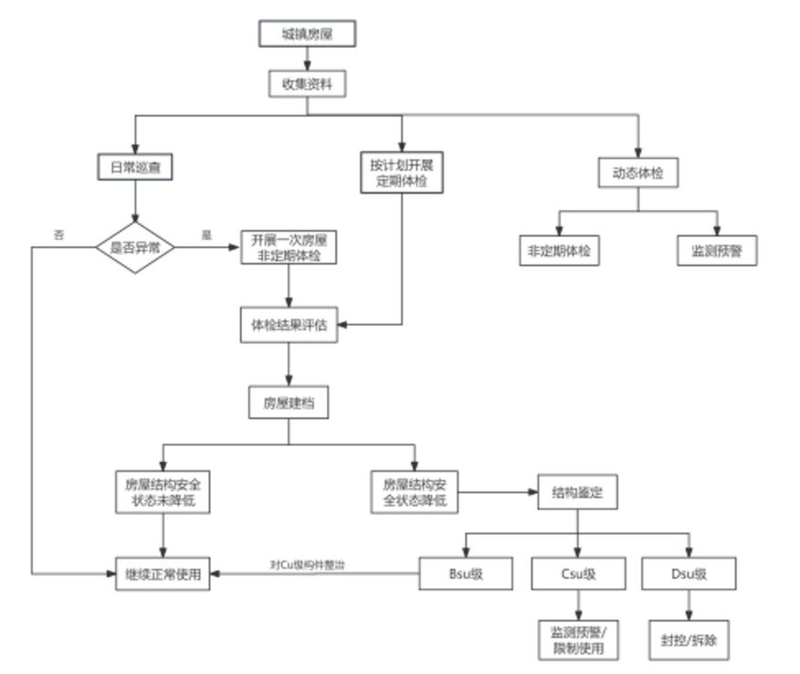
Core Viewpoint - The recent fire incident in Hong Kong has raised concerns about the safety of old buildings and high-rise residential properties, prompting discussions on the implementation of a building health check system to prevent potential hazards [1] Group 1: Policy Support - The Ministry of Housing and Urban-Rural Development has emphasized the need for a comprehensive safety management system for buildings throughout their lifecycle, with a focus on regular health checks for aging properties [2][3] - As of 2024, over 210 million residential units in China are over 25 years old, accounting for approximately 38.7% of urban housing stock, highlighting the urgency of implementing building health checks [2] - Multiple cities have begun to establish guidelines and frameworks for conducting regular health checks on aging buildings, with specific requirements for properties over 25 years old to undergo inspections every 5 to 10 years [4][6] Group 2: Implementation Details - In cities like Zhengzhou, a pilot program has been initiated to implement a three-part system for building safety management, which includes health checks, insurance, and funding mechanisms [3][8] - The health check results will categorize buildings as "pass," "basic pass," or "fail," with strict measures for those that do not meet safety standards, including potential cessation of use and further evaluations [3][6] - Various cities have established specific guidelines for the frequency and scope of health checks, particularly for public buildings and densely populated residential areas [4][6] Group 3: Funding Mechanisms - Funding for building health checks is primarily sourced from government budgets, with local authorities covering the costs for residential properties, ensuring that financial barriers do not hinder the implementation of safety checks [8][9] - In Zhengzhou, the local government has committed to fully funding health checks for eligible residential buildings, while also providing subsidies for non-residential properties [7][8] - The funding structure includes both public accounts, primarily from fiscal revenues, and personal accounts, which may require additional contributions from homeowners if maintenance funds are insufficient [9]

重要信号!多个城市要对老房子“强制体检”
3 6 Ke· 2025-12-04 02:17
Core Viewpoint - The recent initiative by Zhengzhou's housing authority to mandate inspections for residential buildings over 30 years old signals a growing recognition of the aging housing crisis in China, with government support for inspection costs [1][2]. Group 1: Policy Implementation - Zhengzhou's housing authority has proposed a draft requiring buildings aged 30 years or older to undergo inspections, with costs covered by the government [1]. - Other cities, such as Changsha and Wuhan, are also implementing similar inspection guidelines, indicating a nationwide focus on building safety [3]. - The inspections will vary in frequency based on the age and type of the building, with specific guidelines established for different categories [3]. Group 2: Aging Housing Crisis - Approximately 20% of urban housing in China was over 30 years old by the end of 2022, and this figure is expected to rise to nearly 80% by 2040 [5]. - Many older residential buildings face significant maintenance issues, including deteriorating facades, aging pipelines, and frequent elevator failures, exacerbated by insufficient maintenance funds [5]. - The early maintenance fund contributions were low, and inflation has eroded their value, leading to a critical shortage of funds for necessary repairs [5]. Group 3: Future Initiatives - The Ministry of Housing and Urban-Rural Development is piloting housing inspection and pension systems in 22 major cities, which includes a public account funded by government subsidies [6]. - The concept of a housing pension system has gained attention, aiming to provide financial support for the maintenance of aging buildings [6][7]. - The expectation is that the implementation of housing inspections, pensions, and insurance will provide hope for residents in aging communities and alleviate concerns for new homeowners [7].
房屋保险制度箭在弦上 保什么、如何保
Bei Jing Shang Bao· 2025-10-15 15:40
Core Viewpoint - A new transformation is emerging in the field of housing safety management, with the Ministry of Housing and Urban-Rural Development advocating for the establishment of three key systems: housing inspection, housing safety management funds, and housing insurance, to provide institutional support for the safety management of housing throughout its lifecycle [1][2]. Group 1: Housing Insurance System - The housing insurance system is one of the three core systems proposed by the Ministry, aimed at managing and transferring housing risks, especially as nearly 20% of urban housing in China is over 30 years old, with projections indicating that nearly 80% will be considered "aged" by 2040 [2][7]. - Currently, there is no unified model for housing insurance in China, but it generally refers to risk protection for homes through insurance, where insurance companies compensate for losses or damages according to contract terms [2][3]. - Recent pilot programs for housing insurance have been initiated in various regions, such as Guangzhou's implementation plan for housing safety insurance and Dongguan's "Fanguanjia" comprehensive housing insurance trial [2]. Group 2: Comparison with Home Insurance - The existing home insurance primarily covers household property, including homes, against losses from incidents like fires or natural disasters, while housing insurance focuses on the structural quality risks of the house itself and damages due to aging [4][5]. - Home insurance is a purely commercial product, whereas housing insurance is expected to become a policy-oriented insurance, potentially with government subsidies for premiums [4][5]. Group 3: Challenges and Development - The development of housing insurance in China is still in its early stages, facing challenges such as limited product variety and coverage compared to mature markets abroad [3][7]. - Key challenges include the lack of a comprehensive legal framework for housing insurance, insufficient public awareness of risks associated with aging properties, and difficulties in precise pricing and risk management due to a lack of historical data [7]. - The implementation of housing insurance may require government funding or subsidies, and there is a need for increased public awareness and encouragement for insurance companies to develop more personalized housing insurance products [7].
房屋保险制度箭在弦上,保什么,如何保
Bei Jing Shang Bao· 2025-10-15 12:05
Core Viewpoint - A new transformation is emerging in the field of housing safety management, with the Ministry of Housing and Urban-Rural Development advocating for the establishment of three key systems: housing inspection, housing safety management funds, and housing insurance, to provide institutional support for the safety management of housing throughout its lifecycle [1][2]. Group 1: Housing Insurance System - The housing insurance system is a focal point of attention, especially given the large number of aging urban homes in China, with nearly 20% of existing homes built over 30 years ago as of the end of 2022. By around 2040, it is expected that nearly 80% of homes will be considered "old" [2]. - The implementation of a housing insurance system is seen as urgent to manage and transfer housing risks, thereby protecting residents' interests and preventing social risks [2][3]. - Currently, there is no unified model for housing insurance in China, and it is generally defined as providing risk protection for homes through insurance purchases, with compensation for losses or damages according to contractual agreements [2][3]. Group 2: Current Developments and Challenges - Various regions have initiated pilot programs related to housing safety insurance, such as Guangzhou's implementation plan for housing safety insurance set to be further developed between September and December 2025, and Dongguan's "Fanguanjia" comprehensive housing insurance pilot [3]. - Experts indicate that the current state of housing insurance in China is still in its infancy, facing challenges such as limited product variety and coverage compared to more mature markets abroad [3][4]. - The existing housing insurance system is primarily government-driven, with potential future funding from government subsidies or increased returns from dedicated maintenance funds [6]. Group 3: Differences from Home Insurance - Housing insurance differs from traditional home insurance, which primarily covers household property, including homes, against losses from incidents like fires or natural disasters. In contrast, housing insurance focuses on the structural quality risks of the home itself and compensates for losses due to aging or structural issues [4][5]. - Home insurance is a purely commercial product, while housing insurance is expected to become a policy-driven insurance, potentially with government subsidies for premiums [4][5]. Group 4: Industry Collaboration and Future Directions - The development of a robust housing insurance system in China requires collaboration among various stakeholders, including raising public awareness of the importance of housing insurance and encouraging insurance companies to develop more personalized products [6]. - There is a need for supportive policies, such as tax incentives, to promote the growth of housing insurance, as well as collaboration between insurance companies and local governments to advance the establishment of the housing insurance system [6].
