
技术开放

Search documents
FT中文网精选:在欧盟推翻燃油车禁令之前,众车企早已不再押注纯电
日经中文网· 2025-12-18 03:01
Group 1 - The German government opposes the 2035 ban on combustion vehicles while planning to boost electric vehicle (EV) demand, indicating a focus on supporting the domestic automotive industry rather than choosing a specific technology route [5][6]. - Apostolos Tzitzikostas, a member of the European Commission, stated that the EU will remain open to all technologies, including zero-emission and low-emission fuels, suggesting that reliance solely on battery electric vehicles is not necessary [6]. - The potential delay in announcing a comprehensive plan until January indicates ongoing discussions and considerations regarding the future of vehicle technologies in Europe [6].


华为副总裁樊志勇:2024年专利许可收入6.3亿美元,已有超27亿部5G设备获得华为专利授权
Xin Lang Ke Ji· 2025-11-11 08:35
Core Insights - Huawei announced significant advancements in technology openness for 2024, including patent disclosures, standard contributions, and academic publications [1] Group 1: Patent and Standard Contributions - Huawei plans to disclose over 37,000 patents in 2024 [1] - The company aims to contribute more than 10,000 proposals to domestic and international standard organizations in 2024 [1] - Huawei is set to publish over 1,000 academic papers in 2024 [1] Group 2: Revenue and Licensing - Huawei's patent licensing revenue is projected to be approximately $630 million in 2024 [1] - By the end of 2024, over 2.7 billion 5G devices will have received patent licenses from Huawei in the cellular standards domain [1] - In the Wi-Fi sector, more than 1.2 billion consumer electronic devices will have obtained patent licenses from Huawei [1] - Over 3.2 billion multimedia devices will have received licenses for Huawei's video codec patents [1]
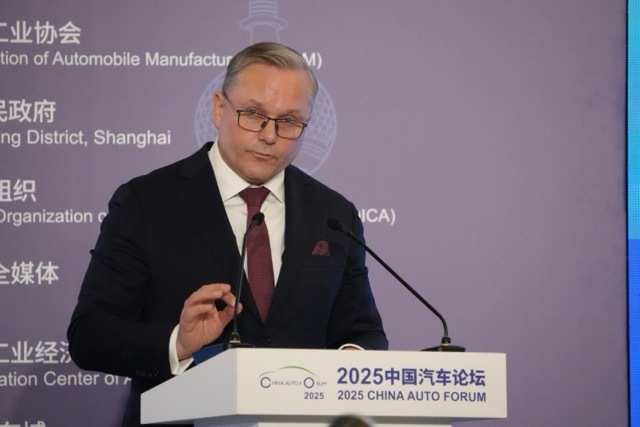
宝马高翔呼吁“破界共生”:协同应对汽车产业新挑战
Zhong Guo Jing Ji Wang· 2025-07-14 07:54
Core Insights - The automotive industry is at a critical juncture, facing both opportunities from electrification and intelligence, and unprecedented challenges due to structural issues [1][2] Group 1: Challenges Facing the Automotive Industry - Geopolitical tensions are significantly altering the global automotive supply chain, making it more vulnerable [4] - The innovation in smart connected electric vehicles is active, but unresolved controversies exist regarding which technology path will dominate and the need for further refinement to meet higher safety and ethical standards [4] - Ongoing price wars have severely reduced industry profitability, which, if not addressed, could lead to quality compromises and hinder innovation, ultimately affecting sustainable development [4] Group 2: Solutions Proposed by the CEO - Innovation and collaboration are key to enhancing the resilience of the automotive supply chain and unlocking sustainable development [5] - Promoting free trade and enhancing supply chain resilience are essential, as globalization has entered a phase of coexistence between cooperation and conflict [6] - Encouraging technological openness and collaborative innovation in key technology areas is vital, as multiple technology paths are competing in a dynamic ecosystem [6] - Fostering global sustainable development and carbon reduction cooperation is necessary, with international collaboration being crucial for addressing climate issues [6][7] - Creating a healthy competitive environment is important, with industry associations advocating for long-termism and self-discipline among manufacturers to protect collective interests [8]

“宝马的发展始终与中国的发展同频共振”(见证·中国机遇) ——访宝马集团董事高乐
Ren Min Ri Bao· 2025-06-05 21:35
Core Insights - The Chinese automotive industry has achieved remarkable success due to strategic planning and top-level design over the past decades, particularly in supply chain, manufacturing, technology innovation, and brand building [1] Group 1: BMW's Strategy in China - BMW is enhancing its core competitiveness through a dual approach of independent research and strategic partnerships, with China playing a crucial role in this process [1] - The company has established the largest R&D team outside Germany in China, consisting of over 3,000 engineers and software developers, primarily composed of local talent [1] - BMW's "co-creation" strategy emphasizes deep integration with local innovation while maintaining its core technological advantages [1] Group 2: Technological Collaboration - BMW adheres to an open cooperation strategy, integrating local technological advantages to meet Chinese consumers' expectations for smart mobility [2] - The new generation of BMW models features a Chinese version of the operating system, with 70% of the source code developed and optimized in China [2] - Collaborations with Chinese tech companies, such as Alibaba and Huawei, highlight BMW's commitment to leveraging local expertise in AI and battery technology [2] Group 3: Investment and Production - The Shenyang production base is BMW's largest and most advanced globally, with cumulative investments of approximately 116 billion RMB since 2010, underscoring its strategic importance [3] - BMW's commitment to the Chinese market is reflected in its historical presence, with the first domestically produced model being the BMW 3 Series in 2003 [2] Group 4: Sustainability and Market Trends - The development of China's new energy vehicle industry aligns with BMW's strategic goals, particularly in achieving carbon neutrality [3] - Recent data indicates that the retail penetration rate of new energy passenger vehicles in China has exceeded 50% over the past three months, demonstrating the success of the country's technology openness strategy [3] Group 5: Global Cooperation - BMW supports open markets and free trade, emphasizing the need for global collaboration in the automotive industry, from raw material sourcing to technology development [4] - The company recognizes the importance of integrating global resources to achieve sustainable, intelligent, and safe automotive solutions [4]