
技术支撑

Search documents
股指期货:关注技术?撑股指期权:续持买权防御为主
Zhong Xin Qi Huo· 2026-03-19 01:04
1. Report Industry Investment Rating No relevant content provided. 2. Core View of the Report - The stock and bond markets are showing signs of improvement. For stock index futures, the downside is limited, and it is advisable to hold a bottom - position. For stock index options, it is recommended to continue holding call options for defense. For bond futures, the sentiment in the bond market is gradually recovering [1][6][7]. 3. Summary by Related Catalog 3.1 Market Outlook Stock Index Futures - On Wednesday, the equity market rebounded in a volatile manner, with the ChiNext and STAR Market leading the gains, while finance, real estate, and petrochemical sectors were weak. The decline in the center of crude oil futures led to a rotation of market styles. The sustainability of the market needs attention, as trading volume remained low (slightly exceeding 2 trillion yuan) and the open interest of stock index futures did not increase significantly. However, the overall downward space is judged to be limited, and it is recommended to hold a bottom - position of IM. The focus should be on geopolitical developments, especially the convergence of crude oil spot prices [1][6]. Stock Index Options - Affected by market conditions, the trading volume of each option variety slightly increased, the option sentiment indicator (open interest PCR) dropped significantly, and the implied volatility was relatively strong, indicating a strong hedging atmosphere. It is recommended to continue holding call options for defense to protect the systematic risks of the overall position [1][6]. Bond Futures - The bond market sentiment continued to recover. The T - contract of bond futures trended upward in a volatile manner, and the motivation for long - positions to enter the market was relatively strong. The ongoing Middle - East geopolitical conflict and the recent decline in oil prices may have spurred the long - position sentiment in the bond market, and inflation concerns may not have further intensified. Although there was tax payment and a small net withdrawal of funds by the central bank, the overall liquidity remained loose, which was favorable for the bond market. The short - end of the bond market remained relatively strong, and the long - end interest rate declined, showing a bullish steepening of the yield curve. It is necessary to pay attention to the development of the Middle - East conflict and inflation expectations, and the cost - effectiveness of bond allocation may increase again [2][7]. 3.2 Derivatives Market Monitoring - The report mentions the monitoring data of stock index futures, stock index options, and bond futures, but no specific content is provided in the given text [8][12][24].
“十五五”是西北新能源“送得出、用得好”关键期
中国能源报· 2026-01-26 04:52
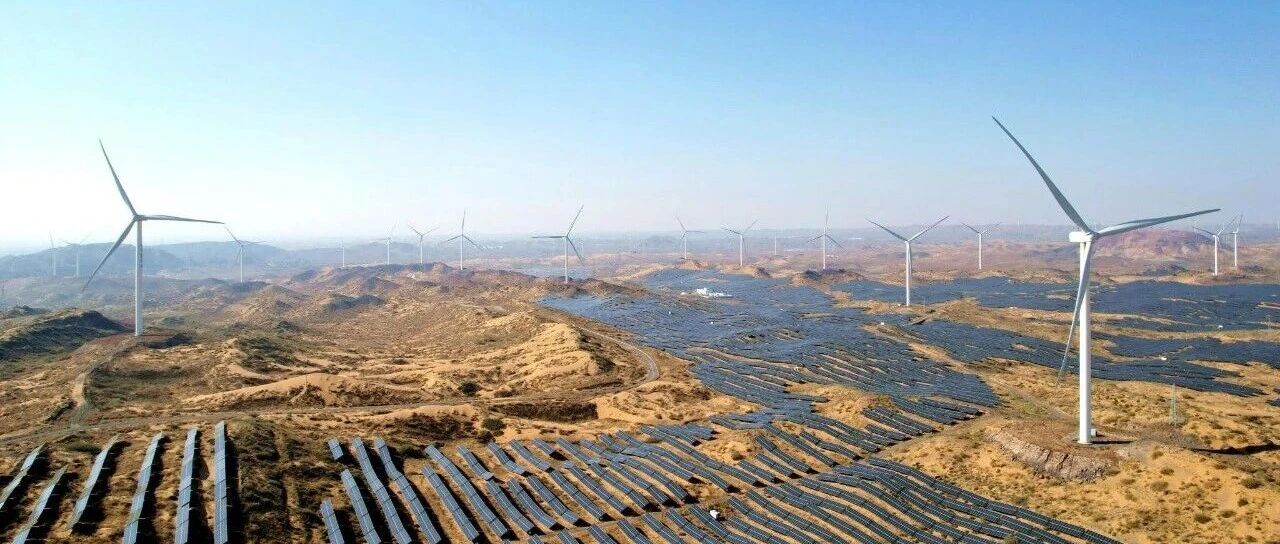
Core Viewpoint - The Northwest power grid is crucial for achieving China's 2035 target of 3.6 billion kilowatts of installed wind and solar capacity, but faces significant challenges in local consumption and external transmission of renewable energy [2][4]. Group 1: Current Status and Achievements - Since the 14th Five-Year Plan, the Northwest region has rapidly developed renewable energy, with a cumulative new installed capacity of 230 million kilowatts, bringing the total to 360 million kilowatts, accounting for 58% of the national total [4]. - The Northwest power grid's external transmission capacity has been enhanced by 14 operational DC channels, supporting the national energy framework [4]. - In the first 11 months of 2025, cross-province electricity trading in the Northwest reached 45.91 billion kilowatt-hours, a 27% year-on-year increase, with a significant rise in the share of renewable energy [4]. Group 2: Challenges Faced - Despite achievements, the Northwest renewable energy sector faces challenges in system operation costs, market mechanisms, and physical reliability [7]. - The current cost allocation mechanism is inadequate, leading to an unfair burden on local industrial and commercial users, while the benefits of renewable energy transmission primarily accrue to economically developed receiving regions [8]. - There are inconsistencies in market rules across provinces, creating barriers to resource flow and limiting the efficiency of renewable energy transactions [8][9]. Group 3: Recommendations for Improvement - Experts suggest establishing a fair cost-sharing mechanism for external transmission, integrating it into the system operation cost allocation for sending provinces [10]. - It is recommended that policies be adjusted to allow eastern high-energy-consuming users to engage directly with western power producers, thereby sharing the responsibility for green energy [10]. - The promotion of flexible trading models and the use of AI technology for optimized scheduling are advised to enhance the market value of renewable energy [10][11].

精彩一文全览!十五位大咖共答财富管理的低利率之问
2 1 Shi Ji Jing Ji Bao Dao· 2025-11-27 10:51
Group 1 - The core discussion at the 20th Century Financial Annual Conference focused on the low interest rate environment and its implications for wealth management and financial services [1] - Industry experts emphasized the need for wealth management to transform static capital into active investment that supports the real economy, aligning with national strategies and enhancing individual wealth [1] - The future competition in the wealth management sector will hinge on a combination of investment research capabilities, service experience, and technological support [3] Group 2 - The shift of deposits into wealth management products is a significant trend, with estimates suggesting that a 5% transfer of fixed-term deposits could generate over 5 trillion yuan in new opportunities for banks by the end of 2024 [19] - The wealth inheritance market is experiencing growth despite broader economic challenges, indicating structural opportunities that require collaboration across finance, legal, and tax sectors [25] - Trust services are positioned as a key tool for addressing the complexities of wealth transfer, with a focus on enhancing professional capabilities to better serve families [74][79]

A股策略周报:“修整期”基本确认,优化结构、多看少动
ZHESHANG SECURITIES· 2025-05-24 07:20
Market Overview - The A-share market experienced a volatile adjustment this week, with major indices recording negative returns, indicating a "strong large, weak small" pattern[11] - The North Star 50 index saw a significant drop of 3.68% after reaching a historical high earlier in the week, confirming the anticipated "active adjustment" phase[58] Sector Performance - The dividend style sectors outperformed overall, with the healthcare and automotive industries rising by 1.92% and 1.80% respectively, while technology and growth sectors continued to weaken, with declines of 3.00% in computing and 2.10% in electronics[12][59] - Among the 30 sectors, 9 increased and 21 decreased, highlighting the dominance of dividend styles[12] Market Sentiment and Capital Flow - The average daily trading volume in the Shanghai and Shenzhen markets decreased to 1.14 trillion yuan, down from 1.23 trillion yuan the previous week[19] - Financing buy-in ratio fell to 8.22%, with a net outflow of 11.3 billion yuan from stock ETFs this week[27] Economic Influences - The Loan Prime Rate (LPR) was lowered by 10 basis points, with the one-year LPR now at 3.00% and the five-year LPR at 3.50%, aimed at reducing loan costs and stimulating economic growth[54] - The U.S. 20-year Treasury yield exceeded 5%, impacting market risk appetite negatively[56] Future Outlook - The market is expected to continue its adjustment phase, with the Shanghai Composite Index's gap from April 10 (3186-3201 points) serving as a key technical support level[60] - Investment strategy suggests reallocating from high-rebound technology and growth sectors to relatively stable large financial and dividend sectors to manage portfolio volatility[61]