
抗体药物开发

Search documents
Genmab (NasdaqGS:GMAB) FY Conference Transcript
2026-01-14 00:47
Genmab Conference Call Summary Company Overview - **Company**: Genmab - **Event**: 2026 J.P. Morgan Healthcare Conference - **Key Speakers**: CEO Jan van de Winkel, CMO Tahamtan Ahmadi, CFO Anthony Pagano Core Industry and Company Insights - Genmab has transitioned from a royalty-based company to a fully integrated, innovation-driven biotech with a growing portfolio of proprietary medicines and a strong late-stage pipeline [2][3] - The company begins 2026 with a diversified revenue base and a late-stage portfolio that can drive sustainable growth into the 2030s, following the acquisition of Merus, which added nine medicines to its market offerings [3][4] - Genmab is financially profitable and continues to invest in priority programs with the highest potential impact for patients [3] Key Programs and Developments - **Epkinly**: A bispecific antibody with dual indications across key B-cell malignancies, showing strong uptake and potential to redefine care in B-cell lymphomas. It has demonstrated phase three superiority over standard care in follicular lymphoma [5][6] - **Rina S**: A folate receptor alpha-targeted ADC with potential to expand eligibility beyond high expressors, currently in three ongoing phase three trials [5][6] - **Petosemtamab**: An EGFR LGR5 bispecific with promising data in head and neck cancer, showing a 63% response rate in first-line settings, significantly higher than standard care [6][7] Financial Projections and Market Strategy - Genmab anticipates multiple registrational data readouts in 2026, setting the stage for important product launches in 2027 [8][9] - The company expects to increase the addressable patient population for Epkinly from approximately 27,000 to nearly 150,000 by early next decade [9] - The peak sales estimate for Rina S has been upgraded from $1 billion to $2 billion due to emerging data and clinical development progress [43] Competitive Landscape and Differentiation - Genmab is focused on executing its development plans rapidly to differentiate its products in a competitive oncology landscape [50] - The company is strategically prioritizing high-impact programs and evaluating partnerships from the Merus acquisition to ensure alignment with its goals [25][27] Operational Efficiency and Future Outlook - Genmab is committed to driving operational efficiencies while expanding its pipeline, particularly in high-priority phase three trials [68][70] - The company aims to leverage its scale to reduce costs and free up capital for further investment in promising programs [71] Additional Insights - The company has a strong track record of delivering on financial and operational commitments, which supports confidence in its future growth [11] - Genmab's focus on antibody science and development expertise aims to translate into meaningful breakthroughs for patients and long-term value for stakeholders [12] This summary encapsulates the key points discussed during the Genmab conference call, highlighting the company's strategic direction, product pipeline, financial outlook, and competitive positioning in the biotech industry.

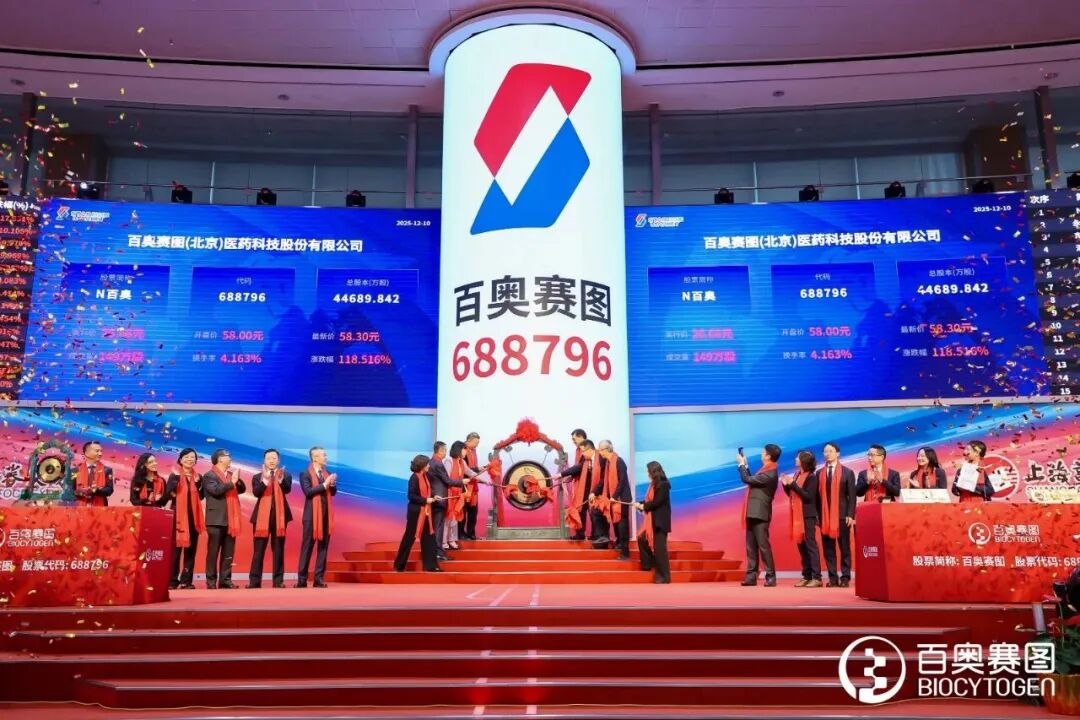
开盘大涨超150%,最会赚钱的基因编辑公司今日IPO
3 6 Ke· 2025-12-10 03:35
Core Viewpoint - BaiO Saite has successfully listed on the Shanghai Stock Exchange's Sci-Tech Innovation Board after more than three years of preparation, joining the ranks of leading model animal companies in China, referred to as the "Mouse King Trio" [1][3]. Company Overview - BaiO Saite, a prominent player in the biopharmaceutical sector, transitioned from the Hong Kong Stock Exchange to the Sci-Tech Innovation Board, receiving significant market interest prior to its IPO, with an oversubscription rate of approximately 5383 times and a final winning rate of only 0.028% [3]. - The company's first-day stock price surged by as much as 157.87%, indicating strong investor confidence [3]. Business Segments Traditional Business - BaiO Saite's primary revenue source remains the sale of genetically modified model mice, which has become increasingly valuable since 2021, alongside services such as customized gene editing and preclinical drug efficacy evaluation [4][5]. - The company has developed over 5000 animal and cell models for research and pharmaceutical clients, providing a comprehensive range of preclinical evaluation services [5]. Innovative Business - BaiO Saite is expanding its offerings beyond traditional animal models to include antibody discovery and development, leveraging its unique RenMice platform and the "Thousand Mice, Ten Thousand Antibodies" initiative [6][8]. - This initiative has led to the screening of nearly 700 single antibody drug targets and over 200 dual antibody targets, creating a vast inventory of antibody molecular sequences [8]. Financial Performance - In 2024, BaiO Saite achieved its first overall profitability since its establishment, reporting a net profit of 33.54 million yuan, which increased to 47.99 million yuan in the first half of 2025 [9]. - The improvement in profitability is attributed to a higher proportion of high-margin businesses and the conclusion of significant R&D expenditures [10]. Revenue Breakdown - The revenue from model animal sales and antibody development has consistently increased, with model animal sales growing at a compound annual growth rate of over 50% since 2021, making it the largest revenue source for the company [11][12]. - The antibody development business has also seen a rapid increase in revenue, becoming the second-largest source of income for BaiO Saite [13]. Market Potential - The global antibody drug market is projected to grow significantly, with a market size of $270.4 billion in 2024 and an expected increase to $463.4 billion by 2031, indicating a robust demand for antibody drugs [21][22]. - The domestic antibody drug market is expected to grow even faster, with a projected size of 448.5 billion yuan by 2031, driven by increased inclusion of antibody drugs in health insurance and the introduction of innovative therapies [22].

Simply Wall St:和铂医药过去一年收益飙升243%远超行业水平,增长潜力巨大
Ge Long Hui· 2025-10-08 06:13
Core Viewpoint - The report from Simply Wall St highlights that Heptares Therapeutics has experienced a remarkable revenue increase of 243% over the past year, significantly outpacing the industry average growth of 4.1% [1] Financial Performance - Heptares Therapeutics reported a total revenue of approximately 725 million yuan for the first half of the year, representing a year-on-year growth of 327% [1] - The company's profit reached about 523 million yuan, marking a staggering increase of 51 times compared to the previous year [1] - The company has a price-to-earnings ratio of 23, which is below the biotechnology industry average of 52, indicating substantial future growth potential [1] Funding and Financial Stability - Heptares Therapeutics recently raised 517 million HKD through a share placement and repurchased shares worth 121 million HKD [1] - As of June 2025, the company's shareholders' equity is positive, and it has a free cash flow of 49 million USD, positioning the company for continued financial stability [1] Innovation and Market Position - The company's revenue growth has been significantly supported by the licensing and collaboration of innovative products, which are becoming a regular source of income [1] - Heptares Therapeutics has established a strong global collaboration ecosystem based on its industry-leading Harbour Mice® technology platform and its extended 2.0 version technology platform, positioning itself as a "new infrastructure" in global antibody drug development [1]
谁能为全球创新药提供真正的“源头动力”?
Ge Long Hui· 2025-07-07 11:08
Core Viewpoint - The article highlights the systematic policy support for innovative drugs in China, emphasizing the role of companies like Baiaosaitu in driving global innovation through their RenMice platform [1][12]. Group 1: Policy Support for Innovative Drugs - The National Healthcare Security Administration and the National Health Commission have jointly released measures to support the high-quality development of innovative drugs, focusing on real-world data, dynamic adjustment of medical insurance catalogs, and commercial health insurance [1]. - The policy aims to make innovative drugs more accessible and affordable through optimized payment systems and mechanisms [1]. Group 2: Baiaosaitu's RenMice Platform - Baiaosaitu has developed the RenMice platform, which includes various technologies such as RenMab, RenLite, RenNano, and RenTCR, covering all necessary tools for next-generation antibody drug development [3]. - The platform's originality lies in its ability to produce fully human antibodies directly from engineered mice, significantly reducing time and costs while avoiding immunogenic risks [3]. - The RenMice platform has secured patents in over ten countries, establishing a comprehensive international intellectual property layout, which enhances the marketability of its antibody products [4]. Group 3: Clinical Applications and Collaborations - Baiaosaitu has signed over 200 drug cooperation agreements, with more than 50 projects entering IND and clinical stages, showcasing the platform's practical value [6]. - Notable projects include NTB003, a second-generation fully human antibody targeting IGF-1R, and several dual-antibody ADC projects that have received IND approvals from regulatory bodies [6][7]. - The company acts not only as an antibody provider but also as a drug design partner, enhancing the efficiency and success rate of projects moving from early research to clinical trials [7]. Group 4: Expansion of Technology and Future Potential - Baiaosaitu is expanding its technology beyond traditional antibody platforms to include novel therapeutic areas such as nanobodies and TCR-based therapies, indicating a broader scope for drug discovery [9]. - The RenTCR-mimic platform opens new target spaces for antibody recognition of intracellular antigens, potentially addressing previously "undruggable" targets [9]. - The company's approach to solving complex system issues positions it as a comprehensive solution provider in drug discovery, moving beyond being merely a tool provider [9]. Group 5: Long-term Value and Market Position - Baiaosaitu exemplifies a "long-term compounding" success model in the Chinese innovative drug sector, focusing on platform stickiness, intellectual property strength, and international commercial viability [11][12]. - The company's ongoing efforts in antibody development and collaboration are shaping the future landscape of new drug ecosystems in China, raising the question of whether more global drugs will be "Made by China" [12].