抛售美债

Search documents
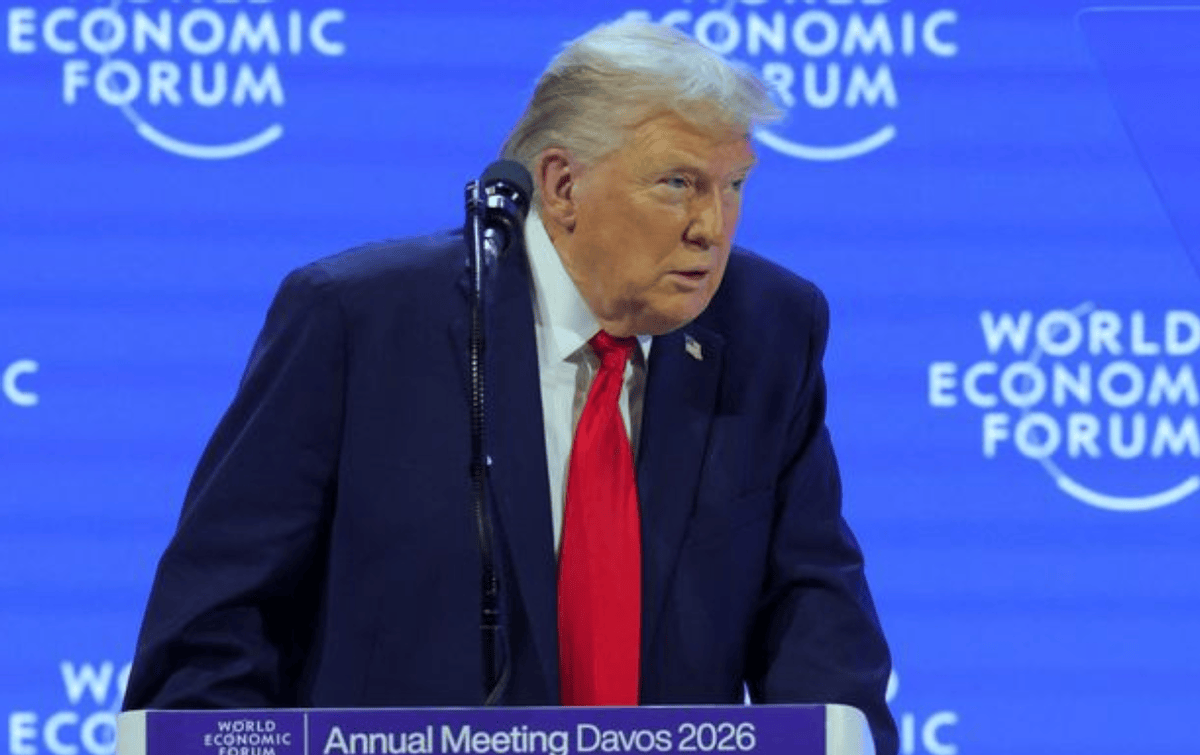
美元贬值,特朗普:这很棒,有助于提振制造业,石油和天然气行业
Sou Hu Cai Jing· 2026-01-29 07:27
Group 1 - The weakening of the US dollar raises concerns about its impact on the purchasing power of American businesses and consumers, potentially leading to higher inflation [1][3] - Trump argues that a weaker currency benefits industries he aims to develop, particularly manufacturing, oil, and gas, as it allows US multinational companies to report stronger earnings when converting overseas revenue back to a depreciated dollar [3] - The dollar has recently fallen to its lowest level in nearly four years, exacerbated by Trump's comments and his administration's trade policies, which have contributed to a narrative of "selling off US debt" [3][4] Group 2 - Trump's trade war has diminished the influence of the US dollar as the world's reserve currency, compounded by broader foreign policy actions that have not been beneficial [4] - Concerns about the independence of the Federal Reserve and significant increases in public spending have led to doubts about Congress's ability to reach a budget agreement, raising uncertainty in economic policy [4] - Recent consumer confidence data indicates a significant shift towards negative sentiment, with market strategies reflecting increased uncertainty and a reluctance to invest in the dollar [4]

为何欧洲不抛售美债?
Sou Hu Cai Jing· 2026-01-27 14:08
Core Viewpoint - Europe may leverage its significant holdings of U.S. Treasury bonds, totaling approximately $3.6 trillion, as a countermeasure against U.S. tariff pressures, but the feasibility and consequences of such actions are complex and potentially damaging to Europe itself [2][4][21]. Group 1: Economic Context - Recent U.S. threats to impose tariffs on certain European countries have triggered movements in the market, including a sell-off of dollar assets, leading to declines in U.S. stocks and rising bond yields [3]. - European investors hold about 40% of all foreign-held U.S. Treasury bonds, which could serve as a tool for exerting pressure on Washington [2]. Group 2: Financial Implications - A coordinated reduction of U.S. Treasury holdings by Europe could increase U.S. financing costs, impacting the U.S. fiscal deficit funding [4]. - The Danish and Swedish pension funds have already begun to reduce or liquidate their U.S. Treasury holdings due to concerns over U.S. policy uncertainty and debt sustainability [4]. Group 3: Risks of Selling U.S. Treasuries - Large-scale selling of U.S. Treasuries poses significant risks, including a reduction in high-quality collateral, which could increase financing costs for institutions and lead to a liquidity crisis in Europe [14][15]. - The immediate impact of such actions would likely harm Europe's financial system more than the intended target, the U.S. [21][22]. Group 4: Structural Dependencies - European financial institutions rely heavily on U.S. Treasuries for liquidity and as a core asset for managing dollar liabilities, making the idea of selling them paradoxical [11][19]. - The deep integration of European financial systems with U.S. Treasuries is not merely a political choice but a structural reality shaped by market regulations and global monetary systems [19][46]. Group 5: Long-term Strategies - Europe is likely to pursue a strategy of risk diversification rather than a confrontational approach, focusing on enhancing its financial resilience over time [56]. - Efforts may include allowing gradual reductions in U.S. Treasury holdings for financial management reasons, while simultaneously working on creating a unified European safe asset market [58][62]. Group 6: Future Outlook - The long-term goal for Europe is to establish a credible euro-denominated safe asset to reduce dependency on U.S. Treasuries, which would require significant political and economic coordination [62][66]. - The ongoing geopolitical tensions may lead to a gradual shift in asset allocation towards emerging markets, including Chinese bonds, as part of a broader strategy to enhance financial autonomy [65][67].

“欧洲手握3.6万亿美债,逼急了…”
Guan Cha Zhe Wang· 2026-01-23 22:57
Core Viewpoint - The article discusses the potential of Europe using the sale of U.S. assets, particularly U.S. Treasury bonds, as a strategic weapon against U.S. pressure, particularly from President Trump [1][3]. Group 1: European Holdings of U.S. Assets - European investors hold approximately $3.6 trillion in U.S. Treasury bonds, accounting for 40% of the total foreign-held U.S. debt, which provides them with significant leverage against Washington [1][4]. - Overall, European institutions and asset management companies hold around $8 trillion in U.S. bonds and stocks, representing nearly two-thirds of total foreign investments in the U.S. [4]. Group 2: Market Reactions and Actions - Following Trump's threats regarding tariffs on European countries, there has been a notable sell-off of U.S. assets, with Wall Street experiencing a drop of over 2% and the dollar declining by 1% [1]. - The Danish pension fund AkademikerPension announced plans to liquidate approximately $100 million in U.S. Treasury bonds due to a loss of confidence in U.S. debt sustainability [4][6]. - The Swedish pension fund Alecta sold off a significant portion of its U.S. Treasury holdings, citing reduced predictability in U.S. policies and rising public debt as reasons for their decision [6]. Group 3: Challenges and Risks of Coordinated Action - The article notes that while using U.S. debt as leverage is a consideration, the decentralized nature of European holdings makes coordinated action difficult, as these assets are spread across various institutions [7]. - Convincing diverse entities like pension funds and insurance companies to sell their U.S. bonds in unison poses a significant challenge, as it could lead to substantial financial losses [7]. Group 4: U.S. Government Response - U.S. Treasury Secretary Mnuchin dismissed the significance of the Danish pension fund's actions, indicating that such moves are not a cause for concern [5]. - President Trump warned of significant retaliation if European nations were to sell U.S. stocks and bonds in response to U.S. pressure regarding Greenland [8].

印度所持美债仓位降至5年来最低
Sou Hu Cai Jing· 2026-01-23 08:57
Group 1 - India's holdings of U.S. Treasury bonds have fallen to a five-year low, currently at $174 billion, a 26% decrease from the peak in 2023 [1] - The share of U.S. Treasuries in India's foreign exchange reserves has dropped to one-third, down from 40% a year ago [1] - The Reserve Bank of India is increasing its gold purchases while selling U.S. Treasuries, indicating a strategic shift influenced by geopolitical factors [1] Group 2 - Concerns over U.S. credit and policy stability are leading more economies to sell U.S. Treasuries, with notable examples including Sweden's Alekta pension fund and Denmark's academic pension fund [1] - Alekta pension fund has sold most of its U.S. Treasuries over the past year due to concerns about the unpredictability of the U.S. government and rising national debt [1] - Another Danish pension fund, PBU, has also reported selling U.S. Treasuries, citing the poor fiscal condition of the U.S. government [1]
【微特稿】印度所持美债仓位降至5年来最低
Sou Hu Cai Jing· 2026-01-23 08:40
Group 1 - India's holdings of U.S. Treasury bonds have fallen to a five-year low, currently at $174 billion, a 26% decrease from the peak in 2023 [1] - The share of U.S. Treasury bonds in India's foreign exchange reserves has decreased from 40% a year ago to one-third currently [1] - The Reserve Bank of India is increasing its gold purchases while selling U.S. Treasuries, indicating a strategic shift in asset allocation [1] Group 2 - The trend of selling U.S. Treasuries is growing among various economies due to concerns over U.S. credit and policy stability [1] - The largest private pension fund in Sweden, Alecta, has sold most of its U.S. Treasuries over the past year, citing unpredictability of the current U.S. government and rising U.S. debt [1] - Danish pension funds are also divesting from U.S. Treasuries, with one fund announcing a $100 million sale due to poor U.S. fiscal conditions [1]
抛售美债正成为世界趋势 欧洲南美洲多国正抛售美债
Xin Lang Cai Jing· 2026-01-23 04:27
Core Viewpoint - The article highlights the increasing trend of countries, including European nations, selling U.S. Treasury bonds in response to pressure from the U.S. regarding Greenland, with potential repercussions from the U.S. government [1] Group 1 - President Trump stated that the U.S. would retaliate if European countries sell U.S. Treasury bonds due to pressure over the Greenland issue [1] - There is a growing number of countries, not just in Europe, that are joining the trend of selling U.S. Treasury bonds [1]
是时候打出美债王牌了!欧洲议员放话:让美国尝尝我们的厉害
Sou Hu Cai Jing· 2026-01-17 06:43
Core Viewpoint - The increasing complexity and volatility of international relations, particularly the growing tensions between the US and Europe, highlight the need for Europe to leverage its $1.5 trillion in US Treasury holdings as a countermeasure against the Trump administration's aggressive stance [1] Group 1: Economic Interdependence - The deep-rooted economic interdependence between the US and Europe complicates the potential for Europe to sell off US Treasuries, as such actions could lead to significant repercussions for both economies [3] - Europe's economic stability has traditionally relied on the US market, making a hasty sell-off of US debt potentially damaging to Europe itself [3] Group 2: Internal Divisions - The increasing internal divisions within the EU regarding how to respond to US pressures may weaken the bloc's collective response, as member states have differing strategies, such as the UK's attempt to deepen ties with the US for security [5] - Key EU member states like Germany and France are caught between maintaining transatlantic alliances and guarding against US actions that threaten European interests [5] Group 3: Strategic Challenges - The US's interest in Greenland is not merely territorial but part of a broader strategic initiative to enhance its influence in the Arctic, which Europe struggles to counter effectively [5] - The ability of European nations to adapt and collaborate will be crucial in navigating the ongoing US-EU tensions, as failure to achieve internal unity could exacerbate the challenges faced by Europe [7]