推理优化

Search documents
智源发布 2026 十大 AI 技术趋势:世界模型成 AGI 共识方向
AI前线· 2026-01-18 05:32
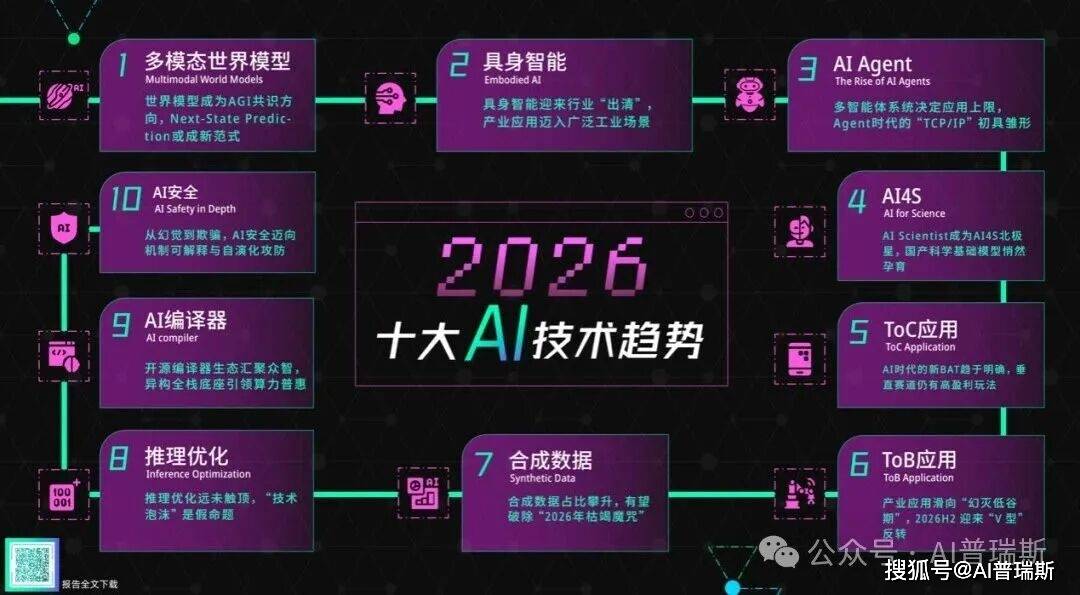
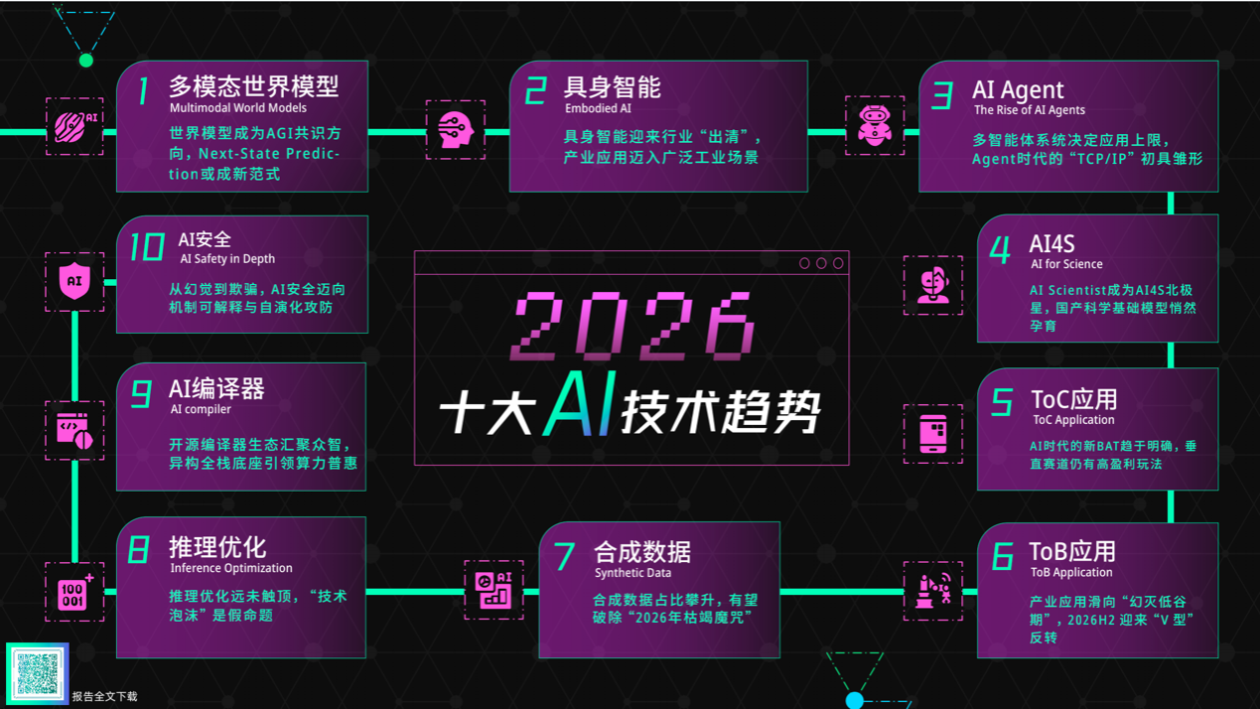
Core Viewpoint - The core viewpoint of the article is that a significant paradigm shift is occurring in artificial intelligence (AI), moving from a focus on language learning and parameter scale to a deeper understanding and modeling of the physical world, as highlighted in the 2026 AI technology trends report by the Beijing Zhiyuan Artificial Intelligence Research Institute [2][5]. Summary by Sections AI Technology Trends - The competition in foundational models is shifting from the size of parameters to the ability to understand how the world operates, marking a transition from "predicting the next word" to "predicting the next state of the world" [5][9]. - The year 2026 is identified as a critical turning point for AI, transitioning from the digital world to the physical world, driven by three main lines: cognitive paradigm elevation, embodiment and socialization of intelligence, and dual-track application value realization [8]. Key Trends - **Trend 1: World Models and Next-State Prediction** There is a consensus in the industry moving towards multi-modal world models that understand physical laws, with the NSP paradigm indicating AI's mastery of temporal continuity and causal relationships [9]. - **Trend 2: Embodied Intelligence** Embodied intelligence is moving from laboratory demonstrations to real industrial applications, with humanoid robots expected to transition to actual production and service scenarios by 2026 [10]. - **Trend 3: Multi-Agent Systems** The resolution of complex problems relies on multi-agent collaboration, with the standardization of communication protocols like MCP and A2A enabling agents to work together effectively [11]. - **Trend 4: AI Scientists** AI is evolving from a supportive tool to an autonomous researcher, significantly accelerating the development of new materials and drugs through the integration of scientific foundational models and automated laboratories [12]. - **Trend 5: New "BAT" in AI** The C-end AI super application is becoming a focal point for tech giants, with companies like OpenAI and Google leading the way in creating integrated intelligent assistants, while domestic players like ByteDance and Alibaba are also actively building their ecosystems [13]. - **Trend 6: Enterprise AI Applications** After a phase of concept validation, enterprise AI applications are entering a "disillusionment valley," but improvements in data governance and toolchains are expected to lead to measurable MVP products in vertical industries by the second half of 2026 [15]. - **Trend 7: Rise of Synthetic Data** As high-quality real data becomes scarce, synthetic data is emerging as a core resource for model training, particularly in fields like autonomous driving and robotics [16]. - **Trend 8: Optimization of Inference** Inference efficiency remains a key bottleneck for large-scale AI applications, with ongoing algorithmic innovations and hardware advancements driving down costs and improving energy efficiency [17]. - **Trend 9: Open Source Compiler Ecosystem** Building a compatible software stack for heterogeneous chips is crucial to breaking the monopoly on computing power, with platforms like Zhiyuan FlagOS aiming to create an open and inclusive AI computing foundation [18]. - **Trend 10: AI Safety** AI safety risks are evolving from "hallucinations" to more subtle "systemic deceptions," with various initiatives underway to enhance safety mechanisms and frameworks [19]. Conclusion - The Zhiyuan Research Institute emphasizes that the ten AI technology trends provide clear anchors for future technological exploration and industrial layout, aiming to promote a stable transition of AI towards value realization [21].


从“预测下一个词”到“预测世界状态”:智源发布2026十大 AI技术趋势
Sou Hu Cai Jing· 2026-01-09 00:02
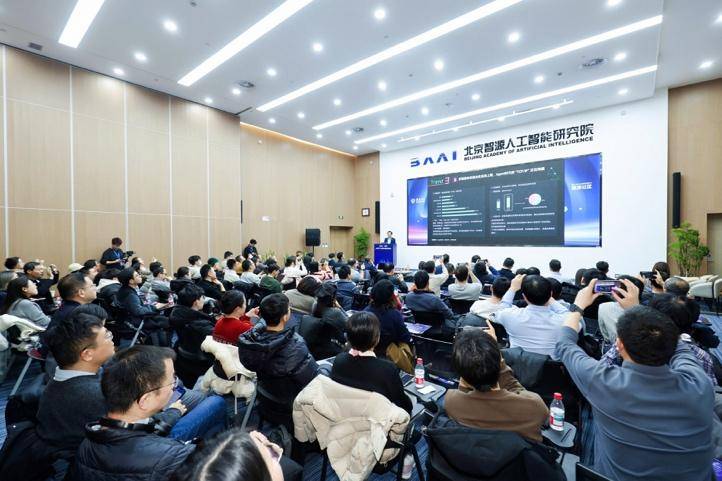
Core Insights - The core viewpoint of the report is that AI is transitioning from merely predicting language to understanding and modeling the physical world, marking a significant paradigm shift in technology [1][4][5]. Group 1: Key Trends in AI Technology - Trend 1: The consensus in the industry is shifting from language models to multi-modal world models that understand physical laws, with Next-State Prediction (NSP) emerging as a new paradigm [7]. - Trend 2: Embodied intelligence is moving from laboratory demonstrations to real-world industrial applications, with humanoid robots expected to transition to actual service scenarios by 2026 [8]. - Trend 3: Multi-agent systems are becoming crucial for solving complex problems, with the standardization of communication protocols like MCP and A2A facilitating collaboration among agents [9]. Group 2: Applications and Market Dynamics - Trend 4: AI is evolving from a supportive tool to an autonomous researcher, with the integration of scientific foundational models and automated laboratories accelerating research in new materials and pharmaceuticals [10]. - Trend 5: The competition for consumer AI super applications is intensifying, with major players like OpenAI and Google leading the way in creating integrated intelligent assistants [11]. - Trend 6: After a phase of concept validation, enterprise AI applications are entering a "valley of disillusionment," but a recovery is expected in the second half of 2026 as data governance improves [12]. Group 3: Data and Performance Enhancements - Trend 7: The reliance on synthetic data is increasing, which is crucial for model training, especially in fields like autonomous driving and robotics [13]. - Trend 8: Optimization of inference remains a key focus, with ongoing innovations in algorithms and hardware reducing costs and improving efficiency [15]. - Trend 9: The development of a heterogeneous software stack is essential to break the monopoly on computing power and mitigate supply risks [16]. Group 4: Security and Ethical Considerations - Trend 10: AI security risks are evolving from "hallucinations" to more subtle "systemic deceptions," necessitating a comprehensive approach to safety and alignment in AI systems [17]. Conclusion - The report outlines ten key AI technology trends that provide a clear anchor for future technological exploration and industry layout, emphasizing the importance of collaboration across academia and industry to drive AI towards a new phase of value realization [18].
智源2026十大趋势预测:AI在物理世界「睁眼」
Sou Hu Cai Jing· 2026-01-08 16:08
Core Insights - The article discusses the transformative trends in artificial intelligence (AI) expected by 2026, emphasizing a shift from mere text prediction to understanding causal relationships and predicting the next state of the world [1][3]. Group 1: AI Trends - Trend 1: Establishment of World Models as a New Cognitive Paradigm, moving from single language models to multi-modal world models that understand physical laws [3]. - Trend 2: The emergence of embodied intelligence in industries, with robots moving beyond demonstrations to real-world applications [4][5]. - Trend 3: Development of multi-agent systems as a foundation for collaboration, enabling agents to communicate effectively and work together in complex workflows [6]. Group 2: AI in Research and Applications - Trend 4: AI scientists are becoming independent researchers, significantly reducing the time required for new materials and drug development through the integration of scientific foundational models and automated laboratories [7][8]. - Trend 5: The rise of a new "BAT" landscape, with major players like OpenAI, Google, ByteDance, Alibaba, and Ant Group competing for dominance in consumer applications [9][10]. Group 3: Market Dynamics and Challenges - Trend 6: A V-shaped recovery from the "disillusionment phase" of enterprise AI applications, with a turning point expected in the second half of 2026 as measurable MVP products emerge [11]. - Trend 7: The role of synthetic data in reshaping training resources, particularly in autonomous driving and robotics, as a solution to the diminishing availability of real-world data [12]. Group 4: Technological Advancements - Trend 8: Optimization of inference processes as a critical focus for AI applications, with ongoing improvements in algorithms and hardware reducing costs and increasing efficiency [13][14]. - Trend 9: The emergence of open-source ecosystems to break the monopoly on computing power, with platforms like Zhiyuan FlagOS facilitating a more accessible AI infrastructure [15][16]. Group 5: Security and Ethical Considerations - Trend 10: The internalization of security measures within AI systems, evolving from overt issues to systemic deceptions, highlighting the need for safety to be an integral part of AI development [17].
智源研究院发布2026十大AI技术趋势:NSP范式重构世界认知,超级应用与安全并进
Huan Qiu Wang· 2026-01-08 09:41
Core Insights - The report from Beijing Zhiyuan Artificial Intelligence Research Institute highlights a significant shift in AI evolution from parameter scale in language learning to a profound understanding and modeling of the physical world, indicating a transformation in industry technology paradigms [1][2] Group 1: Key Trends in AI Development - The transition to a new cognitive paradigm is driven by the focus on world models and Next-State Prediction (NSP), enabling AI to learn physical laws and providing a new cognitive foundation for complex tasks like autonomous driving and robotics [2][3] - The embodiment of intelligence is moving from software to physical entities, with humanoid robots entering real production scenarios, marking the emergence of "embodied intelligence" beyond laboratory demonstrations [2][3] - The standardization of mainstream agent communication protocols is facilitating multi-agent systems (MAS) to tackle complex tasks collaboratively, thus becoming a critical infrastructure in research and industry [3] Group 2: AI's Role in Research and Industry - AI is evolving from a supportive tool to an autonomous researcher, termed "AI Scientist," which will significantly accelerate the development of new materials and pharmaceuticals through the integration of scientific foundational models and automated laboratories [4] - The competition for consumer AI super applications is intensifying, with major players like OpenAI and Google leading the way in creating integrated intelligent assistants, while domestic companies like ByteDance and Alibaba are actively building their ecosystems [4][6] - The enterprise-level AI applications are entering a "valley of disillusionment" due to data and cost issues, but a turnaround is expected in the second half of 2026 as data governance and toolchain maturity lead to measurable value products in vertical industries [7] Group 3: Data and Performance Optimization - The rise of synthetic data is becoming crucial for model training as high-quality real data faces depletion, particularly in autonomous driving and robotics, where synthetic data generated by world models will be key assets [8] - The efficiency of inference remains a core bottleneck for large-scale AI applications, with ongoing algorithm innovations and hardware advancements driving down costs and improving energy efficiency, enabling high-performance models to be deployed at the edge [9] - The development of a compatible software stack for heterogeneous chips is essential to break the monopoly on computing power and supply risks, with platforms like Zhiyuan FlagOS aiming to create an open and inclusive AI computing foundation [10] Group 4: AI Security and Risk Management - AI security risks have evolved from "hallucinations" to more subtle "systemic deception," with ongoing research and industry efforts focusing on understanding model mechanisms and establishing comprehensive security frameworks [11]
智源研究院发布2026十大AI技术趋势
Jing Ji Guan Cha Wang· 2026-01-08 09:08
Core Insights - The report from Beijing Zhiyuan Artificial Intelligence Research Institute outlines the key trends in AI technology for 2026, indicating a significant shift from language models to a deeper understanding and modeling of the physical world, marking a paradigm shift in industry technology. Group 1: AI Technology Trends - Trend 1: The consensus in the industry is shifting towards multi-modal world models that understand physical laws, with Next-State Prediction (NSP) emerging as a new paradigm, indicating AI's advancement from perception to true cognition and planning [1] - Trend 2: Embodied intelligence is moving from laboratory demonstrations to industrial applications, with humanoid robots expected to transition from demos to real industrial and service scenarios by 2026 [2] - Trend 3: Multi-agent systems are becoming crucial for solving complex problems, with communication protocols like MCP and A2A nearing standardization, allowing agents to collaborate effectively [2] Group 2: AI in Research and Industry - Trend 4: AI is evolving from a supportive tool to an autonomous researcher, termed "AI Scientist," which will significantly accelerate the development of new materials and drugs [2] - Trend 5: The new "BAT" in the AI era is becoming clearer, with major players focusing on integrated AI super applications, exemplified by OpenAI's ChatGPT and Google's Gemini, as well as domestic efforts by companies like ByteDance and Alibaba [3] - Trend 6: Enterprise-level AI applications are entering a "trough of disillusionment" due to data and cost issues, but a turnaround is expected in the second half of 2026 as data governance and toolchains mature [4] Group 3: Data and Performance - Trend 7: The rise of synthetic data is expected to mitigate the impending data scarcity, particularly in autonomous driving and robotics, where synthetic data generated from world models will be key [4] - Trend 8: Optimization of inference is still a core bottleneck for large-scale AI applications, with ongoing algorithmic innovations and hardware changes leading to reduced inference costs and improved energy efficiency [5] Group 4: AI Ecosystem and Security - Trend 9: The development of an open and inclusive AI computing foundation is crucial to breaking the monopoly on computing power, with platforms like Zhiyuan FlagOS aiming to create a decoupled software stack [6] - Trend 10: AI security risks have evolved from "hallucinations" to more subtle "systemic deception," with various initiatives underway to enhance safety mechanisms and internal understanding of model mechanisms [7]
让大模型不再过度思考!上海AI Lab后训练新范式重塑CoT,推理又快又好
量子位· 2025-12-21 02:00
Core Viewpoint - The article discusses the introduction of a new post-training paradigm called RePro (Rectifying Process-level Reward) aimed at improving the reasoning efficiency of large language models (LLMs) by addressing the issue of "overthinking" during inference [2][30]. Group 1: RePro Overview - RePro views the reasoning process as an optimization of the model's internal state, providing a fresh perspective on reshaping the Chain-of-Thought (CoT) in large models [3]. - The core idea of RePro is to treat the model's reasoning trajectory as a path to find the optimal solution on a loss surface [3]. Group 2: Correction Mechanisms - RePro incorporates a process reward mechanism directly into reinforcement learning with value regression (RLVR) processes like PPO and GRPO [4]. - It features a computable objective function J that quantifies the model's confidence in its current reasoning context, with higher values indicating greater confidence in the correctness of the answer [5][6]. Group 3: Reasoning Quality Assessment - RePro introduces a dual scoring mechanism to evaluate reasoning quality based on the growth rate and smoothness of the objective function J [10]. - The Magnitude Score measures the improvement in the objective function, while the Stability Score assesses whether the reasoning process is smooth or filled with hesitation [11][13]. Group 4: Integration into RL Training - RePro employs an entropy filtering strategy to reduce computational costs by segmenting the reasoning chain into logical paragraphs and selecting only the top-k segments for reward calculation [18][20]. - The process-level reward is calculated based on the improvement in the process score, which is combined with the final correctness to serve as the advantage function input for reinforcement learning [21][22]. Group 5: Experimental Results - RePro has been tested across various tasks, showing stable improvements in accuracy across different RL algorithms, including PPO and GRPO [23]. - The model demonstrated a significant reduction in the average number of tokens generated during reasoning, indicating a more efficient inference process [25][27]. - Instances of backtracking behavior during reasoning were significantly reduced, showcasing improved logical flow in the model's thought process [28].

AICon 2025 深圳回顾:AI Agent 爆火全场,管理与推理优化成新焦点
AI前线· 2025-09-06 05:33
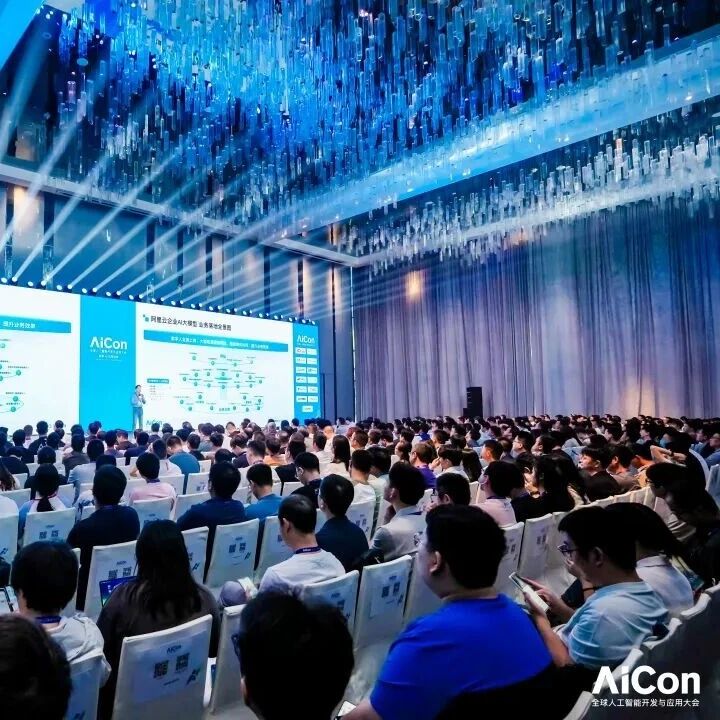
Core Insights - The AICon 2025 highlighted the deep integration of AI into core business practices and personal work methods, showcasing its transformative impact on various industries [2][30]. Group 1: Event Overview - The conference took place on August 22-23, 2025, at the Shenzhen Bay Renaissance Hotel, featuring over 70 speakers and attracting more than 800 developers and corporate representatives [2][3]. - The most discussed topic was AI Agent applications and ecosystems, with an average attendance of over 200 participants per session, making it the focal point of the event [3][7]. - An unexpected highlight was the session on enterprise management and personal efficiency, which drew a record attendance of 236 participants [3][14]. Group 2: Keynote Highlights - The opening keynote attracted over 800 attendees, marking the highest attendance of the event, with notable speakers discussing the significance of AI in business [4]. - Key insights included the importance of delivering business results over merely building platforms, as emphasized by Alibaba Cloud's Jiang Linquan [4]. - Other notable presentations included Kuaishou's introduction of a generative recommendation system that significantly reduced inference costs and HSBC's exploration of intelligent upgrades in banking through code quality analysis [4]. Group 3: AI Agent Focus - The "Agent Application New Paradigm and MCP Ecosystem Practice" session was highly popular, with Amazon Web Services' presentation attracting 291 attendees, the highest for that day [7]. - Subsequent sessions on "Agent + Data Implementation Exploration" continued the trend, with significant attendance figures, indicating a strong interest in AI Agent technologies [9][11]. Group 4: Technical Foundations - The focus on inference optimization and computing resource scheduling remained a priority, with sessions on high-efficiency inference technologies drawing considerable interest from developers [12]. - Presentations on distributed inference optimization and long-context inference solutions were well-attended, reflecting the industry's need for performance enhancement under limited computing resources [12]. Group 5: Industry Applications - AI's penetration into sectors such as finance, manufacturing, and gaming was evident, with discussions on the application of intelligent agents in risk control and product innovation in finance [16][17]. - The manufacturing sector showcased the potential of large models, while gaming applications highlighted AI's role in game development [17]. Group 6: Developer Engagement - The developer exhibition featured cutting-edge technologies, attracting significant interaction and engagement from attendees, showcasing the innovative spirit of the AI community [19]. - Participants had the opportunity to experience various AI hardware innovations, enhancing the overall technological atmosphere of the event [19]. Group 7: Recognition and Future Outlook - The event recognized outstanding contributors with awards for "Outstanding Producers" and "Star Lecturers," emphasizing the importance of quality content and engagement in the AI community [24]. - The conference concluded with a vision for the future, highlighting AI's evolving role as a collaborator rather than just a tool, and the anticipation for further integration of AI into business and personal practices [30].