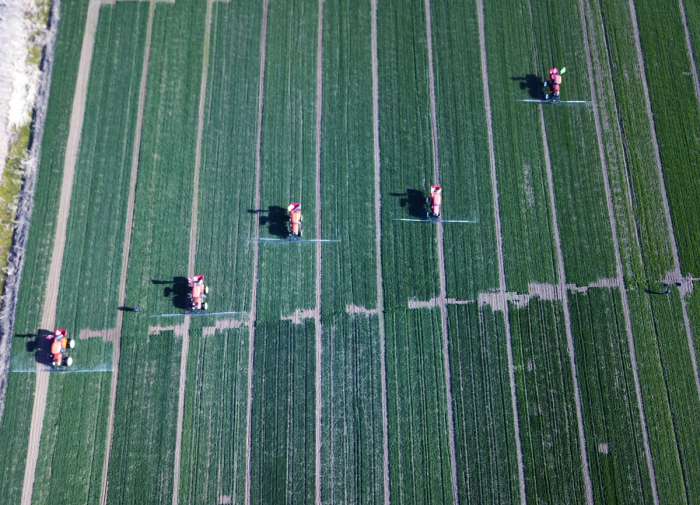
提升农业综合生产能力和质量效益

Search documents
李松泽:提升农业综合生产能力和质量效益
Jing Ji Ri Bao· 2026-02-25 00:06
Core Viewpoint - The modernization of agriculture and rural areas is crucial for China's overall modernization, with a focus on enhancing agricultural production capacity and quality efficiency as a top priority for the government [1][2]. Group 1: Agricultural Production Capacity and Quality - The central document for 2026 emphasizes the need to stabilize grain and oil production, strengthen farmland protection, and improve quality, which guides the enhancement of food security and agricultural resilience during the 14th Five-Year Plan [1]. - Despite achieving a new high in grain production, challenges remain in agricultural high-quality development, including resource constraints, rising costs, and insufficient technological innovation [1][2]. - The need for a balanced approach to domestic production and moderate imports is highlighted, ensuring that the majority of food consumed is domestically produced while enhancing agricultural competitiveness [2]. Group 2: Strategies for Improvement - A systematic approach is required to enhance agricultural production capacity and quality, focusing on increasing yield, ecological protection, and farmer income simultaneously [3]. - The development of technology-driven agriculture is essential, including advancements in key agricultural technologies and the promotion of efficient agricultural practices [4]. - Emphasis on green agriculture involves reducing chemical inputs, promoting sustainable farming practices, and expanding the supply of high-quality green products [4][5]. Group 3: Quality and Brand Development - The shift towards quality agriculture necessitates adapting production methods to meet market demands, establishing standards, and enhancing product quality through deep processing [5]. - Brand development in agriculture is crucial, with initiatives to cultivate and protect agricultural brands, promote marketing strategies, and support rural e-commerce [5].
提升农业综合生产能力和质量效益
Jing Ji Ri Bao· 2026-02-24 22:12
Core Viewpoint - The modernization of agriculture and rural areas is crucial for China's overall modernization, with a focus on enhancing agricultural production capacity and quality efficiency as a top priority for the government [1][2]. Group 1: Agricultural Production Capacity and Quality - The 2026 Central Document No. 1 emphasizes the need to stabilize grain and oil production and strengthen the protection and quality improvement of arable land [1]. - Since the 14th Five-Year Plan, China's grain production has reached new heights, providing solid support for economic and social development, but challenges remain in achieving high-quality agricultural development [1][2]. - There is a need to balance production capacity and quality, ensuring that agricultural production meets both quantity and quality demands while addressing environmental constraints and rising costs [2][3]. Group 2: Agricultural Development Strategies - The transition to modern agriculture requires a focus on improving agricultural production capacity and quality efficiency, which is essential for stabilizing farmers' expectations and increasing their income [2][4]. - Strategies include promoting technological advancements in agriculture, developing green agriculture practices, and enhancing the quality of agricultural products to meet market demands [4][5]. - The integration of ecological protection with agricultural production is vital, emphasizing the need for sustainable practices that reduce environmental pressure while increasing productivity [3][4]. Group 3: Policy and Support Mechanisms - The government aims to implement policies that support grain production, such as minimum purchase prices for rice and wheat, and subsidies for soil fertility protection [3][5]. - There is a focus on developing brand agriculture, enhancing the marketing and promotion of agricultural products, and fostering rural e-commerce and customized agriculture [5][6]. - The establishment of a robust agricultural brand and the cultivation of high-quality agricultural products are essential for improving market competitiveness and ensuring food safety [5].
一号文件里的“三农”路线图
Xin Lang Cai Jing· 2026-02-06 08:35
Group 1 - The core document titled "Opinions on Anchoring Agricultural and Rural Modernization and Promoting Comprehensive Rural Revitalization" outlines a clear roadmap for rural revitalization during the 15th Five-Year Plan period, building on the achievements of the 14th Five-Year Plan [2] - The document prioritizes enhancing agricultural production capacity and quality, with a target of stabilizing grain output at around 1.4 trillion jin, indicating a shift in food security focus from merely maintaining production to improving capacity and efficiency [2] - The emphasis on integrating "good land, good seeds, good opportunities, and good methods" aims to leverage technology for increased yield and efficiency while maintaining stable sowing areas [2] Group 2 - A significant policy innovation in this year's document is the introduction of "regularized precise assistance," marking the end of a five-year transitional period and entering a new phase of poverty alleviation efforts [3] - The strategy focuses on embedding regularized assistance within the framework of rural industry, talent, culture, ecology, and organization, shifting the focus towards development-driven assistance that stimulates internal motivation and prevents large-scale poverty [3] - The document highlights the importance of increasing farmers' income, addressing the critical issue of "who grows grain, who benefits," and emphasizes protecting and incentivizing farmers through coordinated policies on pricing, subsidies, and insurance [3] Group 3 - The document sets higher requirements for rural construction, transitioning from merely ensuring availability to pursuing quality in living conditions, with a focus on enhancing convenience, comfort, and satisfaction [4] - It introduces a "regionalization" approach to encourage neighboring villages to plan and develop collaboratively, promoting efficient resource integration and complementary functions [4] - The central theme of the document is to anchor agricultural and rural modernization, ensuring food security and poverty prevention while upgrading development issues related to industrial efficiency, farmer income, and rural construction [4]


“十五五”农业怎么干?增强粮食供给保障 强化科技装备支撑
2 1 Shi Ji Jing Ji Bao Dao· 2025-12-10 14:38
Core Viewpoint - The article emphasizes the importance of enhancing agricultural comprehensive production capacity and quality efficiency as a major task in building an agricultural power, highlighting five key tasks to achieve this goal [1]. Group 1: Key Tasks for Enhancing Agricultural Production - The five key tasks include: enhancing the supply guarantee capacity of important agricultural products, constructing a diversified food supply system, strengthening arable land protection and quality improvement, reinforcing technological and equipment support, and improving agricultural development quality and efficiency [1][2]. - The first priority among these tasks is to enhance the supply guarantee capacity of important agricultural products, particularly focusing on grain production [2]. Group 2: Grain Production Strategies - The government plans to implement a new round of actions to increase grain production capacity, aiming to stabilize grain planting areas and improve yields through various measures [3]. - There is a focus on optimizing the supply structure of important agricultural products, including consolidating staple grains and increasing the production of high-quality varieties [3]. Group 3: Agricultural Technology and Innovation - Strengthening arable land protection and quality improvement is crucial, with a strict arable land protection system and the promotion of high-standard farmland construction as key initiatives [4][5]. - The article highlights the need to enhance the overall effectiveness of the agricultural technology innovation system, fostering collaboration among various innovation entities to drive agricultural development [5][6]. Group 4: Seed Industry and Agricultural Machinery - The seed industry and agricultural machinery are identified as critical areas for technological empowerment, with an emphasis on advancing seed industry revitalization and improving agricultural machinery quality [6]. - The government aims to accelerate the development of high-yield, high-quality, and resilient crop varieties while also addressing the shortcomings in agricultural machinery [6].
“十五五”农业怎么干?增强粮食供给保障,强化科技装备支撑
2 1 Shi Ji Jing Ji Bao Dao· 2025-12-10 13:04
Core Viewpoint - The article emphasizes the importance of enhancing agricultural comprehensive production capacity and quality efficiency as a major task in building an agricultural power, highlighting five key tasks to achieve this goal [2][4]. Group 1: Key Tasks for Enhancing Agricultural Production Capacity - The five key tasks include: strengthening the supply guarantee capacity of important agricultural products, constructing a diversified food supply system, reinforcing farmland protection and quality improvement, enhancing technological support, and improving agricultural development quality and efficiency [2][4]. - The first task focuses on ensuring food security, with a projected national grain output exceeding 1.4 trillion jin in 2024, achieving a per capita grain availability of 500 kg [3][4]. Group 2: Measures for Grain Production and Supply - The article outlines measures to stabilize grain planting areas and enhance single crop yields, including optimizing the production layout and reinforcing production capacity by crop type and region [4]. - It also emphasizes improving grain storage, circulation, and processing capabilities, alongside developing infrastructure for grain logistics and initial processing [4]. Group 3: Agricultural Disaster Prevention and Technological Innovation - The article discusses the need to strengthen agricultural disaster prevention and mitigation capabilities, including enhancing monitoring and forecasting of meteorological disasters and improving irrigation infrastructure [5]. - It highlights the importance of agricultural technology innovation, advocating for a robust agricultural technology innovation system that integrates various research and educational institutions [7][8]. Group 4: Focus on Seed Industry and Agricultural Machinery - The article stresses the need for revitalizing the seed industry by promoting self-reliance in seed technology and protecting genetic resources [8]. - It also points out the necessity of addressing shortcomings in agricultural machinery, promoting high-quality development of agricultural equipment, and integrating machinery with agricultural practices [9].