
政策利率传导

Search documents
利好落地!大行下调存款利率,债市关注哪些投资机会?
Quan Jing Wang· 2025-05-20 06:43
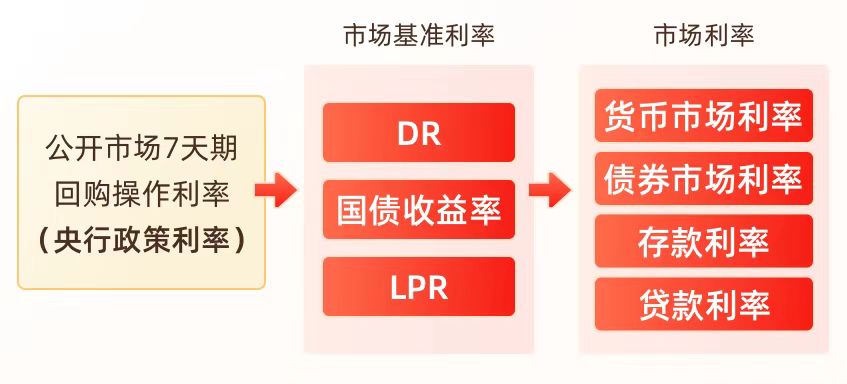
Group 1 - Major state-owned banks have announced a reduction in RMB deposit rates, affecting various products including demand deposits, time deposits, and notice deposits [1] - The market had anticipated this new round of deposit rate cuts, leading to a recovery in bond market sentiment, with interest rate products leading the gains [1] - The People's Bank of China (PBOC) has adjusted the 7-day reverse repurchase rate from 1.50% to 1.40%, which will influence various interest rates including deposit and loan rates [2] Group 2 - The reduction in deposit rates is expected to lower market funding costs, potentially leading to a decline in yields for credit products as well [4] - The cut in deposit rates opens up spread opportunities for credit products, as lower deposit rates make these assets more scarce and increase their allocation space [4] - Investors are advised to focus on medium to long-term interest rate bonds and high-grade credit bonds as potential investment opportunities following the rate cuts [4]

存款降息和LPR调降同步落地,楼市与消费市场将迎何变?
Di Yi Cai Jing· 2025-05-20 04:32
Core Viewpoint - The recent reduction in the Loan Prime Rate (LPR) marks the first decline in six months, signaling a shift in monetary policy aimed at reducing financing costs for businesses and households [1][2]. Group 1: LPR Adjustment - The one-year LPR is set at 3%, and the five-year LPR is at 3.5%, both down by 10 basis points from the previous month, indicating a significant policy shift [1]. - This adjustment is seen as a response to the need for lower corporate financing costs and to alleviate the financial burden on residents [1][4]. Group 2: Factors Influencing the Rate Change - The LPR decline is attributed to multiple factors, including a recent 0.1 percentage point reduction in the policy rate by the central bank, which directly influenced the LPR pricing mechanism [2]. - External uncertainties, such as the U.S.-China trade tensions, have prompted the need for increased counter-cyclical adjustments in macroeconomic policy [2]. Group 3: Impact on Banking Sector - The reduction in deposit rates by major banks, with cuts ranging from 5 to 25 basis points, is aimed at stabilizing net interest margins while allowing for the LPR decrease [1][3]. - The recent reserve requirement ratio cut, releasing approximately 1 trillion yuan in long-term liquidity, has further facilitated the conditions for the LPR adjustment [3]. Group 4: Economic Implications - The dual reduction in lending and deposit rates is expected to stimulate corporate investment and consumption, thereby injecting vitality into economic growth [4]. - For existing mortgage borrowers, the LPR decrease will reduce monthly payments, potentially enhancing consumer spending and supporting the real estate market [5]. Group 5: Future Outlook - Analysts predict that the central bank may continue to implement rate cuts in the coming months, given the current economic conditions and the need for sustained growth [6]. - The focus of monetary policy is shifting towards reducing overall financing costs in the economy while ensuring the stability of the banking sector [7].
重庆市市场利率定价自律机制召开工作会议
news flash· 2025-05-14 09:45
Core Viewpoint - The meeting of the Chongqing Market Interest Rate Pricing Self-Discipline Mechanism emphasizes the importance of understanding the relationship between interest rate marketization and self-discipline management, aiming to enhance the effectiveness of financial services to the real economy [1] Group 1 - The meeting highlighted the need to strengthen the execution of interest rate policies and ensure smooth transmission of policy rates [1] - It aims to maintain market competition order and prevent "involution-style" competition [1] - The implementation of recently introduced price-based policies is crucial for continuously benefiting the real economy [1] Group 2 - The meeting discussed the importance of practical work on the pilot program for explicit comprehensive financing costs of loans [1] - There is a collective effort to reduce comprehensive financing costs [1]