政策投降

Search documents
美银Hartnett:一切都达到“流动性峰值”,美联储将被迫“投降”,比特币率先嗅探救市信号
华尔街见闻· 2025-11-24 10:16
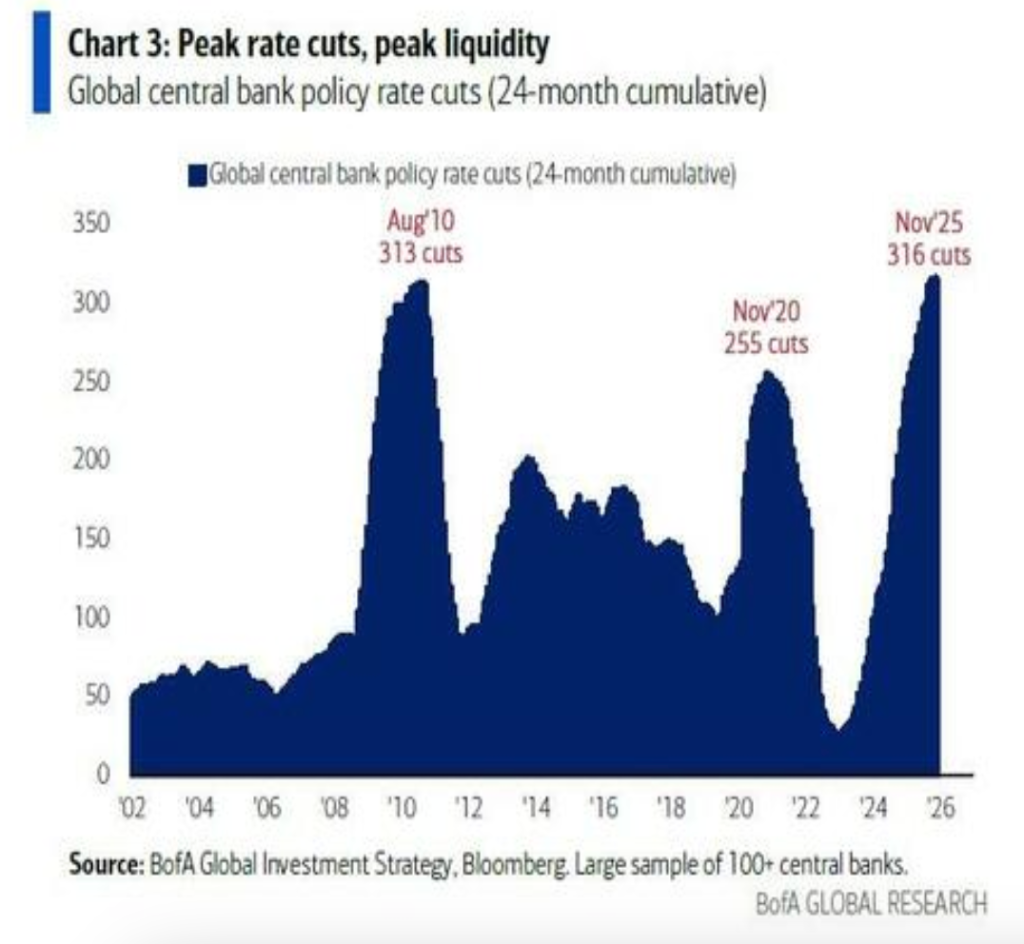
Group 1 - The article discusses the recent shift in market expectations regarding the Federal Reserve's monetary policy, highlighting that despite previous optimism for rate cuts in December, hawkish statements from the Fed have dampened these expectations [1][3][12] - Michael Hartnett from Bank of America indicates that various asset classes, including cryptocurrencies, credit, and private equity, are showing signs of "liquidity peak," suggesting a tightening of liquidity in the market [2][10] - The article notes that the recent hawkish rhetoric from the Fed has raised doubts about further easing policies in 2026, leading to significant declines in cryptocurrencies like Bitcoin and Ethereum, which reflect the impact of tightening liquidity on risk assets [3][4][13] Group 2 - Hartnett predicts that the current weakness in U.S. bank stocks is signaling a potential shift in Fed policy, similar to the signals seen in December 2018, where continued declines in liquidity-sensitive sectors may force the Fed to adopt a more accommodative stance [4][11] - The article reviews the cumulative 316 rate cuts by global central banks over the past two years, which have fueled speculative behavior in markets, including AI investments and cryptocurrency speculation [5][13] - Looking ahead to 2026, Hartnett anticipates that the Fed will be compelled to initiate a rate-cutting cycle, benefiting long-duration zero-coupon bonds, Bitcoin, and mid-cap stocks, which are sensitive to financing costs [6][11][15] Group 3 - The article highlights Japan's escalating debt crisis, with significant declines in 30-year government bonds and the yen, creating global liquidity concerns [8] - The combination of expansive fiscal policy and negative interest rates in Japan is exacerbating the depreciation of the yen and pressure on government bonds, leading to a challenging policy environment [8][9] - The crisis in Japan may have ripple effects globally, potentially impacting U.S. dollar liquidity and affecting U.S. equities, credit bonds, and cryptocurrency markets [9][10] Group 4 - Hartnett emphasizes that cryptocurrencies, particularly Bitcoin, will serve as a leading indicator for changes in central bank policy, given their sensitivity to liquidity shifts [16][17] - Despite recent declines in cryptocurrency prices, there is a strong expectation for a rebound once the Fed signals a policy shift, as retail investment in cryptocurrencies has surged significantly [17][18] - The limited allocation of institutional investors to cryptocurrencies contrasts with the substantial retail inflow, indicating a strong market anticipation for liquidity easing [17][18]


美银:2026年美联储恐重演“政策投降”,比特币等三类资产将最受益
Sou Hu Cai Jing· 2025-11-24 01:52
Core Viewpoint - The tightening liquidity is significantly impacting multiple asset classes, with the Federal Reserve facing ongoing pressure to lower interest rates, and the cryptocurrency market is expected to be the first to sense this policy shift [1] Group 1: Central Bank Actions - A total of 316 interest rate cuts have been made by global central banks this year, leading to a liquidity boom that has fueled AI investment enthusiasm, caused volatility in Japanese stocks, and spurred speculative behavior in cryptocurrencies [1] Group 2: Future Predictions - By 2026, the Federal Reserve may have to repeat a "policy pivot," necessitating a new cycle of interest rate cuts [1] - Long-term zero-coupon bonds, Bitcoin, and mid-cap stocks are predicted to benefit the most from this potential shift in monetary policy [1] Group 3: Asset Class Sensitivity - Long-term zero-coupon bonds will capitalize on interest rate declines due to their long-duration advantage [1] - Bitcoin is noted for being highly sensitive to liquidity changes and often leads the market in signaling recovery [1] - Mid-cap stocks are expected to show improved profitability and recovery potential following interest rate cuts, as they are sensitive to financing costs [1]
美银Hartnett:一切都达到“流动性峰值” 美联储将被迫“投降” 比特币率先嗅探救市信号
智通财经网· 2025-11-23 11:19
Group 1 - The market is experiencing significant divergence in expectations regarding the Federal Reserve's interest rate path for December, with previous optimism about rate cuts being tempered by recent hawkish statements from the Fed [1][4] - Michael Hartnett from Bank of America indicates that tightening liquidity is impacting multiple asset classes, suggesting that the cryptocurrency market will be the first to sense a shift in central bank policy [1][7] - Hartnett predicts that the current weakness in U.S. bank stocks is signaling a potential shift towards easing monetary policy, similar to signals observed in December 2018 [1][4] Group 2 - Hartnett forecasts that the Federal Reserve will likely initiate a rate-cutting cycle in 2026, benefiting long-duration zero-coupon bonds, Bitcoin, and mid-cap stocks [2] - Japan is facing a debt crisis, with a significant decline in 30-year government bonds and the yen nearing a 40-year low against the dollar, raising global liquidity concerns [3] - The combination of expansive fiscal policy and loose monetary policy in Japan is exacerbating the depreciation of the yen and pressure on government bonds [3] Group 3 - U.S. mid-cap stocks are showing a notable divergence in valuation and performance, indicating that the Fed's policy adjustments are lagging behind market demands [4] - The decline in bank and brokerage indices, which are sensitive to liquidity, serves as a leading indicator for potential policy shifts [4] - Hartnett emphasizes that the cryptocurrency market, particularly Bitcoin, will act as an early warning system for changes in central bank policy due to its sensitivity to liquidity changes [7][8]