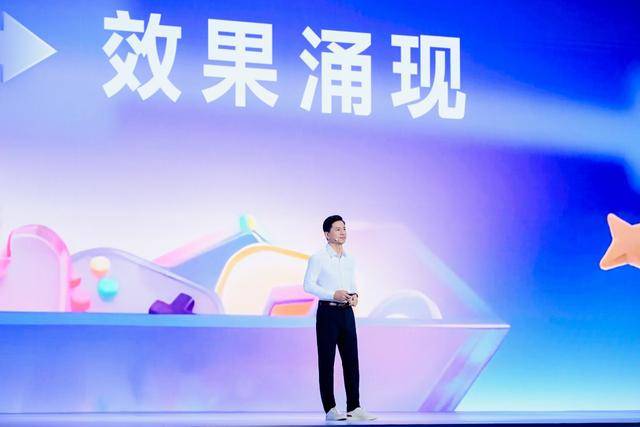
效果涌现

Search documents
这件事百度干了三年!李彦宏:让应用燎原
Sou Hu Cai Jing· 2025-11-15 11:08
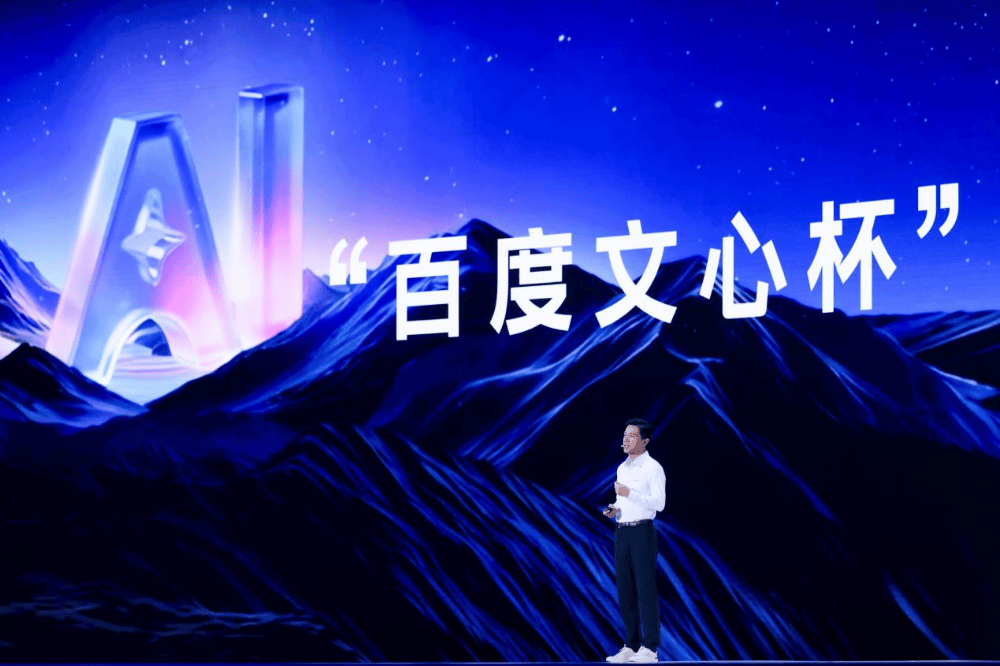
Core Insights - The article highlights the significant evolution in the AI startup landscape, emphasizing the increasing participation of experienced entrepreneurs and established companies in the AI wave [3][4] - There is a shift from AI being viewed as a demonstration tool to becoming a genuine force driving industrial progress, with a focus on practical results and productivity enhancement [4][5] Group 1: AI Capability Internalization - The "Artificial Intelligence +" national action plan is becoming a core engine for industrial upgrading and economic transformation, with various sectors actively embracing AI [5][6] - Baidu's founder, Li Yanhong, emphasizes that internalizing AI capabilities transforms AI from a cost into a productivity driver, marking a cognitive revolution for enterprises [5][6] - Baidu serves as a model for AI capability internalization, having integrated AI across its services, thus enabling other companies to leverage advanced technologies at lower costs [5][7] Group 2: AI Ecosystem Development - Baidu is recognized for its ambitious AI ecosystem, continuously upgrading its Wenxin model and providing extensive support to startups through platforms like Qianfan [8][9] - The Wenxin Cup has attracted 3,200 entrepreneurial teams globally, with Baidu offering substantial financial and technical support to winners, fostering a symbiotic relationship with AI entrepreneurs [9][10] - The evolution of the Wenxin Cup reflects the growing sophistication of AI applications, moving from text generation to more complex, multi-modal applications [9][10] Group 3: Emergence of Effectiveness - The concept of "effectiveness emergence" is becoming a shared goal within the AI industry, moving beyond mere demonstrations to practical solutions [10][11] - Baidu's initiatives, such as autonomous driving services, exemplify the transition from experimental phases to large-scale applications, achieving significant operational milestones [11][12] - Successful projects from the Wenxin Cup demonstrate the potential for AI to drive substantial returns on investment and enhance user experiences in various sectors [12][13]


“内化AI能力”,百度瞄准了什么
第一财经· 2025-11-13 12:09
Core Viewpoint - The AI industry is transitioning from a "pyramid" structure, where chips capture most value, to an "inverted pyramid" structure, where models and applications generate significantly more value, indicating a healthier and sustainable future for AI [1][3]. Group 1: AI Industry Insights - The internalization of AI capabilities transforms it from a cost to a productivity driver, emphasizing the need for AI to integrate organically with tasks [3]. - Baidu's AI products, including the Wenxin 5.0 model, Kunlun chip, and the autonomous driving service "LuoBo KuaPao," showcase the company's long-term investment in AI [5][9]. - The Wenxin 5.0 model utilizes a unified autoregressive architecture for multimodal modeling, achieving global leading performance in various benchmarks [5][7]. Group 2: Technological Developments - Baidu's Kunlun chip has been validated internally and is being used for most inference tasks, with plans for new chip releases in 2026 and 2027 [7][8]. - The autonomous driving service "LuoBo KuaPao" has achieved over 250,000 fully autonomous orders weekly and has completed over 240 million kilometers of autonomous driving [9]. - Baidu's search engine has been significantly transformed by AI, with 70% of search results now generated by AI, moving from text-based to rich media content [10]. Group 3: Global Expansion and Market Position - Baidu's AI capabilities are being applied globally, with digital human technology launched in Brazil and autonomous driving services expanding in the Middle East [18]. - The company's AI strategy has led to a 40% increase in stock price since 2025, reflecting a market shift from model competition to application effectiveness [17][18]. - Baidu's transformation is not merely an addition of AI but a deep integration of AI capabilities into its business processes, enhancing productivity and efficiency across various sectors [18].
李彦宏:当AI被真正内化,生产力革命才真正开始
Sou Hu Cai Jing· 2025-11-13 09:43
Core Insights - The core theme of the Baidu World Conference is the emergence of AI effects, focusing on practical applications rather than technical specifications [1][2][5] Group 1: AI Applications - Baidu's digital human technology, "Hui Bo Xing," has seen a 91% year-on-year increase in GMV during the Double 11 shopping festival, with a 119% increase in the number of live broadcasts [2] - The self-evolving AI agent "Fa Mo" simulates biological evolution to discover optimal solutions, outperforming top algorithm experts [4] - Baidu's search engine is transforming from a text-based application to a rich media AI application, with 625 companies already integrated into its AI API [4] - The "Miao Da" no-code development tool has generated over 400,000 applications and launched an overseas version called MeDo [4] - Baidu's autonomous driving service "Luo Bo Kua Pao" has surpassed 250,000 fully autonomous orders weekly, with total service instances exceeding 17 million [4] Group 2: AI Model Development - The newly released Wenxin 5.0 model has 2.4 trillion parameters and supports multi-modal understanding and generation, achieving performance on par with top international models [5][6] - The model utilizes a sparse mixture of experts architecture to enhance training efficiency while maintaining strong capabilities [6] Group 3: AI Infrastructure - Baidu introduced the next-generation Kunlun chip and Tianchi supernode products, with the Kunlun M100 and M300 chips set to launch in 2026 and 2027, respectively [7] - The Tianchi supernodes will significantly improve AI training efficiency and scalability, with the Tianchi 512 supernode capable of training trillion-parameter models [7][8] Group 4: Strategic Recommendations - Companies are encouraged to internalize AI capabilities to drive productivity and efficiency, transforming problems into AI-solvable challenges [8]
李彦宏宣告AI正跨越临界点:从“智能涌现”走向“效果涌现”
Zhong Guo Jing Ji Wang· 2025-11-13 07:27
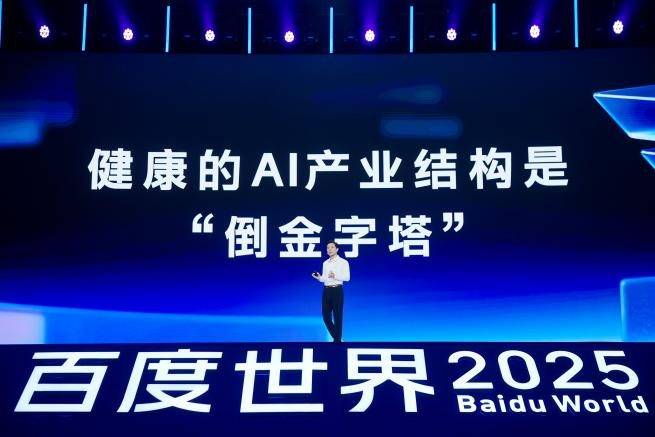
Core Insights - The 2025 Baidu World Conference emphasized the theme of "emergent effects" in AI, with Baidu's founder discussing the transition from "intelligent emergence" to "effect emergence" in AI technology [1] Industry Structure - The AI industry structure is shifting from an unhealthy "pyramid" model, where chips capture most value, to an "inverted pyramid" model, where models generate ten times the value of chips and AI applications create one hundred times the value, promoting a healthier industry ecosystem [1] AI Applications - AI's core value is realized when it is internalized within enterprises, enhancing decision-making, reducing costs, increasing profit margins, and shortening innovation cycles [2] - Baidu is actively restructuring its business using AI, with significant advancements showcased, including the release of the Wenxin 5.0 model, the new Kunlun chip, and various AI products [2] Key AI Products - The Wenxin 5.0 model is a new generation of native multimodal models that integrates language, image, video, and audio data from the training stage, achieving unified understanding and generation [3] - The new Kunlun chip includes two products, with the Tianchi 512 super node capable of training trillion-parameter models [3] - The "Luo Bo Kua Pao" service has surpassed 250,000 fully autonomous orders weekly and has completed over 240 million kilometers of autonomous driving globally [3] Digital Human Technology - Baidu's digital human technology, Huibo Xing, is being expanded globally, with significant adoption in Brazil and plans for further expansion into Southeast Asia and the US [4] - During the recent Double 11 shopping festival, 83% of live stream hosts utilized Huibo Xing, leading to a 119% increase in live streaming sessions and a 91% increase in GMV [4] Intelligent Agents - Baidu launched the self-evolving intelligent agent "Fa Mo," designed to find global optimal solutions by simulating evolutionary processes, which can outperform top algorithm experts [4] - The integration of AI into various industries is crucial for realizing its value and driving a productivity revolution, transforming "intelligent dividends" into "social dividends" [4]
AI迎“效果涌现时刻”,李彦宏:AI产业结构正转变为健康的“倒金字塔”
Sou Hu Cai Jing· 2025-11-13 05:23
Core Insights - The core message emphasizes the integration of AI as an inherent capability that transforms it from a cost into a productivity driver for both enterprises and individuals [1] Group 1: AI Integration and Business Transformation - Baidu is actively restructuring its business through AI, with its search engine undergoing significant AI-driven transformations, focusing on rich media content [1][9] - The AI industry structure is shifting from an unhealthy "pyramid" to a "reverse pyramid," where models generate ten times the value of chips, and AI applications can create a hundred times that value [1][3] Group 2: AI Product Innovations - Baidu introduced the next-generation "real-time interactive digital human" and upgraded its "秒哒" to version 2.0, showcasing advancements in digital human technology and self-evolving intelligent agents [3][11] - The latest Wenxin model 5.0 is a unified native multimodal model, excelling in multimodal understanding, creative writing, intelligent planning, and instruction adherence, placing it at a global leading level [7][8] Group 3: Performance Metrics and Market Expansion - The "萝卜快跑" service has achieved over 17 million global travel service instances, becoming the world's leading service in its category, with a weekly order count exceeding 250,000 [9][5] - Baidu's search results now feature a 70% coverage of rich media, indicating a significant shift from text-based results to a more visual and interactive format [9][10] Group 4: Future Outlook and Strategic Goals - Baidu plans to continue investing in cutting-edge models to push the limits of intelligence, with new products like the next-generation Kunlun chip and Tianchi supernodes set to launch next year [8][10] - The company aims to internalize AI as a native capability across various industries, fostering a productivity revolution that translates "intelligent dividends" into "social dividends" [15]