数字中国战略

Search documents
系统推进城市全域数字化转型
Xin Hua Ri Bao· 2025-12-15 21:38
Core Viewpoint - The construction of smart cities is a crucial part of advancing the digital China strategy, as highlighted by the recent release of the "Action Plan for Deepening Smart City Development and Promoting Comprehensive Digital Transformation" [1] Group 1: Smart City Development in Jiangsu - Jiangsu aims to lead in smart city development by implementing national strategies and utilizing digital means to enhance urban governance [2] - The province has established a "five-in-one" framework for comprehensive digital transformation, covering key areas such as social management, public services, and ecological protection [2] - A government cloud system has been formed, supporting over 7,900 non-confidential government systems and enabling cross-level collaboration for 30 services [2] Group 2: Challenges in Smart City Construction - The fragmentation of platform construction limits governance efficiency, with multiple independent applications leading to an "APP wall" phenomenon [3] - There are shortcomings in the public data sharing system, including non-standardized data and inadequate circulation mechanisms [3] - Certain groups, such as the elderly and disabled, face "digital exclusion," indicating a disconnect between governance logic and technology application [3] Group 3: Strategic Recommendations for Smart City Governance - Emphasizing top-level design is essential for guiding urban governance direction and breaking down "data silos" [4] - Establishing a cross-level coordination mechanism is necessary to ensure smooth flow of policy directives, data resources, and financial support [4] - Implementing innovative mechanisms for smart city governance can stimulate internal motivation for digital governance and enhance performance evaluation systems [4] Group 4: Data Integration and Urban Responsiveness - Data is identified as the "blood" of smart city development, crucial for driving precise governance and efficient services [5] - A unified, secure, and efficient data resource system is needed, focusing on application scenarios like traffic management and public health [5] - Clear data security responsibilities and a comprehensive data governance mechanism are essential for protecting public network security [5] Group 5: Multi-Stakeholder Collaboration - A collaborative governance network involving government, market, and society is vital for enhancing smart city services [6] - Creating an inclusive service system that addresses the needs of marginalized groups is a priority [6] - Establishing a feedback mechanism for public participation can improve service delivery and governance effectiveness [6] Group 6: Technological Support for Smart Cities - Digital technology serves as the "nerve center" for smart city governance, with the integration of platforms directly affecting data flow and decision-making accuracy [7] - Building a unified digital foundation and enhancing the integration of various technologies are necessary for effective governance [7] - Developing an urban AI platform and a comprehensive IoT sensing system can facilitate real-time monitoring and intelligent analysis of urban operations [7]
加快推进数字长沙建设专题研讨班开班
Chang Sha Wan Bao· 2025-11-25 04:02
Core Insights - The seminar on accelerating the construction of Digital Changsha was launched on November 24, focusing on the digital economy theme and aiming to build a strong consensus for advancing Digital Changsha [1] Group 1: Seminar Details - The training lasts for five days and includes a systematic review of the evolution and core principles of the Digital China strategy [1] - Wang Jin, Deputy Director of the Provincial Data Bureau, provided insights into Hunan Province's innovative practices in smart governance and the digital economy [1] Group 2: Objectives and Expectations - Vice Mayor Qian Lixia emphasized the importance of adapting to the rapid updates in digital knowledge and encouraged participants to become experts in digital development [1] - Participants are urged to break conventional thinking and explore data sharing, scenario innovation, and management reform [1] - The goal is to translate learning outcomes into actionable strategies to ensure the effective implementation of tasks related to Digital Changsha [1]
数字政通:拟募资10.5亿元加码主业 前次募资账户结余超5100万元
2 1 Shi Ji Jing Ji Bao Dao· 2025-10-16 02:36
Core Viewpoint - Digital政通 (300075.SZ) plans to raise up to 105 million yuan through a private placement of A-shares to enhance its main business layout and supplement working capital [1] Fundraising Purpose - The raised funds will be allocated to five major projects: 1. Construction of urban lifeline operation management service platform 2. Construction of urban renewal management service platform 3. Urban governance human and large model 3.0 and intelligent application in the industry 4. Construction of a new generation urban-level low-altitude flight operation service system 5. Construction of urban intelligent data operation service system - Additionally, 20 million yuan will be used to supplement working capital [1] Strategic Alignment - The company aims to seize opportunities from the Digital China strategy and the development of the low-altitude economy to enhance its technological strength and market competitiveness [1] Previous Fund Usage - As of December 31, 2024, the balance of the previous non-public offering project special account was 51,122,647.32 yuan, including interest [1] - The funds originated from a non-public offering completed in July 2020, with a net fundraising amount of 585,858,781.70 yuan, and the remaining balance will be permanently used to supplement working capital for daily operations [1]

国家市场监督管理总局:利用数字技术赋能质量认证关键环节
Zheng Quan Ri Bao Wang· 2025-09-12 13:16
Group 1 - The core viewpoint of the news is the release of the "Guiding Opinions on Accelerating the Digital Development of Quality Certification" by the State Administration for Market Regulation and the National Development and Reform Commission, aiming to enhance the digital transformation of quality certification by 2030 [1][2] - The guiding opinions outline a goal to gradually improve the top-level institutional design for digital quality certification, establish digital evaluation rules, and explore machine-readable standards in certification [1] - The document emphasizes the importance of digital technology in empowering key aspects of quality certification and encourages certification bodies to integrate digital technology innovations into their processes [2] Group 2 - The guiding opinions identify five key areas for action, including promoting the digital development of certification institutions, supporting digital transformation in key industries, enhancing quality certification for the digital industry, strengthening smart regulation, and building a favorable ecosystem for digital quality certification [1][2] - The document highlights the challenges faced by certification institutions, such as outdated data acquisition methods and insufficient intelligent evaluation capabilities, particularly in emerging sectors like smart manufacturing and digital healthcare [2][3] - The market regulation authority aims to transform traditional quality certification methods through the use of new technologies like blockchain and artificial intelligence, shifting from manual judgment to data-driven approaches and from static certification to dynamic quality services [3]
市场监管总局《关于加快推进质量认证数字化发展的指导意见》专题新闻发布会实录
Zhong Guo Zhi Liang Xin Wen Wang· 2025-09-12 08:18
Core Viewpoint - The State Administration for Market Regulation (SAMR) has issued the "Guiding Opinions on Accelerating the Digital Development of Quality Certification," aiming to enhance the digital transformation of the quality certification industry and support the broader digital economy [4][5][10]. Summary by Sections Overall Requirements - The guiding opinions position digital quality certification as a crucial tool for empowering industrial digital transformation, unlocking the value of technology and data, and supporting high-quality economic and social development [5][6]. Specific Goals - Two phases of specific goals are set: by 2030, to improve the digital certification system and establish exemplary cases; by 2035, to fully develop a clear and innovative digital quality certification system adaptable to various industries [5][6]. Key Tasks - Four main tasks are outlined: 1. Accelerate the development of the quality certification industry and enhance the application of digital technologies [6]. 2. Empower industry digital transformation by advancing certification systems in smart manufacturing and other sectors [6]. 3. Strengthen the foundation for digital economic innovation by enhancing certification for digital infrastructure [6]. 4. Promote the application of digital resources and establish a quality certification big data system [6]. Implementation and Support - SAMR will collaborate with relevant departments to promote the implementation of the guiding opinions and ensure that measures are effectively executed [7][36]. Background and Considerations - The guiding opinions are a response to the increasing demand for efficient and intelligent quality certification services in emerging sectors like smart manufacturing and digital healthcare [10][12]. Focus Areas - The guiding opinions emphasize three focus areas for empowering industrial digital transformation: supporting new industrialization, promoting smart agriculture, and enhancing service industry transformation [12][13]. Technological Role - Technology is identified as a key driver for the digital transformation of quality certification, with a focus on improving efficiency, enhancing service capabilities, and strengthening the credibility of certification results [21][22]. Talent Development - SAMR plans to establish a professional team to enhance the digital capabilities of certification institutions and personnel, focusing on training and collaboration with educational institutions [29][30][31]. Regional Implementation - Zhejiang Province has made significant progress in digital economy development, with a focus on quality certification to support key industries and enhance data security [25][34]. Systematic Support Measures - The guiding opinions propose systematic support measures, including policy support, standardization efforts, and promoting international mutual recognition of certification [36][37].

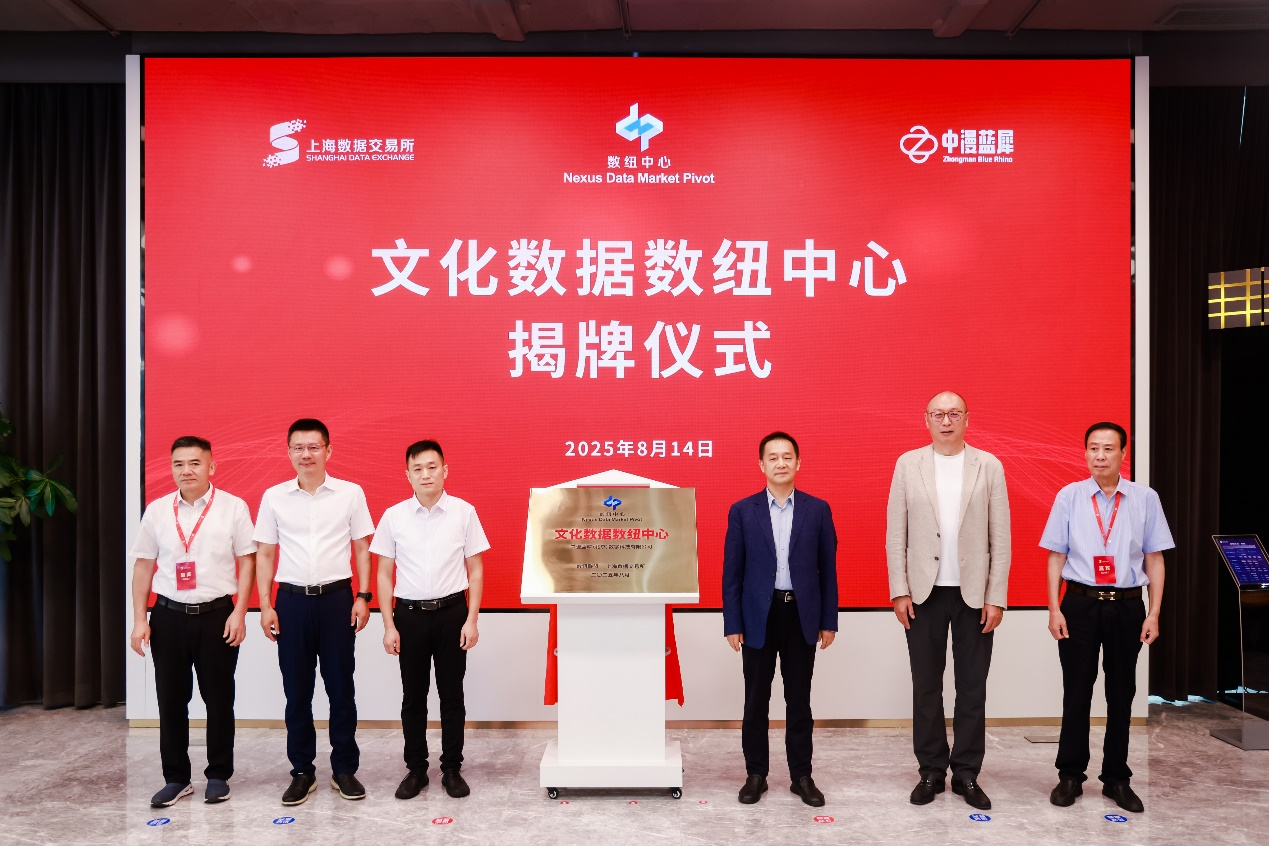
文化数据数纽中心在沪揭牌 上海数交所与中漫蓝犀共推产业生态升级
Zheng Quan Ri Bao Wang· 2025-08-14 11:06
Core Insights - The Shanghai Data Exchange and Zhongman Lansi (Beijing) Digital Technology Co., Ltd. have jointly established the Cultural Data Link Center to promote the marketization and value realization of cultural data, aligning with the Digital China strategy [1][2] Group 1: Objectives and Functions - The Cultural Data Link Center aims to empower the entire cultural industry chain by creating a cultural data asset registration platform, establishing a data certification system, and developing industry standards [2] - The center will leverage the policy advantages of the Shanghai Free Trade Zone to create a cultural data circulation corridor targeting RCEP member countries, focusing on high-value cultural assets such as tourist flow heat maps and event IP derivative data [2][3] Group 2: Implementation and Collaboration - The center will integrate with physical cultural scenarios, providing decision support for smart tourism operations through real-time visitor data, and facilitating the digital exhibition of museums and theaters to activate the potential value of collections [2] - The collaboration will also include the establishment of a dynamic database for intangible cultural heritage skills and the incorporation of event impact metrics into trading targets [2][3] Group 3: Strategic Development - To build a comprehensive ecosystem for data generation, rights confirmation, trading, and application, the Shanghai Data Exchange and Zhongman Lansi will focus on standardization, industry ecosystem cultivation, and achieving scale breakthroughs [3] - Plans include incubating over a hundred specialized cultural data brokers across various sectors such as cultural tourism, cultural heritage, and cultural creation [3]
工商银行大理分行斩获“全国文明单位”殊荣
Zhong Guo Jin Rong Xin Xi Wang· 2025-07-01 11:15
Core Viewpoint - The Dali branch of the Industrial and Commercial Bank of China (ICBC) has been recognized as a "National Civilized Unit," reflecting its commitment to serving the local community and promoting cultural heritage through financial services [1][2]. Group 1: Civilized Creation and Social Responsibility - The Dali branch integrates the cultivation and practice of socialist core values into its daily operations, fostering a positive atmosphere of virtue and excellence [2]. - The branch has received multiple accolades, including the National Financial Labor Award and recognition as a Model Workers' Home, showcasing its commitment to employee welfare and excellence [2]. - A number of exemplary figures have emerged from the branch, enhancing team cohesion and driving high-quality development [2]. Group 2: Financial Contributions and Innovations - The Dali branch has established a "Five Major Articles" work mechanism to support local economic initiatives, focusing on key sectors such as energy, transportation, and manufacturing [3]. - The branch ranks second in loan growth among peers, with a significant increase in loans for strategic emerging industries and green finance initiatives [3]. - Since 2009, the branch has invested a total of 1.474 billion yuan in environmental protection efforts, particularly for the Erhai Lake [3]. Group 3: Community and Elderly Services - The Dali branch prioritizes community service, enhancing financial services for the elderly and providing over 1,000 personalized services [4]. - The branch has developed platforms to assist migrant workers, ensuring they have access to essential banking services [4]. - Innovative financial products for youth, such as the "Mengwa Card" and "Baby Growth Card," have been introduced to support financial literacy among children [4]. Group 4: Philanthropy and Environmental Initiatives - The Dali branch has engaged in significant philanthropic efforts, donating a total of 1.22 million yuan to support poverty alleviation and rural revitalization [5]. - Employees have participated in over 100 volunteer activities, contributing approximately 300 hours to community service [5]. - The branch actively promotes environmental protection through various initiatives, including the "Three Cleanups" campaign in the Erhai Lake basin [5].

打造建筑业全链路数字化管理系统,「一智科技」力争构建行业新格局丨AI成都
3 6 Ke· 2025-05-09 08:32
Core Viewpoint - The emergence of the "Anxin Zhu" digital construction management system by Yizhi Technology is transforming the construction industry, addressing long-standing issues and providing a comprehensive solution for various stakeholders including contractors, clients, supervisors, subcontractors, and workers [1][3][5]. Group 1: Company Overview - Yizhi Technology was founded in 2019 and has invested over 500 million yuan to build a team of over 600 people, focusing on the integration of construction and the internet [5]. - The company has obtained more than 30 national invention patents and is actively involved in the development of industry standards [5][6]. Group 2: Industry Challenges - The construction industry has been plagued by issues such as informal agreements, lack of accountability, and poor communication, leading to disputes and payment delays [3][7]. - The founder, Liu Yonggang, emphasizes the need for solutions to these persistent problems to improve the working conditions for construction workers [3][19]. Group 3: Solution Implementation - The "Anxin Zhu" system replaces informal verbal agreements with electronic task orders, ensuring that each task is documented with project details, timelines, and payment information [7][9]. - The system establishes a closed-loop evidence chain for labor management, allowing for traceability of responsibilities and quality assurance [9][13]. Group 4: Impact on Workers - Workers can now appeal unfair evaluations and receive timely payments based on confirmed task orders, enhancing their rights and job security [11][17]. - The system allows for flexible task assignments, enabling workers to take on multiple jobs based on their skills and availability [9][11]. Group 5: Benefits for Clients and Contractors - The "Anxin Zhu" system addresses quality, safety, and progress management challenges faced by clients and contractors, providing a clear and controllable workflow [13][15]. - Real-time monitoring of project data helps prevent payment delays and ensures compliance with safety regulations [17]. Group 6: Future Aspirations - Yizhi Technology aims to extend its system to the home decoration industry, addressing similar challenges in that sector [21]. - The company envisions a transformation of construction workers from "migrant workers" to "industrial workers," enhancing their dignity and recognition in the workforce [19][21].