数字健康生态

Search documents
14.2亿美元!呼吸巨头公布最新财报
思宇MedTech· 2026-02-04 03:28
Core Viewpoint - ResMed's financial performance exceeded expectations for Q2 of FY2026, but the stock price experienced slight fluctuations post-announcement due to ongoing market concerns regarding medium to long-term competitive variables [2]. Revenue Growth Breakdown - The growth in the quarter was driven by multiple business lines rather than a single blockbuster product: - Sleep devices serve as the core entry point for new patients - Masks and accessories provide high margins and stable repeat purchases [3]. Financial Performance - Quarterly revenue reached $1.42 billion, representing an 11% year-over-year increase - GAAP net profit was $393 million, up 13.9% year-over-year - GAAP EPS was $2.68, while adjusted EPS was $2.81, significantly above market expectations [4]. Product and Service Insights - The CPAP and bi-level ventilators continue to see increased volume, with the AirSense series being the primary revenue source [5]. - Digital health services are positioned as tools for patient engagement and adherence [6]. Regulatory and Product Developments - ResMed received FDA approval for the Smart Comfort personalized treatment solution, which is not described as a "disruptive innovation" but rather as a complementary solution to enhance patient comfort and long-term adherence [7]. - The growth in masks and consumables is supported by the increasing installed base of devices, which is crucial for the company's long-term profitability [8]. Company Background - ResMed, headquartered in San Diego, is a key player in the sleep apnea treatment sector, focusing on outpatient long-term management scenarios, which are closely tied to patient adherence [10]. Market Dynamics - Demand for sleep apnea treatment remains characterized by low diagnosis rates and a high potential patient population - Supply-side challenges are anticipated in the coming years, although these factors were not reflected in the current quarter's financial report or included in the company's formal guidance [11]. Industry Observations - The significance of ResMed's quarterly results lies not in whether they beat expectations, but in the broader implications for the industry [12]. - Other competitors are returning to the market, and there are potential impacts from new drug treatment pathways - The sustainability of ResMed's device, consumables, and digital services combination in the face of increasing competition remains a key question [13].



从“功能刚需”向“科学悦己”升级,2026男装内衣私域增长密码解锁
Yang Zi Wan Bao Wang· 2025-12-18 03:34
Core Insights - The innerwear industry is experiencing a shift in consumer perception from "functional necessity" to "scientific self-appreciation," with 58% of consumers focusing on emotional value and scientific selection [1][3] - The DreamX Technology men's innerwear conference in Shanghai highlighted structural changes in the industry, emphasizing the importance of private domain operations and strategies for sustainable growth [1][4] Industry Trends - Three significant trends in the innerwear market: 1. Consumer mindset is evolving towards valuing brand and quality assurance, with emotional value and scientific selection becoming core demands [3] 2. Product technology is advancing towards a digital health ecosystem, with tech-enabled products rapidly gaining popularity [3] 3. Consumption scenarios are expanding from physiological needs to psychological aspects, with high-energy fitness, outdoor activities, and daily commuting driving demand [3] - In the men's apparel category, a structural transformation is evident: 1. Sports leisure has replaced business formal wear as the main growth driver, with casual and functional blends dominating the market [3] 2. Consumer demand is shifting from "looking good" to "smart dressing," with over 60% of products utilizing functional fabrics [3] 3. Style segmentation is growing, with trends like Guochao and City Boy seeing a 156% increase in store growth [3] Company Strategies - DreamX Technology has identified four core development directions for the upcoming year: 1. Focus on "quality products" by upgrading the supply chain and differentiating product strategies [2] 2. Enhance "content" by launching new features and improving private domain live-streaming tools [2] 3. Deepen "AI empowerment" to optimize operational efficiency across the entire supply chain [2] 4. Expand the open ecosystem by connecting diverse online and offline partners [2] - The company aims to leverage its B2R model and AI technology to provide comprehensive support for merchants, enhancing user engagement and driving sustainable growth [2] Performance Highlights - DreamX Technology has achieved impressive growth despite market changes, with high user loyalty and low return rates since 2025 [4] - Key product categories like down jackets, outdoor jackets, loungewear, and underwear have emerged as new growth engines, with some brands experiencing growth rates exceeding 200% [4] - GXG, through exclusive collaboration with DreamX, achieved sales exceeding 10 million yuan, setting a benchmark for private domain cooperation [4] Practical Insights - Brand representatives from GXG, MEINS, and others shared successful growth strategies at the conference, emphasizing the importance of private domain operations [5] - The company is committed to empowering partners to achieve performance growth while driving transformation in the men's innerwear industry [5]
水银体温计血压计禁产背后:谁能代替
Bei Jing Shang Bao· 2025-12-09 13:12
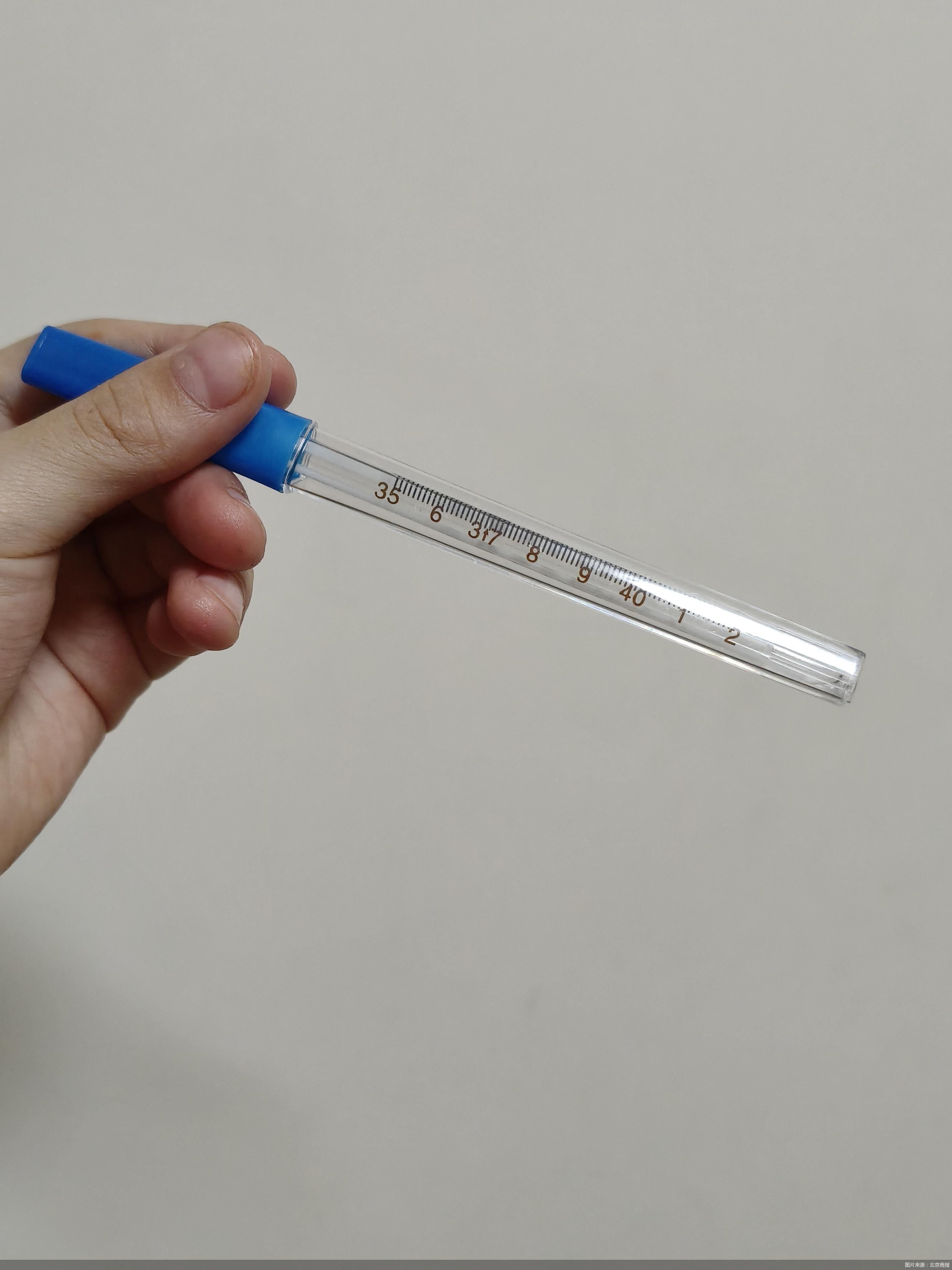
Core Viewpoint - The production of mercury thermometers and sphygmomanometers will be banned starting January 1, 2024, as part of China's commitment to the Minamata Convention on Mercury, leading to a transition towards electronic medical devices and a shift in the healthcare industry towards high-value digital health ecosystems [1][7]. Group 1: Market Trends - The market for smart thermometers in China reached 1.55 billion yuan in 2021, with a year-on-year growth of 23%, and is projected to grow to 2.13 billion yuan by the end of 2023, reflecting a compound annual growth rate of 13.8% [5]. - Over 80% of young consumers prefer electronic thermometers and sphygmomanometers, while more than half of middle-aged and elderly consumers also choose electronic devices due to their convenience [5]. Group 2: Consumer Perspectives - Many consumers express a strong trust in traditional mercury measuring devices, with concerns about the accuracy of electronic alternatives, particularly among families with young children [4]. - Some consumers have found electronic devices to be more user-friendly and practical compared to mercury devices, indicating a shift in consumer preferences [4]. Group 3: Technological Transition - The ban on mercury devices is expected to drive the medical device industry in China from low-cost glass manufacturing to high-value digital healthcare solutions, integrating sensor technology, microelectronics, and software development [7][8]. - Electronic devices have achieved clinically acceptable accuracy through advancements in sensor technology and algorithms, although there are still scenarios where mercury devices may outperform them [7][8]. Group 4: Future Innovations - The market is seeing the emergence of innovative alternatives such as infrared thermometers, wearable continuous temperature monitoring patches, and integrated devices that measure multiple health parameters [8]. - The integration of smart connectivity in modern devices allows for continuous health monitoring and personalized health recommendations, marking a significant shift from passive measurement to active health management [8].
蔡司出手!8000多万投资数字眼科公司
思宇MedTech· 2025-10-05 16:01
Core Insights - The article discusses the strategic investment by Zeiss Vision Care in Ocumeda, a Swiss digital ophthalmology company, highlighting the growing importance of tele-ophthalmology in addressing the increasing demand for eye care services due to aging populations and rising eye diseases [3][5]. Group 1: Investment and Valuation - Zeiss Vision Care acquired a 10% stake in Ocumeda for €10 million (approximately $11.75 million), valuing the company at around €100 million (approximately $117.5 million) [3]. - This investment is part of Zeiss's broader strategy to enhance its digital health ecosystem [11]. Group 2: Tele-Ophthalmology Services - Ocumeda focuses on remote eye care services, connecting optometrists, opticians, and ophthalmologists through a digital platform, allowing patients to undergo initial screenings and remote consultations locally [6]. - The platform has approximately 60% of users who had never previously received an eye examination, indicating the potential of digital channels in promoting eye health [7]. Group 3: Technology and Operational Model - The Ocumeda platform is based on cloud architecture, integrating data from various stores and devices, enabling remote image reading and multi-point collaboration among doctors [8]. - The model addresses the shortage of ophthalmologists, with fewer than 10 ophthalmologists per 100,000 people in many countries, and the long wait times for initial diagnoses in remote areas [9]. Group 4: Strategic Implications - The partnership between Zeiss and Fielmann Group aims to create a leading open remote ophthalmology platform in Europe, enhancing accessibility and innovation in eye care services [11]. - The evolution of tele-ophthalmology from an emergency response during the pandemic to a structured solution is highlighted, with Ocumeda exemplifying a platform that redistributes eye health services [11]. Group 5: Market Insights and Future Directions - Traditional optical giants like Zeiss and Hoya are investing in digital startups to extend service chains and build a closed loop of "hardware + algorithms + services," indicating a shift in competition from equipment to data and platform levels [12]. - The Ocumeda model offers valuable insights for the Chinese market, suggesting potential for similar developments in remote eye care services [13].