
电子血压计

Search documents
30倍妖股,押中沐曦、Kimi、智元
投中网· 2026-03-14 07:07
Core Viewpoint - The article discusses the rapid growth and strategic transformation of Kimi Medical, highlighting its significant capital investments and market positioning in the healthcare and technology sectors, particularly in AI and medical devices [3][21]. Group 1: Company Background and Growth - Kimi Medical, originally focused on home healthcare electronic products, has evolved into a major player in the medical industry, leveraging its expertise in electronic blood pressure monitors and expanding into various health-related technologies [6][8]. - The company experienced a dramatic increase in revenue during the COVID-19 pandemic, securing large contracts worth approximately $1.275 billion (about 8.1 billion RMB) from the U.S. government, leading to a net profit of 14.312 billion RMB in Q1 2022, a 375-fold increase year-on-year [8][10]. Group 2: Capital Investment Strategy - Following the pandemic, Kimi Medical began diversifying its investment strategy, initially acting as a limited partner (LP) in venture capital funds, investing a total of 340 million RMB across five VC institutions [11]. - The company has since expanded its investment approach to include direct investments and the establishment of new investment platforms, focusing on sectors such as artificial intelligence, information technology, and biomanufacturing [12][21]. Group 3: Market Performance and Future Outlook - Kimi Medical's investment activities have become a core pillar of its growth, with trading financial assets exceeding 10.3 billion RMB, a 49.18% increase from the beginning of the year, and investment-related income accounting for 137.7% of its net profit in the first three quarters [14][16]. - The company is projected to achieve a net profit of between 2.02 billion and 2.35 billion RMB in 2025, reflecting a year-on-year growth of 21.05% to 40.83%, primarily driven by its asset management performance [16][21].

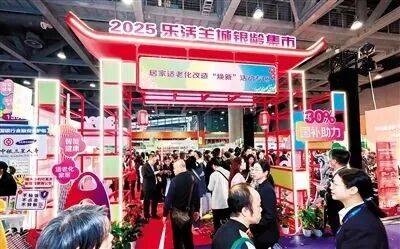
广州银龄集市:激活银发消费新生态
Sou Hu Cai Jing· 2026-02-10 13:03
Core Insights - The article discusses how Guangzhou is transforming policy benefits into accessible happiness experiences for the elderly, aiming to stimulate the trillion-level silver economy market through the "Lohas Yangcheng" silver market initiative [1] Group 1: Silver Market Initiative - In 2025, Guangzhou plans to hold 180 "Lohas Yangcheng" silver markets under the guidance of local civil affairs and aging offices, utilizing a "six-in-one" innovative model that integrates various services [1] - The silver market aims to provide a one-stop consumption experience for the elderly, combining supermarkets, hospitals, banks, and community events [1] Group 2: Subsidy Policy Integration - Guangzhou is the first city in China to deeply integrate national subsidies for home adaptation with offline consumption, offering a 30% discount on eligible products, with a maximum subsidy of 10,000 yuan per person [4] - The range of subsidized products has expanded to 54 categories across seven major types, addressing diverse needs from home modifications to health monitoring [4] Group 3: Sales Performance and Impact - The total sales revenue from the silver market reached 43.139 million yuan, with over 35 million yuan attributed to subsidized products [5] - During the ninth Guangzhou International Elderly Health Industry Expo, the silver market's home adaptation section achieved sales exceeding 12 million yuan in three days, with a conversion rate of 35% [5] Group 4: Consumer Behavior Trends - Data from last year's silver market indicates a 200% year-on-year increase in users purchasing elderly-friendly products, reflecting a shift from basic needs to quality improvements [6] - The subsidy policy has encouraged family collaborative consumption, with over half of the orders for elderly products made by children for their parents [6] Group 5: Comprehensive Service Model - The silver market has created a comprehensive service model that includes medical consultations, financial education, and community performances, effectively addressing the diverse needs of the elderly [8] - Each district in Guangzhou has tailored its silver market activities to local characteristics, enhancing the overall experience for the elderly [8] Group 6: Future Developments - The silver market plans to evolve into a 3.0 version focusing on fixed, normalized, decentralized, and digital services, including a mobile service station to reach rural areas [15][16] - The initiative aims to create a vibrant new culture of aging, promoting positive perceptions of elderly consumption and engagement in community activities [18]
研判2026!中国耳温枪行业发展历程、产业链、市场规模、重点品牌及前景展望:公众健康意识提升与技术进步,耳温枪行业迎来新发展阶段[图]
Chan Ye Xin Xi Wang· 2026-02-07 01:18
Industry Overview - The ear thermometer is a non-contact temperature measurement tool that offers advantages such as accuracy, speed, convenience, safety, and resistance to external environmental interference, making it suitable for various applications in healthcare, industry, schools, homes, and public places [1][12] - The market demand for ear thermometers has been steadily increasing, particularly influenced by heightened public health awareness and advancements in medical detection technology [1][12] - In 2020, the domestic ear thermometer market size exceeded 600 million yuan, with a year-on-year growth of 17.31%, highlighting its critical role in public health emergency systems [1][12] - The market size for the ear thermometer industry in China is projected to reach 830 million yuan in 2024, with a year-on-year growth of 6.41%, and approximately 900 million yuan in 2025 [1][12] Industry Development History - The ear thermometer industry traces back to the 1980s, gaining momentum in the 1990s due to rising household demand for medical devices [7] - The 21st century has seen unprecedented growth in the ear thermometer industry, driven by continuous innovation in medical technology and increased public health awareness [7] Industry Chain - The ear thermometer industry chain consists of upstream raw materials and components, including metals, plastics, infrared sensors, chips, displays, batteries, and microcontrollers [8] - The midstream involves the production and manufacturing of ear thermometers, while the downstream encompasses sales channels such as medical device specialty stores, large chain pharmacies, e-commerce platforms, and supermarkets [8] Market Competition - The competition in the ear thermometer industry features both domestic and international brands, with foreign companies holding significant market positions due to their established technology and brand advantages [13] - Notable domestic companies include Yuyue Medical, Jiuan Medical, and Kefu Medical, which are rapidly developing through product innovation and channel expansion [13] Key Companies - Yuyue Medical Equipment Co., Ltd. focuses on providing home medical devices and clinical products, with a significant portion of its revenue coming from home health monitoring solutions [13] - Kefu Medical Technology Co., Ltd. specializes in medical device research, production, and sales, with a diverse product line covering health monitoring and rehabilitation [14] Future Trends - The ear thermometer is expected to evolve into a personal health management terminal that integrates health data monitoring and intelligent analysis, enhancing its role in chronic disease management and early epidemic screening [15] - Continuous improvements in measurement accuracy will focus on overcoming complexities in deep ear canal measurements through multi-sensor fusion technology and adaptive calibration algorithms [16] - The industry is anticipated to shift towards data and service-oriented ecological integration, establishing new standards for measurement accuracy and data privacy, which will enhance the reliability of temperature data for remote healthcare and public health monitoring [18]


智能穿戴设备的“诊断”可信吗
Jing Ji Ri Bao· 2026-02-01 22:10
Group 1 - The core viewpoint of the articles emphasizes the limitations of wearable devices and home medical equipment in accurately diagnosing health conditions, highlighting that these devices should be used for self-monitoring rather than as substitutes for professional medical assessments [1][2]. Group 2 - Wearable devices like smart bands and watches are increasingly popular for health monitoring, but their data accuracy is influenced by factors such as wearing method and environmental interference, making them unreliable for medical diagnosis [1]. - Users are advised not to self-diagnose conditions like sleep disorders based solely on device data, as physiological health indicators naturally fluctuate and should not cause undue anxiety [1]. - Home medical devices, including electronic blood pressure monitors and oxygen meters, require proper usage and adherence to medical guidance to ensure accurate results and avoid mismanagement of health conditions [2]. - Specific instructions for using home medical devices include selecting the correct cuff size for blood pressure monitors and ensuring that conditions like nail polish do not affect the accuracy of pulse oximeters [2].
汉王科技宣布启动“商业合伙人”计划,核心重点项目全面向市场开放
Xin Lang Cai Jing· 2026-01-30 08:57
Core Insights - Hanwang Technology officially launched its "Business Partner" program to open its core projects to the market, seeking strategic partners with commercialization capabilities and application scenarios [1][4] - The release of the "AI New Scene Industry White Paper" aims to provide a reference for AI innovation to transition from the laboratory to large-scale applications, emphasizing the need for collaboration in commercial paradigms [1][4] - Hanwang maintains high research and development efficiency and commercialization rates, ensuring that innovation does not stagnate, driven by insights into technology trends and a strategy of incremental product development [1][4] Project Highlights - The forum showcased three key projects: the bionic flapping-wing robot bird, the Kersh audio medical electronic blood pressure monitor, and the dual-mode cholesteric liquid crystal display aimed at new display markets [2][5] - Partners are particularly sought who can bring funding, resources, and application scenarios to accelerate projects in mass production, channel development, compliance certification, and operational delivery [2][5]


呼吸机、血压计、血糖仪…这些“健康帮手”,你用对了吗?
Xin Lang Cai Jing· 2026-01-28 12:47
Core Viewpoint - The increasing popularity of home medical devices has led to common misconceptions about their usage, emphasizing the need for proper guidance and professional evaluation to ensure health benefits [1][6]. Group 1: Treatment Devices - Treatment medical devices should be evaluated by professional medical institutions before purchase and use [2][7]. - For example, home ventilators used for sleep apnea require prior hospital assessments, including sleep monitoring and cardiopulmonary function evaluations, to determine necessity [2][7]. - Parameters for usage must be set and regularly adjusted by professional doctors to ensure effective treatment [2][7]. Group 2: Monitoring Devices - The accuracy of monitoring devices is highly dependent on specific details [8][9]. - For electronic blood pressure monitors, the cuff size is crucial; standard cuffs fit arm circumferences of 22-32 cm, while larger or smaller cuffs are needed for overweight individuals or children [8]. - For pulse oximeters, nail polish or artificial nails should be removed before measurement to avoid inaccurate blood oxygen saturation readings [9]. - Blood pressure and blood oxygen measurements should not be taken from the same limb to prevent temporary interference with results [9]. - Blood glucose test strips must be stored in a cool, dry place and used within three months of opening to prevent enzyme degradation, which can lead to inaccurate readings [10]. Group 3: Professional Guidance - Data from home monitoring devices should not be used as a direct basis for diagnosis or treatment adjustments [4][11]. - If significant abnormalities are detected, individuals should seek professional medical evaluation to determine if treatment adjustments are necessary [4][11]. - Home medical devices can be effective tools for health management, but they require scientific usage, regular reviews, and professional medical guidance to maximize their benefits [5][11].
健康管理“小帮手”别用错
Xin Lang Cai Jing· 2026-01-18 16:22
Core Insights - The article emphasizes the importance of scientifically using home medical devices and understanding their data for effective health management [1][2][3][4] Group 1: Home Medical Devices - Various home medical devices, such as electronic blood pressure monitors and pulse oximeters, are increasingly integrated into daily life, but common misuse includes using them without proper guidance [1] - Home medical devices should be used under medical supervision, especially for conditions like sleep apnea, where specific settings must be adjusted based on professional evaluations [1] - The accuracy of home medical devices can be affected by personal operation methods, environmental factors, and individual conditions, making it crucial to consult a doctor for any treatment adjustments based on self-measurements [2] Group 2: Wearable Devices - Wearable devices like smart bands and watches are popular for monitoring health metrics, but they should not be relied upon for disease diagnosis or treatment [3] - For instance, sleep monitoring devices provide general trends but lack the precision of professional equipment due to various influencing factors [3] - Individuals are encouraged to maintain a rational perspective on health data and seek professional medical advice if significant changes in health indicators occur [3] Group 3: Emergency Response - The article highlights the critical importance of timely intervention during cardiac arrest, with a survival rate significantly increasing if help is provided within 4 to 6 minutes [4] - The use of Automated External Defibrillators (AEDs) is promoted, with their availability in public places like airports and sports venues, and they are designed for easy operation [4] - The Chinese government plans to further promote AEDs in public spaces and provide CPR training to the public, enhancing emergency response capabilities [4]
浙黔医疗帮扶纪实:一场跨越十年的健康守护
Xin Lang Cai Jing· 2026-01-18 14:18
Core Viewpoint - The collaboration between Zhejiang University Second Hospital and Taijiang County People's Hospital has significantly improved healthcare access and quality in a previously underserved mountainous region of Guizhou, China, through a sustainable model of medical support and training [1][10]. Group 1: Healthcare Improvement Initiatives - In 2016, a partnership was established to enhance medical resources in Taijiang, addressing the challenges of healthcare accessibility in rural areas [1]. - A total of 8,000 electronic blood pressure monitors were distributed to local residents, highlighting the high prevalence of hypertension (4.7%) among the population [3][4]. - The initiative included a comprehensive health outreach program, where medical staff provided hands-on training to villagers on using blood pressure monitors [4]. Group 2: Emergency Response Development - A "15-minute emergency response circle" was established to improve urgent medical care, with a network of a county-level center, nine township sub-centers, and 71 village-level points [6][7]. - The emergency response system was enhanced with training materials in the local language and practical training sessions for villagers [6][7]. Group 3: Capacity Building and Talent Development - Over ten years, 249 experts from Zhejiang University Second Hospital have trained local medical staff, resulting in significant improvements in local healthcare capabilities [9]. - The establishment of over 300 regulations and the implementation of a "7S" management model have strengthened the operational framework of the local hospital [9]. - Advanced surgical procedures, previously unavailable, are now being performed locally, reducing the need for patient referrals outside the county [9].
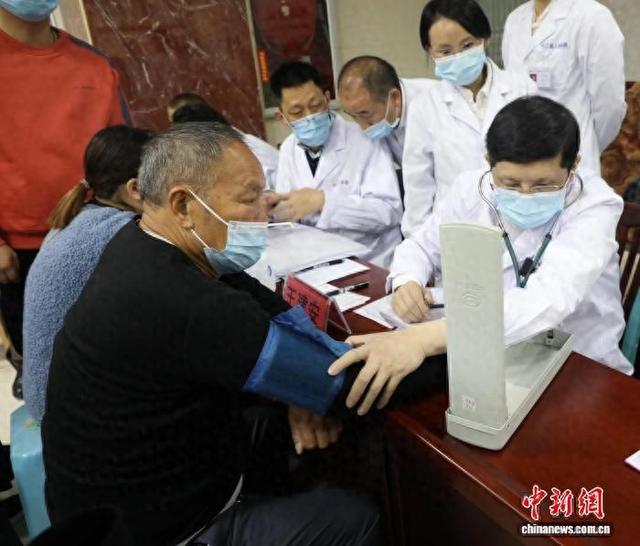
健康“小帮手”,用对才靠谱
Xin Lang Cai Jing· 2026-01-16 18:02
Group 1 - The increasing popularity of health devices such as AEDs, smart wristbands, and electronic blood pressure monitors is aiding public health management [1] - Proper usage of home medical devices requires professional evaluation and adherence to specific settings, as highlighted by experts [1] - Home monitoring data can be influenced by various factors, and adjustments to medication should not be made without medical advice [1] Group 2 - The Chinese government plans to promote the installation of AEDs in public places and communities as part of the healthcare strengthening initiative [2] - A responsible understanding and correct usage of health devices are essential for building a solid health defense [2]
安稳过冬,掌握这些方法
Ren Min Ri Bao Hai Wai Ban· 2026-01-16 05:34
Group 1 - The core message emphasizes the importance of vaccination against influenza, especially during the cold season, as flu activity is currently on a decline but still poses a risk [2][3] - The Chinese Center for Disease Control and Prevention reports that influenza activity has decreased for four consecutive weeks, remaining at a moderate epidemic level, with common pathogens identified [2] - Recommendations for personal health during the cold season include wearing warm clothing, consuming warming foods, and engaging in moderate exercise to prevent cold-related health issues [2] Group 2 - The article discusses the misconceptions surrounding the use of human albumin, clarifying that it is a clinical prescription drug and not a general health supplement [13] - Human albumin is primarily used to treat specific medical conditions such as low albumin levels, liver cirrhosis, and severe burns, rather than enhancing immunity [13] - The article warns against the blind use of human albumin for health benefits, highlighting the need for medical supervision and the potential risks associated with its use [13]