数字化设计

Search documents
每周股票复盘:镇海股份(603637)布局煤化工与广东市场
Sou Hu Cai Jing· 2026-01-24 19:35
Core Viewpoint - The company, Zhenhai Co., is focusing on the petrochemical engineering sector, leveraging its expertise in refining and chemical engineering to meet diverse client needs and market stages, with a stable revenue model and growth potential in new materials and fine chemicals [1][2][3]. Company Overview - Zhenhai Co. reported a stock price increase of 10.04% to 12.49 CNY as of January 23, 2026, with a total market capitalization of 2.981 billion CNY, ranking 36th in the professional engineering sector [1]. - The company maintains an annual revenue of approximately 500 million CNY, reflecting a stable state aligned with market demand and a team of around 400 employees [2][5]. Market Strategy - The company emphasizes the potential of the coal chemical market in regions like Xinjiang and Inner Mongolia, adopting a strategy of "active tracking, selective participation, localized service, and steady advancement" [2][5]. - A new branch in Guangdong has been established to enhance local service capabilities and respond to market opportunities in the South China petrochemical sector [4][5]. Competitive Landscape - The industry is characterized by a clear tiered competition structure, with major state-owned enterprises in the first tier, Zhenhai Co. in the second tier, and smaller design institutes in the third tier [3]. - The company aims for differentiated competition by leveraging its technical expertise and project experience to enhance comprehensive solution capabilities [3]. Future Growth Directions - Future growth will focus on consolidating the existing business base, cultivating new growth drivers, and optimizing operational efficiency, particularly in sulfur recovery, hydrogenation technology, and new chemical materials [3][4]. - The company is also investing in digital design platforms to improve execution efficiency and monitor costs dynamically in response to raw material price fluctuations [3][4][6]. Research and Development - Zhenhai Co. is committed to a transformation towards "specialization, high-end, intelligence, and low carbon," with successful innovations in various chemical processes and ongoing development of digital platforms [4][6]. - The company collaborates with research institutions to create a full-chain innovation system, focusing on optimizing refining processes and developing high-end new materials [6]. Talent Management - The company prioritizes talent retention and is exploring stock incentive plans to motivate core teams and retain key personnel, aiming to enhance cohesion and attract local talent [5][6].

走进2025光辉大赛:奉节菜籽坝抽水蓄能电站的科技破局之旅
Zhong Guo Neng Yuan Wang· 2026-01-05 08:30
Core Insights - The Fengjie Caizhiba Pumped Storage Power Station is a groundbreaking clean energy project in Chongqing, China, representing the first large-scale pumped storage project in a complex karst region and the first fully self-designed project by the Three Gorges Group [1][9] - The project has been recognized in the 2025 Infrastructure Digitalization Glorious Awards held in Amsterdam, highlighting its innovative approach in the clean energy sector [1] Group 1: Challenges and Technological Responses - The geological conditions in Fengjie, characterized by caves, fissures, and underground rivers, pose significant challenges for the construction of the power station, including difficulties in seepage prevention and potential ecological impacts [3] - Engineers from Shanghai Survey and Design Institute are leveraging technology to navigate these challenges, initiating a technological offensive to address the complexities of the karst landscape [3] Group 2: Data Integration and Collaborative Design - The project team faced limitations with traditional design workflows, including data fragmentation and high iteration costs, prompting the adoption of Bentley's technology for enhanced data integration and customized solutions [5] - The integration of OpenRoads and OpenBuildings Designer allows for seamless compatibility across various professional data, meeting the integrated design needs of the pumped storage station [5] Group 3: Geological Insights and Safety Design - Advanced technologies, such as iTwin Capture, have been utilized to create high-precision geological models, which are essential for safe design and risk visualization [6] - The project successfully constructed a 3D karst geological model that identifies the spatial distribution of geological features, aiding in the prediction of potential leakage paths and high-risk areas [6] Group 4: Digital Twin Technology - Digital twin technology plays a crucial role in the construction of the power station, enabling the integration of all professional models into a unified platform for dynamic data correlation and operational simulations [7] - The use of digital twin technology has optimized excavation volumes by 120,000 cubic meters, shortened construction time by 42 days, and reduced carbon emissions by 8,960 tons, supporting the region's clean energy transition [7] Group 5: Empowering Digital Components - A comprehensive digital component system has been established, including a parameterized equipment library and a standardized component library, achieving an 85% reuse rate in design and significantly reducing modeling workload [8] - The standardized product library developed from this project has been applied in five similar projects, achieving a 75% resource reuse rate, facilitating rapid construction of pumped storage power stations [8] Group 6: Conclusion and Future Outlook - The successful realization of the Fengjie Caizhiba Pumped Storage Power Station marks a significant technological breakthrough in constructing pumped storage facilities in karst regions, serving as a major demonstration for the development of clean energy [9] - The project exemplifies the power of technology in advancing clean energy initiatives, paving the way for a greener and more sustainable energy future [9]


一块牛仔布里的“时尚密码”
Yang Guang Wang· 2025-12-31 09:21
Core Insights - The article highlights the transformation of the denim industry in Xintang, Guangzhou, focusing on innovation, sustainability, and fashion trends in denim production [1][8]. Group 1: Innovation in Denim Production - Companies like Jianfang have shifted from traditional denim production to a research-driven approach, investing over 40% of profits annually into R&D to enhance fabric quality and functionality [2][3]. - Jianfang has developed various innovative fabrics, such as ultra-colorable materials and reflective denim, achieving significant sales milestones, including 20 million yards for a specific fabric between 2008 and 2010 [2][3]. - The focus has shifted from mere aesthetics to incorporating technology and consumer experience into fabric design, with products like "cloud-like cotton candy" fabric that combines comfort with traditional denim characteristics [3][4]. Group 2: Sustainable Practices - Jianfang has adopted green manufacturing processes, significantly reducing water usage from approximately 100 tons to just 1 ton per 10,000 meters of fabric through ozone technology [4]. - The company has also reduced the use of caustic soda by about 70% in dyeing processes, leading to a decrease in organic pollutants in wastewater [4]. - Jianfang collaborates with organizations to recycle waste materials, such as turning discarded fishing nets into regenerated nylon fibers, contributing to environmental sustainability [4]. Group 3: Industry Upgrades and Future Prospects - The new Xintang Denim Fabric Center, led by Jianfang, is set to cover 76.7 acres and aims to integrate fabric R&D, innovative processes, and smart warehousing, with projected annual revenues of 600 million yuan upon completion [5]. - The center will focus on developing functional fabrics and digital printing technologies, enhancing collaboration between fabric manufacturers and fashion brands [5]. - The overall industry is evolving from a focus on mass production to a model that emphasizes design and innovation, with companies like Xinbang leading the way in integrating design with manufacturing [6][7]. Group 4: Design and Consumer Trends - Xinbang has established a professional design team to create unique styles, moving away from generic designs to cater to specific consumer preferences [6][7]. - The integration of digital technologies, such as AI design systems and 3D fitting technologies, has streamlined the design process, reducing production time significantly [7]. - Xinbang's production capacity has increased, with over 500,000 pieces produced annually, and a shift from nearly 100% exports to over 60% domestic sales, reflecting changing consumer demands [7]. Group 5: Community and Industry Support - The local government has established associations for designers and e-commerce professionals, fostering collaboration and innovation within the industry [9]. - Events like the China Guangzhou (Xintang) International Denim Culture Festival promote the region's denim industry and encourage participation from various stakeholders [9]. - The transformation of Xintang's denim industry illustrates a broader trend of traditional industries adapting to modern demands through technology, sustainability, and creative expression [9].
村庄设计“杭州导则”来了
Mei Ri Shang Bao· 2025-05-30 02:47
Core Points - The article discusses the release of the "Hangzhou Village Design Guidelines (Trial)" aimed at improving the design quality and construction standards of rural areas in Hangzhou [1][2] - The guidelines address issues such as the loss of local characteristics, uniformity in rural landscapes, and the inadequate reuse of historical and cultural elements in construction [1] Group 1: Guidelines Overview - The guidelines fill a technical standard gap for village design in Hangzhou, providing normative, standardized, and characteristic technical guidance for rural construction [1] - The document includes five main chapters: general principles, terminology, basic principles, overall design guidance, and element design guidance, along with an appendix of positive and negative design lists [1] Group 2: Differentiated Guidance - The guidelines are tailored to four topographical features of Hangzhou and categorize villages into three types: renovation and enhancement, traditional protection, and new aggregation, each with specific focus areas [2] - For renovation and enhancement, the emphasis is on functional improvement and aesthetic coordination using a gradual update model; traditional protection focuses on authenticity and integrity, preserving historical streets, buildings, and natural resources; new aggregation prioritizes scientific and rational overall planning [2] Group 3: Key Elements and Management - The guidelines detail six core elements for village design, including public space, building space, and infrastructure, promoting a combination of rigid control and flexible guidance [2] - Public space is highlighted as a priority, with a minimum area of 2000 square meters designated for each administrative village to meet daily activities and leisure needs [2] - A positive and negative list management system is established to clarify design and construction requirements, along with the introduction of the "pre-operation" concept and promotion of "micro-renovation" techniques [2] Group 4: Implementation and Training - The city planning committee plans to conduct multi-form, tiered training and publicity to ensure that grassroots officials and designers fully understand and effectively utilize the guidelines [3] - There will be increased support to systematically summarize and promote successful village design experiences, aiming to demonstrate and lead the effective implementation of the guidelines in rural construction [3]
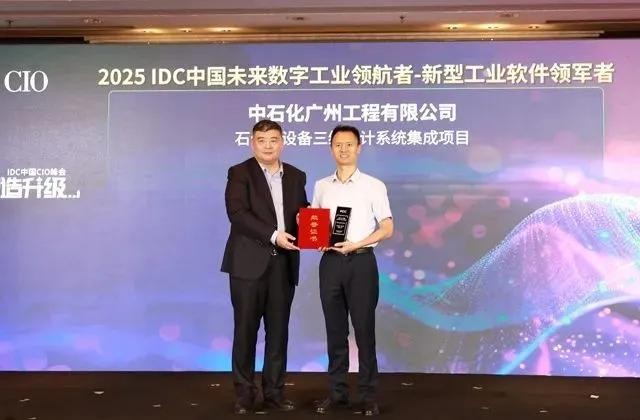
战略伙伴获奖!华天软件三维CAD创新方案问鼎数字工业巅峰
Zhong Guo Neng Yuan Wang· 2025-05-27 09:07
Group 1 - The "IDC China CIO Summit" was held in Shenzhen, focusing on the theme of "Industrial AI Leading Intelligent Manufacturing Upgrade," with over 200 industry leaders and technology experts sharing insights on AI applications in the industrial sector [1] Group 2 - The "Static Equipment 3D Design System (XVessel)" is the first specialized, intelligent, and integrated design system for static equipment in China, developed through a 15-year collaboration between Sinopec Guangzhou Engineering Company and Shandong Shanda Huatian Software Co., Ltd [2] - The system meets design requirements for various equipment types, including vessels, towers, heat exchangers, and storage tanks, featuring intelligent assembly of 3D models, automatic generation of 2D drawings, collaborative design, and digital delivery [2] Group 3 - Since 2015, Sinopec Guangzhou Engineering Company has fully promoted the Static Equipment 3D Design System in engineering projects, completing thousands of designs for various types of static equipment [4] - Compared to traditional methods, the design efficiency has doubled, and design quality has improved by 30%. The average design time for a tower, including calculations, is about 3 hours, while generating 2D drawings takes approximately 100 seconds. The design time for a heat exchanger is about 1.5 hours, with 2D drawings generated in about 120 seconds [4]