数据安全和隐私保护

Search documents
阿里千问宣布接入淘宝等业务;谷歌发布两大开源模型|数智早参
Mei Ri Jing Ji Xin Wen· 2026-01-15 23:12
Group 1 - Alibaba's Qianwen App has integrated multiple services including Taobao, enabling AI shopping features and is currently in testing phase, achieving over 100 million monthly active users within two months of launch [1] - The introduction of AI shopping capabilities by Alibaba not only enhances the application of AI technology in the e-commerce sector but also envisions a promising future for smart living [1] Group 2 - Google has launched two new open-source models: MedGemma 1.5, which enhances medical imaging support, and MedASR, an automatic speech recognition model optimized for medical dictation [2] - The release of these models signifies Google's shift from a "closed service" to an "open empowerment" strategy in the medical AI field, promoting broader applications in grassroots healthcare, telemedicine, and research analysis [2] Group 3 - Noumena, an AI-native growth intelligence company, has completed a Pre-A round financing of several tens of millions, focusing on brand growth through AI agents that facilitate marketing decision-making and execution [3] - The increasing recognition of AI's role in enhancing marketing efficiency and user experience is evident, although the sector faces challenges in differentiation as more companies enter the market [3]
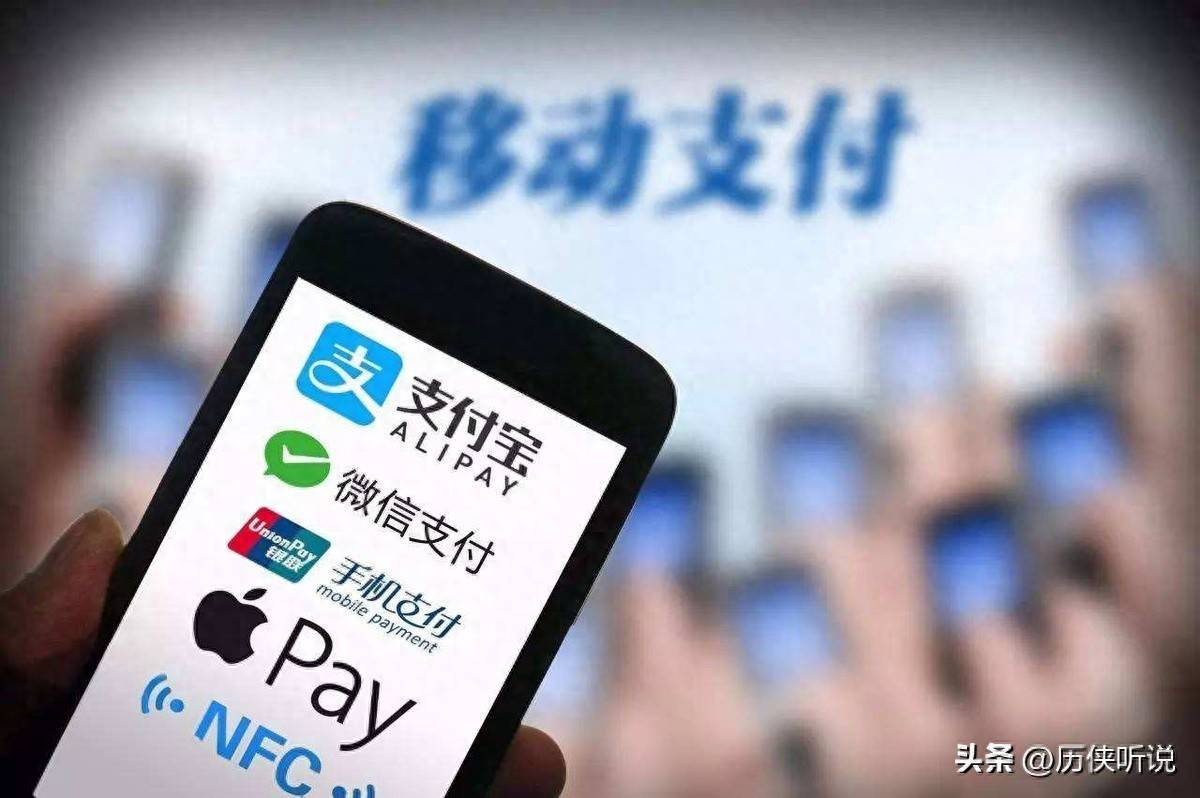
中国移动支付世界第一,欧美却还用现金?为何欧美不用移动支付?
Sou Hu Cai Jing· 2025-12-18 23:15
Core Viewpoint - The widespread adoption of mobile payment in China contrasts sharply with its limited use in developed countries, primarily due to concerns over data security and privacy, as well as entrenched payment habits and infrastructure issues [1][11][19]. Group 1: Data Security and Privacy Concerns - In developed countries, data security and privacy protection are major public concerns, leading to higher operational costs and legal risks for payment institutions [3]. - A data breach incident in the EU resulted in the exposure of personal information for approximately 1.2 million users, significantly eroding consumer trust in mobile payments [5]. - Continuous reports of mobile payment fraud and data breaches heighten the sensitivity around financial and personal data protection in developed nations [7]. Group 2: Infrastructure and Technological Limitations - The lack of stable network infrastructure in some developed regions, particularly rural areas, hampers the reliability of mobile payment systems [13]. - Users often experience failed transactions due to unstable signals, reinforcing the reliance on cash payments in these areas [13]. Group 3: Established Payment Habits - Consumers in developed countries have long-standing habits of using credit cards and cash, which creates a barrier to adopting mobile payment systems [15]. - Small businesses may be reluctant to invest in mobile payment technology, preferring the simplicity and lower costs associated with cash transactions [15]. Group 4: Industry Resistance and Economic Interests - The credit card industry in the U.S. generates over $80 billion annually, with a significant portion derived from transaction fees, leading to resistance against mobile payment adoption [19]. - German banks express concerns that mobile payments could disrupt the existing financial system, resulting in a lack of proactive support for mobile payment technologies [21]. Group 5: Comparative Analysis with China - In China, mobile payment has rapidly penetrated various sectors, supported by a cooperative mechanism between banks and third-party payment platforms, facilitating widespread adoption [23]. - The Chinese government has implemented measures to ensure that the promotion of mobile payment does not disrupt financial order while protecting user rights [23]. - Continuous improvements in addressing risks associated with mobile payments, such as fraud and data breaches, are being made in China, including the establishment of compensation funds and risk monitoring systems [27].


商务部等6部门:支持有条件的地方建立国际认可的数据安全和隐私保护机制
Zheng Quan Shi Bao Wang· 2025-12-15 10:31
Core Viewpoint - The Ministry of Commerce and five other departments have issued an action plan to promote high-quality development of service outsourcing, focusing on building a digital trade industry cluster [1] Group 1: Digital Trade Development - The plan emphasizes the establishment of internationally recognized data security and privacy protection mechanisms in certain regions [1] - It aims to promote the deep integration of the digital economy with the real economy [1] - The initiative includes the construction of digital trade industry aggregation areas [1] Group 2: Business Environment and Industry Growth - There is a focus on optimizing the digital business environment and strengthening industrial capabilities [1] - The plan encourages the active development of international data service businesses [1] - It explores the establishment of an overseas data storage, processing, and trading service industry chain [1] Group 3: New Business Models - The action plan aims to accelerate the development of new business formats and models in digital trade [1] - It seeks to cultivate new growth points for foreign trade [1]
研判2025!中国城市道路监控系统行业发展背景、产业链、市场规模及发展趋势分析:智慧城市建设加速,推动城市道路监控系统规模持续扩容[图]
Chan Ye Xin Xi Wang· 2025-12-12 01:08
Core Viewpoint - The urban road monitoring system is a crucial subsystem of intelligent transportation systems, responsible for comprehensive, real-time monitoring of traffic conditions, and is experiencing significant market growth in China due to urbanization and smart city initiatives [1][4]. Market Size and Growth - The market size of China's urban road monitoring system industry reached 8.3 billion yuan in 2015 and is projected to grow to 20.94 billion yuan by 2024, with a compound annual growth rate (CAGR) of 10.8% [1][9]. - The industry is expected to continue its growth trajectory, supported by policy backing and new infrastructure initiatives, as well as technological innovations and expanded application scenarios [1][4]. Industry Overview - The urban road monitoring system is an essential part of public security command systems, providing real-time visual feedback for accurate dispatching and management of traffic violations, congestion, accidents, and other emergencies [4]. - The system includes various components such as traffic signal control systems, video monitoring systems, traffic management information systems, communication systems, and traffic guidance systems [5]. Industry Chain - The industry chain consists of upstream hardware and software providers, midstream urban road monitoring systems, and downstream application scenarios primarily involving government entities like public security and traffic police [8]. Competitive Landscape - Major players in the market include Hikvision and Dahua Technology, which hold significant market shares due to their strong technological capabilities and brand influence. Smaller companies focus on niche markets and customized solutions to expand their market presence [9][10]. Development Trends - The industry is moving towards higher definition and intelligence, with advancements in camera technology and the integration of AI and deep learning to enhance monitoring and management capabilities [11]. - There is a noticeable trend towards energy efficiency and environmental sustainability, with solar power expected to be widely adopted in urban road monitoring systems, aligning with global green development goals [12].



联想刘军:让AI成为创新生产力,隐私保护和数据安全不可妥协
Huan Qiu Wang Zi Xun· 2025-06-11 06:50
Core Viewpoint - Lenovo has unveiled its "Trusted Hybrid Computing Solution" in collaboration with Volcano Engine, enhancing the security capabilities of its Tianxi personal superintelligence from endpoints to the cloud, ensuring safety both online and offline [1][2]. Group 1: AI Development and Security - The rapid development of large model technology and the emergence of DeepSeek have accelerated the growth of artificial intelligence in China, posing significant challenges to data security and personal privacy protection [1][2]. - Lenovo's hybrid AI technology path, proposed in 2023, extends from personal trusted computing devices to secure personal clouds, forming a privacy-enhanced computing and full-link protection technology system [2][3]. - The Tianxi personal superintelligence is designed to ensure absolute data security during transmission and processing between endpoints and the cloud [2][3]. Group 2: Technological Features and Capabilities - The Trusted Hybrid Computing Solution is based on Lenovo Personal Cloud 1.0, featuring core technologies such as Trusted Execution Environment (TEE), trusted transmission, and endpoint-cloud mutual trust [3]. - Tianxi personal superintelligence is equipped with a 720 billion parameter large language model and offers users a dedicated memory space starting from 100GB, combined with RAG technology to create an expandable knowledge base [3][4]. - Tianxi possesses multiple interaction capabilities, including voice, text, and visual, along with full-time memory and autonomous planning execution, redefining the smart interaction experience [4]. Group 3: Market Impact and Future Prospects - Since the launch of the world's first true AI PC in May last year, Lenovo has sold over one million units, with Tianxi's daily active users growing exponentially and achieving an advanced customer net promoter score [5]. - Lenovo aims to empower individuals and industries through AI, facilitating the rapid development of China's AI industry on a global scale [5].

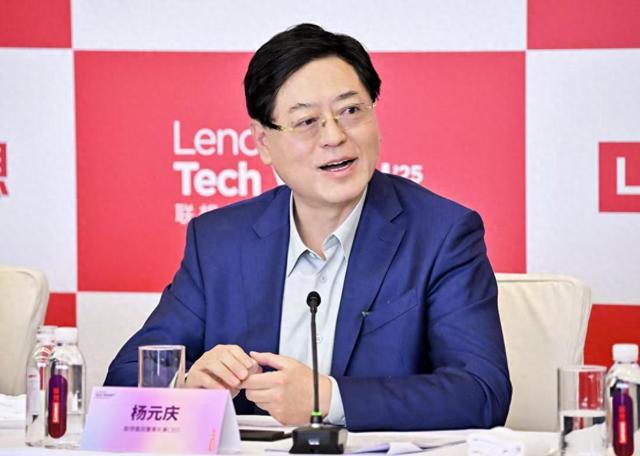
杨元庆:数据安全和隐私保护是“超级智能体”的基座
Huan Qiu Wang Zi Xun· 2025-05-08 03:03
Core Insights - The AI sector is entering a phase of rapid innovation, with advancements such as DeepSeek's integration of algorithm innovation and engineering optimization, and the release of Llama 4 accelerating the deployment of multimodal large models [1] - Privacy and data security are significant challenges faced by the AI large model field, as discussed at the 2025 Lenovo Innovation Technology Conference [1] Group 1: Data Security and Privacy Protection - Lenovo's CEO Yang Yuanqing emphasized the importance of hybrid AI from the perspectives of personal data protection, enterprise data protection, personal privacy protection, and corporate intellectual property protection [3] - Yang stated that data security and privacy protection are foundational to the three main functions of "super intelligent agents," which represent non-negotiable value propositions and innovation principles [3] - The contradiction between the need for accurate responses and the desire to protect personal data is highlighted, suggesting that personal trusted computing can be a solution by utilizing users' own devices for data learning and inference [3] Group 2: Technological Advancements and Applications - Lenovo's CTO Tolga Kurtoglu noted that data security and privacy protection are crucial in developing "super intelligent agents," advocating for local processing of sensitive information on devices [4] - The need for robust data security measures when transferring data to the cloud is emphasized, along with the importance of anonymizing sensitive information [4] - Yang revealed that Lenovo plans to introduce Deepfake detection technology to mitigate the risk of personal image theft, showcasing the company's commitment to enhancing data security [4]
京东健康受邀参加“两会健康策”访谈 加快以AI驱动医疗健康服务升级
2 1 Shi Ji Jing Ji Bao Dao· 2025-03-25 14:50
Core Viewpoint - JD Health is leveraging AI to enhance medical health services, focusing on high-quality development through AI-driven solutions in health management and patient care [1][2]. Group 1: AI in Healthcare - AI is recognized as a new production factor that should address deep-rooted issues across various industries, particularly in healthcare [2]. - JD Health's "Jingyi Qianxun" medical model has been fully open-sourced, making it the first vertical model in the domestic healthcare sector to do so, which will lower the development barriers for medical AI applications [2][3]. - The AI diagnosis assistant 2.0 boasts a triage accuracy rate of 99.5%, with a 120% increase in electronic medical record writing efficiency and over 90% problem-solving rate [3]. Group 2: AI Products and Services - JD Health has launched several AI-driven services, including the intelligent health assistant "Kangkang" and the AI psychological companion "Therapeutic Little Universe," creating an online medical service ecosystem [3]. - The AI doctor digital entity is designed to provide 24/7 responses to patient inquiries, enhancing the efficiency of medical services [3]. Group 3: Data Security and Privacy - The company emphasizes that AI models learn from de-identified "knowledge data" rather than clinical data, addressing data security and privacy concerns [3]. - Patients are informed about the use of their data, allowing them to choose between protecting or sharing their information [3]. Group 4: Future Directions - JD Health aims to continuously explore the potential of AI in healthcare, focusing on technological innovation to build a safer, more efficient, and convenient medical service system [4].