
文明

Search documents
人民创造文化
Xin Lang Cai Jing· 2026-02-25 16:57
Group 1 - The article highlights a unique village custom where families visit each other on the first day of the Lunar New Year, fostering community bonds and sharing updates about work and life [3][4][6] - This tradition has evolved over time, particularly driven by younger generations returning home, and serves as a means to strengthen social ties and resolve conflicts [3][4][6] - The practice of taking a collective family photo has become a significant cultural event, reflecting the growth and changes within the community, and enhancing social cohesion [6][10] Group 2 - The article discusses the impact of urbanization and marketization on traditional community structures, leading to a fragmentation of cultural practices and social relationships [4][12] - It emphasizes the importance of grassroots cultural initiatives, such as the "Village Song Project," which aims to revive local culture and foster community engagement through music and shared experiences [7][12] - The concept of culture is explored, defining it as a collective life experience shaped over time, which is essential for community identity and continuity [9][10][12]

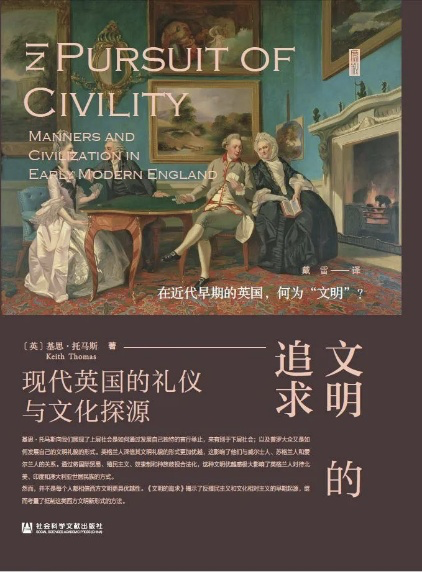
维舟:“文明”究竟意味着什么|新春阅读
Di Yi Cai Jing· 2026-02-17 09:08
Group 1 - The concept of "civilization" is formed through shared experiences within a community, and only those who are part of it can deeply understand its significance [1][2] - The modern understanding of "civilization" has been challenged, with behaviors once deemed unacceptable now being openly practiced, indicating a regression in civilized norms [1] - The historical evolution of "civilization" reflects a long process of social development, where the term "civilization" only emerged in English in 1772, previously referred to as "civility" [7] Group 2 - The spread of "civilized etiquette" is often believed to start from the upper classes and gradually permeate downwards, but commercial activities have significantly accelerated this process [8] - The interdependence of individuals in society fosters self-control and politeness, as the need for goodwill among various social actors increases with market competition [8] - The emergence of modern sports is linked to the civilization process, as it requires the control of violence and the establishment of rules for non-violent competition [13][14] Group 3 - The treatment of vulnerable groups is a reliable indicator of a society's level of civilization, with modern animal protection emerging as a reflection of humanitarian values [17][18] - Historical context plays a crucial role in shaping contemporary actions and beliefs, as new ideas often draw from existing traditional resources [18] - The understanding of "civilization" has evolved over time, particularly after the World Wars, where it shifted from elite etiquette to encompass human dignity and basic rights [21][22]
中国城市发展研究院:2025城市高质量发展指数综合分析报告
Sou Hu Cai Jing· 2026-01-05 02:12
Core Insights - The report presents a comprehensive analysis of the "2025 China Urban High-Quality Development Index," highlighting the current state of urban development in China based on six core dimensions: innovation, livability, beauty, resilience, civilization, and wisdom [1][10][12]. Group 1: Evaluation Framework - The evaluation framework consists of a three-tier system covering six core dimensions, with a total of 74 specific indicators selected to assess urban development [12][15]. - The index aims to provide a reliable quantitative basis for policy formulation, regional benchmarking, and development assessment, aligning with the strategic goals set by the Central Urban Work Conference [11][12]. Group 2: Assessment Results - The assessment indicates a pattern of "core city traction and overall improvement," with cities like Beijing, Shanghai, Shenzhen, and Hangzhou ranking high due to their advantages in innovation, digital governance, and economic resilience [17][18]. - Most cities have made significant progress in infrastructure, public services, and living environments, but challenges remain in areas such as cultural heritage, livability, and public service supply [17][18]. Group 3: Regional Development Disparities - There are notable regional disparities in development, with eastern cities leading in innovation and resilience, while central cities lag behind the national average across all dimensions [2][20]. - Western cities exhibit strong ecological advantages but face challenges in innovation and smart development, highlighting a clear distinction in strengths and weaknesses across regions [2][20]. Group 4: Dimension-Specific Insights - **Innovation**: Leading cities like Beijing and Shenzhen show strong innovation ecosystems, but there is uneven regional vitality, with non-core cities struggling to connect innovation resources effectively [22][23]. - **Livability**: Cities such as Beijing and Shanghai excel in public service provision, yet face challenges in housing affordability and employment income disparities [28][29]. - **Beauty**: Cities like Shenzhen and Beijing have made significant strides in pollution reduction and green industry development, but the transition to green living remains a challenge [35][36]. - **Resilience**: The resilience of cities is characterized by strong economic and social components, but infrastructure and environmental resilience are relatively weak, indicating a need for improvement [41][42].


悟规律 明方向 学方法 增智慧丨走出一条中国特色城市现代化新路子
Zhong Yang Ji Wei Guo Jia Jian Wei Wang Zhan· 2025-07-29 00:28
Core Viewpoint - The recent Central Urban Work Conference emphasizes the construction of modern urban cities with six key aspects: innovation, livability, beauty, resilience, civilization, and intelligence, aiming to align urban development with national goals [7][8][12]. Group 1: Urban Development Goals - The conference highlights the transition of urbanization from rapid growth to stable development, focusing on quality improvement rather than mere expansion [12]. - The six aspects of modern urban cities are designed to meet the aspirations of the people for a better life, making urban development goals more comprehensive and aligned with high-quality development requirements [8][9]. Group 2: Innovation as a Key Driver - Innovation is identified as the primary driver for urban development, essential for transitioning from extensive growth to quality enhancement [17][18]. - The importance of innovation is underscored by the need for cities to adapt to new technological revolutions and industrial transformations, positioning themselves as centers for economic and social development [18][19]. Group 3: Specific Urban Development Strategies - The conference proposes a systematic transformation in urban development, emphasizing five key shifts: from extensive to intensive development, from quantity to quality, from uniformity to uniqueness, from construction to governance, and from fragmentation to coordination [12][13][16]. - Each city is encouraged to develop its unique innovation ecosystem based on its resources and characteristics, avoiding a one-size-fits-all approach [20][21]. Group 4: Role of Different Cities - Different cities are to be positioned according to their unique resources and industrial bases, with specific strategies for innovation and development tailored to their strengths [21]. - The national strategy includes supporting major cities like Beijing and Shanghai as international innovation centers while fostering regional innovation hubs in other areas [21].
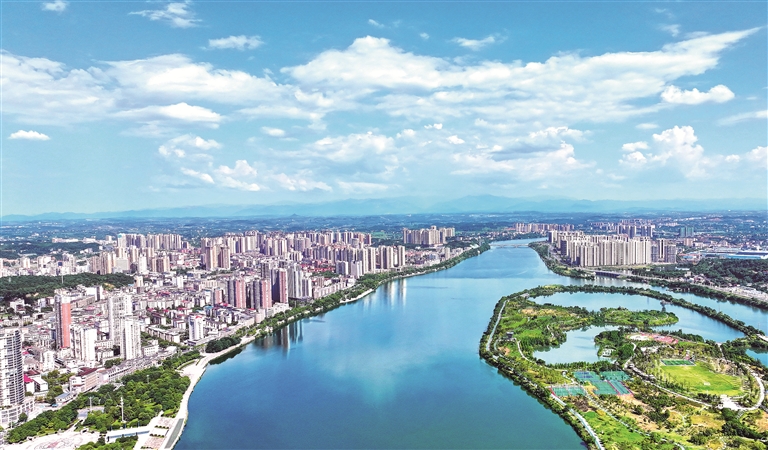
城市发展,如何更加以人为本?
Yang Shi Xin Wen Ke Hu Duan· 2025-07-17 01:38
Core Insights - The central urban work conference held in Beijing emphasized the goal of building modern, innovative, livable, beautiful, resilient, civilized, and smart cities, marking a shift from rapid urbanization to stable development [1] Group 1: Urban Development Transition - China's urbanization is transitioning from a phase of rapid growth to stable development, focusing on improving existing urban spaces rather than expanding them [1] - The conference highlighted the need for new ideas and methods to address the challenges faced by over 900 million urban residents in the context of urban space optimization and quality enhancement [1][3] Group 2: Urban Safety Initiatives - Urban safety is identified as a fundamental aspect of city development, necessitating simultaneous efforts in both above-ground and underground infrastructure [2] - There is a need for significant updates and renovations of aging underground pipelines and improved emergency response systems to address urban disasters [2] Group 3: Urban Renewal Focus - The renewed emphasis on urban renewal is seen as a critical strategy for enhancing urban quality and efficiency, moving beyond just the renovation of old neighborhoods to include optimizing urban spatial structures and promoting green, low-carbon development [3] Group 4: Public Service Improvement - The conference underscored the importance of expanding public services to non-resident populations, addressing the disparity in service availability between urban and rural areas [4][5] - There is a call for more diverse and accessible public service facilities, particularly in the context of an aging population, to support community-based elder care [4][5] Group 5: Shift in Development Philosophy - A significant shift in development philosophy is required, moving from a focus on construction to governance and management, emphasizing the importance of people in urban development [7] - The conference advocates for a people-centered approach, recognizing that urban development should prioritize the needs and contributions of its residents [7]
城市如何让生活更美好
Guohai Securities· 2025-07-16 08:05
Investment Insights - In 2024, China's urban population is projected to reach 940 million, with an urbanization rate of 67%[2] - The focus of urban development is shifting from large-scale expansion to improving existing stock, emphasizing quality and efficiency[2] Definition of a Good City - A "good city" in China is defined by its ability to be innovative, livable, beautiful, resilient, civilized, and smart, as highlighted in recent government meetings[3] Innovation and Economic Growth - As of January 2025, China has 463,000 high-tech enterprises, with 169,000 in the industrial sector, contributing significantly to global R&D efforts[4] - R&D expenditure as a percentage of GDP is nearing 2.7%, surpassing the EU average and approaching OECD levels[4] Livability and Quality of Life - The average housing area per urban resident exceeded 40 square meters by the end of 2023, with over 68 million affordable housing units built since the 18th National Congress[6] - Approximately 150 million rural migrants have settled in cities since 2014, enhancing urban public service coverage[6] Environmental Sustainability - PM2.5 concentration in major cities dropped by 51% from 2015 to 2025, with an average of 24.5 µg/m³ recorded by May 2025[7] - The proportion of good water quality in surface water reached 90.4% in 2024, with a target to eliminate urban black and odorous water bodies by 2025[7] Urban Resilience - By 2024, approximately 100,000 kilometers of urban pipelines have been upgraded to enhance disaster resilience and safety[8] - A total investment of over 1 trillion yuan is planned for the construction of 3,000 "dual-use" facilities in major cities[9] Cultural Heritage and Historical Preservation - The protection of historical buildings and cultural heritage is prioritized, with a focus on preserving urban historical context and preventing large-scale demolitions[10][14] Smart City Development - By May 2025, China has built 4.486 million 5G base stations, with 207 cities achieving gigabit internet status, enhancing urban connectivity[11] - The integration of data governance and smart applications is crucial for improving urban management and public services[11] Housing and Community Development - In 2024, 74,000 dilapidated houses are set for renovation, with 1,863 urban village projects benefiting 1.367 million households[18] - The initiative to build "good houses" focuses on safety, comfort, and sustainability, with new standards implemented from May 2024[19]