
文艺复兴

Search documents
进步与再平衡:愿黄金时代永不落幕
Jing Ji Guan Cha Bao· 2026-01-24 12:04
Group 1 - The article draws parallels between the cultural flourishing of medieval Baghdad and industrial revolution-era England, highlighting the significance of bookstores in both societies [1] - During the Renaissance, the emergence of a new patronage system allowed wealthy families like the Medici to support artists, leading to a close relationship between art and commerce [2][3] - The rise of the merchant class in the Netherlands contributed to a shift in artistic demand towards more personal and everyday themes, further democratizing art [2] Group 2 - The integration of craftsmen and intellectuals was crucial for technological advancement, as seen in the establishment of the Royal Society in England, which encouraged collaboration between knowledge and practical skills [3][4] - The absence of a strong centralized government in England allowed the market to thrive, fostering an environment conducive to innovation and the rise of the merchant class [7][8] - The industrial revolution was characterized by continuous progress, driven by technological innovations across various sectors, from steam engines to digital technologies [5][6] Group 3 - The transition of cultural centers from London to New York reflects the evolution of global power dynamics, with the U.S. embodying a decentralized system that fosters innovation [10][11] - The challenges faced by contemporary societies include balancing centralized planning with the need for decentralized innovation, particularly in the context of technological advancements [15][17] - The article emphasizes the importance of optimism and the redefinition of progress to avoid the decline of a golden age, suggesting that a focus on inclusivity and environmental sustainability is essential [17][18]
超越“第四次工业革命”:关于人工智能与人类主体性的再思考
腾讯研究院· 2026-01-20 09:53
Core Viewpoint - The article discusses the transformative impact of artificial intelligence (AI) on society, likening it to a "digital renaissance" that challenges traditional notions of human agency and intelligence [2][3][6]. Group 1: Historical Context and Comparison - The current developments in Silicon Valley echo not only the industrial changes of the 18th century but also the profound intellectual shifts of the Renaissance in Florence during the 14th to 16th centuries [3]. - The article emphasizes that we are experiencing a crisis and reconstruction of subjectivity, marking a significant shift in how humans perceive their role in the world [3][6]. Group 2: The Nature of AI and Human Cognition - The emergence of generative AI raises ontological anxieties about human uniqueness, as AI demonstrates capabilities that closely resemble human reasoning and creativity [7][26]. - The article argues that while the Renaissance liberated humans from theological constraints, the "digital renaissance" compels a reevaluation of human identity in the face of advanced AI [7][26]. Group 3: Technological Tools and Their Impact - The article draws parallels between the linear perspective of the Renaissance and the transformer architecture of modern AI, suggesting that both represent significant cognitive tools that reshape understanding [9][13]. - Generative AI is seen as an exponential extension of the printing press, drastically reducing the cost of initial creation and democratizing access to skills previously reserved for trained professionals [17][20]. Group 4: Ethical Considerations and Risks - The article warns of the potential for a "digital theocracy," where algorithmic decision-making could undermine human agency and reduce individuals to mere data points [21][24]. - It highlights the ethical risks of commodifying human beings, where individuals may be viewed as mere sources of data rather than as autonomous agents [25][26]. Group 5: Future Directions and Human Value - The article posits that the true spirit of the renaissance is not to reject technology but to redefine human irreplaceability in the face of AI advancements [26][29]. - It emphasizes the importance of human qualities such as empathy, moral intuition, and the ability to assign meaning, which remain beyond the reach of AI [28][30].


素描里的达·芬奇绘画密码
Xin Lang Cai Jing· 2025-12-29 02:20
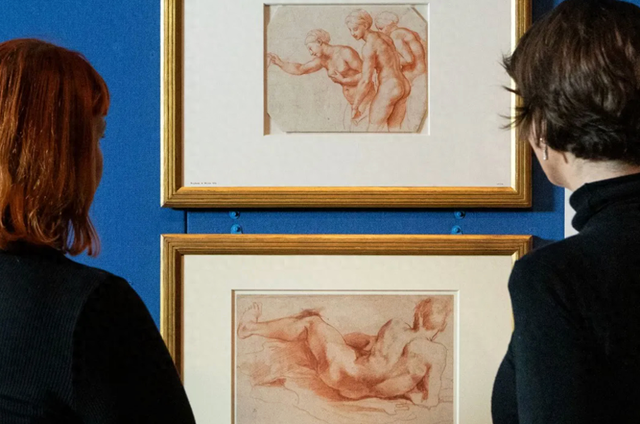
Core Insights - The exhibition "Depicting the Italian Renaissance" at the King’s Gallery in Edinburgh showcases approximately 80 valuable sketch manuscripts from the British royal collection, focusing on the period from 1450 to 1600 and featuring works from over 50 artists, including Leonardo da Vinci, Michelangelo, and Raphael [1][34] - The exhibition highlights the evolution of sketches from mere drafts to independent art forms, reflecting the expansion of artistic boundaries and the liberation of creativity during the Renaissance [1][18] Group 1: Exhibition Highlights - The exhibition features a significant section dedicated to Leonardo da Vinci, allowing viewers to explore his multifaceted genius in anatomy, engineering, natural philosophy, and aesthetics through his sketches [3][5] - Da Vinci's sketches provide a unique perspective on his thoughts, research processes, and visions, with the British Royal Collection housing around 550 of his sketches, which are crucial for understanding his artistic value [5][12] - The exhibition includes notable works such as da Vinci's preparatory sketches for "Leda and the Swan," showcasing his exploration of mythological themes and intricate details in hair design [7][9] Group 2: Featured Artists and Works - Raphael's sketch of "The Three Graces" is highlighted for its innovative approach, using a live model to depict three different poses, which was rare for artists of the Renaissance [18][19] - Michelangelo's sketch "Madonna and Young Saint John" is noted for its heavy texture and potential as a design for a sculpture, reflecting the artistic practices of the time [21][22] - The exhibition also features works from other artists like Parmigianino and Federico Barocci, showcasing their unique styles and contributions to the art of sketching during the Renaissance [26][28]
专访Buccellati布契拉提CEO Nicolas Luchsinger:四只蝴蝶,如何传递一种百年审美?
3 6 Ke· 2025-12-16 10:13
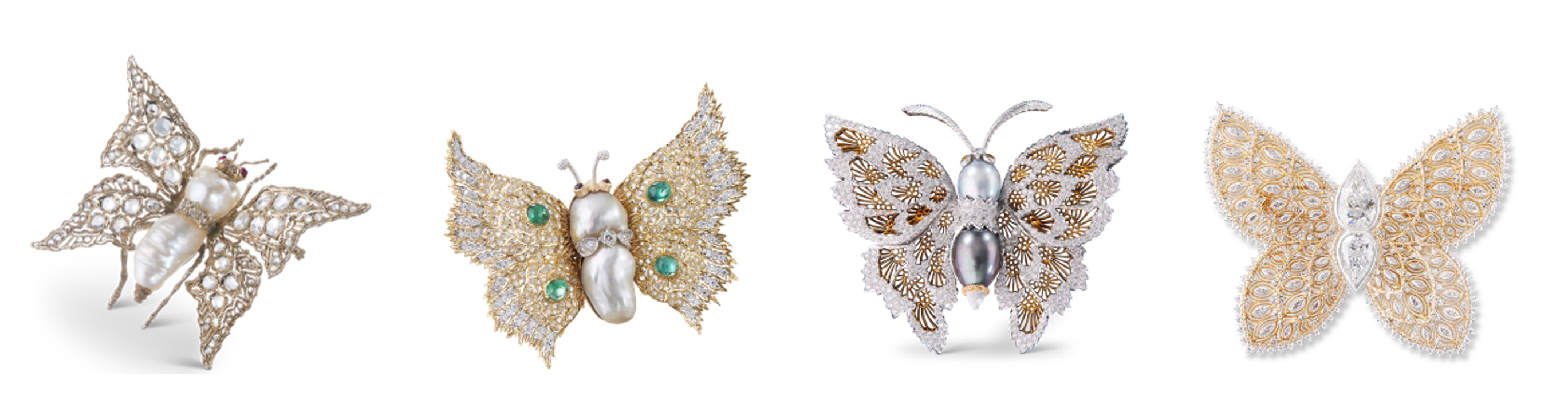
Core Insights - Buccellati, an Italian luxury jewelry brand, is showcasing its "Timeless Craftsman - Buccellati Collection Exhibition" in Shanghai, marking its first systematic overseas presentation after a global debut in Venice in 2024 [1][3] - The exhibition features 250 pieces, including 150 jewelry items and 100 silverware pieces, illustrating the brand's journey from its Milan origins to global expansion [1][3] Group 1: Exhibition Details - The exhibition begins with four butterfly brooches created by four generations of the Buccellati family and culminates in a "Collection Corridor" showcasing the brand's representative works and core craftsmanship [1][3] - The timing of the exhibition coincides with a peak in gold prices, which reached a historical high of $4,000 per ounce in early October [3] Group 2: Craftsmanship and Value - Buccellati's CEO, Nicolas Luchsinger, emphasizes that while gold prices may fluctuate, the true value of a piece lies in its craftsmanship [3][8] - The brand's unique value proposition is rooted in its ability to maintain the beauty and quality of its pieces over time, even as they show signs of wear [8][19] Group 3: Historical Context - The craftsmanship of goldsmiths in Italy dates back to the Etruscan civilization, which significantly advanced metalworking techniques long before the Renaissance [8][10] - During the Renaissance, goldsmiths began to cater to secular clients, creating jewelry that signified social status, thus intertwining craftsmanship with art [10][13] Group 4: Brand Philosophy and Strategy - Buccellati maintains a restrained production strategy, focusing on quality over quantity, despite the growing global demand for luxury jewelry [19][21] - The brand has announced plans to invest in training over 500 artisans across its workshops in the next three years, ensuring the preservation of its craftsmanship [19][21] Group 5: Marketing Approach - Buccellati's marketing strategy diverges from the typical reliance on celebrity endorsements, focusing instead on finding brand ambassadors who genuinely understand and embody the brand's values [25][26] - The brand's current ambassador is Talita von Fürstenberg, chosen for her alignment with Buccellati's heritage and aesthetic [25][28] Group 6: Family Legacy - Despite being integrated into Richemont's core jewelry division in 2019, Buccellati retains significant family involvement, with multiple family members holding key roles [26][32] - The brand's core style has remained consistent over the past century, drawing inspiration from nature, fabric textures, and architectural structures [32][36]
深圳看展:华彩欢歌——格拉斯哥博物馆藏文艺复兴大师真迹展
Jing Ji Guan Cha Bao· 2025-10-07 01:39
Core Viewpoint - The exhibition "Vibrant Songs: Masterpieces of the Renaissance from the Glasgow Museum" will be held at the Sky Art Museum in Shenzhen from September 27, 2025, to January 18, 2026, showcasing a significant collection of Renaissance art [1] Group 1: Exhibition Details - The exhibition is a collaboration between the Sky Art Museum and the Glasgow Museum, marking the first stop of its China tour [1] - A total of 58 selected art pieces from the Glasgow Museum will be displayed, including 33 oil paintings, 4 sculptures, and 21 Italian handcrafted artifacts [1] - The artworks span a creation period of 500 years, highlighting the rich artistic heritage of Italy [1] Group 2: Artworks and Value - The exhibition features masterpieces from early, high, and late Renaissance artists, showcasing various themes such as humanism in religious and landscape paintings [1] - The total value of the exhibited pieces is nearly 1 billion [1]
协同演化 “以幻解幻”——专访高世名
Huan Qiu Wang· 2025-09-05 13:54
Core Perspective - Digital technologies are reshaping the artistic ecosystem, with the collaborative evolution between AI and humanity becoming an irreversible civilizational trajectory. The mission of art today is to defend the subjectivity of creation amid the technological tide [1][2]. Group 1: AI and Art Collaboration - The relationship between AI and art is not adversarial; rather, it is a collaborative evolution where AI serves as a tool to enhance human creativity and open new dimensions of artistic expression [3][5][6]. - AI can transform passive consumption into active production, allowing artists to become "dreamweavers" who actively create rather than indulge in ready-made illusions [1][2][9]. Group 2: Historical Context and Future Directions - The concept of a "vast ocean of history" suggests that all past artistic expressions coexist, and through AI, artists can engage in collective creation with historical figures, thus enriching contemporary art [10][12]. - The "Grotto-Heavens" initiative aims to encourage individuals to create diverse artistic worlds, fostering a rich tapestry of interconnected artistic expressions [15][18]. Group 3: Challenges and Opportunities - The challenge lies in transforming AI-generated content into meaningful artistic production, as current AI outputs often lack depth and creativity, resembling "pre-packaged" art [9][10][22]. - The potential of AI to enhance creativity is significant, as it can assist in generating ideas and improving efficiency in artistic processes, thus expanding the creative landscape [9][19]. Group 4: The Role of Artists - Artists are encouraged to reactivate their primordial instincts and engage actively in the creation process, using AI as a partner rather than a replacement [6][23]. - The ultimate goal is to liberate human creativity from the constraints of consumerism and automation, allowing individuals to reclaim their roles as active producers in the artistic landscape [22][27].
