
黄金时代

Search documents
钢铁、芯片与技术未来︱21书评
2 1 Shi Ji Jing Ji Bao Dao· 2026-02-27 05:47
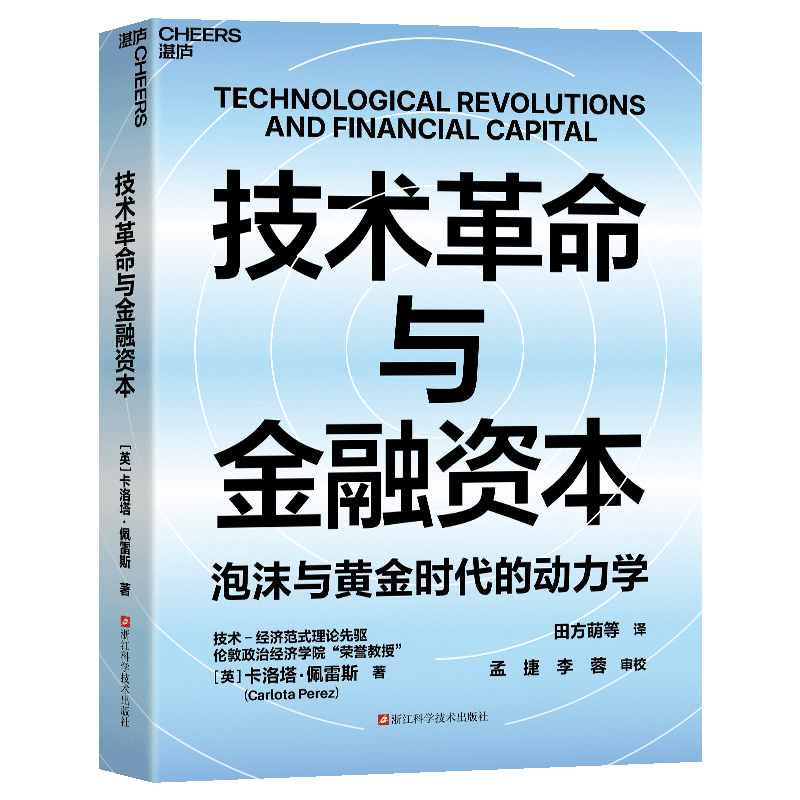
Core Insights - The article discusses the historical context and implications of Carlota Perez's "Technological Revolutions and Financial Capital," emphasizing the cyclical nature of capitalism driven by technological revolutions [1][2] Group 1: Technological Revolutions - The author identifies five technological revolutions that have occurred since the early 21st century: the Industrial Revolution, the Steam and Railway Era, the Steel, Electricity, and Heavy Industry Era, the Oil, Automobile, and Mass Production Era, and the Information and Communication Era [1] - The current technological environment is influenced by the AI revolution, open-source innovation, distributed finance, and global geopolitical competition, which may alter the historical conditions of the "technological-economic paradigm" [2] Group 2: Economic Implications - The article highlights that significant events in the global economy since the book's original publication include the ongoing breakthroughs in the information revolution, the irreversible threat of climate change, and China's rise as the world's second-largest economy [4] - China has leveraged both mature technologies from the fourth technological revolution and emerging technologies from the fifth to achieve substantial economic growth, paralleling the historical achievements of the U.S. and Germany during the third technological revolution [5] Group 3: Institutional Changes - The article emphasizes the necessity of major institutional reforms to facilitate innovation and investment, address social inequality, and achieve a green transition before climate change becomes irreversible [8] - Historical examples illustrate how previous technological revolutions required significant institutional changes to adapt to new economic realities, suggesting that similar reforms are needed today [6][8] Group 4: Challenges Ahead - The article notes that despite the potential for a new golden age of the information revolution, significant changes that could have occurred after the 2000 tech bubble and the 2008 financial crisis did not materialize, leading to continued speculative behavior in finance rather than long-term investments in the real economy [9] - The book aims to provide insights into the relationship between technological, economic, and political changes, rather than making predictions, encouraging readers to learn from historical patterns [9]

主要政府官员将随行,有望重启“黄金时代”对话,英国期待首相访华“开新篇”
Huan Qiu Shi Bao· 2026-01-25 22:59
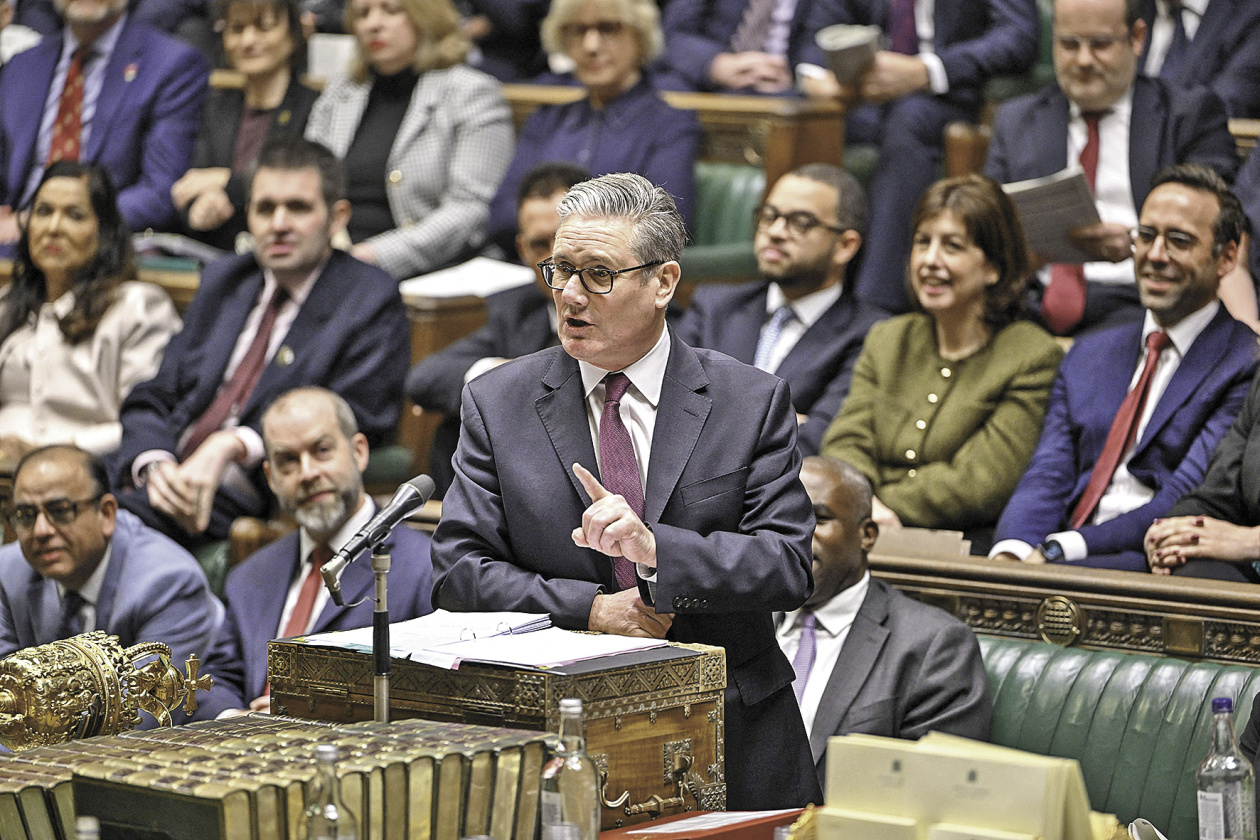
Group 1 - UK Prime Minister Starmer is leading a delegation of approximately 60 people to China, marking the first visit by a UK Prime Minister in eight years since Theresa May's visit in February 2018 [1] - The visit is seen as a significant diplomatic moment, with Starmer aiming to establish a new chapter in UK-China relations amid deteriorating ties with the US [3] - Key government officials, including Chancellor of the Exchequer Reeves and Secretary of State for Business and Trade Peter Kyle, will accompany Starmer to strengthen trade relations with China [3][5] Group 2 - The business delegation includes executives from major companies such as HSBC, Diageo, and Jaguar Land Rover, indicating a strong interest in reviving commercial dialogue between the UK and China [4] - The restructured "UK-China CEO Council" will include representatives from companies like AstraZeneca and BP, highlighting the importance of corporate engagement in the renewed dialogue [4] - Starmer's government is pursuing a pragmatic approach to relations with China, recognizing it as a vital trade partner with a market of over 1.4 billion people [5][6]
进步与再平衡:愿黄金时代永不落幕
Jing Ji Guan Cha Bao· 2026-01-24 12:04
Group 1 - The article draws parallels between the cultural flourishing of medieval Baghdad and industrial revolution-era England, highlighting the significance of bookstores in both societies [1] - During the Renaissance, the emergence of a new patronage system allowed wealthy families like the Medici to support artists, leading to a close relationship between art and commerce [2][3] - The rise of the merchant class in the Netherlands contributed to a shift in artistic demand towards more personal and everyday themes, further democratizing art [2] Group 2 - The integration of craftsmen and intellectuals was crucial for technological advancement, as seen in the establishment of the Royal Society in England, which encouraged collaboration between knowledge and practical skills [3][4] - The absence of a strong centralized government in England allowed the market to thrive, fostering an environment conducive to innovation and the rise of the merchant class [7][8] - The industrial revolution was characterized by continuous progress, driven by technological innovations across various sectors, from steam engines to digital technologies [5][6] Group 3 - The transition of cultural centers from London to New York reflects the evolution of global power dynamics, with the U.S. embodying a decentralized system that fosters innovation [10][11] - The challenges faced by contemporary societies include balancing centralized planning with the need for decentralized innovation, particularly in the context of technological advancements [15][17] - The article emphasizes the importance of optimism and the redefinition of progress to avoid the decline of a golden age, suggesting that a focus on inclusivity and environmental sustainability is essential [17][18]
特朗普称美菲达成贸易协议;中国央行:房地产贷款增速回升|南财早新闻
Sou Hu Cai Jing· 2025-07-22 23:43
Group 1 - The State Administration of Foreign Exchange reported that in the first half of the year, banks accumulated foreign exchange settlement of 82,135 billion yuan and foreign exchange sales of 83,950 billion yuan, indicating a stable foreign exchange market with strong resilience and vitality, outperforming market expectations [1] - In the first half of the year, there was a net inflow of cross-border funds of 127.3 billion USD from non-bank sectors, and foreign capital net increased holdings of domestic stocks and funds by 10.1 billion USD, reversing the net reduction trend of the past two years, with expectations for gradual increases in foreign allocation of RMB assets [1] Group 2 - The Ministry of Human Resources and Social Security reported that as of the end of June, the number of participants in basic pension, unemployment, and work injury insurance reached 1.071 billion, 245 million, and 300 million respectively, all showing stable growth year-on-year [4] - The Central Huijin Investment Co. has significantly increased its holdings in exchange-traded funds (ETFs), with a total subscription of over 200 billion yuan in the second quarter, aligning its strategic layout with policy guidance to stabilize market expectations and attract long-term capital [4] Group 3 - JD.com launched a "Dish Partner" recruitment plan, offering 1 billion yuan in cash to find partners for 1,000 signature dishes, with a guaranteed dividend of 1 million yuan for each dish [7] - Meituan announced the official launch of the "Ten Thousand Brands" plan, providing traffic support, customized services, and brand support for 10,000 well-known catering brands, with over 5,000 brands already participating [8]
金价攻破3400美元关口,能否迈进“黄金时代”?
2 1 Shi Ji Jing Ji Bao Dao· 2025-07-22 13:03
Core Viewpoint - The recent surge in gold prices, surpassing $3,400 per ounce, is attributed to rising uncertainty in global trade and the weakening of the US dollar and bond yields, leading to increased safe-haven demand for gold [1][2]. Group 1: Market Dynamics - Gold's price increase is seen as a systematic response to global macroeconomic instability rather than a temporary fluctuation, with expectations of failed US-EU trade negotiations acting as a micro trigger [2][4]. - The Federal Reserve's potential changes and speculation about its restructuring are contributing to market uncertainty, which is favorable for gold [2][3]. - The demand for gold is shifting from being primarily driven by the US dollar's fundamentals to being influenced by global economic differentiation and trust issues among countries [2][4]. Group 2: Central Bank Behavior - Central banks are increasingly purchasing gold as a proactive response to the instability of foreign currencies, with significant growth in gold demand from central banks, particularly in emerging markets [5][6]. - The global central bank gold purchasing trend is expected to continue, with many central banks still having low gold reserves relative to their foreign exchange reserves, indicating room for growth [5][6]. - The structural demand for gold from central banks is seen as a long-term trend, with the current low allocation of gold in reserves suggesting substantial future increases [6][8]. Group 3: Future Projections - Analysts predict that gold prices could reach between $3,600 and $4,500 per ounce in the medium to long term, driven by systemic changes in the global monetary structure and increasing distrust in the dollar [7][8]. - The transition of gold from an inflation hedge to a systemic protection asset reflects a significant shift in its valuation logic, with expectations of continued price increases as global credit systems are reassessed [7][9]. - The long-term bullish outlook for gold is supported by multiple structural factors, including the reconfiguration of the global monetary trust structure and the ongoing trend of de-dollarization among emerging market central banks [8][9].
黄金创新高!突破3340美元
21世纪经济报道· 2025-05-22 02:16
Core Viewpoint - The article highlights a significant surge in gold prices, driven by geopolitical tensions and shifts in the global monetary system, indicating the dawn of a "golden era" for the asset class [6][8]. Group 1: Gold Price Movement - On May 22, spot gold prices rose to over $3,340 per ounce, marking a new high since May 9, with a daily increase of 0.78% [1][2]. - Hong Kong-listed gold stocks saw substantial gains, with companies like Chifeng Jilong Gold Mining rising over 5% [2]. Group 2: Market Predictions - UBS predicts that gold prices could reach $3,500 per ounce by the end of the year, with potential highs of $3,800 per ounce under certain scenarios [2]. - Goldman Sachs forecasts gold prices to be $3,700 per ounce by the end of 2025 and $4,000 per ounce by mid-2026, based on the delayed interest rate cuts by the Federal Reserve and a slight economic recession impact [6][8]. Group 3: Underlying Factors - The recent surge in gold prices is attributed to three main factors: the U.S. dollar's credit crisis, the geopolitical tensions in the Middle East, and the structural cracks in the U.S. credit system [6][7]. - The loss of the last AAA rating for the U.S. has raised concerns about the dollar's status as a global reserve currency, increasing demand for gold as a "non-sovereign credit asset" [6][7]. Group 4: Long-term Outlook - The long-term bull market for gold is expected to be supported by a supply-demand imbalance, with global gold production growth at only 1% and continued central bank purchases [8]. - Historical data suggests that during periods of stagflation, gold has provided significant returns, indicating a potential repeat of this scenario in the coming years [8].

“一代投资人也有一代投资人的使命”
投中网· 2025-04-25 06:45
将投中网设为"星标⭐",第一时间收获最新推送 与上一代投资解法有什么不同? 整理丨 张楠 来源丨 投中网 投中峰会前超级投资家中,一位圈内 " 老炮儿 " 认为, VC 一定会有下一个黄金时代,而且比之前的更伟大。 我们好奇的是,在股权投资行业剧烈分化的时代,新星投资人如何看待自己所经历的黄金时代?还会坚定地认为,有下一个黄金时代在等待他们吗?在 上一个黄金时代到下一个黄金时代的过程中,投资人的身份会发生什么样的迁移和变化?面对分化,他们又将拿出什么理性或感性的工具应对?又与上 一代投资解法有什么不同? 在由投中信息、投中网共同主办的 " 第 19 届中国投资年会 · 年度峰会 " 上, 联想之星合伙人高天垚、峰瑞资本合伙人马睿、东方富海合伙人唐睿 德、心资本合伙人吴炳见、东方嘉富执行总经理郑格、保利资本股权投资部负责人朱峰 ,就"投资人身份的时代新解"议题展开深度对话,既有对过往 周期的复盘,也有对未来趋势的前瞻,勾勒出新星投资人面对时代剧烈变化的轮廓和线条。 高天垚 认为自己有幸赶上了 AI 时代,联想之星也投了 100 多个 AI 项目。当前, AI 进入能力与场景迭代阶段,太"热"了所以才引发不少争议 ...