
AIGC(人工智能生成内容)

Search documents
文化新质生产力推动“两个文明”相协调的现代化
Xin Lang Cai Jing· 2026-01-11 20:19
Group 1: High-Quality Development and Cultural New Productive Forces - The core principle and primary goal of the "14th Five-Year Plan" is high-quality development, emphasizing the role of new cultural productive forces in promoting this development [1] - Cultural new productive forces are driving a systematic reconstruction of material civilization, influencing production practices and consumption methods beyond just technology [2] Group 2: Reshaping Cultural Production Practices - Cultural new productive forces have become a significant concept in cultural enterprises, leading to a transformation in production practices that extends beyond internal integration to deeper changes in production logic, organizational methods, and industry boundaries [2] - The shift from traditional content reproduction to autonomous generation is facilitated by AI-generated content (AIGC), enhancing the internal nature of cultural productivity and redefining production boundaries and creative roles [2] Group 3: Redefining Cultural Consumption - The "14th Five-Year Plan" suggests boosting consumption by expanding the supply of quality consumer goods and services, with cultural new productive forces reshaping the underlying logic of cultural consumption [3] - Cultural consumption is evolving from a one-way acceptance model to a co-creation model, where consumers participate in the cultural value reproduction process [3] - The reliance on algorithmic recommendations and social connections is increasing, leading to a collaborative network in cultural consumption [3] Group 4: Promoting Spiritual Civilization - Cultural new productive forces, supported by digital technology and intelligent algorithms, are embedded in social sciences and moral thought, providing momentum for the overall leap in socialist spiritual civilization [4] Group 5: Modernizing Education, Technology, and Culture Systems - The "14th Five-Year Plan" emphasizes seizing opportunities from the new round of technological revolution and industrial transformation to enhance the overall effectiveness of the national innovation system [5] - Digital and intelligent technologies are transforming education from a one-way knowledge transfer to a participatory meaning generation process, fostering modern citizens with innovative capabilities [5] Group 6: Strengthening Socialist Moral Systems - Cultural new productive forces promote the integration of socialist core values into social life, leading to a generative development of the moral system [6] - The digitalization of public ethics and the creation of civilized cities shift public morality from promotional guidance to situational participation [7] Group 7: Building a New Form of Human Civilization - Cultural new productive forces facilitate the coordinated development of material and spiritual civilizations, laying the foundation for a new form of human civilization [8] - The transition from efficiency-oriented material civilization to culture-empowered production processes enhances the humanistic and ecological aspects of material products [8] Group 8: Enhancing Cultural Industry Quality - The focus on people-centered development in constructing a new form of human civilization emphasizes the importance of public cultural services and the synchronization of cultural industry innovation and social value [8] - High-quality cultural products, such as books and digital creativity, not only meet diverse cultural needs but also strengthen the cultural foundation for social sharing [8]
中软国际中国总部“未来之门”项目落户昌平
Bei Jing Ri Bao Ke Hu Duan· 2026-01-08 16:45
Group 1 - The core project "Future Gate" by China Soft International is aimed at establishing a digital and intelligent information technology innovation ecosystem in Changping District, promoting high-quality development of the digital economy [1][5] - The project will focus on six key areas: intelligent cloud, ERP, HarmonyOS, AIGC (Artificial Intelligence Generated Content), trusted computing, and smart vehicles, leveraging the company's extensive experience in cloud intelligence and big data [3][5] - The project will create a "Strategic Partner Space" and "AI + Industry Incubator" to foster micro-clusters of industries in sectors such as energy, finance, smart manufacturing, healthcare, education, and public services, facilitating the transformation of technological achievements [3][5] Group 2 - Changping District has actively integrated into Beijing's global digital economy benchmark city construction, with 435 core digital economy enterprises and recognition as a national pilot city for small and medium-sized enterprises' digital transformation [5] - The project site, Zhuxinzhuang Smart Innovation Port, is a core area for digital economy in Changping, already housing major companies like Xiaomi and Unisplendour [5] - The establishment of the China Soft International headquarters is expected to enhance the digital economy industry chain in Changping, driving continuous development of upstream and downstream enterprises through innovation collaboration and industry empowerment [5]

(粤港澳全运会)全运会上这些“动物”,藏着大湾区发展密码
Zhong Guo Xin Wen Wang· 2025-11-13 11:51
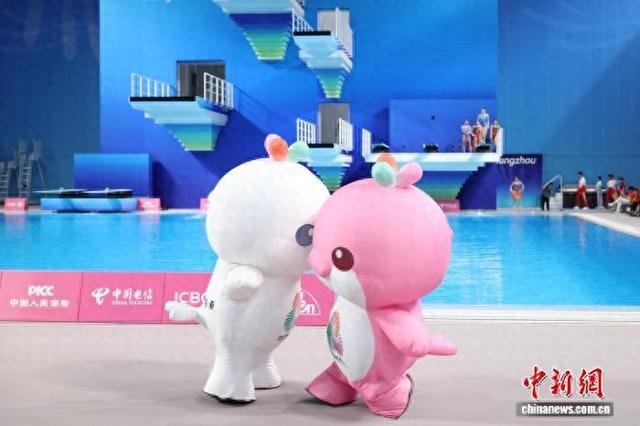
Group 1: Ecological Protection - The mascots of the 15th National Games, "Xi Yang Yang" and "Le Rong Rong," are based on the endangered Chinese white dolphin, highlighting the importance of ecological protection in the Guangdong-Hong Kong-Macao Greater Bay Area [1][2] - The Greater Bay Area has established a marine ecological protection system through innovation, technology, and cross-border cooperation, resulting in improved marine ecological conditions [2][3] - The presence of the Chinese white dolphin in the Lingdingyang waters signifies a harmonious coexistence between humans and nature in the Greater Bay Area [2] Group 2: Cultural Significance - The opening ceremony of the 15th National Games featured cultural symbols like the lion dance and the arowana fish, representing the shared cultural heritage of Guangdong, Hong Kong, and Macao [4][5] - The lion dance symbolizes the spirit of perseverance and vitality, while the arowana fish is associated with success and ambition, reflecting the cultural values of the region [5][7] - The unique characteristics of Lingnan culture contribute to the ongoing development of the Greater Bay Area, promoting cultural innovation and integration [7] Group 3: Technological Innovation - The event showcased various smart technologies, such as the "Eagle Eye" system for precise judging and the "electronic dog" providing seamless services for disabled attendees [8] - Guangzhou ranks eighth globally in the "Natural Index - Research Cities," and Shenzhen has maintained double-digit growth in R&D investment for nine consecutive years, indicating a strong focus on technological advancement [8] - The "Shenzhen-Hong Kong-Guangzhou" innovation cluster has been recognized as the world's top innovation cluster in the 2025 Global Innovation Index [8]
数据时代城市文化的被动重塑与主动升维
Xin Hua Ri Bao· 2025-11-07 09:23
Core Insights - The article emphasizes the profound transformation of urban culture in the data era, highlighting the importance of preserving and promoting traditional Chinese culture while adapting to technological advancements [1][2][3] Group 1: Opportunities in the Data Era - The data era is reshaping urban cultural ecology, providing new momentum for the protection, inheritance, innovation, and dissemination of urban culture [2] - Cultural preservation is shifting from "rescue-based restoration" to "preventive preservation," utilizing technologies like 3D scanning and digital modeling to create permanent digital archives of cultural heritage [2] - Cultural transmission is evolving from "one-way instruction" to "immersive experiences," leveraging AR, VR, and MR technologies to engage audiences interactively with historical contexts [3] - Cultural innovation is moving from "resource dependence" to "creative drive," with data analysis enabling personalized cultural offerings and the emergence of new artistic forms like digital art and metaverse exhibitions [4] - Cultural dissemination is expanding from "regional limitations" to "global coverage," as internet platforms allow unique cultural aspects of cities to reach a worldwide audience [4] Group 2: Challenges in the Data Era - The "digital divide" may lead to unequal access to cultural resources, marginalizing groups less familiar with digital technologies [5] - "Algorithmic bias" could result in cultural content homogenization, creating "information cocoons" that threaten cultural diversity [5][6] - Over-reliance on digital representations may dilute the authenticity of cultural experiences and historical connections [6] - "Data security" and "cultural security" face new risks, necessitating robust measures to protect cultural heritage in the digital realm [6] Group 3: Pathways for Cultural Development - Emphasizing a people-centered approach, efforts should be made to bridge the digital divide and ensure equitable access to cultural resources [7] - Value-driven algorithms should be developed to promote diverse and high-quality cultural content, countering the effects of "information cocoons" [7] - A focus on integrating digital technology with physical cultural experiences can enhance engagement and appreciation of cultural heritage [8] - Establishing a governance framework for cultural heritage in the digital age is essential to ensure the safety and sustainable development of cultural resources [8]
陆洪磊、王嘉欣:厘清二创边界,让AIGC生态走得更远
Huan Qiu Wang Zi Xun· 2025-10-21 22:56
Core Viewpoint - The rise of AI-generated content (AIGC) has sparked significant attention and controversy, particularly regarding copyright infringement related to AI adaptations and derivative works, necessitating effective governance to navigate this evolving landscape [1][2][3] Group 1: AI and Copyright Issues - The American Film Association has publicly urged OpenAI to take immediate action against its AI application Sora2 for copyright infringement, highlighting the ongoing tensions between AI creativity and intellectual property rights [1] - The open and extensible nature of AI tools, combined with the lack of a robust regulatory framework, has facilitated the unchecked growth of AI-generated derivative works, raising concerns about potential copyright violations [1][2] Group 2: Cultural Impact and User Responsibility - AI tools empower users with greater creative freedom, allowing for decentralized content creation that can revitalize cultural resources, as seen in projects like the AI micro-drama "The Monkey King" launched by the Central Radio and Television Station in 2025 [2] - While AI-generated content can fulfill personal emotional needs, it also poses risks of misuse, such as creating offensive material or engaging in illegal activities like deepfake scams, which has led to distress among the families of deceased public figures [2] Group 3: Governance and Ethical Considerations - The responsibility of creators has increased with the advent of AI, emphasizing the importance of ethical standards in content creation to avoid descending into low-quality or offensive material [3] - Platforms must take proactive measures to guide and regulate AI-generated content, including improving content filtering mechanisms and enhancing the review processes to promote original works [3] - Regulatory bodies should remain vigilant regarding public sentiment and technological risks, implementing timely responses and developing comprehensive regulations to establish clear boundaries for AI content creation [3]
协同演化 “以幻解幻”——专访高世名
Huan Qiu Wang· 2025-09-05 13:54
Core Perspective - Digital technologies are reshaping the artistic ecosystem, with the collaborative evolution between AI and humanity becoming an irreversible civilizational trajectory. The mission of art today is to defend the subjectivity of creation amid the technological tide [1][2]. Group 1: AI and Art Collaboration - The relationship between AI and art is not adversarial; rather, it is a collaborative evolution where AI serves as a tool to enhance human creativity and open new dimensions of artistic expression [3][5][6]. - AI can transform passive consumption into active production, allowing artists to become "dreamweavers" who actively create rather than indulge in ready-made illusions [1][2][9]. Group 2: Historical Context and Future Directions - The concept of a "vast ocean of history" suggests that all past artistic expressions coexist, and through AI, artists can engage in collective creation with historical figures, thus enriching contemporary art [10][12]. - The "Grotto-Heavens" initiative aims to encourage individuals to create diverse artistic worlds, fostering a rich tapestry of interconnected artistic expressions [15][18]. Group 3: Challenges and Opportunities - The challenge lies in transforming AI-generated content into meaningful artistic production, as current AI outputs often lack depth and creativity, resembling "pre-packaged" art [9][10][22]. - The potential of AI to enhance creativity is significant, as it can assist in generating ideas and improving efficiency in artistic processes, thus expanding the creative landscape [9][19]. Group 4: The Role of Artists - Artists are encouraged to reactivate their primordial instincts and engage actively in the creation process, using AI as a partner rather than a replacement [6][23]. - The ultimate goal is to liberate human creativity from the constraints of consumerism and automation, allowing individuals to reclaim their roles as active producers in the artistic landscape [22][27].

巨星传奇与宇树科技合作;全网用户人均每天上网近8小时|数智早参
Mei Ri Jing Ji Xin Wen· 2025-07-31 06:44
Group 1: Company Collaborations - Giant Star Legend and Yushu Technology have signed a cooperation agreement to develop and commercialize quadruped robots with companionship and social attributes, particularly in the entertainment sector [1] - The collaboration aims to create consumer-grade robotic products with strong IP attributes, potentially enhancing business expansion and commercial value for both companies [1] Group 2: Mobile Internet Trends - As of June 2025, China's mobile internet monthly active user count reached a record 1.267 billion, with users spending nearly 8 hours online daily [2] - The AIGC (Artificial Intelligence Generated Content) sector saw a staggering year-on-year growth rate of 393.9% in total usage time, emerging as a new growth engine [2] - AI search applications have gained significant traction, indicating a shift towards innovative applications in the mobile internet landscape [2] Group 3: Funding and Investment - RoboScience has completed nearly 200 million yuan in angel round financing, led by JD.com, with participation from other investors including China Merchants Venture Capital and SenseTime [3] - The company, established in December 2024, has been operational since March 2025 and previously raised several million yuan in seed funding [3] - The successful financing is expected to attract more talent, capital, and resources to the field of embodied intelligence, accelerating technology development and industrialization [3]
毕业季AI人才就业火爆
Zhong Guo Qing Nian Bao· 2025-07-07 00:22
Core Insights - The demand for AI-related positions is experiencing explosive growth, particularly in state-owned enterprises and internet companies, driven by digital transformation and the integration of AI technologies into various industries [3][5][7]. Group 1: AI Industry Growth - The AI industry in China is projected to exceed 700 billion yuan in 2024, maintaining a growth rate of over 20% annually [2]. - As of April 2025, there are 214,000 registered AI-related companies in China, with a 36% increase in registrations compared to the same period in 2024 [7]. - The rapid growth of the AI sector is creating diverse employment opportunities, particularly in emerging fields such as smart robotics and autonomous driving [2][8]. Group 2: Job Market Dynamics - AI-related job postings have surged, with a 33.4% year-on-year increase in job seekers for AI positions during the spring recruitment period of 2025 [3]. - Salaries for AI positions are notably high, with starting salaries for algorithm positions often around 400,000 yuan annually, and some roles offering up to 1.3 million yuan per year [5][6]. - Despite the high demand, competition for AI jobs remains intense, with many candidates from top universities vying for positions [6][9]. Group 3: Educational Initiatives - Over 500 universities in China have established AI programs or dedicated colleges since 2019, reflecting the growing need for AI talent [10]. - The Ministry of Education has introduced new AI-related majors in the 2025 undergraduate program directory, highlighting the emphasis on AI education [10][11]. - Universities are increasingly focusing on interdisciplinary approaches to AI education, aiming to cultivate versatile talents equipped with both AI skills and domain-specific knowledge [10][11].