
新增就业

Search documents
Americans say the economy is lousy, but their spending habits say the economy is pretty good. What's going on?
MarketWatch· 2025-12-23 17:27
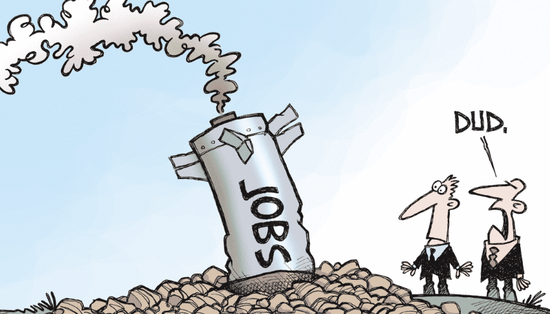
Core Insights - The economy in 2025 is negatively impacted by tariffs, rising inflation, and a decrease in new job creation, leading to a pessimistic outlook [1] Economic Factors - Tariffs are contributing to economic challenges, affecting trade and pricing [1] - Rising inflation is eroding purchasing power and consumer confidence [1] - The number of new jobs created has declined, indicating a slowdown in economic growth [1] Future Outlook - There is potential for improvement in the economy in the upcoming year, suggesting a possible recovery [1]


宋雪涛:除掉AI的广义贡献,美国经济基本处于衰退边缘
Xin Lang Cai Jing· 2025-12-17 07:59
Core Viewpoint - The expectation of a "weak labor supply" is misleading; excluding the broad contributions of AI, the US economy is essentially on the brink of recession [3][24]. Labor Market Dynamics - The US labor supply continues to recover, contributing to a rising unemployment rate, which is a concerning trend as it indicates a weakening "service-employment-income-consumption" chain [3][24]. - The unemployment rate is becoming a critical indicator for observing the US economy, with the Federal Reserve showing increased concern over the rising unemployment rate starting in the second half of 2025 [5][27]. - The labor supply situation is uneven, with "red states" experiencing growth while "blue states" see employment levels contracting, leading to a more alarming signal regarding economic sensitivity [5][27]. Employment Trends - The structure of non-farm payroll employment remains unbalanced, heavily reliant on the education and healthcare sectors, with other private sector job growth showing minimal positive changes [9][31]. - A significant reduction in government employment due to a buyout program has led to the lowest year-on-year growth rate since May 2021, while private sector job growth approaches a low point [11][32]. - The volatility in job creation and economic expectations is affecting the overall stability of the labor market, which is reflected in the high fluctuations of new employment figures [15][36]. Wage Growth and Economic Impact - Wage growth has slipped to 3.5% year-on-year, presenting challenges to purchasing power despite real wage growth remaining positive [16][37]. - The anticipated impact of interest rate cuts on employment appears to be overestimated, as the rising unemployment rate and limited job growth distribution indicate a weakening economic environment [18][40].
海外市场点评:11月非农的“噪音”有多大?
Guolian Minsheng Securities· 2025-12-17 02:41
Employment Data Analysis - November non-farm payrolls showed a significant drop, with a decrease of 10.5 thousand jobs in October and a further reduction of 0.6 thousand jobs in November, primarily due to federal government employment cuts[6] - Private sector job growth remained stable, averaging over 50 thousand jobs added per month in the last three months, indicating a relatively controlled employment market[6] - The unemployment rate unexpectedly rose to 4.6% in November, the highest level since September 2021, influenced by supply-side disruptions and an increase in labor force participation to 62.5%[6][19] Wage Growth and Economic Implications - Average hourly earnings increased by 0.1% month-on-month and 3.5% year-on-year, marking the lowest growth rate since May 2021, reflecting a cooling recruitment market[6] - The decline in real wage growth is compressing consumer purchasing power, contributing to a "K-shaped" recovery in the U.S. economy[6] - The Federal Reserve's recent interest rate cuts are supported by the gradual cooling of the job market, but further "bad" news may be needed to prompt additional rate cuts in January[6][9] Market Reactions and Future Outlook - Market reactions to the employment data were measured, with gold prices initially rising and the U.S. dollar index dipping below 98, but both returned to pre-release levels[6] - The expectation for a rate cut in January remains around 25%, indicating that the market does not view the employment data as significantly altering the Fed's policy trajectory[6][9] - The upcoming December employment report will be crucial for assessing the Fed's policy direction, especially if unemployment continues to rise or non-farm employment shows negative growth[9]