
新工科建设

Search documents
探索机械类专业实践育人模式创新路径
Xin Lang Cai Jing· 2026-02-04 22:38
Core Viewpoint - The article discusses the innovative educational model developed by Jinggangshan University to bridge the gap between engineering talent cultivation and regional industrial needs, showcasing a replicable solution after six years of exploration [1]. Group 1: Educational Model - Jinggangshan University has established a distinctive and effective practical education model for mechanical majors, termed "extracurricular leverage, four-chain drive, and innovation linkage" [1]. - The model emphasizes a three-dimensional intersection of ideological education, competition training, and club nurturing, integrating the Jinggangshan spirit into professional practice [2]. Group 2: Industry-Education Integration - The university has created a "four-chain closed-loop" mechanism, connecting the education chain, talent chain, industry chain, and innovation chain to enhance collaboration with over 40 local leading enterprises [3]. - This mechanism allows for direct incorporation of real industry needs into curricula and graduation projects, fostering a dynamic balance between talent supply and industry demand [3]. Group 3: Innovation Pathways - A three-step approach to innovation training has been designed, focusing on stimulating creative awareness, training creative thinking, and practicing entrepreneurial spirit [4]. - The approach includes access to cutting-edge platforms and support for transforming ideas into products and business plans, providing comprehensive support for students' innovation potential [4]. Group 4: Impact and Recognition - Over six years, the model has impacted more than 3,000 students, with graduates being well-received by companies, as over 65% remain in Jiangxi to support local industrial upgrades [5]. - The model's effectiveness has been recognized by relevant authorities and has been adopted by similar institutions for their engineering education and industry-education integration reforms, demonstrating its replicability and universality [5].
多校撤销艺术专业
第一财经· 2026-01-18 03:36
Core Viewpoint - The rapid development of emerging industries necessitates adjustments in higher education professional settings to align with industry transformation and upgrades [3]. Group 1: Changes in Higher Education Programs - Many universities are increasingly suspending or eliminating certain academic programs, particularly in the arts [4]. - Jilin University has 141 undergraduate programs, with 19 suspended and 1 new program (Biological Breeding Science) planned for 2025 [4]. - East China Normal University plans to add 1 new program (Data Science) and suspend 24 programs, including several in the arts [4]. - Nanchang University intends to eliminate 8 programs, including 4 in the arts, by 2025 [4]. - The McKinsey Research Institute reports that from 2014 to 2023, arts-related programs such as Fashion Design and Animation have seen significant reductions [4]. Group 2: Impact of Technology on Academic Programs - The rise of artificial intelligence (AI) is significantly impacting various fields, especially art and design, leading to a notable shift in program offerings [5]. - The elimination of certain art programs does not indicate a decline in the arts as a whole; rather, new programs that integrate technology and digital arts are emerging [5]. - New programs such as Digital Performance Design and Virtual Space Art reflect the growing intersection of art with technology and market demand [5]. Group 3: Institutional Adjustments and New Initiatives - Institutions like Sichuan University are implementing dynamic adjustment mechanisms to optimize academic structures, focusing on areas with insufficient development or alignment with national strategies [6]. - Recent trends show universities establishing new colleges focused on cutting-edge fields such as AI, integrated circuits, and life sciences [6][7]. - The Ministry of Education has emphasized the need to optimize professional settings based on national strategies and market demands, aiming to enhance the alignment of higher education with economic and social development [8].

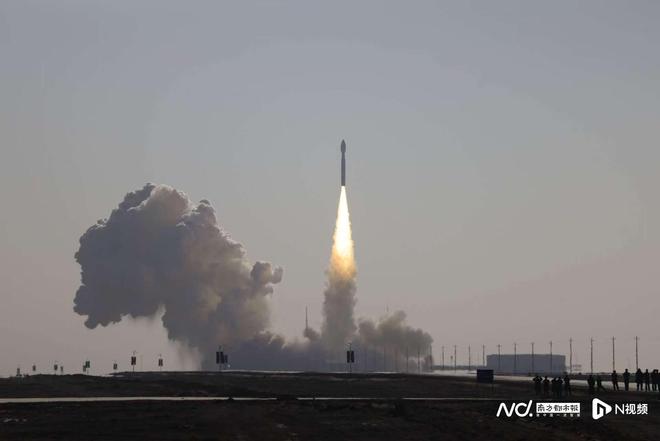
中山大学学生自主研制立方星在酒泉成功发射
Nan Fang Du Shi Bao· 2025-12-10 07:20
Core Viewpoint - The successful launch of the "Yixian-A" satellite, developed by a student team from Sun Yat-sen University, marks a significant achievement in the field of aerospace engineering and education, showcasing the university's commitment to new engineering disciplines and talent cultivation [1][3]. Group 1 - The "Yixian-A" satellite was launched on December 10, 2023, at 12:03 PM from the Jiuquan Satellite Launch Center using the Kuaizhou-1A rocket, successfully entering its designated orbit at 12:17 PM [1]. - The satellite is the world's first to conduct in-orbit verification of wooden outer panels, demonstrating innovative materials in aerospace applications [1][3]. - The satellite is designed for a six-month mission, focusing on tasks such as satellite imaging, wooden outer panel testing, and software-defined satellite technology validation using Raspberry Pi [3]. Group 2 - The development of "Yixian-A" took four years, involving multiple iterations and significant support from the university, alumni, and various academic disciplines, including aerospace, materials, and advanced manufacturing [3]. - The student team plans to continue developing the "Yixian" series of satellites, aiming for innovative breakthroughs in fields such as medical engineering integration [3].
有985高校停招24个本科专业
第一财经· 2025-11-04 11:36
Core Viewpoint - The rapid development of emerging industries necessitates adjustments in higher education systems, leading to an accelerated restructuring of academic programs in Chinese universities to align with national strategic needs and technological advancements [3]. Group 1: New Academic Programs - A number of "Double First Class" universities have announced the establishment of new colleges focusing on cutting-edge technologies and emerging industries, particularly in fields such as artificial intelligence, future technologies, aerospace technology, quantum science, and information dissemination [3]. - On September 7, 2023, Northwest A&F University inaugurated the first Artificial Intelligence and Robotics College among agricultural and forestry universities in China [3]. - On October 27, 2023, Henan University held a strategic consultation meeting for new engineering disciplines, planning to establish nine new engineering colleges focusing on areas like new energy, intelligent manufacturing, and artificial intelligence [3]. Group 2: Trends in University Admissions - New research-oriented universities, such as Fujian Fuyou University and Ningbo Oriental Institute of Technology, have seen their admission scores rivaling or exceeding those of established 985 universities in their first year of undergraduate enrollment [4]. - The increasing popularity of these new universities reflects a shift in student preferences towards institutions that align with modern industry demands [4]. Group 3: Professional Program Adjustments - Traditional universities are increasingly adjusting their professional offerings by adding new programs while also discontinuing those that do not align with economic and social development needs [5]. - Recent data from East China Normal University indicates that in 2025, the university will add one new program in data science while discontinuing 24 programs, including various fields such as environmental engineering and international trade [6]. - Shandong University has also announced the suspension of 27 programs, including financial engineering and world history, while introducing two new programs in engineering software and sports training [6].

聚焦国家重大战略需求,深化教学科研改革,加强基础研究和科技攻关—— 天津大学的三个创新场景(科技视点)
Ren Min Ri Bao· 2025-10-26 22:20
Group 1 - The core message emphasizes the importance of aligning educational and research efforts with national strategic needs, focusing on talent cultivation and technological self-reliance to contribute to the development of a strong educational and technological nation [1] - Tianjin University has made significant breakthroughs in research, discipline construction, and talent training, aiming to meet the demands of national security and engineering construction through large-scale scientific facilities [1][2] - The university's earthquake engineering simulation facility is unprecedented globally, designed to address major public safety and engineering challenges that existing smaller facilities cannot meet [2][3] Group 2 - The facility's development involved overcoming numerous technical challenges, including the creation of a unique "dual six-degree-of-freedom superimposed vibration table system" to simulate various earthquake scenarios [2][3] - The project team has successfully surpassed similar international facilities, achieving the capability to replicate nearly all earthquake scenarios within five years of construction [3] - The team has expanded the application of the facility from engineering to industrial product seismic testing, transitioning from a "purchaser" to a "service provider" role [3][4] Group 3 - Tianjin University is a leader in the new engineering education initiative, focusing on innovative teaching methods and interdisciplinary collaboration to enhance students' problem-solving abilities [5][6] - The university's synthetic biology laboratory has made significant advancements in genome synthesis and artificial cell construction, contributing to the field of synthetic biology [6][7] - The establishment of synthetic biology courses has fostered a new generation of researchers, enabling students to engage in cutting-edge projects and develop essential scientific skills [7][8] Group 4 - The collaborative environment within the synthetic biology lab encourages student autonomy and creativity, leading to innovative solutions and significant research breakthroughs [9] - The lab's recent achievements include the precise synthesis of large-scale human genome sequences, showcasing the university's commitment to advancing high-end research capabilities [8][9]
欧普照明捐3000万设科创基金 助力复旦新工科建设
Chang Jiang Shang Bao· 2025-07-03 23:29
Core Viewpoint - The company OPPLE Lighting has established a 30 million yuan fund in collaboration with Fudan University to support innovation in new engineering disciplines, focusing on talent recruitment, faculty development, research projects, and student training [1] Group 1: Corporate Social Responsibility Initiatives - OPPLE Lighting has donated 30 million yuan to set up the Fudan University-OPPLE Lighting Technology Innovation Fund, aimed at enhancing the competitiveness of faculty in new engineering fields and supporting research in smart lighting, green low-carbon solutions, and healthy lighting environments [1] - The company has actively engaged in various charitable activities, including educational support, disaster relief, rural assistance, and elderly care [1][2] - In 2024, OPPLE Lighting donated 456 sets of high-quality classroom and dormitory lighting fixtures to three schools in Guizhou and Yunnan, benefiting 572 students and promoting eye health [2] Group 2: Community Engagement and Health Initiatives - On Children's Day 2024, OPPLE Lighting organized a charity event at a nursing home, providing safety power strips to elderly residents and fostering intergenerational interaction [2] - The company conducted a family health lighting public science activity, educating citizens on the importance of appropriate lighting for health and well-being [2] Group 3: Environmental and Technological Innovations - OPPLE Lighting is committed to green development, offering smart lighting solutions to facilitate urban low-carbon transformation [3] - The company has launched a new generation of high-efficiency streetlights with a luminous efficacy of 200 lm/W, leading the industry in performance [3] - OPPLE's smart road lighting and multifunctional pole projects have been successfully implemented in multiple cities, with over 1 million connected streetlight nodes, contributing to urban green development [3]

北京大学增设信息科学与技术学部、工学部,均由院士“挂帅”
Xin Jing Bao· 2025-03-26 02:19
Group 1 - Beijing University has established two new departments: the Department of Information Science and Technology and the Department of Engineering, both led by academicians [1][2] - The Department of Information Science and Technology includes several institutes such as the Institute of Information Science and Technology, the Computer College, and the Integrated Circuit College, among others [1] - The Department of Engineering comprises the College of Engineering, the College of Mechanics and Engineering Science, and other specialized institutes [1] Group 2 - The newly appointed leaders, Mei Hong and Duan Huiling, emphasized the importance of interdisciplinary collaboration to enhance the development of new engineering disciplines and contribute to the university's goal of becoming a world-class institution [2] - The university's president, Gong Qihuang, highlighted that the restructuring aligns with national strategic needs and aims to optimize academic layout while fostering innovative talent development [2] - Beijing University announced an increase of 150 undergraduate enrollment slots, focusing on disciplines that are urgently needed by the nation and emerging fields [2]