
新材料产业化

Search documents
新材料×AI,如何跨越创新“死亡谷”?
Sou Hu Cai Jing· 2026-02-11 14:20
Core Viewpoint - The survival rule in the pilot stage should shift from technology-driven to scenario-driven, and from solo efforts to collaborative responsibilities. Only through the combined efforts of government, enterprises, and capital can the innovation "valley of death" be truly crossed [8]. Group 1: Innovation in New Materials - The year 2026 marks the beginning of the "14th Five-Year Plan," emphasizing high-level technological self-reliance, with new materials positioned as the "grain of industry" [3]. - A recent closed-door meeting titled "New Materials × AI: Paradigm Shift" was held to discuss the core challenges of industrializing new materials, featuring key figures from various sectors [3]. - There is a significant misconception in China regarding the transformation of scientific achievements; the focus should be on identifying market demand first rather than developing technology and then seeking a market [4]. Group 2: Challenges in Pilot Testing - New material innovation is characterized by "three highs and three longs": high investment, high difficulty, high barriers, and long research, verification, and application cycles [7]. - The pilot testing phase is critical and often the most challenging, as scaling from laboratory to industrial application involves complex dynamics and engineering capabilities [7]. - The establishment of pilot research platforms by local governments aims to provide resources for new material innovation companies, but requires substantial investment from enterprises alongside government support [8]. Group 3: AI Empowerment in Material Innovation - AI's role in new material development is to identify paths not yet discovered by humans, but it requires a foundation of standardized, high-quality data to be effective [9]. - The success of AI in manufacturing is more pronounced than in research, as manufacturing data tends to be more standardized and systematic [10]. - The emergence of embodied intelligence in the materials sector presents opportunities for cost reduction through the use of new composite materials [10]. Group 4: Understanding the Value of "Slow Variables" - New materials are not a fast business; understanding their value is crucial for attracting capital, which involves clear communication and collaboration with investors [11]. - The strategy for new material companies should focus on both internal capabilities and visibility to investors, emphasizing the importance of long-term perspectives and patient capital [11][12]. - Different types of capital suitable for new material enterprises include government industrial funds, corporate venture capital, and impact investments that prioritize both financial returns and social value [12].


从资源大企迈向价值强企:中金岭南锚定“十五五”目标
Jing Ji Wang· 2026-01-09 07:57
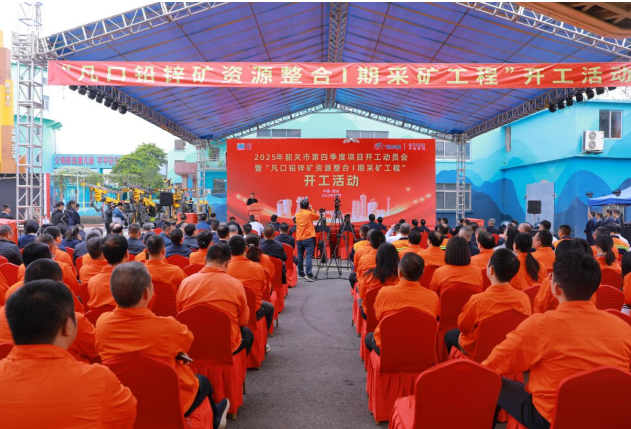
Core Insights - In 2025, Zhongjin Lingnan reported a total operating revenue of 48.505 billion yuan, a year-on-year increase of 11.81%, and a net profit attributable to shareholders of 841 million yuan, up 5.18% year-on-year, while also aiming to reduce costs and increase efficiency by approximately 200 million yuan for the year [1] - The company is undergoing a strategic transformation, focusing on enhancing quality and efficiency, and aims to lead in the comprehensive recycling of rare metals and the industrialization of new materials [1][4] Resource Security - The company emphasizes the importance of securing strategic mineral resources as a political responsibility and a foundation for survival and development, especially given the increasing global competition for resources [1] - Zhongjin Lingnan is actively working on domestic resource expansion and overseas diversification, with projects like the Fan口 lead-zinc mine resource integration and the expansion of the Guangxi mining project [3] New Materials Industry - The new materials industry is identified as a core engine for value enhancement, with a focus on transitioning from raw material sales to material production and solution provision [9] - Zhongjin Lingnan's subsidiary, Zhongjin Technology, has developed zinc-based battery storage materials that have entered the European and American supply chains, and is a leading supplier of mercury-free zinc alloy batteries in China [9][10] Innovation and R&D - The company has established a robust innovation system with 15 provincial-level R&D platforms and has signed 24 research projects with universities, resulting in 78 authorized patents in 2025 [10] - Zhongjin Lingnan aims to grow its new materials sector significantly by 2030, targeting over 10 billion yuan in revenue and focusing on high-end market breakthroughs [10] Green and Intelligent Development - The company has integrated carbon neutrality goals into its development strategy, aiming to peak carbon emissions by 2030 and implementing various low-carbon technologies [12] - Zhongjin Lingnan is advancing smart mining technologies, including autonomous systems for underground transport and intelligent production management [12] Reform and Talent Development - The company is implementing deep reforms, including competitive job placements and salary reforms, to enhance internal vitality [13] - Zhongjin Lingnan has introduced a talent development plan, recruiting industry experts and focusing on skill training, with several employees recognized for their excellence [13][14]

打通“最后一公里”,智能制造赋能新材料产业化
高工锂电· 2025-07-14 10:19
Core Viewpoint - The global lithium battery industry is entering the TWh era, where capacity expansion is no longer the sole competitive focus. The industry is shifting towards systemic innovation to address challenges such as energy density, material cost pressures, and the environmental impact of retired batteries [1]. Group 1: Industry Trends - The competition is evolving towards three core areas: the industrialization of advanced materials, engineering capabilities for extreme manufacturing, and the global recycling resource layout [1]. - The rapid development of the global electric vehicle industry is leading to a surge in retired batteries, with policies and regulations becoming key drivers for industry development [4][5]. Group 2: Recycling and Resource Management - China has established a comprehensive recycling management system for electric vehicle batteries, with manufacturers as the primary responsible entities [4]. - The global lithium resource consumption is heavily concentrated in the Asia-Pacific region, while lithium mines are primarily located in Australia, South America, and Africa [5]. - The recycling capacity is unevenly distributed globally, with China accounting for 40% of the global black powder production, while Europe and the U.S. rely on third-party processing [5]. Group 3: Material Innovations - The company has a strong patent portfolio in silicon-based anode materials, with 458 patents filed and 109 granted, focusing on key technologies such as in-situ doping and gas-phase coating [9]. - New silicon-carbon materials have achieved high capacity (up to 2212 mAh/g), low expansion (less than 10% after 1000 cycles), and long lifespan (over 80% capacity retention after 1400 cycles) [9]. - The company has made significant breakthroughs in solid-state electrolytes, developing multiple generations of products to enhance performance [10]. Group 4: Equipment and Manufacturing Innovations - The company has developed high-capacity equipment that significantly reduces costs, with a production capacity increase of 50% and a 30% reduction in operating costs for certain furnaces [16][17]. - Innovations in equipment design, such as temperature and atmosphere uniformity, contribute to improved product consistency and energy efficiency [16][17]. - The company is addressing the dual pressures of cost reduction and quality improvement through process optimization and scalable manufacturing capabilities [20]. Group 5: Future Directions - The company aims to focus on green energy as a foundation for reducing costs in graphite anode materials and to deepen the development and industrialization of silicon-based anode materials [13].
2025高工新能源新材料产业大会7月8日盛大启幕!
高工锂电· 2025-07-07 10:46
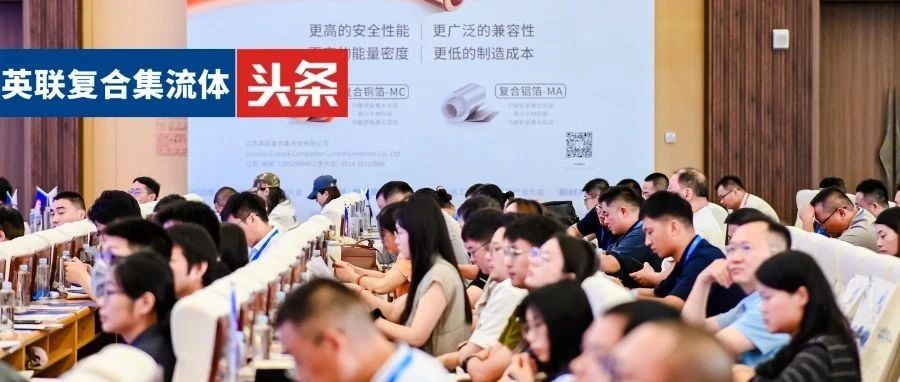
Core Viewpoint - The 2025 High-Performance New Energy Materials Industry Conference will focus on the theme "New Materials, New Dynamics, New Ecology," bringing together leaders from the lithium battery materials industry to discuss the industrialization paths of solid-state batteries and sodium batteries [1]. Group 1: Conference Details - The conference will take place on July 8-9, 2025, at the Yang'an New City Conference Center in Qionglai, Sichuan Province [3][4]. - The event is organized by GGII and is sponsored by Yinglian Composite Fluid [1]. Group 2: Agenda Overview - The conference will feature three main sessions: 1. Opening Ceremony: Changes in Battery Materials under Diverse Demand [6] 2. Special Session One: Blue Ocean of New Material Applications [8] 3. Special Session Two: Innovative Paths for New Materials and Zero-Carbon Manufacturing [9] 4. Special Session Three: Industrialization and Cost Reduction Paths for Solid-State Battery Materials [10] Group 3: Key Topics and Speakers - Key topics include the industrialization of lithium battery materials, advancements in silicon-based anode materials, and the development of solid-state batteries [7][9][10]. - Notable speakers include industry leaders from companies such as Yinglian Composite Fluid, Puli Technology, and various research institutions [6][7][9][10]. Group 4: Logistics and Participation - Participants are advised to prepare business cards and registration information for the check-in process, which starts at 9:00 AM on July 8 [4]. - Transportation options include flights to Chengdu Shuangliu International Airport or Tianfu International Airport, with shuttle services provided to the conference venue [14][15].

万华化学(600309):经营韧性凸显,看好长期成长
China Post Securities· 2025-05-09 08:16
Investment Rating - The report maintains a "Buy" investment rating for the company, with an expected EPS of 4.65, 5.70, and 6.06 for the years 2025 to 2027, respectively, corresponding to PE valuations of 11.7, 9.54, and 8.98 times [6][9]. Core Views - The company demonstrates strong operational resilience and is expected to maintain long-term growth despite short-term economic fluctuations. The global layout is expected to solidify its leading position in the polyurethane market, with new high-value-added products anticipated to enhance profitability [5][6]. - In 2024, the company reported a total revenue of 1820.69 billion yuan, a year-on-year increase of 3.83%, while the net profit attributable to shareholders decreased by 22.49% to 130.33 billion yuan. The decline in profit was attributed to credit impairment losses and asset impairment losses totaling 9.4 billion yuan [5][7]. - The company is expanding its production capacity in polyurethane and has successfully industrialized new materials, with significant projects expected to come online in the near future, further strengthening its market position [5][6]. Financial Summary - For 2024, the company achieved a revenue of 1821 billion yuan, with a projected growth rate of 3.83%. The net profit attributable to shareholders is expected to recover to 146.10 billion yuan in 2025, reflecting a growth rate of 12.10% [7][8]. - The EBITDA for 2024 is reported at 328.17 billion yuan, with projections of 241.94 billion yuan, 286.87 billion yuan, and 299.01 billion yuan for the years 2025 to 2027, respectively [7][8]. - The company's asset-liability ratio stands at 64.7%, with expectations for gradual improvement in the coming years [8].
