
新材料产业集群

Search documents
浙江桐乡,如何“无中生有”?
3 6 Ke· 2026-02-03 07:54
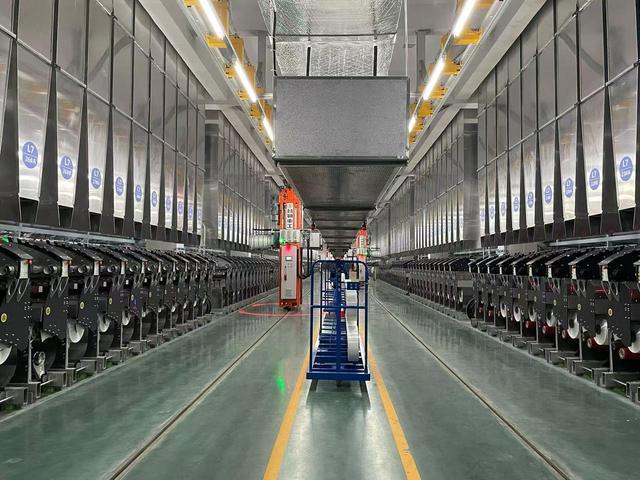
Core Insights - The article highlights the remarkable economic transformation of Tongxiang City, emphasizing its ability to create industries and opportunities from scratch, referred to as "creating something from nothing" [1][3][9]. Group 1: Economic Development - Tongxiang's GDP reached 134.71 billion, showcasing its economic strength comparable to a prefecture-level city despite its small size [9][11]. - The city has a significant entrepreneurial spirit, with approximately 20% of its population engaged in business, leading to a prosperous local economy [13][24]. - In 2024, the industrial output value of Tongxiang exceeded 225.86 billion, marking its evolution from "China's woolen sweater town" to "the capital of woolen sweaters in the world" [7][9]. Group 2: Industrial Growth - Tongxiang has developed a robust new materials industry cluster, with major companies like Jushi, New Fengming, and Tongkun leading the way [15][17]. - The city produces one-third of the country's wind turbine blades, demonstrating its significant role in the new materials sector [15][19]. - The local textile industry, particularly in Puyuan, supports the new materials sector by providing high-quality raw materials, with 31% of high-end functional fabrics used in new materials [15][17]. Group 3: Digital Transformation - The establishment of the "Wuzhen Light" supercomputing center has positioned Tongxiang as a leader in digital innovation, facilitating the digital transformation of traditional industries [20][23]. - The city has implemented a "supercomputing + intelligent computing" system to enhance production efficiency, achieving over a 40% increase in productivity for new materials companies [23][24]. - By 2023, 76% of enterprises in Tongxiang had undergone intelligent transformation, reflecting the city's commitment to integrating technology into its industrial framework [23][24]. Group 4: Government Support and Strategic Planning - The local government has committed significant resources to support the new materials industry, including a 500 million annual fund for three years [24][28]. - Tongxiang's "135N industrial cluster" strategy aims to cultivate a comprehensive new materials industry chain, indicating a structured approach to economic development [25][28]. - Various incentive programs, such as the "Eagle Plan" and "Chick Plan," provide financial support to both large and small enterprises, fostering a conducive environment for business growth [28][29]. Group 5: Future Prospects - The new materials market is projected to grow at a compound annual growth rate of 13.3% from 2020 to 2025, with Tongxiang positioned to be a key player in this expansion [32][33]. - The city's efforts in developing a high-quality new materials industry have resulted in a production capacity that could significantly contribute to China's overall new materials output [32][33].

我国醋酸产业实现新突破
Zhong Guo Hua Gong Bao· 2026-01-13 07:05
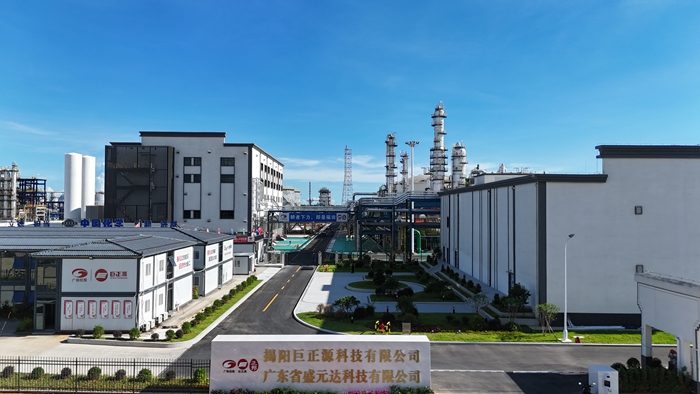
Core Viewpoint - The project of 1.5 million tons/year acetic acid at the Juzhengyuan (Jieyang) New Materials Base has officially entered the trial production phase, marking it as one of the largest single-unit acetic acid production facilities globally, which will significantly impact China's acetic acid industry chain and promote the formation of a new materials industry cluster in the region [1][4]. Technical Aspects - The project utilizes methanol and carbon monoxide as raw materials, employing a rhodium-based catalyst for low-pressure carbonylation to produce acetic acid, achieving high conversion rates, good selectivity, and mild reaction conditions, which effectively enhance thermal efficiency and reduce energy consumption [1][3]. - The main technical indicators of the project meet international advanced levels, with core metrics such as single-unit scale, energy consumption control, and environmental emissions comparable to leading international technologies [3]. Industry Impact - The project will further increase China's annual acetic acid production capacity, solidifying the country's leading position in the global acetic acid industry, and filling the production gap in South China, which previously relied on external supplies [2][4]. - Acetic acid serves as a "universal intermediate" in the chemical industry, widely used in the production of PTA, vinyl acetate, and acetate esters, thus the project is expected to stimulate downstream industries like vinyl acetate and butanol, enhancing the vitality of the new materials industry chain in Jieyang [5]. Regional Development - The project is expected to change the consumption-only status of South China in the acetic acid market, achieving a balanced capacity layout that meets the growing demand for high-end chemical raw materials in the Greater Bay Area, thereby reducing procurement and logistics costs for downstream enterprises [4]. - Future plans include forming a complete industrial chain from basic raw materials to high-end new materials, contributing to the establishment of a regional new materials industry cluster in Jieyang [4]. Talent and Innovation - The project has attracted a high-quality professional talent pool and technical teams, promoting regional technological innovation capabilities and talent development, while collaborations with universities and research institutions will enhance the integration of industry, academia, and research [5]. - As a key project under Guangdong's "Hundred Million Project," it employs domestic technology to achieve self-sufficiency in key chemical raw materials, reducing reliance on external supplies and enhancing the autonomy of China's chemical industry chain [5]. Project Management - The construction faced multiple challenges, including tight schedules, adverse weather, limited space, and complex technologies, which were successfully overcome through innovative processes, optimized construction organization, and strengthened process control [6]. - The project team aims to ensure stable and efficient operation of the facility, contributing to the high-quality development of the regional economy [6].
惠东县公示第三批土地征收成片开发方案,拟征56余公顷土地
Nan Fang Du Shi Bao· 2025-12-05 09:33
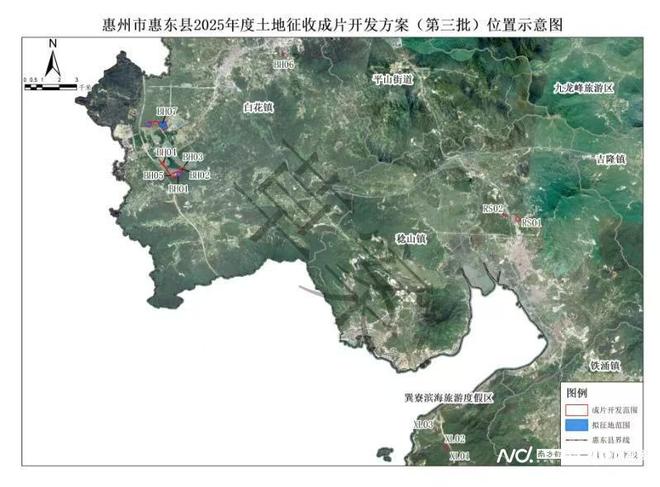
Core Viewpoint - The Huizhou Natural Resources Bureau has announced a public notice regarding the land acquisition plan for Huizhou's Huizhou County, aiming to acquire 56.3679 hectares of land to promote industrial upgrading and regional coordinated development over a two-year period [1][11]. Group 1: Land Acquisition and Development Plan - The land acquisition plan involves a total area of 56.3679 hectares, with one development zone and twelve development areas, including Baihua, Renshan, and Xunliao [2]. - The land use within the development area primarily consists of agricultural land, accounting for 36.4495 hectares (64.66%), with construction land at 19.8614 hectares (35.24%) and unused land at 0.0570 hectares (0.10%) [4]. Group 2: Industrial Focus - The land acquisition aims to accelerate the construction of a new materials industrial park, targeting the establishment of a trillion-level new materials industry cluster and a leading new materials industrial base in the Guangdong-Hong Kong-Macao Greater Bay Area [5]. - Proposed projects will focus on advanced basic materials, key strategic materials, and cutting-edge new materials, including high-end electronic chemicals, high-performance fibers, and biodegradable plastics, laying a solid foundation for the long-term development of the new materials industry cluster [6]. Group 3: Rural Community Development - The plan includes the construction of modern, safe, cost-effective, and environmentally friendly rural communities, contributing to the provincial new rural demonstration construction and enhancing the rural cultural landscape [7]. - Efforts will be made to promote ecological and livable rural areas, integrating urbanization with the development of new rural demonstration villages and improving the overall living environment [8]. Group 4: Tourism Development - Some projects within the land acquisition plan are located in Xunliao Bay, part of Huizhou's key coastal tourism development areas, aiming to create a comprehensive tourism demonstration zone in Guangdong Province [9]. - The plan emphasizes the integration of tourism and cultural development, enhancing tourism infrastructure, and creating diverse tourism products to promote the "tourism+" industry [10]. Group 5: Implementation Timeline - The land acquisition and development are scheduled to be completed within two years, with the project timeline set for 2026 to 2027, ensuring all land acquisition is finalized by 2027 [12].
安徽省蚌埠市: 做强产业集群 营造“材料之都”
Ke Ji Ri Bao· 2025-11-24 01:27
Group 1 - Bengbu has a strong industrial foundation and is recognized as an innovation hub for the glass industry in China, producing the country's thinnest electronic information display glass and hardest high-alumina cover glass [1] - The establishment of the Bengbu Comprehensive Bonded Zone has been approved, providing a core platform for the high-end development of the new materials industry cluster in northern Anhui [1] - The city has positioned the new materials industry as a leading sector, with increasing cluster effects and a vision for becoming a "City of Materials" [1] Group 2 - Anhui Longquan Silicon Materials Co., Ltd. has seen annual capacity growth, with some products achieving the highest market share in their segments, focusing on the R&D and production of HTV silicone rubber nano-reinforcement materials [2] - Yishitong Materials Technology Co., Ltd. is the first Sci-Tech Innovation Board listed company in northern Anhui, specializing in a special coated film that enhances the thermal resistance of lithium battery separators, making it a leading global supplier [2] - Yishitong has increased its R&D investment over 20 times in the past decade, leading to significant breakthroughs and earning accolades such as national manufacturing "single champion" and "specialized and innovative" small giant [2] Group 3 - The new materials industry in Bengbu is rapidly developing, with a focus on specialized "single champions" and "specialized and innovative" small giants driving the industry towards high-end and clustered upgrades [3] - As of now, Bengbu has gathered 411 new materials companies, with an industry scale exceeding 66 billion yuan, forming a collaborative industrial system centered on silicon-based and bio-based new materials [3] - The International New Materials Industry Conference has facilitated international cooperation and attracted 408 project signings with a total investment of 383.909 billion yuan, serving as a strong engine for urban development [3] Group 4 - The city will continue to adhere to the strategy of "intelligent manufacturing and industry-based city," promoting "dual recruitment and project construction" to strengthen the new materials industry cluster [4] - The International New Materials Industry Conference will be a key focus for the city to enhance quality projects and physical workload, aiming to realize the vision of becoming a "Pearl of the Huai River and a City of Intelligent Manufacturing" [4]

山东:2025年新材料领军企业50强出炉
Zheng Quan Shi Bao Wang· 2025-11-12 04:13
Core Viewpoint - Shandong Province is actively developing its new materials industry, with 620 companies included in the 2025 New Materials Leading Enterprises Cultivation Database, indicating a strong focus on innovation and growth in this sector [1] Group 1: New Materials Industry Development - The Shandong Provincial Department of Industry and Information Technology has initiated the application and review process for the 2025 New Materials Leading Enterprises Cultivation Database [1] - A total of 620 enterprises have been identified for inclusion, showcasing the province's commitment to fostering a robust new materials sector [1] - Among these, companies like Yunlu Co., Ltd. have been recognized as part of the top 50 leading enterprises in the new materials field [1] Group 2: Industry Clusters - As of September this year, Shandong has developed 7 provincial-level advanced manufacturing clusters and 22 provincial-level characteristic industry clusters in the new materials sector [1] - Four clusters, including the carbon fiber cluster in Weihai, have been recognized as national-level characteristic industry clusters, highlighting the growing significance of these clusters [1] - The emergence of these industry clusters is accelerating the overall industrial cluster effect in Shandong [1]
山东能源集团:推动新材料产业“聚链成势”
Zhong Guo Hua Gong Bao· 2025-07-04 02:16
Core Viewpoint - Shandong Energy Group is focusing on national strategic industries by establishing Shandong Energy New Materials Company in July 2022, aiming to create a leading new materials industry group with a target of building a trillion-level new materials industry cluster [1] Group 1: Industry Development Strategy - The new materials company emphasizes the cultivation of industrial clusters as a key driver for high-quality development, focusing on four major industrial clusters: high-end chemical new materials, calcium-based new materials, fiber and composite new materials, and optoelectronic new materials [2] - The company has achieved significant profit growth from January to May this year, exceeding annual assessment targets, and is actively engaged in project mergers and acquisitions to enhance its industrial chain [1][2] Group 2: High-End Chemical New Materials - Qixiang Tengda, as the world's largest carbon four deep processing base, leads in the production and sales of acetone and anhydride, with an expected export revenue of $442 million in 2024 [2] - Dongchen Ruishen has overcome key technologies in long-chain nylon, ranking third globally in nylon elastomer production capacity [2] Group 3: Calcium-Based New Materials - The calcium-based new materials industrial park is under rapid construction, with a million-ton industrial calcium stone processing line entering joint trial operation, and a 100,000-ton nano-calcium carbonate project expected to generate over 300 million yuan in annual output value [2][6] Group 4: Fiber and Composite New Materials - Shandong Glass Fiber has introduced a high-performance glass fiber manufacturing project with an annual capacity of 300,000 tons, meeting the demands of offshore wind power [2] Group 5: Optoelectronic New Materials - The company is strategically focusing on the research and industrialization of perovskite solar cells, with plans to establish the first 100-megawatt production line north of the Yangtze River by 2024 [3] Group 6: Intelligent Manufacturing - The company is advancing digitalization and intelligent management systems, exemplified by the "black light factory" concept, which has reduced labor from 300 to over 100 while improving production efficiency and product quality [4] - The integration of digital and intelligent technologies is seen as a transformative force in traditional manufacturing, enhancing productivity and quality [4] Group 7: High-End Value Creation - The company recognizes that high-end development is essential for survival in a competitive global market, focusing on the integration of raw materials and advanced production techniques [5] - The transformation of limestone into high-end calcium-based materials illustrates a significant value increase, with prices rising from around 100 yuan per ton to 3,000 yuan after processing [6]
浙江桐乡:“无中生有”的产业奇迹
3 6 Ke· 2025-05-05 23:30
Core Insights - The article highlights the remarkable economic transformation of Tongxiang City, emphasizing its ability to create significant industrial growth from seemingly limited resources, showcasing a unique "from nothing to something" capability [1][9][24]. Group 1: Economic Development - Tongxiang has demonstrated rapid industrial growth, with notable statistics such as the ability of Tongkun's digital brain to generate approximately 1.5 million OT data in one second and the production line of Tai Rui Machinery producing an injection molding machine in just nine minutes [1]. - The city has achieved a remarkable industrial output value of over 225.86 billion yuan in 2024, transitioning from "China's woolen sweater town" to "the world's woolen sweater capital" [7][9]. - The local economy is characterized by a high density of business ownership, with one in five residents being a business owner, contributing to the city's wealth and economic dynamism [13][24]. Group 2: Industrial Innovation - Tongxiang has established itself as a leader in the new materials industry, with significant contributions to the global wind power sector, producing one out of every three wind turbine blades [15][18]. - The city has developed a complete industrial chain in new materials, from production to processing and composite materials manufacturing, attracting numerous enterprises and fostering a collaborative industrial environment [18][23]. - The establishment of the "U Town Light" supercomputing center has positioned Tongxiang at the forefront of digital innovation, facilitating the digital transformation of traditional industries, particularly in new materials [20][21]. Group 3: Government Support and Strategic Planning - The local government has implemented strategic plans, such as the "135N industrial cluster" strategy, to cultivate the new materials industry, allocating significant funding for development [24][28]. - Tongxiang has established a supportive infrastructure, including the first "light-storage integrated" demonstration park in Zhejiang Province, ensuring sufficient energy supply for enterprises [27][29]. - Various incentive programs, such as the "Eagle Plan" for large enterprises and the "Chick Plan" for startups, provide financial support and resources to foster innovation and growth in the new materials sector [28][29]. Group 4: Future Prospects - The new materials market is projected to grow significantly, with a compound annual growth rate of 13.3% from 2020 to 2025, potentially reaching a market size of 5.6 trillion USD by 2025 [32]. - Tongxiang is positioned to become a key player in the new materials industry, producing 25% of the world's glass fiber and 31% of China's chemical fiber materials, indicating its potential to lead in this sector [32]. - The article concludes by emphasizing the importance of cities like Tongxiang in driving national economic growth, highlighting their role in the broader economic landscape [34][35].


