
新能源汽车充电设施建设

Search documents
今日新闻丨我国将在服务区新增超过1万个充电枪,解决充电难题!众泰汽车预计2025年亏损超2.81亿元!
电动车公社· 2026-01-30 14:00
Group 1 - The core viewpoint of the article highlights the financial struggles of Zotye Auto, which is expected to incur a net profit loss of at least 281 million yuan in 2025, a significant reduction from a previous loss of 1 billion yuan [2][3] - Zotye Auto's projected losses for 2025 range from 281 million to 417 million yuan, indicating a decrease in losses by 58.32% to 71.91% compared to the previous year [3] - The company is currently addressing historical issues that have halted its automotive operations, leading to substantial ongoing losses while still incurring necessary operational expenses [3] Group 2 - The Ministry of Transport in China announced plans to add over 10,000 charging guns in service areas by 2026, with more than a quarter being high-power chargers to enhance convenience for electric vehicle users [4][5] - China's existing charging infrastructure has surpassed 20 million units, which is generally sufficient for daily needs, but high demand during peak times has led to charging difficulties, making the addition of 10,000 charging guns a necessary improvement [7]



北京市发改委副主任赵云龙:今年将积极推动充电设施建设提质增效
Bei Ke Cai Jing· 2026-01-29 09:10
Core Insights - Beijing's electric vehicle (EV) ownership has surpassed 1.3 million units, raising concerns about charging infrastructure among residents [1] - The Beijing Development and Reform Commission aims to build 490,000 charging piles and 1,044 supercharging stations by the end of 2025 [1] Summary by Categories Charging Infrastructure Development - The city will focus on enhancing public charging facilities through strategic measures [1] - Plans include optimizing the layout of supercharging facilities using big data to identify key locations such as highway service areas, urban expressways, gas stations, parks, and shopping centers [1] Addressing Charging Challenges - Pilot programs will be initiated to address charging difficulties in older residential communities [1] - The strategy involves utilizing remaining electrical resources and parking spaces in these communities, employing smart technology to manage charging times and power [1] - The initiative aims to create a coordinated charging service between community charging facilities and public charging infrastructure, with successful experiences to be summarized and gradually promoted [1]
理想2025年高速1200站目标完成, 4000站目标差93站
理想TOP2· 2026-01-02 13:17
Core Viewpoint - The article discusses the expansion of Li Auto's supercharging stations, highlighting significant growth in the number of stations and their strategic placement along highways, which is expected to enhance the charging infrastructure for electric vehicles in China. Group 1: Expansion Plans - As of December 31, 2024, Li Auto has 1,727 supercharging stations, with an increase of 345 stations in the last week of December and 136 stations added on December 31 alone [1] - By December 31, 2025, the number of supercharging stations is projected to reach 3,907, with 194 stations added in the last week of December and 72 on December 31 [1] - Li Auto plans to have a total of 4,800 supercharging stations by the end of 2026, with over 35% of these located on highways, equating to approximately 1,680 stations [1] Group 2: Charging Infrastructure Statistics - Currently, about 20% of highway service areas have Li Auto supercharging stations, with an average of one station every 318 kilometers on all highways in China [1] - By the end of 2026, it is expected that around 28% of highway service areas will feature Li Auto supercharging stations, reducing the average distance between stations to approximately 227 kilometers [1] - During the period from October 1 to 8, 2025, Li Auto's supercharging stations accounted for 12% of the total charging volume on national highways, with a total charging volume of 14.7 million kWh [4] Group 3: National Charging Station Growth - As of December 27, 2024, over 5,800 out of 6,000 highway service areas in China have installed charging piles, achieving a coverage rate of 97% [4] - The total number of charging piles in highway service areas has reached 33,000, with an increase of 12,000 compared to 2023 [4] - The number of charging sessions for new energy vehicles on highways reached 5.169 million, with a total charging volume of 1.23 trillion kWh during the same period, reflecting a 23.61% increase in daily average charging volume compared to the May Day holiday and a 47.3% increase compared to the previous year's National Day holiday [4]

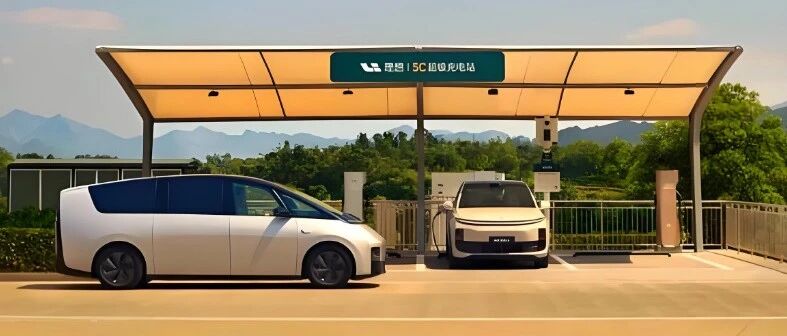
理想汽车2年8个月建成20000根超充桩
Zhong Guo Zhi Liang Xin Wen Wang· 2025-12-05 05:08
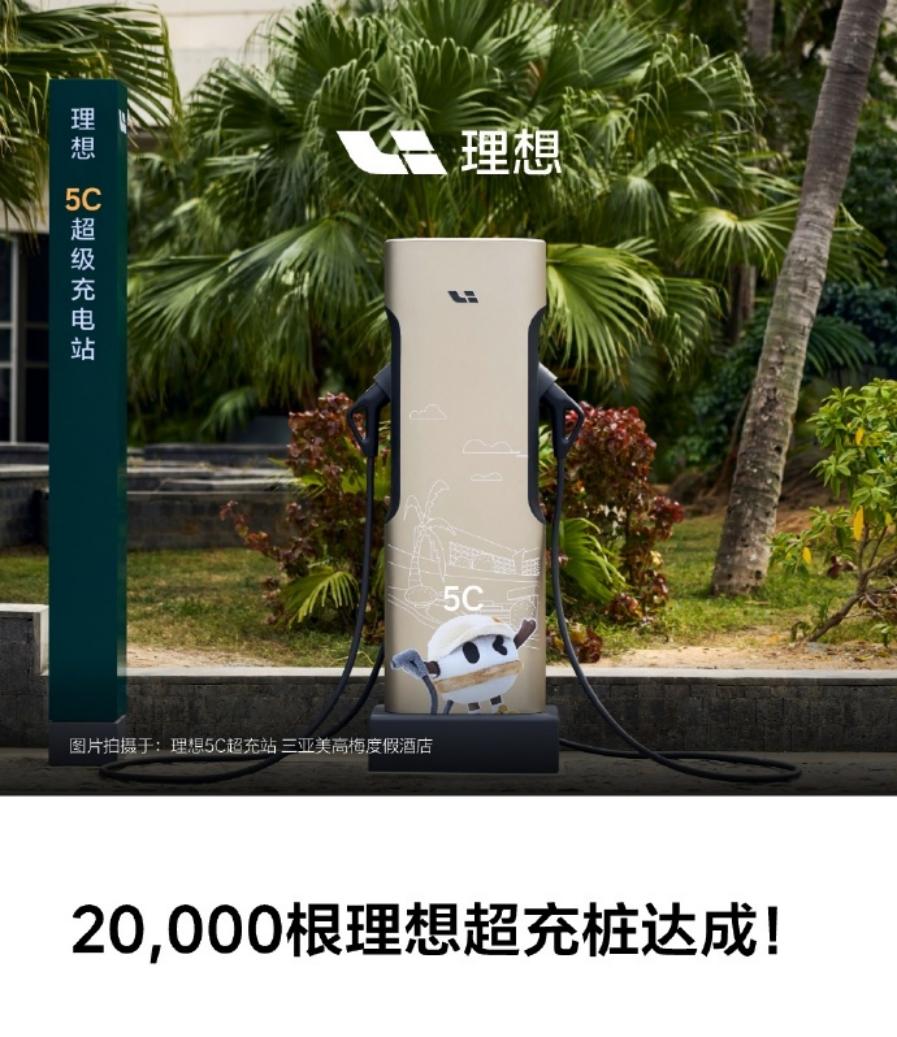
Group 1 - The core point of the article is that Li Auto has successfully established its 20,000th supercharging pile in Sanya, marking significant growth in its charging infrastructure since the launch of its first supercharging stations in April 2023 [1] - As of December 1, 2025, Li Auto has built a total of 3,040 5C charging piles, 10,258 4C charging piles, and 6,861 2C charging piles across the country [1] - Li Auto has constructed 3,614 supercharging stations, covering 31 provinces and over 260 cities, with an average of 4 new supercharging stations added daily and approximately 28 new charging piles added weekly [3] Group 2 - The company has achieved a national highway coverage rate of 70% with over 1,000 high-speed supercharging stations, connecting the busiest 18 highways and popular tourist routes such as the G318 Sichuan-Tibet line and Xinjiang [3] - In first and second-tier cities, Li Auto has established a 10-minute charging lifestyle circle, with core areas achieving an average coverage radius of 3 kilometers [3] - Li Auto's supercharging stations utilize fully liquid-cooled supercharging terminals, offering three power levels (5C, 4C, and 2C) to accommodate different vehicle needs, with over 7,000 4C charging piles and 6,000 2C charging piles available for all electric vehicle brands, totaling over 21 million charging services provided [4]
理想超充站3005座|截至25年7月29日
理想TOP2· 2025-07-30 00:02
Core Insights - The article discusses the progress of the company's supercharging station construction, highlighting the current number of stations and the target for the end of 2025 [1]. Group 1: Supercharging Station Progress - The total number of supercharging stations has changed from 2988 to 3007 and then to 3005, with a target of over 4000 stations by the end of 2025 [1]. - There are currently 995 stations left to be built to meet the 2025 target [1]. - The progress rate for new stations this year has increased from 55.48% to 56.23% [1]. - The time progress value for this year is at 57.53%, indicating that an average of 6.42 stations need to be built daily to reach the year-end goal [1]. Group 2: Newly Built and Removed Stations - A total of 19 new stations have been constructed across various provinces, including locations in Anhui, Fujian, Gansu, Guangdong, Jiangsu, Inner Mongolia, Ningxia, Shaanxi, Shanghai, Sichuan, Xinjiang, Yunnan, and Zhejiang [1][3]. - Two stations have been removed, located in Guangdong and Henan [4].
理想超充站2416座|截至25年6月1日
理想TOP2· 2025-06-01 12:47
Core Insights - The article discusses the progress of the company's supercharging station construction, highlighting the current number of stations and future targets [1][2][3][4][5][6] Summary by Sections Current Status of Supercharging Stations - The total number of supercharging stations has slightly decreased from 2417 to 2416, with a recent addition of 29 stations bringing the total to 2400 [1] - The company aims to achieve over 2500 stations by the release of the i8 model, which is 60 days away, requiring a daily addition of 1.40 stations to meet this target [1] Yearly Goals and Progress - For the year 2025, the company targets over 4000 supercharging stations, with current progress at 30.31% and a need for 7.44 stations to be added daily to meet the year-end goal [1] - The remaining time in the year is 213 days, indicating a time progress of 41.64% [1] Recent Additions and Specifications - A total of 45 new stations have been established across various locations, including Beijing, Guangdong, and Jiangsu, with specifications varying from 4C × 4 to 4C × 8 [1][3][4][5][6] - Specific locations include urban and highway service areas, indicating a strategic expansion in both city and highway networks [3][4][5][6] Station Reductions - There has been a reduction in the number of stations, specifically in Foshan, Guangdong, where one station has been temporarily or permanently removed [3]
光储和液冷超充站“上新”
Mei Ri Shang Bao· 2025-04-30 22:15
Group 1 - The newly launched charging station at the Xiaoshan service area is the largest solar, energy storage, and ultra-fast charging station on Zhejiang's highways, featuring 88 charging piles and a distributed photovoltaic system [1] - The charging station is expected to reduce carbon emissions by 115.18 tons annually, equivalent to planting 5,200 trees [1] - As of March, the number of new energy vehicles in Hangzhou exceeded 1.16 million, accounting for approximately 25% of the total vehicle ownership [1] Group 2 - Hangzhou Power Supply Company is actively promoting the "full coverage" construction of ultra-fast charging stations along highways, with a current total of 620 charging piles in highway service areas, representing about 15% of car parking spaces [2] - The company has also made progress in urban charging network construction, including public charging services reaching 193 central villages and the establishment of smart bus charging stations [2] - The total number of charging stations operated by Hangzhou Power Supply Company has exceeded 710, with over 8,250 charging guns, creating a charging service circle that ensures high-quality charging facilities are available wherever there are public parking lots [2]