
新能源汽车售后保障

Search documents
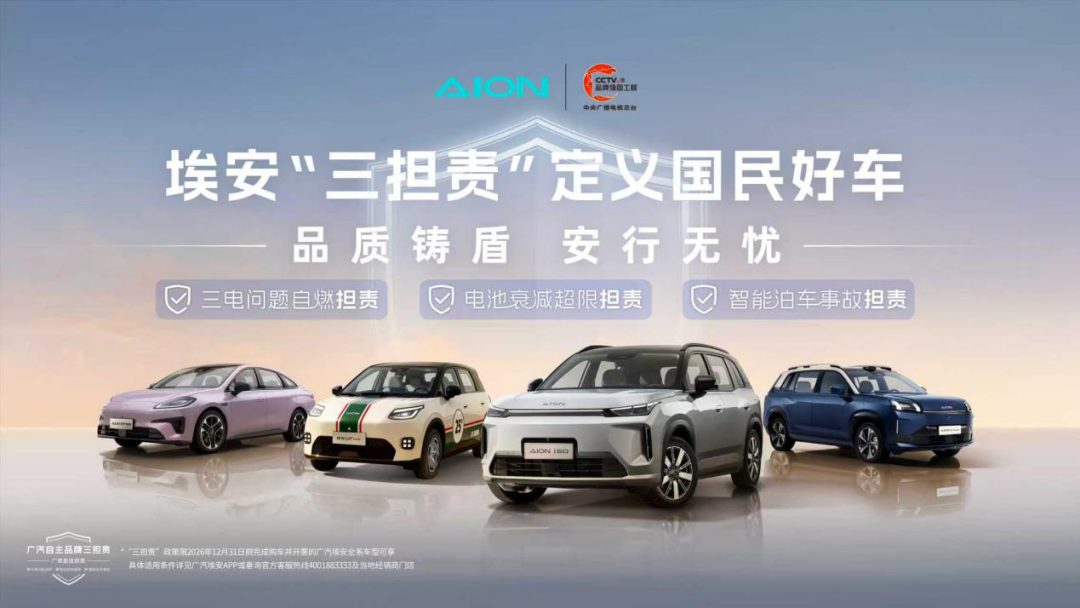
广汽埃安推出“三担责”权益 定义用户买车新标准
Mei Ri Jing Ji Xin Wen· 2025-12-31 06:31
Core Viewpoint - The article highlights the challenges faced by electric vehicle (EV) owners in asserting their rights, particularly in cases of system failures and accidents, emphasizing the need for improved consumer protection and service standards in the growing EV market [1][6]. Group 1: Consumer Rights and Challenges - EV owners are increasingly concerned about after-sales service, product quality assurance, and the protection of their rights, as exemplified by a case where a consumer struggled to prove system failure after a near-collision incident [1]. - The difficulties in proving fault and the lack of clear monitoring systems contribute to a prolonged and frustrating claims process for consumers [1][6]. Group 2: "Three Responsibilities" Policy - GAC Aion has introduced a "Three Responsibilities" policy that outlines specific consumer rights related to battery safety, battery degradation, and smart parking accidents, applicable to eligible non-commercial vehicle owners [3][4]. - The policy includes compensation for vehicle fires due to battery system issues, free battery replacements for significant capacity loss, and full coverage of repair costs for accidents caused by the smart parking system [4][10]. Group 3: Industry Impact and Consumer Confidence - The introduction of the "Three Responsibilities" policy is seen as a significant step in addressing consumer anxieties regarding EV ownership, particularly concerning high repair costs and complex after-sales issues [11][12]. - This policy aims to enhance the resale value of EVs by addressing battery degradation concerns, which are critical to the second-hand market [11]. Group 4: Technological Strength and Market Position - GAC Aion's confidence in offering the "Three Responsibilities" policy stems from its strong technical capabilities, including a record of zero vehicle fires and significant advancements in battery safety technology [8][10]. - The company has achieved notable milestones in autonomous driving, further establishing its reputation in the EV market [8]. Group 5: Industry Collaboration and Standards - The "Three Responsibilities" policy encourages collaboration across the EV supply chain, prompting upstream suppliers to enhance quality control and midstream manufacturers to improve vehicle safety and service systems [14]. - By clarifying responsibilities and compensation standards, the policy provides a framework for consumer protection and contributes to the development of national standards for EV safety and after-sales service [14][15].

车企退市,售后“烂尾”:新能源汽车行业面临责任闭环新挑战
Zhong Guo Neng Yuan Wang· 2025-11-05 02:09
Core Insights - The rapid development of China's new energy vehicle (NEV) industry has led to the establishment of the world's largest production and consumption market, but intense competition has resulted in many companies exiting the market, creating a phenomenon of "abandoned vehicles" that severely impacts consumer rights and trust in the industry [1][2] Group 1: Challenges from Company Exits - The exit of NEV companies has left after-sales responsibilities unaddressed, leading to a lack of maintenance and parts supply for consumers, which has resulted in significant financial burdens [2][3] - Many NEV brands utilize self-researched technologies with non-standardized core components, making repairs difficult once a company exits the market [2][3] - The average "zero parts ratio" for pure electric vehicle battery packs exceeds 50%, indicating that replacing a battery could cost more than half the original vehicle price [2] Group 2: Market Support and Insurance Issues - The market's ability to provide alternative support is insufficient, as the exit of companies complicates insurance coverage for consumers, leading to higher premiums or outright refusals from insurers [3][4] - The third-party repair system is underdeveloped, lacking original factory authorization and data access, which hinders compliance and effective repairs [4][5] Group 3: Regulatory and Consumer Protection Gaps - Regulatory mechanisms for risk warning and consumer protection are lagging, often only responding after extreme signals like bankruptcy occur [5][6] - There is a lack of clear prioritization for consumer rights in bankruptcy proceedings, leading to prolonged and costly legal battles for consumers [5][6] - A need exists for improved risk monitoring and consumer protection mechanisms within the NEV industry, including dynamic monitoring and prioritization of consumer rights in bankruptcy cases [6]
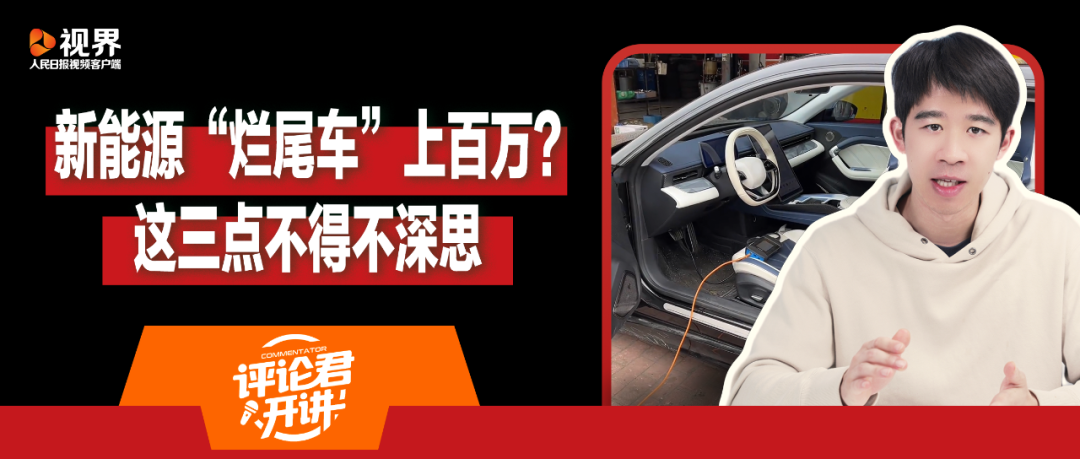
新能源“烂尾车”上百万?这三点不得不深思
Ren Min Ri Bao· 2025-10-30 02:37
Core Insights - The article highlights the issue of "orphaned vehicles" in the electric vehicle (EV) market, where consumers face challenges such as lack of warranty, unavailable parts, and difficulties in obtaining insurance due to the exit of several new energy vehicle manufacturers from the market [1][2]. Group 1: Industry Challenges - The exit of companies like WM Motor and NIO has left over a million car owners with vehicles that lack support, leading to a situation where warranties and after-sales services are no longer guaranteed [1]. - The current regulatory framework mandates that manufacturers must ensure parts and after-sales service for 10 years post-production cessation, but many companies fail to uphold this commitment, leaving consumer rights unprotected [1]. Group 2: Need for Consumer Protection - A robust consumer rights protection mechanism is essential for the healthy development of the industry, necessitating a shift in focus from sales to after-sales service among manufacturers [2]. - The article suggests that enhancing the compatibility of key EV components and fostering partnerships between defunct manufacturers and large repair shops could improve the repair landscape for consumers [2]. Group 3: Opportunities Amidst Challenges - The challenges faced by the industry can also present opportunities for growth, as seen in the fuel vehicle sector where the breaking of original parts monopolies led to more competitive pricing and vibrant after-sales markets [3]. - The establishment of a third-party certification system and an open, efficient after-market ecosystem for EVs could benefit consumers and create new growth avenues for the industry [3]. Group 4: Long-term Vision - The article emphasizes that the EV industry requires a long-term perspective, focusing on technological and management innovations to deliver high-quality, cost-effective products and services for sustainable growth [4].
百万新能源“烂尾车”找谁要质保?
Zhong Guo Qi Che Bao Wang· 2025-10-09 01:32
Core Insights - The article highlights the significant challenges faced by electric vehicle (EV) owners in China, particularly those who purchased vehicles from companies that have since gone bankrupt or ceased operations, leading to a lack of after-sales service and support [2][12][13] Group 1: Company Issues - Neta Auto, the parent company of Neta vehicles, has informed nearly 500,000 car owners that due to a service agreement dispute with Lenovo, car connectivity services will be discontinued, severely impacting user experience [2] - Other brands like WM Motor, HiPhi, and Zeekr have also faced similar issues, resulting in millions of car owners experiencing problems with warranty services and repairs [2] - The article notes that the collapse of several EV companies has left many vehicles without proper maintenance and support, leading to them being labeled as "unfinished cars" [2] Group 2: Customer Experiences - Customers who purchased vehicles from WM Motor report significant delays in receiving repairs and parts, with some waiting months for service, rendering their extended warranties useless [3][6] - The lack of a reliable after-sales service has forced some owners to resort to third-party repair shops, which often lack the necessary parts and support [6][9] - Despite the challenges, some customers still appreciate the practicality of electric vehicles, indicating a shift in purchasing criteria towards brands with strong reputations and support systems [4][7] Group 3: Industry Implications - The article discusses the broader implications of the recent failures in the EV sector, suggesting that the industry is undergoing a necessary phase of "survival of the fittest," which could lead to more regulated and higher-quality development in the future [7][12] - Experts argue that the lack of accountability for after-sales service in the event of a company's bankruptcy poses a significant risk to consumer trust and the overall image of the Chinese EV market [12][13] - Recommendations include the establishment of clear regulations regarding after-sales responsibilities and the creation of independent service markets to ensure consumer protection [12][13]

各承办单位高质量办理人大代表建议——为新能源汽车发展添动能(坚持和完善人民代表大会制度)
Ren Min Ri Bao· 2025-06-04 21:25
Group 1: Industry Development - The core viewpoint emphasizes the rapid growth and technological advancement in China's new energy vehicle (NEV) sector, with annual production and sales increasing from tens of thousands to millions over the past decade [1] - The government is actively promoting the development of smart and connected NEVs, as highlighted in the recent government work report [1] - By the end of 2024, the total number of charging and swapping infrastructure is projected to reach 12.818 million units, representing a year-on-year increase of 49.1% [4] Group 2: Infrastructure and User Experience - The introduction of smart charging stations in Suzhou has alleviated "charging anxiety" for NEV owners, making charging more convenient [2][3] - A national representative's investigation revealed regional disparities in charging infrastructure, leading to recommendations for improved coordination and expansion of charging facilities [3] - The coverage rate of charging stations in national highway service areas has reached 98%, with a total of 35,000 charging stations established [4] Group 3: Maintenance and Repair Challenges - NEV owners face significant challenges regarding maintenance, with a shortage of skilled technicians and high repair costs due to the complexity of NEV components [5][6] - Recommendations have been made to enhance NEV after-sales support, including the establishment of a public parts supply platform and the inclusion of NEV repair workers in vocational classifications [6] Group 4: Regulatory and Legal Framework - The rapid development of assisted driving technology necessitates the revision of legal frameworks to ensure safety and regulation, as suggested by a national representative [7][8] - The Ministry of Public Security is actively coordinating with various departments to improve management mechanisms and facilitate the integration of smart connected vehicles into traffic systems [8][9]