
日美贸易

Search documents
高市早苗访美与特朗普如何“面对面”?
第一财经· 2026-03-19 05:45
Group 1: Japan-US Relations - Japanese Prime Minister Sanna Marin's visit to the US is aimed at deepening the Japan-US alliance and discussing trade, security, and the Middle East situation [3][4] - The visit comes at a challenging time due to escalating tensions in the Middle East, making it difficult for Japan to navigate its diplomatic stance [4][5] - The Prime Minister's agenda has been disrupted by the unexpected developments in the Middle East, which complicates discussions on trade and defense cooperation [5][6] Group 2: Trade and Economic Implications - Japan is expected to invest $550 billion in the US, which could create hundreds of thousands of jobs, as part of a trade agreement reached last year [8] - Despite the anticipated growth, Japan's exports to the US have been declining, with a reported 8% drop in February, largely due to reduced exports of pharmaceuticals, automobiles, and auto parts [8][9] - The US Trade Representative's recent announcement of a 301 investigation into Japan and other trading partners could further strain Japan-US trade relations, potentially leading to a more pessimistic outlook for bilateral trade [9][10]

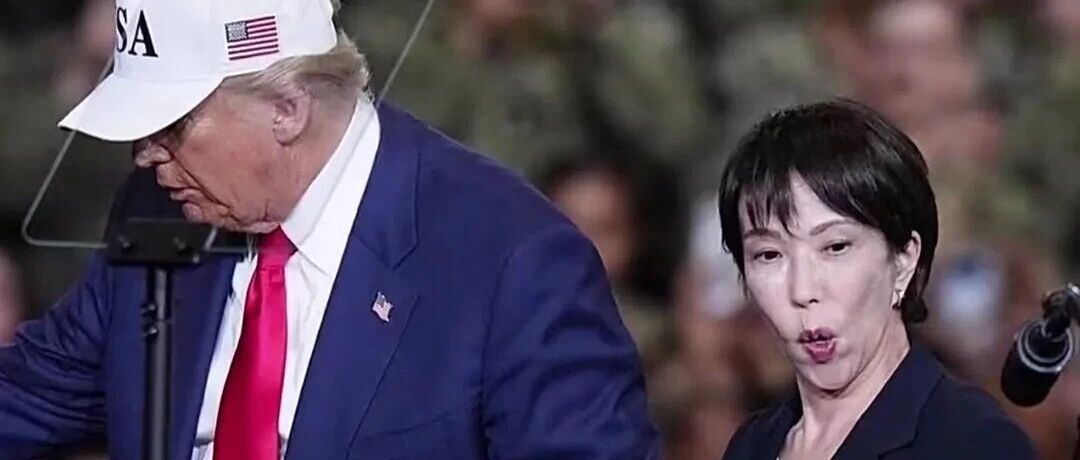
借安倍晋三拉近关系,高市早苗与特朗普谈了什么
Di Yi Cai Jing· 2025-10-28 09:22
Group 1 - The core focus of the meeting between President Trump and Japanese Prime Minister Kishi is on trade and security, with Trump describing the US-Japan tariff agreement as "very fair" [1][2] - Japan has committed to investing $550 billion in the US, although there are still disagreements on the nature and implementation of this investment [2] - Japan's exports to the US are projected to increase by 3.8% in 2024, reaching a record high of 21.6482 trillion yen, with automobiles making up about 30% of total exports [2] Group 2 - The Japanese capital market has reacted positively to Trump's visit, with the Nikkei 225 index surpassing the psychological barrier of 50,000 points for the first time, closing at 50,219.18 points [3] - The Nikkei 225 index has risen over 26% this year, driven by foreign capital inflows and optimism regarding economic growth during Kishi's administration [3] - Japan plans to increase its defense budget significantly, with a target to exceed 2% of GDP by 2027, and Kishi aims to accelerate this goal to be achieved within the current fiscal year [4]
借芯片东风,日本出口迎五个月来首次增长,对美贸易却连跌六个月
智通财经网· 2025-10-22 03:30
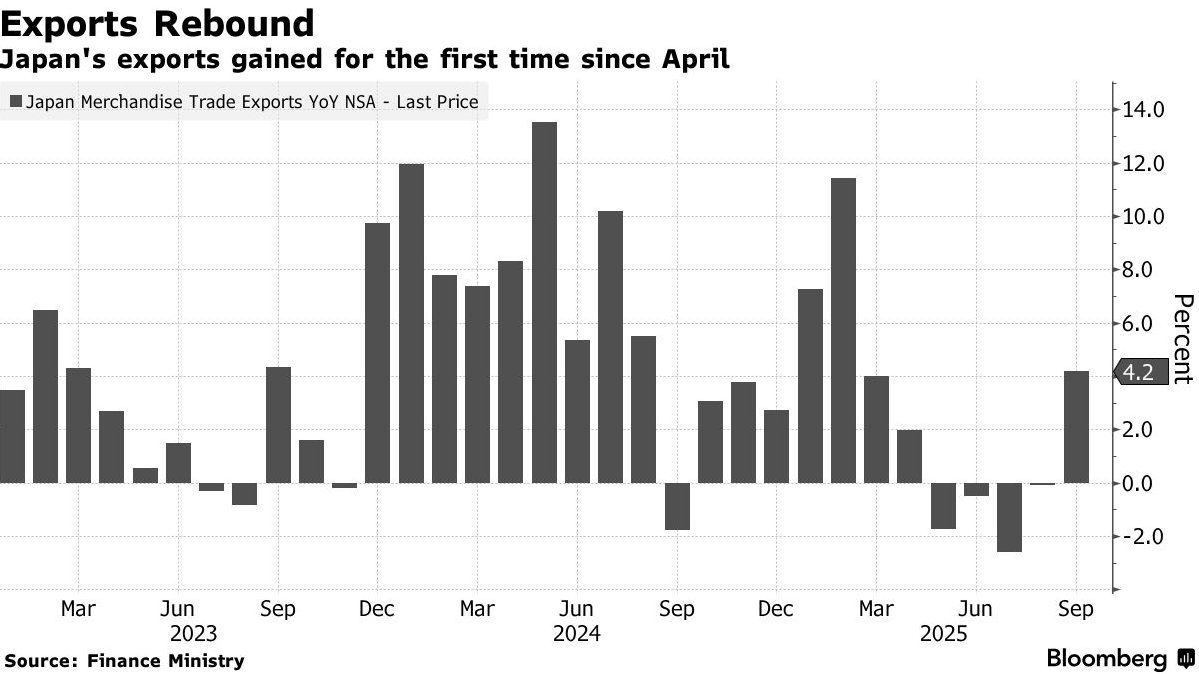
Group 1 - Japan's exports in September increased by 4.2% year-on-year, marking the first expansion in five months, driven by higher shipments of chips and electronic components, as well as a rebound in mineral fuel exports [1] - Exports to the United States fell by 13.3% year-on-year for the sixth consecutive month, while exports to the European Union and China grew by 5% and 5.8%, respectively [1][3] - Japan's trade deficit in September reached 234.6 billion yen (approximately 1.5 billion USD), with imports rising by 3.3%, exceeding market expectations of 0.6% [3] Group 2 - The decline in automobile exports to the U.S. remains a concern, attributed to tariffs, despite a reduction in tariffs from 27.5% to 15% [3][4] - Japan's semiconductor and electronic component exports increased by 12.6% year-on-year, benefiting from strong demand in Asia [3] - The U.S. became Japan's largest export market in September, surpassing China, although automobile exports to the U.S. dropped by 24.2% [3] Group 3 - The focus is shifting to the $550 billion investment mechanism promised in the Japan-U.S. trade agreement, with potential implications for tariffs if projects are not funded [4] - Analysts predict that the negative impact of U.S. tariffs will persist for some time, but the extent of the impact is not expected to disrupt the global economy significantly [4] - Upcoming discussions between President Trump and Japan's new Prime Minister may further influence the trade dynamics between the two countries [4]
日本首相回应“美日达成贸易协议”:若必要将与特朗普电话或面谈
news flash· 2025-07-23 00:32
Core Viewpoint - The article discusses the recent announcement by U.S. President Trump regarding a trade agreement between the U.S. and Japan, highlighting Japan's positive response and potential further discussions between the leaders [1]. Group 1: Trade Agreement Details - President Trump announced a trade agreement with Japan, which includes a tariff rate of 15% on Japanese goods and a commitment from Japan for $550 billion in investments in the U.S. [1]. - The announcement was made on July 22, and it reflects the results of strong negotiations led by Japan's Minister of Economic Revitalization, Akira Amari [1]. Group 2: Japanese Government Response - Japanese Prime Minister Shigeru Ishiba stated that he would receive a detailed report from Minister Akira Amari and may engage in a phone or face-to-face conversation with President Trump if necessary [1]. - A Japanese government official confirmed that Japan welcomed the progress in the U.S.-Japan tariff negotiations as outlined by President Trump [1].