
星际移民

Search documents
从火星到月球:马斯克的太空战略转向与现实逻辑
Sou Hu Cai Jing· 2026-02-16 02:16
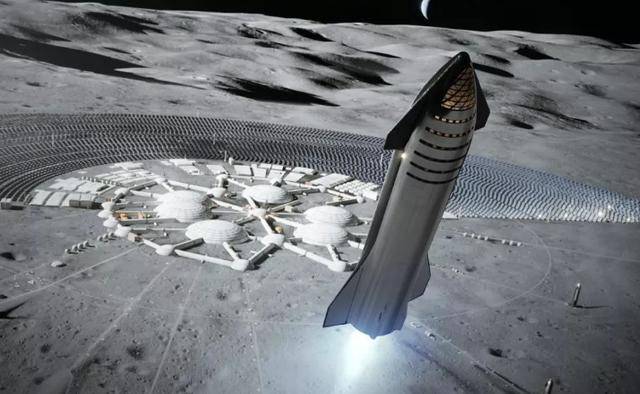
Core Viewpoint - Elon Musk announced that SpaceX will temporarily suspend its Mars colonization plans to focus on lunar settlement, prompting a reevaluation of the tension between Musk's long-term ambitions for interstellar migration and the realities of implementation [1][3]. Group 1: Strategic Shift - Mars has long been depicted as SpaceX's ultimate vision, but the transition to lunar settlement reflects a pragmatic approach, as the Moon is closer, less costly, and presents lower risks compared to Mars [3][4]. - This shift aligns with U.S. government space policy, which has recently favored sustainable outposts near Earth, making the lunar strategy compatible with national objectives [3][4][7]. Group 2: Technical Feasibility - The feasibility of lunar settlement is significantly higher than that of Mars, with the Moon being approximately 380,000 kilometers away, which is one-fiftieth the distance to Mars, enhancing supply, communication, and emergency response capabilities [4]. - Musk's vision of a self-sustaining city on the Moon can be achieved through modular construction and 3D printing, utilizing lunar materials, which aligns with NASA's Artemis program [4]. Group 3: Economic and Social Impact - Building a lunar base is likely to yield early visible results, attracting capital and talent, while enhancing international cooperation, unlike the long-term and costly Mars colonization plan [6]. - The lunar focus allows SpaceX to establish a demonstration project in a "controlled risk area," accumulating technology and experience for potential future Mars missions [6]. Group 4: Public Perception and Communication - This strategic adjustment may alter public perception of space exploration, as the lunar base's tangible outcomes could enhance confidence in private space ventures, contrasting with the high uncertainty of Mars plans [9]. - The shift to lunar exploration is not a renunciation of the Mars dream but a strategic convergence that reflects a comprehensive assessment of technological realities, funding logic, and policy environments [9].

31省市披露去年财政收入,最严虚拟货币监管落地 | 财经日日评
吴晓波频道· 2026-02-10 00:29
Group 1: Fiscal Revenue Insights - In 2025, Guangdong's fiscal revenue is expected to approach 1.4 trillion yuan, maintaining the top position for 35 consecutive years, while Jiangsu's revenue surpasses 1 trillion yuan, ranking second nationally [2] - The overall growth of local fiscal revenue in China is 2.4% compared to the previous year, with regions like Tibet, Jilin, and Xinjiang showing double-digit growth rates [2][3] - The fiscal revenue growth reflects the resilience of economic development despite challenges such as insufficient domestic demand and ongoing adjustments in the real estate market [3] Group 2: Virtual Currency Regulation - The People's Bank of China, along with eight departments, has issued strict regulations on virtual currencies, declaring related activities as illegal financial activities and prohibiting the issuance of stablecoins linked to the yuan abroad [4] - A significant incident occurred in South Korea where a trading platform mistakenly distributed over $44 billion worth of Bitcoin, highlighting the risks associated with virtual currencies [4][5] - The regulatory stance from China indicates a commitment to maintaining financial stability while recognizing the need for balanced development and oversight of the virtual currency industry [5] Group 3: Semiconductor Market Forecast - The global semiconductor sales are projected to reach $791.7 billion in 2025, with a growth rate of 25.6% from 2024, and expected to approach $1 trillion by 2026 [8] - The fastest-growing segment within the semiconductor market is logic chips produced by companies like Nvidia and Intel, with a projected sales increase of 39.9% in 2025 [8] - The demand for semiconductors is being driven by strong growth in AI and data center sectors, indicating a shift in the traditional market cycles [8][9] Group 4: Solar Industry Developments - Aixin Co. and TCL Zhonghuan have signed a patent licensing agreement worth 1.65 billion yuan, marking the highest record for patent licensing fees in China's solar industry [10] - The agreement comes after a series of patent disputes, indicating a trend towards resolving conflicts through financial settlements rather than prolonged litigation [10][11] Group 5: AI Video Generation Technology - ByteDance has launched a new AI video generation model, Seedance 2.0, capable of creating high-quality videos from text or images in under 60 seconds [12] - The model significantly enhances the usability of AI-generated videos, addressing previous limitations in handling complex scenes and maintaining consistency [12][13] Group 6: SpaceX's Strategic Shift - SpaceX has shifted its focus from Mars to building a self-sustaining city on the Moon, aiming to achieve this goal within the next decade [14] - This strategic pivot aligns with NASA's plans for lunar exploration and reflects a pragmatic approach to securing funding and demonstrating viability in space projects [14][15] Group 7: Stock Market Performance - On February 9, the stock market saw significant gains, with the Shanghai Composite Index rising over 1% and the Shenzhen Component Index increasing by over 2% [16] - The market's performance was driven by strong interest in AI applications, chemical sectors, and solar concepts, indicating a recovery in investor sentiment [16][17]

马斯克身家飙至超7000亿美元,但更谨小慎微:犯错就得死
Sou Hu Cai Jing· 2025-12-22 02:10
Core Viewpoint - The U.S. Supreme Court ruled in favor of Elon Musk regarding a lengthy lawsuit over his substantial compensation, allowing him to retain stock valued at approximately $58 billion at the time, which is now worth around $190 billion, significantly increasing his wealth and global ranking among billionaires [1][3]. Group 1: Wealth Increase - Following the court's decision, Musk's personal wealth surpassed $600 billion, marking the highest individual wealth ever recorded based on market value [3]. - As of December 21, Musk's net worth reached $749 billion, representing the fastest growth in personal wealth in human history, with a notable increase of $1 trillion in just 24 hours [3][4]. - Musk has set records for personal wealth milestones, including $3 trillion, $4 trillion, $5 trillion, $6 trillion, and $7 trillion, and analysts predict he may become the first person to exceed $1 trillion in wealth [4]. Group 2: Sources of Wealth - Musk's wealth primarily stems from his holdings in Tesla and the upcoming IPO of SpaceX, where he owns 42% of the company, which is currently valued at $800 billion [5]. - The valuation of SpaceX has previously been estimated at $1.5 trillion, suggesting that Musk's wealth could already exceed $1 trillion if this valuation holds true [5]. Group 3: Future Prospects - The potential IPO of SpaceX could accelerate Musk's journey to becoming a trillionaire, contingent upon Tesla meeting specific market capitalization and operational targets set by its board [6]. - SpaceX's unique market position may lead to a more rapid increase in valuation compared to Tesla once it goes public [7]. Group 4: Personal Aspirations and Challenges - Musk views his wealth as a means to achieve his dream of Mars colonization, emphasizing the importance of time in this endeavor [8]. - He has expressed a desire for more time to live healthily, indicating that his ambitions are intertwined with personal longevity and the challenges posed by bureaucratic regulations in the U.S. [8][9].

杰夫・贝佐斯:2045年,机器人将替我们上班
财富FORTUNE· 2025-10-22 04:08
Core Viewpoint - The article discusses contrasting views on the impact of artificial intelligence (AI) on humanity's future, highlighting Jeff Bezos's optimistic perspective that AI will lead to a prosperous society rather than job loss or civilization's end [2][3]. Group 1: Perspectives on AI and Space Exploration - Jeff Bezos believes that by 2045, robots will replace humans in the workforce, allowing humans to potentially live on other planets [2]. - Bezos emphasizes that technological advancements will lead to a more prosperous civilization, similar to how the invention of the plow improved human life thousands of years ago [3]. - Sam Altman and Elon Musk share similar views, predicting that humans will soon engage in exciting high-paying jobs in space, with Musk's SpaceX aiming for Mars exploration by 2028 [4]. Group 2: Work-Life Balance and AI's Role - Bill Gates argues that while space exploration is important, more focus should be on addressing issues on Earth, expressing concerns about the dual-edged nature of technological advancements [5]. - Gates is optimistic about AI creating a future where people may only need to work two days a week, as machines will take over heavy workloads, allowing humans to pursue their passions [5].
