
普氏指数

Search documents
铁矿石暗战升级!
Sou Hu Cai Jing· 2025-11-24 02:12
Core Insights - The rise of China's steel industry in the global iron ore market represents a significant shift in power dynamics, moving from a passive role to an active one in price negotiations [1][15] Group 1: Historical Context - In 2003, China became the world's largest iron ore importer, surpassing Japan with imports of 148 million tons [3] - From 2003 to 2008, iron ore prices experienced extreme volatility, with annual increases of up to 71.5%, leading to additional costs for China amounting to 700 billion RMB [3] - The number of companies with import licenses peaked at 523, leading to market chaos and price manipulation by agents [3][4] Group 2: Market Regulation and Price Negotiation - In 2005, the China Iron and Steel Association (CISA) reduced the number of licensed importers to 118, yet high prices persisted due to ongoing speculation [4] - The 2008 financial crisis caused a dramatic drop in demand, resulting in losses for many companies due to long-term contracts priced above spot market rates [4][6] - A significant bribery scandal involving a representative from Rio Tinto revealed the complexities of price negotiations and led to a shift in contracts towards more favorable terms for China [6][8] Group 3: Shift in Pricing Mechanism - Post-2010, China began using the Platts index for iron ore pricing, although this method faced criticism for not accurately reflecting the Chinese market [8] - By 2024, the Platts index was still high at $130/ton, while China's import costs were significantly inflated compared to mining costs in Australia [8][10] Group 4: Development of Equity Mines - China aims to increase its share of equity mines from 8% to over 20% by 2025, with significant projects like the Simandou iron ore project in Guinea [10][11] - The Simandou project is expected to produce 30 million tons annually by the end of 2026, contributing to a total of 300 million tons of equity mines, which will reduce reliance on traditional suppliers [11][12] Group 5: Currency and Trade Dynamics - In 2024, negotiations with BHP broke down over currency settlement, leading to a shift towards RMB settlements for iron ore trade, impacting 70% of global transactions [12][14] - Australia's iron ore export share to China decreased from 60% to 45%, with predictions of a $110 billion drop in export revenue by 2025 [14][15] Group 6: Future Outlook - The completion of the Simandou project and stable steel demand in China will pose challenges for Australian iron ore sales, potentially leading to lower prices [15] - The ongoing transformation in the iron ore market indicates a shift in power, with China gaining significant leverage in negotiations and pricing [15]




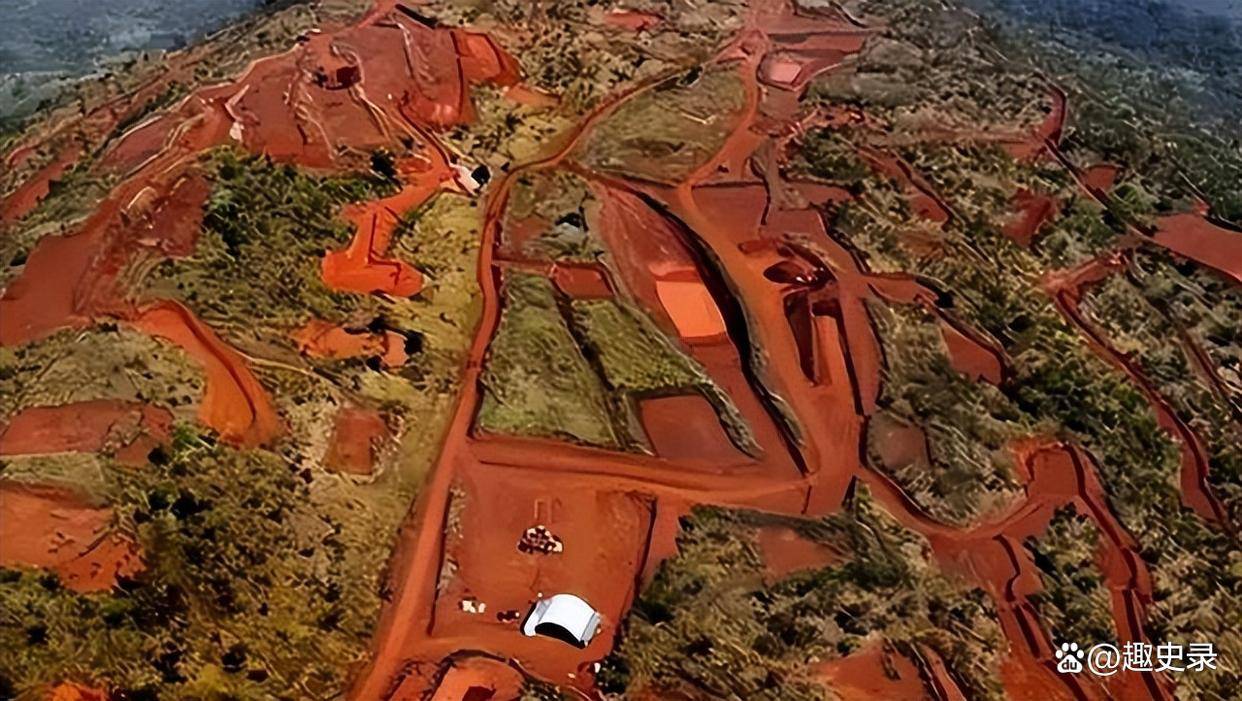
中国隐忍20年打赢翻身仗!中澳铁矿之争大反转,攻守出现大变化
Sou Hu Cai Jing· 2025-10-28 09:11
Core Viewpoint - The article discusses a significant shift in the iron ore negotiation dynamics between China and Australia, highlighting China's strategic moves to leverage its position as the largest steel producer and buyer of iron ore, ultimately leading to a successful negotiation with BHP for pricing in RMB instead of USD [2][15]. Group 1: Historical Context - For 20 years, China has been at a disadvantage in iron ore pricing, paying significantly higher prices compared to the production costs of Australian mines, which are around $19 per ton, while China was paying up to $109 per ton [4][5]. - In 2024, the average profit margin for Chinese steel companies was only 0.71%, with many companies facing losses, contrasting sharply with the high profits earned by Australian miners [6][7]. Group 2: Strategic Moves by China - China established the China Mineral Resources Group in 2022, consolidating purchasing power and representing nearly 40% of the country's iron ore imports, allowing for more effective negotiations with suppliers [10]. - China has secured contracts with Brazilian mining giant Vale and other Australian companies for RMB-denominated transactions, reducing reliance on USD [11]. - The development of the Simandou iron ore project in Guinea, which has higher quality ore than Australian sources, positions China to further reduce dependence on Australian iron ore [12]. Group 3: Negotiation Outcomes - The negotiation in October 2025 resulted in a shift to 30% of transactions being settled in RMB, marking a significant change in the pricing structure and reducing the influence of the Platts index, which has been criticized for benefiting Western interests [14][15]. - The article emphasizes that this negotiation is not just about immediate price savings but represents a broader challenge to the dominance of the USD in global commodity trading [15][17]. Group 4: Future Implications - With the upcoming availability of Simandou iron ore and the increasing recycling of steel, China's position in the global steel market is expected to strengthen, allowing for more flexibility in sourcing and pricing [17]. - The article concludes that this shift marks a turning point in the relationship between China and Australia, with China now able to dictate terms rather than being at the mercy of Australian suppliers [17].
银河期货铁矿石日报-20250922
Yin He Qi Huo· 2025-09-22 11:47
Report Summary 1. Report Industry Investment Rating No relevant information provided. 2. Report's Core View No clear core view presented in the given content. It mainly provides daily data on iron ore including futures prices, spot prices, basis, spreads, import profits, and more. 3. Summary by Related Catalogs Futures Prices - DCE01: Today's price is 808.5, up 1.0 from yesterday; DCE05 is 786.0, unchanged; DCE09 is 766.0, up 2.0 [2] - Inter - contract spreads: I01 - I05 is 22.5, up 1.0; I05 - I09 is 20.0, down 2.0; I09 - I01 is - 42.5, up 1.0 [2] Spot Prices - Various iron ore spot prices increased compared to the previous day. For example, PB powder (60.8%) rose from 780 to 786, Newman powder from 789 to 796, etc. [2] Basis - The basis of different iron ore varieties to different contracts is provided. For the optimal delivery product (Roy Hill powder), the 01 - contract basis is 34, 05 - contract basis is 55, and 09 - contract basis is 77 [2] Spot Variety Spreads - Spreads between different iron ore varieties changed. For example, the spread of Carajás fines - PB powder increased from 128 to 129 [2] Import Profits - Import profits of different iron ore varieties changed. For example, the import profit of Carajás fines decreased from 18 to 3 [2] Indexes - The Platts 62% iron ore price increased from 105.2 to 106.6, the 65% price remained unchanged at 120.8, and the 58% price increased from 93.3 to 94.6 [2] 内外盘美金价差 - The spreads between SGX and DCE contracts increased. For example, SGX main - DCE01 increased from 7.2 to 7.5 [2]
银河期货铁矿石日报-20250820
Yin He Qi Huo· 2025-08-20 11:07
Report Summary 1. Report Industry Investment Rating No information about the industry investment rating is provided in the report. 2. Report's Core View No clear core view is presented in the given content. The report mainly offers data on iron ore futures, spot prices, spreads, and import profits. 3. Summary by Relevant Catalog Futures Prices - DCE01 decreased from 771.0 to 769.0, a drop of 2.0; DCE05 fell from 749.5 to 747.0, a decline of 2.5; DCE09 declined from 789.0 to 786.0, a decrease of 3.0 [2] - I01 - I05 increased from 21.5 to 22.0, a rise of 0.5; I05 - I09 increased from -39.5 to -39.0, a rise of 0.5; I09 - I01 decreased from 18.0 to 17.0, a drop of 1.0 [2] Spot Prices - PB powder decreased from 770 to 768, a drop of 2; Newman powder decreased from 764 to 763, a decline of 1; Mac powder decreased from 761 to 756, a decrease of 5 [2] - The optimal deliverable is PB powder with a price of 809 after deducting the 8 yuan/ton warehouse - out fee [2] Spot Price Spreads - The spread of Carajás fines - PB powder increased from 105 to 109, a rise of 4; Newman powder - Jinbuba powder decreased from 21 to 20, a decline of 1; Carajás fines - Jinbuba powder increased from 132 to 134, a rise of 2 [2] Import Profits - Carajás fines' import profit increased from -26 to -23, a rise of 3; Newman powder's import profit remained at 0; PB powder's import profit decreased from -5 to -6, a drop of 1 [2] Index Prices - The Platts Iron Ore 62% price decreased from 101.1 to 100.8, a drop of 0.3; the Platts Iron Ore 65% price decreased from 118.6 to 118.3, a decline of 0.3; the Platts Iron Ore 58% price decreased from 89.2 to 88.8, a decrease of 0.4 [2][4] 内外盘美金价差 - SGX主力 - DCE01 decreased from 7.7 to 7.5, a drop of 0.2; SGX主力 - DCE05 decreased from 10.4 to 10.2, a decline of 0.3; SGX主力 - DCE09 decreased from 5.4 to 5.2, a decrease of 0.2 [2][4]