
智慧能源管理

Search documents
中粮科工20260323
2026-03-24 01:27
Summary of Company and Industry Insights Company Overview - The company is focused on the agricultural and food logistics sectors, providing equipment supply, electromechanical delivery, and full-cycle technical services in grain storage, rice processing, and flour processing [3][4]. Business Structure and Strategy - The company has established a "3+3+1" business system, aiming to increase the proportion of international business revenue from less than 10% to 30% by the end of the 14th Five-Year Plan [2][5]. - The "3+3+1" structure includes three traditional business areas and three emerging sectors, with a focus on advanced machinery manufacturing, bio-chemicals, and smart grain storage [4][5]. Financial Performance - Revenue growth is outpacing net profit growth primarily due to the increased share of low-margin electromechanical business, which has a gross margin of approximately 17% compared to over 40% for design services [11]. - The company anticipates a good growth in new orders for 2027, driven by the recovery of international and equipment businesses [13]. Emerging Industries and Innovations - The company is exploring strategic emerging industries, including advanced machinery manufacturing and AI-assisted technologies for predictive maintenance [2][5]. - It has established a dedicated innovation management department to enhance technological advancements and project financing [3]. Electromechanical Engineering and Profitability - The self-sufficiency rate for electromechanical engineering equipment is expected to rise from 10%-12% in 2025, with measures in place to improve gross margins through better project management and increased market share [6][11]. Grain and Oil Business Development - The company plans to expand its grain and oil business by targeting differentiated markets such as coffee bean processing and traditional Chinese medicine materials [7][8]. - It aims to modernize aging factories through digital transformation and optimize production layouts for better efficiency [7][8]. Cold Chain Sector Insights - The cold chain sector is transitioning towards state-owned capital, which is expected to enhance long-term profitability and efficiency through digital technologies [9]. - The company is focusing on increasing the conversion rate of design projects to electromechanical projects and expanding into downstream equipment sectors [9]. Dividend Policy - The company intends to maintain a stable dividend payout ratio while effectively utilizing funds for investments aligned with its strategic development goals [10]. Future Outlook - The company has set growth targets for 2026, with expectations for a stable design business and growth in electromechanical and equipment sectors [12][13]. - The international business is expected to see significant growth as the company enhances its technical and market capabilities [13].
城市更新既有建筑可持续改造路径与金融支持方案研究
北京绿色金融与可持续发展研究院· 2026-01-31 00:25
Investment Rating - The report does not explicitly state an investment rating for the industry Core Insights - The building sector is a key area for energy consumption and carbon emissions, with existing buildings accounting for over 70% of building operational energy consumption in China, highlighting the urgent need for sustainable renovation to meet carbon reduction goals [12][14] - The sustainable renovation of existing buildings is driven by both policy incentives and market demand, with clear targets set by the government for energy-saving renovations and the construction of ultra-low energy buildings by 2025 [14][21] - The core concept of sustainable renovation involves integrating technological, economic, and financial innovations to achieve energy savings, functional upgrades, and value enhancement throughout the building lifecycle [15][21] Summary by Sections 1. Research Background - The report emphasizes the importance of sustainable renovation in the building sector as a response to climate change and urban renewal efforts, which are crucial for ecological security and sustainable development [11][12] 2. Sustainable Renovation Technical Paths - The renovation focuses on "decarbonization, efficiency, and intelligence," integrating renewable energy systems, energy optimization, building energy-saving measures, and smart energy management [27][28] 3. Economic Benefits - The report outlines the economic benefits of renovation, including direct savings from energy costs, increased asset value, and enhanced operational efficiency, alongside environmental and social benefits [15][21] 4. Business Models and Financial Tools - Various business models and financial tools are discussed, emphasizing the need for innovative financing solutions to address the significant upfront investment required for renovation projects [17][24] 5. Case Studies - The report includes analyses of typical domestic and international renovation cases, extracting replicable experiences and key success factors [25][24] 6. Conclusion - The report concludes with a summary of core insights and a forward-looking perspective on the industry's development, aiming to contribute to carbon reduction targets and high-quality urban renewal [24][25]
万帮数字能源:两次折戟A股,上市之路因何辗转六年?
Zhi Tong Cai Jing· 2026-01-15 08:43
Core Viewpoint - The Chinese automotive market is undergoing a historic shift with the penetration rate of new energy vehicles surpassing 50% for the first time, leading to a transition from a "price war" to a focus on "value" in the industry. This shift is driving significant growth in charging infrastructure, with Wanbang Digital Energy Co., Ltd. preparing for an IPO on the Hong Kong Stock Exchange [1][8]. Company Overview - Wanbang Digital Energy is a leading global supplier of smart charging equipment and an early practitioner of microgrid systems, aiming to create a comprehensive smart energy solution [1][2]. - The company has delivered over 300 microgrid systems across various applications, showcasing its project experience and adaptability [2][3]. Financial Performance - Revenue figures for Wanbang Digital Energy show a steady increase, with approximately 3.474 billion RMB in 2023, 4.182 billion RMB in 2024, and 3.072 billion RMB in the first nine months of 2025, indicating an ongoing optimization of revenue structure [2][3]. - The revenue contribution from smart charging equipment is declining, from 92.4% in 2023 to 71.1% in the first nine months of 2025, while microgrid and energy storage systems are gaining traction [3][6]. Global Expansion - The company has expanded its reach to approximately 70 countries and regions, with overseas revenue reaching 572.9 million RMB in the first nine months of 2025, accounting for 18.6% of total revenue [4][5]. - Europe is a key focus for global strategy, with a joint venture established to promote charging equipment and services, enhancing brand recognition and setting a benchmark for quality [5][8]. Industry Trends - The charging infrastructure industry in China is experiencing rapid expansion, with a target of 28 million charging facilities by the end of 2027, reflecting a 52% year-on-year growth [7][8]. - The global market for charging equipment is projected to grow from 21.41 billion RMB in 2020 to 59.7 billion RMB in 2024, with a compound annual growth rate of 29.2% [8]. Challenges - Despite revenue growth, the company's overall gross margin has declined from 33.4% in 2023 to 24.6% in the first nine months of 2025, primarily due to increased competition, rising raw material costs, and a higher proportion of lower-margin microgrid and energy storage businesses [5][6]. - Net profit has also decreased from 493 million RMB in 2023 to 301 million RMB in the first nine months of 2025, indicating challenges in maintaining profitability amid industry changes [6][9]. Future Outlook - The charging infrastructure industry is expected to continue growing, supported by domestic policies and increasing global demand for charging solutions. Wanbang Digital Energy's IPO is seen as a test of its strategic execution and operational efficiency [9].
新股前瞻|万帮数字能源:两次折戟A股,上市之路因何辗转六年?
智通财经网· 2026-01-15 08:37
Core Viewpoint - The Chinese automotive market is undergoing a historic shift with the penetration rate of new energy vehicles surpassing 50% for the first time, leading to a transition from a "price war" to a focus on "value" in the industry. This shift is driving significant growth in charging infrastructure, with Wanbang Digital Energy Co., Ltd. preparing for an IPO in Hong Kong after previous attempts in the A-share market failed [1][2]. Company Overview - Wanbang Digital Energy is a leading global supplier of smart charging equipment and an early practitioner of microgrid systems, aiming to create a comprehensive smart energy solution [1][2]. - The company has delivered over 300 microgrid systems across various applications, showcasing its project experience and adaptability in promoting renewable energy applications [2][3]. Financial Performance - Revenue from smart charging equipment remains the mainstay but is declining in proportion, from 92.4% in 2023 to 71.1% in the first nine months of 2025. The direct current charging equipment contributed the most, generating 1.381 billion yuan, accounting for 44.9% of total revenue in the first nine months of 2025 [3]. - Microgrid system revenue has significantly increased, reaching 608 million yuan in the first nine months of 2025, representing 19.8% of total revenue, while large-scale energy storage systems contributed 281 million yuan, accounting for 9.1% [3]. - The company's overall revenue for 2023, 2024, and the first nine months of 2025 was approximately 3.474 billion yuan, 4.182 billion yuan, and 3.072 billion yuan, respectively, indicating a continuous optimization of revenue structure [2][3]. Global Expansion - Wanbang Digital Energy has expanded its market presence to approximately 70 countries and regions, with overseas revenue reaching 572.9 million yuan in the first nine months of 2025, accounting for 18.6% of total revenue [4][5]. - The company views Europe as a key market for its global strategy, establishing a joint venture with Schneider Electric to promote charging equipment and services in the region [5]. Industry Trends - The Chinese charging infrastructure industry is experiencing rapid expansion, with a target of 28 million charging facilities by the end of 2027, reflecting a 52% year-on-year growth as of November 2025 [7]. - The global charging equipment market is projected to grow from 21.41 billion yuan in 2020 to 59.7 billion yuan in 2024, with a compound annual growth rate of 29.2% [8]. Challenges - Despite revenue growth, the company's overall gross margin has declined from 33.4% in 2023 to 24.6% in the first nine months of 2025, primarily due to intensified competition, rising raw material costs, and a higher proportion of lower-margin microgrid and energy storage businesses [5][6]. - Net profit has also decreased from 493 million yuan in 2023 to 301 million yuan in the first nine months of 2025, indicating challenges in maintaining profitability amid business expansion and industry pressures [6]. Future Outlook - The charging infrastructure industry is expected to continue growing, supported by domestic policies and increasing global demand. Wanbang Digital Energy's IPO is seen as a test of its strategic execution and operational efficiency [9].
CES2026开展首日直击:海信展区人气火爆,让AI从炫技到日常
Jing Ji Guan Cha Wang· 2026-01-07 09:35
Core Viewpoint - Hisense showcased its innovative RGB-Mini LED technology and AI-driven products at CES 2026, emphasizing the integration of technology into daily life under the theme "Love, Technology Also Moves" [2][18]. Group 1: Product Innovations - Hisense's new RGB-Mini LED TV UX attracted significant attention, achieving a color gamut of 110% BT.2020 and a color precision of 134 bits, setting a new industry standard [3][5]. - The introduction of a fourth cyan self-luminous chip in the RGB-Mini LED technology enhances color range and precision, allowing for the display of over a trillion color variations [5][7]. - Hisense has established a comprehensive RGB-Mini LED product matrix, covering sizes from 75 to 116 inches, solidifying its leadership in the high-end TV market [7]. Group 2: AI Integration - Hisense has developed an integrated AI capability system, enhancing user experience in picture quality, sound quality, and personalized services, transforming TVs into interactive home companions [9][11]. - The AI-driven smart home solutions include intelligent refrigerators, air conditioners, washing machines, and ovens, all designed to optimize user experience and convenience [11][13]. Group 3: Energy Management Solutions - Hisense's smart energy management solutions focus on optimizing energy use through solar panels, storage systems, and smart appliances, aiming to increase energy self-sufficiency and reduce costs [13][15]. - The AI energy management system can adjust operational modes based on energy usage, prioritizing solar energy for charging electric vehicles and operating appliances [15]. Group 4: Robotics and Customer Interaction - Hisense introduced its first commercial humanoid robot, Harley, designed for customer service and product guidance, showcasing advanced interaction capabilities and product knowledge [16][19]. - The robot aims to enhance customer experience in various settings, including stores and exhibitions, by providing personalized assistance and information [19].



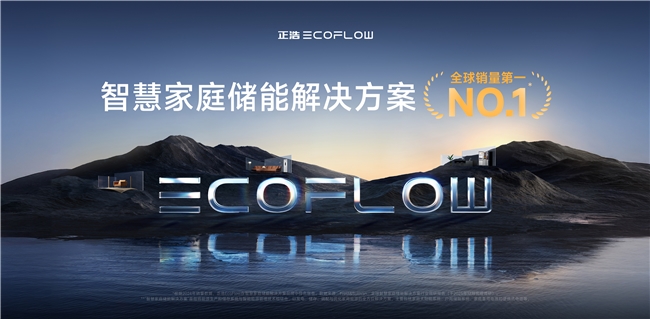
沙利文最新报告:正浩EcoFlow位列智慧家庭储能解决方案全球销量第一,以系统级创新重塑家庭能源格局
Zhong Guo Neng Yuan Wang· 2025-12-31 10:01
Group 1 - The global smart home energy storage solutions market is accelerating towards systemization and intelligence, with EcoFlow leading in global sales [1][4] - Smart home energy storage solutions integrate generation, storage, scheduling, and optimization of household energy through smart energy management technology [3] - Frost & Sullivan's report aims to analyze the global smart home energy storage solutions industry, exploring market size, characteristics, technological innovations, and driving factors behind industry development [3] Group 2 - EcoFlow has become a major provider of smart home energy storage solutions since its establishment in 2017, serving over 5 million users across more than 140 countries and holding over 1,200 patents [4] - EcoFlow's global leadership in the smart home energy storage market is attributed to its systematic advantages in ecological technology completeness, system intelligence capability, and global operations [4][6] - The company has developed a comprehensive energy ecosystem, providing tailored electricity solutions for various household scenarios, thus becoming a crucial foundation for home energy infrastructure [4] Group 3 - EcoFlow is enhancing its smart capabilities through its OASIS software platform, focusing on intelligent load management, peak shaving strategies, and other innovative features to help users manage household energy more efficiently [6] - The company has established localized operations and service teams in key regions such as North America, Europe, and Japan, allowing for differentiated services that cater to regional energy policies and user habits [6] - EcoFlow's commitment to "technology-driven + providing value to users" has positioned it as a global leader in smart home energy solutions, responding to increasing demands for energy independence, cost-effectiveness, and safety [9]
盛弘股份(300693) - 2025年11月20日投资者关系活动记录表 (投资者网上集体接待日活动)
2025-11-20 12:36
Group 1: Management and Shareholder Concerns - Recent share reductions by executives are due to personal financial needs and do not reflect a lack of confidence in the company's future [1][4][9] - The company assures that its operations are normal and that any share reductions will comply with legal disclosure requirements [2][4][9] Group 2: Financial Performance and Projections - The company reported a 33.09% increase in net profit for Q3, with expectations for continued growth in Q4 [1][2] - The gross profit margin is currently at 39.92%, with strategies in place to maintain this despite increasing competition in the charging station market [2][4] Group 3: Product Development and Market Strategy - The company is focusing on expanding its product line in response to market demands, particularly in energy storage systems [3][4] - The smart energy management platform is in the early stages of development, with future profitability expected [2][4] Group 4: International Market and Revenue Growth - The company is actively pursuing international expansion, with ongoing certification and localization efforts in various countries [2][4] - The overseas revenue growth is on track, with specific updates to be provided in the upcoming annual report [2][4]
引领能源物联网变革,姬晓鹏打造智慧园区新标杆
Zhong Guo Neng Yuan Wang· 2025-10-29 04:20
Core Insights - The article emphasizes the importance of energy management in enhancing operational efficiency, reducing costs, and achieving sustainable development in the context of rapid digitalization and green energy advancements [2][6] - Shanghai Fengdian Network Technology Co., Ltd. is at the forefront of smart energy management in China, led by its founder Ji Xiaopeng, who integrates AIoT technologies to provide efficient energy solutions for enterprises and industrial parks [2][4] Industry Trends - Traditional manual management methods are becoming inadequate for modern energy management needs due to the increasing complexity of energy consumption structures in enterprises and parks [2] - The focus is shifting towards intelligent methods to improve energy efficiency, reduce losses, and promote green low-carbon development [2] Company Overview - Ji Xiaopeng has a strong academic background with degrees in computer science and management, which supports his effective integration of technology development and corporate strategy [3] - The company has developed a comprehensive AIoT energy management system that serves as a replicable model for energy management in industrial parks [2][4] Project Highlights - The Shanghai Lingang Zhixin Source Park exemplifies Ji Xiaopeng's technological achievements, focusing on strategic emerging industries such as integrated circuits and new energy vehicles [4] - The park has implemented smart meters and energy monitoring systems, achieving a reduction in energy loss to approximately 8%, significantly below national regulatory standards [4] Technological Contributions - Ji Xiaopeng has led the development of multiple technologies, including smart meters and energy management platforms, resulting in over ten patent authorizations and more than 40 software copyrights [5] - The technologies developed cover critical areas such as power IoT, energy optimization control, and data analysis, creating a complete technological ecosystem from chip development to system application [5] Future Outlook - Ji Xiaopeng's efforts in integrating technology and management are expected to enhance operational efficiency in parks and lay a solid foundation for sustainable development in high-tech industrial parks [6] - The company is positioned to be a significant player in promoting green low-carbon development and the deep integration of digital economy and smart energy management [6]
不搞“一刀切” 数据变资产 工业园区绿色转型路径更明晰
Zhong Guo Neng Yuan Wang· 2025-10-15 02:35
Core Insights - The Ministry of Industry and Information Technology and the National Development and Reform Commission have jointly issued the "Guidelines for High-Quality Development of Industrial Parks," focusing on five key directions: specialization, intensification, digitalization, greening, and standardization [1][2] - The guidelines aim to shift industrial parks from rapid quantitative growth to effective qualitative improvement, promoting renewable energy consumption and green supply chain construction [1][2] Group 1: Policy and Development Directions - The guidelines provide a systematic approach to low-carbon transformation in industrial parks, emphasizing that achieving zero carbon is not just about energy supply but also involves optimizing industrial structure and enhancing safety [2][3] - Industrial parks are identified as key areas for zero-carbon projects, particularly in sectors like wind power, photovoltaics, and battery manufacturing [2][3] Group 2: Infrastructure and Implementation - The guidelines stress the importance of developing green infrastructure, including rooftop photovoltaics, decentralized wind power, and energy storage systems, tailored to the specific resources and industries of each park [3][4] - A "one-size-fits-all" approach is discouraged; instead, strategies should be customized based on local resources, industry types, and spatial considerations [4][5] Group 3: Data Sharing and Digital Transformation - The guidelines highlight the need for enhanced information infrastructure, promoting the deployment of 5G, gigabit optical networks, and industrial internet within parks [6][7] - Addressing the reluctance to share energy consumption data among enterprises is crucial, with suggestions for using data anonymization techniques to protect sensitive information [6][7]
股市必读:瑞纳智能(301129)10月14日董秘有最新回复
Sou Hu Cai Jing· 2025-10-14 20:03
Core Viewpoint - The company, 瑞纳智能, experienced a stock price decline of 2.73% on October 14, 2025, closing at 27.05 yuan, with a trading volume of 23,300 shares and a turnover of 64.03 million yuan [1]. Group 1: Company Performance - The company reported a significant trading activity with a turnover of 64.03 million yuan and a turnover rate of 6.24% on October 14, 2025 [1]. - The main funds saw a net outflow of 6.746 million yuan, while retail investors experienced a net inflow of 10.2891 million yuan on the same day [4]. Group 2: Investor Inquiries and Company Responses - The company stated that the increase in tariffs does not have a significant impact on its operations [2]. - The company confirmed that it is focusing on domestic smart heating projects and currently has no plans for overseas market expansion [2]. - The company has not yet developed any pilot projects related to the integration of photovoltaic and smart heating systems [2]. - The data accumulated by the company's smart heating platform is used solely for providing energy-saving services to partner heating companies, adhering to data compliance requirements [2]. - The company has not disclosed specific information regarding the proportion of cross-regional heating network projects in its major contracts since 2024, as this information requires regulated disclosure [2]. - The company is monitoring policy developments related to smart energy management subsidies but has not yet received information on specific application processes [2].