
智慧运维

Search documents
建筑装饰行业:改扩建提速、万亿空间释放,重视工程、管材、运维投资机会
GF SECURITIES· 2026-03-06 11:34
Investment Rating - The report maintains a "Buy" rating for Tunnel Shares and Weixing New Materials, indicating a positive outlook for these companies in the underground pipeline construction sector [4]. Core Insights - The underground pipeline construction industry is experiencing accelerated growth due to government policies and significant investment needs, with an expected construction and renovation of over 700,000 kilometers of underground pipelines during the "15th Five-Year Plan" period, requiring more than 5 trillion yuan in new investment [12][13]. - The industry is transitioning from a focus on "laying pipes" to "maintaining and smart management," emphasizing the need for modernization and upgrades of existing infrastructure [13][16]. - The investment opportunities are concentrated in three main segments: engineering, pipe materials, and operation and maintenance services, with specific companies recommended for investment in each segment [30][31][32]. Industry Situation - The total length of urban pipelines in China is projected to reach 3.78 million kilometers by the end of 2024, with significant increases in investment and construction during the "13th Five-Year Plan" and "14th Five-Year Plan" periods [12][14]. - The report highlights a 78.2% increase in new urban pipelines during the "13th Five-Year Plan" compared to the "12th Five-Year Plan," with a 52.3% increase in related fixed asset investments [12][14]. Market Review - The report identifies six major market trends in the underground pipeline sector from 2015 to the present, driven by policy changes and significant infrastructure projects, including the establishment of the Xiong'an New Area and the recent issuance of 1 trillion yuan in special bonds for urban drainage and flood control [22][23][27]. - The performance of pipe material companies has shown strong correlation with these policy events, with notable stock price increases during key periods of policy announcements [22][27]. Investment Recommendations - In the engineering segment, Tunnel Shares is recommended for its strong cash flow and involvement in large-scale urban renewal projects [30]. - In the pipe materials segment, companies such as China Liansu, Weixing New Materials, and Qinglong Pipe Industry are highlighted for their market leadership and growth potential in municipal projects [31][32][33]. - The report also emphasizes the importance of digitalization and smart operation in the maintenance segment, with companies like Zhengyuan Geospatial and Chen'an Technology being noted for their innovative solutions [30][32].


天津轨道交通装上“智慧大脑”
Xin Lang Cai Jing· 2026-01-29 22:56
Core Insights - The article discusses the successful development and implementation of a multi-professional intelligent operation and maintenance system for Tianjin's rail transit, addressing the long-standing issue of "information silos" in the industry [1][2] Group 1: Technological Breakthroughs - The system was developed by China Aerospace Science and Industry Corporation's 8357 Institute in collaboration with Tianjin Rail Transit Operation Group, achieving significant breakthroughs in multi-professional intelligent operation and maintenance technology [1] - The project introduced the "1+4+N" network cross-professional operation and maintenance management system and established a cross-professional information analysis model, enabling comprehensive monitoring, intelligent analysis, fault diagnosis, and health evaluation [1] Group 2: Application and Impact - The system has been successfully applied in the Tianjin Rail Transit Intelligent Operation and Maintenance Center, integrating key professional data from subway signaling, vehicles, electromechanical systems, power supply, and civil engineering [2] - This marks Tianjin as the first city in China to implement a multi-professional intelligent operation and maintenance system, enhancing the efficiency of fault response and operational management through data integration and intelligent analysis [2]
中车大连助力天津轨道交通Z4线一期工程(北段)开通运营
Zhong Guo Jing Ji Wang· 2026-01-20 06:03
Core Viewpoint - The opening of the Tianjin Metro Z4 Line Phase I (Northern Section) marks a significant advancement in the construction of the "Railway on the Beijing-Tianjin-Hebei" initiative, with CRRC Dalian Company providing high-quality electric multiple units tailored for this project [1] Group 1: Project Details - The Z4 Line features six-car A-type aluminum alloy trains, which are characterized by high strength, lightweight, and corrosion resistance, with a maximum operational speed of 120 kilometers per hour [1] - The trains are equipped with several innovative systems, including an online monitoring system for the pantograph and catenary relationship, enhancing power supply safety [1] - A regenerative braking energy recovery system converts braking energy into electrical energy, promoting energy-efficient operation [1] - An intelligent lighting system adjusts brightness based on ambient light, improving comfort while reducing energy consumption [1] Group 2: Company Achievements - Through the Z4 Line project, CRRC Dalian Company has achieved autonomous design and manufacturing of high-end equipment [1] - The company has accumulated systematic experience in smart operation and maintenance, as well as full lifecycle services, providing replicable technology and management paradigms for future urban rail transit projects [1]

AI赋能精益运维生态筑垒新能源赛道
Zhong Guo Zheng Quan Bao· 2026-01-19 21:11
Core Viewpoint - The renewable energy industry is transitioning from a phase of rapid expansion to one focused on lean operations and value creation, driven by a fundamental shift in underlying logic from policy dependence to market competition [1][2]. Industry Transformation - The industry is experiencing a shift from "passive income" to "active management," with operational logic evolving from policy reliance to market competition [2]. - The traditional model of merely holding assets is becoming unsustainable due to slowing installation growth and increasing price volatility [2]. - Companies that excel in operational efficiency and can optimize electricity usage will dominate the future of the renewable energy sector [2]. Company Strategy - The company plans to acquire a 70% stake in Youde New Energy, which will become a subsidiary, enhancing its operational capabilities and aligning with its strategic upgrade in the renewable energy sector [2]. - This acquisition is seen as a critical move to inject strong operational capabilities and expand the company's development space in the renewable energy sector [2]. - The company aims to transition from a single "asset holder" to a comprehensive smart energy service provider, integrating "assets + data + services" [2]. AI and Smart Operations - The company is focusing on integrating AI and robotics to enhance its operational efficiency in response to the increasing complexity of renewable energy projects [3][4]. - A strategy has been established to build a smart operation system that combines human expertise, AI, and robotics to optimize data utilization and operational execution [3]. - The company has initiated a Real World Data Collection (RWDC) plan to gather comprehensive data for developing core models in efficiency, fault prediction, and operational decision-making [3]. Efficiency and Performance Goals - AI-driven predictive models are expected to enhance operational efficiency by preventing unplanned downtimes and enabling automated operations [4]. - The company aims to improve asset operation efficiency by over 30% and increase revenue by 3% to 5% by the end of 2026 [5][6]. - The long-term vision includes productizing and platforming smart operational capabilities, exploring a "robot as a service" model to lower industry application barriers [6]. Ecosystem Development - The company emphasizes the importance of creating a collaborative ecosystem rather than merely replacing human labor with AI [6]. - The focus is on establishing a competitive edge through a closed-loop capability of "data—algorithm—execution" and fostering an open ecosystem [6]. - The company plans to collaborate with partners across the supply chain to define new standards for the entire operational process in renewable energy [6].

推动新能源产业向“新”而兴
Ke Ji Ri Bao· 2026-01-14 08:13
Core Insights - The Hebei Jidian Longhua Independent Energy Storage Project has officially met grid connection conditions, marking a significant step in the development of renewable energy in the Beijing-Tianjin-Hebei region [1] - The project is part of a broader strategy by Hebei Transportation Investment Group to enhance the innovation and development of the province's renewable energy industry [1] Group 1: Renewable Energy Projects - The Hebei Jidian Longhua project is one of the largest energy storage projects in China, utilizing electrochemical technology [1] - The Chengde Weichang Deyou 200 MW photovoltaic energy storage integrated project has begun operation, covering over 7,000 acres and generating an average annual power output of 320 million kWh, sufficient for over 100,000 households [2] - The Haitang River Wind Farm, constructed by Hebei Shengde Infrastructure Construction Development Co., has installed 50 wind turbines with a capacity of 6 MW each, providing 670 million kWh of green electricity annually, saving 204,400 tons of standard coal and reducing CO2 emissions by approximately 545,300 tons [2] Group 2: Technological Innovations and Infrastructure - The company plans to increase investment in technological innovation and explore new paths for wind-solar complementary development [3] - The construction of the "Two Stations and One Channel" project in Chengde is progressing, with an expected addition of 8.5874 million kW of new energy grid connections by 2024, accounting for 43% of the city's total wind-solar power generation capacity [5] - The Hebei Jidian Longhua Independent Energy Storage Station will be fully operational by the end of March, meeting nearly half of Chengde's energy storage needs [8] Group 3: Energy Management Solutions - The energy storage station will store excess wind and solar energy during low demand periods and release it during peak demand, ensuring stable supply [7] - A new shared control center for renewable energy projects in Chengde is set to enhance operational efficiency, enabling centralized monitoring and remote control capabilities [8]
建筑变“绿”的秘密(延伸阅读)
Ren Min Ri Bao· 2025-12-23 22:28
Core Viewpoint - The construction industry is undergoing a profound green transformation, shifting towards energy conservation and emission reduction through innovative technologies and a change in development concepts [1] Group 1: Green Building Definition and Importance - Green buildings aim to maximize energy, land, water, and material savings throughout their entire lifecycle, while protecting the environment and providing healthy, efficient spaces for people [1] - The construction of green buildings is a systematic project that encompasses design, construction, and operation phases [1] Group 2: Design and Technology Innovations - In the design phase, scientific physical environment designs can significantly reduce reliance on active heating and cooling systems [1] - Green buildings emphasize the use of efficient mechanical and electrical systems and the integration of renewable energy sources [1] Group 3: Operational Efficiency - The operational phase of green buildings holds significant energy-saving potential, utilizing smart operation platforms and AI algorithms to automatically adjust air conditioning and lighting [1] - Real-time monitoring and diagnostics of equipment operation data can preemptively warn of faults and identify abnormal energy consumption, continuously improving energy efficiency [1] Group 4: Benefits to Individuals and Society - Green buildings typically have lower operational energy consumption compared to conventional buildings, leading to substantial savings on water and electricity bills [1] - The use of environmentally friendly building materials and efficient fresh air filtration systems in green buildings can effectively reduce respiratory discomfort and allergy risks [1] Group 5: Contribution to Sustainability Goals - Promoting green buildings can help achieve "dual carbon" goals and provide individuals with more livable and sustainable living spaces [1]
兆新股份:以“AI+机器人”重构新能源电站运维格局
Zhong Zheng Wang· 2025-12-19 11:09
Core Viewpoint - Zhaoxin Co., Ltd. aims to enhance the operational efficiency of renewable energy power plants through a smart operation system that integrates human expertise, AI, and robotic execution, thereby transforming operational capabilities into a productized and platform-based model [1][4] Group 1: Smart Operation System - The company plans to build a smart operation system that connects data, algorithms, smart operation devices, and on-site execution to improve the lifecycle operational efficiency of renewable energy power plants [1] - The smart operation system will utilize an "AI brain" for perception and decision-making, while robots will execute on-site actions, creating a closed-loop of "data accumulation—model iteration—strategy output—execution feedback" [1][2] Group 2: Real-World Data Capture Program - Zhaoxin has initiated the Real-World Data Capture Program (RWDC) to collect real-time operational data from its power plants, including health monitoring at the component and inverter levels, weather data modeling, and drone inspection imagery [2] - The program aims to establish a unified data lake and AI model training system, leading to the development of industry-leading models for power generation efficiency, fault prediction, and operational decision-making [2] Group 3: Robotic Applications in Operations - In practical operations, Zhaoxin employs wheeled and quadruped inspection robots for continuous monitoring and anomaly verification, ensuring stable and safe operation of power plants [3] - The company has introduced robots capable of performing standardized tasks such as replacing fuses and conducting basic repairs, while cleaning robots optimize cleaning schedules to minimize impact on power generation [3] Group 4: Future Outlook and Strategic Goals - Zhaoxin aims to transition from passive management to proactive revenue generation, evolving from an asset-based company to a capability-based company [4] - The company plans to enhance operational efficiency by over 30% and increase revenue by 3% to 5% by 2026, positioning itself as a leading service provider in photovoltaic smart operations within the A-share market [3][4]
智领新能·运维无界:AI+机器人重塑新能源电站运维新格局
Quan Jing Wang· 2025-12-19 07:12
Core Insights - The renewable energy industry is transitioning from "scale expansion" to "quality improvement" in response to carbon neutrality goals and the construction of new power systems [1] - The competition logic in the industry has shifted from installed capacity to operational efficiency, focusing on existing assets [1][3] - The Z.O.O smart operation and maintenance solution by Zhaoxin Co., Ltd. aims to enhance operational efficiency through AI and robotics [1][2] Industry Transformation - The total installed capacity of renewable energy has reached tens of billions of kilowatts, with existing plants entering a peak period of centralized operation and quality improvement [1] - The traditional "man-on-site" operation model is becoming increasingly difficult to sustain as the scale and complexity of renewable energy plants grow [3][4] - The industry requires a paradigm shift from human-centric operations to AI-driven management to support high-quality operations of large-scale assets [4] Technological Advancements - The Z.O.O system emphasizes three key concepts: "Zero-distance" for real-time monitoring, "Omni-connected" for comprehensive digital interconnectivity, and "Orchestrated" for AI-driven global scheduling [2] - Zhaoxin is initiating a Real-World Data Capture Program to collect real-time operational data, health monitoring, and inspection data to build advanced predictive models [5] Operational Efficiency - The traditional maintenance approach is reactive, focusing on responding to alerts, while the new strategy aims for proactive optimization to enhance operational outcomes [6][7] - AI-driven decision-making can lead to a 3%-5% increase in power generation by optimizing maintenance strategies and scheduling [7] Knowledge and Training - The company is developing a training program for maintenance robots by standardizing and digitizing frontline operational processes [8][9] - The use of advanced technologies for robot training will enable the automation of standardized tasks, enhancing operational efficiency [9] Execution and Implementation - The integration of AI and robotics will create a 24/7 operational framework, allowing for continuous monitoring and maintenance of renewable energy plants [10] - Mobile units will facilitate the coverage of remote and dispersed sites, ensuring efficient operation and maintenance [10] Business Model Evolution - The shift towards AI and robotics in maintenance will transform the relationship between service providers and asset owners, moving from a cost center to a value-creating engine [11][12] - The company aims to improve operational efficiency by reducing reliance on human labor and enhancing decision-making through data and algorithms [12] Future Outlook - Zhaoxin aims to become a leading service provider in smart renewable energy operations by 2026, targeting a 30% increase in operational efficiency and a 3%-5% enhancement in revenue [13] - The company plans to redefine its role from a service provider to an ecosystem standard setter, leveraging data and partnerships to enhance its competitive position in the renewable energy asset management market [14]

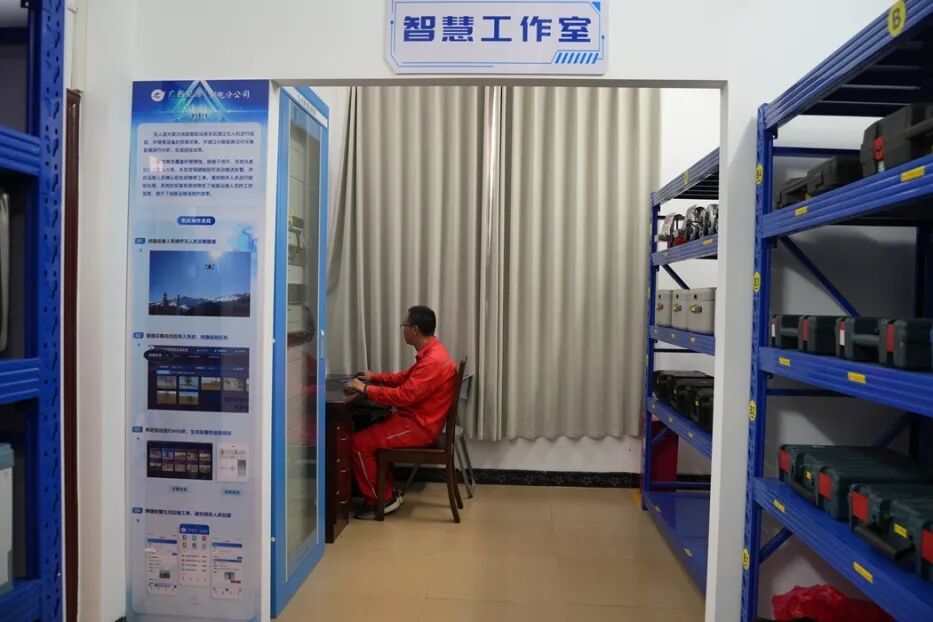
企业动态 | 广西能源股份供电分公司开启智慧运维新篇章
Xin Lang Cai Jing· 2025-12-17 14:19
Core Viewpoint - The integration of "Party Building + Digital Transformation" is innovatively changing the traditional operation and maintenance model in the power transmission sector of Guangxi Energy Group, enhancing the safety and efficiency of the power grid [1][10]. Group 1: Innovation and Technology Integration - A "Smart Work Studio" led by technical party members has been established, utilizing cutting-edge technologies such as drones, cloud computing, and intelligent monitoring to improve operational efficiency [1][10]. - The studio has developed a three-dimensional intelligent operation and maintenance system that combines aerial, cloud, and ground technologies for comprehensive monitoring and fault detection [5][15]. Group 2: Operational Efficiency Improvements - The use of drones equipped with laser radar has significantly reduced the time required for line inspections from several days to just a few hours, achieving high-precision 3D modeling and data collection [3][13]. - The intelligent drone patrol system has increased inspection efficiency by over five times compared to traditional manual inspections, accurately identifying potential hazards such as tree obstructions and wire damage [17]. Group 3: Data Analysis and Fault Detection - The cloud diagnostic system leverages big data to enable intelligent judgment of fault types and rapid location of issues, reducing fault identification time from 6-8 hours to under 3 seconds [19]. - The high-potential fault location system has achieved a 100% accuracy rate in identifying line faults, providing timely alerts for potential risks [20]. Group 4: Initial Success and Future Plans - The smart work studio has shown promising results, with drone inspections replacing manual patrols and achieving a 98% accuracy rate in identifying common hazards [19]. - The company plans to further deepen the integration of "Party Building + Digital Transformation" to promote more innovative applications and contribute to the construction of a smart grid and energy security [19].


锦州石化长输管道实现智慧运维
Zhong Guo Hua Gong Bao· 2025-12-17 04:22
Core Viewpoint - The implementation of a GIS-based pipeline management platform by China Petroleum's Jinzhou Petrochemical significantly enhances operational efficiency and safety in pipeline management through data-driven decision-making and real-time monitoring capabilities [1][2]. Group 1: Technology and Innovation - The GIS pipeline management platform has been developed over 10 years, transitioning from traditional methods to a data-driven approach, allowing for better management of over 320 kilometers of pipelines [1]. - The platform integrates 159 management information items into 21 professional layers, providing a comprehensive "one-stop" management solution for the entire lifecycle of the pipeline [1]. - The platform's capabilities include a 19-level zoom real-world map that visually presents pipeline routes, enhancing operational clarity [1]. Group 2: Operational Efficiency - In the 2024 pipeline overhaul, technicians utilized the platform to complete the internal inspection routing communication for seven pipeline segments in just one day, significantly improving efficiency compared to traditional methods [1]. - The platform's data-driven advantages have led to a multiple-fold increase in operational efficiency [1]. Group 3: Future Developments - By 2026, Jinzhou Petrochemical plans to deploy 90 smart testing piles for real-time monitoring of pipeline potential, further enhancing the safety of energy transportation [2]. - The platform has accumulated nearly 10 years of pipeline health data, allowing for clear traceability of risk point management even decades later [2].
