暴利税

Search documents
未知机构:13月31日3月PMI数据将公布-20260330
未知机构· 2026-03-30 01:40
Summary of Key Points from Conference Call Records Industry or Company Involved - **Manufacturing and Non-Manufacturing Sectors**: The PMI data indicates trends in these sectors - **Photovoltaic Industry**: Changes in export tax policies affecting this sector - **Semiconductor Industry**: Price adjustments by major companies - **Paper and Steel Industries**: Price increases announced by key players - **U.S. Employment and Economic Indicators**: Upcoming reports that may impact market sentiment Core Points and Arguments 1. **PMI Data Release**: The manufacturing PMI for February was reported at 49.0%, a decrease of 0.3 percentage points from the previous month, while the non-manufacturing business activity index was at 49.5%, an increase of 0.1 percentage points [1] 2. **Export Tax Changes for Photovoltaic Products**: Starting April 1, 2026, the VAT export rebate for battery products will be reduced from 9% to 6%, and will be completely eliminated by January 1, 2027. This is expected to pressure export companies and shift the photovoltaic industry towards high-quality development rather than low-cost competition [1] 3. **Semiconductor Price Increases**: Major companies like Texas Instruments, NXP, and Infineon are raising prices on select products starting April 1, with Texas Instruments seeing increases up to 85% and Infonion's mainstream products expected to rise by 5% to 15% [2] 4. **Fuel Surcharge Adjustments**: Domestic airlines are expected to raise fuel surcharges, following the trend set by major carriers [2] 5. **Unlocking of Restricted Shares**: A total of 28 restricted shares will be unlocked next week, with a total market value of nearly 29.3 billion yuan, led by Hongri Da at 10.846 billion yuan [2] 6. **New Stock Issuances**: Three new stocks are set to be issued, including Saiying Electronics and Yuyuan Composites [2] 7. **Price Increases in Passive Components**: Murata has announced price hikes of 15% to 35% for AI server and high-end automotive MLCC products, effective April 1 [2] 8. **Paper Industry Price Increases**: Yueyang Lin Paper and Chenming Paper have announced price increases of 200 yuan per ton for various paper products starting April 1, 2026 [3] 9. **Steel Industry Price Adjustments**: Baosteel, Ansteel, and Benxi Steel are all raising base prices by 200 yuan per ton for multiple steel products in April [3] 10. **Upcoming Financial Reports**: A peak in domestic earnings reports is expected, with several key companies set to announce their financial results [3] Other Important but Possibly Overlooked Content 1. **U.S. Employment Reports**: The U.S. will release the non-farm payroll report for March, with expectations of a rebound to an increase of 55,000 jobs after a surprising decrease in February [4] 2. **G7 Meeting on Strategic Oil Reserves**: Discussions were held regarding the release of strategic oil reserves, which could impact global oil prices [4] 3. **Geopolitical Tensions**: The U.S. is reportedly preparing for ground operations in Iran, which could have significant geopolitical implications [5]
铝:区间震荡,氧化铝:关注矿端扰动,铸造铝合金:跟随电解铝
Guo Tai Jun An Qi Huo· 2026-03-17 02:26
Report Industry Investment Rating - Aluminum: Range-bound oscillation [1] - Alumina: Attention to ore end disturbances [1] - Cast aluminum alloy: Follow electrolytic aluminum [1] Core Viewpoints - The report updates the fundamental data of aluminum, alumina, and cast aluminum alloy, including futures market prices, trading volumes, positions, and spot market prices, inventory, and corporate profitability [1] - The trend strength of aluminum is 0, alumina is 1, and aluminum alloy is 0 [2] Summary by Related Catalogs Futures Market - **Aluminum**: The closing price of the Shanghai Aluminum main contract is 25,170, up 210 from the previous trading day; the LME Aluminum 3M closing price is 3,392, down 47 [1] - **Alumina**: The closing price of the Shanghai Alumina main contract is 2,965, up 9 from the previous trading day [1] - **Aluminum alloy**: The closing price of the aluminum alloy main contract is 23,830, up 175 from the previous trading day [1] Spot Market - **Aluminum**: The domestic aluminum ingot social inventory is 1345,000 tons, an increase of 35,000 tons from the previous trading day; the LME aluminum ingot inventory is 442,800 tons, a decrease of 2,500 tons [1] - **Alumina**: The domestic average price of alumina is 2,700 yuan/ton, up 2 yuan from the previous trading day; the CIF price of alumina in Lianyungang is 328 US dollars/ton, down 2 US dollars [1] - **Aluminum alloy**: The price of Baotai ADC12 is 24,600 yuan/ton, down 100 yuan from the previous trading day [1] Corporate Profitability - **Electrolytic aluminum**: The profit and loss of electrolytic aluminum enterprises is 8,492.36 yuan/ton, a decrease of 330 yuan from the previous trading day [1] - **Alumina**: The profit and loss of Shanxi alumina enterprises is -53 yuan/ton, unchanged from the previous trading day [1] Other Information - Sino-US are considering establishing a working mechanism to promote bilateral trade and investment cooperation, and discussing issues such as bilateral tariff levels and related non-tariff measures [2] - Indonesia is considering levying a "windfall tax" on commodities, and the government reaffirms its adherence to the 3% budget deficit red line [2]
UK North Sea Oil Enters Survival Mode as Investment Dries Up
Yahoo Finance· 2026-01-06 22:00
Core Insights - The UK North Sea oil and gas industry faced significant challenges in 2025, marking the most difficult year since the 1960s when hydrocarbons were first discovered in the region [1] - Production from mature fields continued to decline, and uncertainties regarding government policy led to reduced investments and frozen plans among operators [2] - Exploration activity in the UK North Sea reached an all-time low, with no exploration wells drilled in 2025, a first since 1960, due to unpredictable fiscal policies [3] Investment Climate - The UK oil and gas industry received clarity on the fiscal regime at the end of 2025, but the windfall tax remained unchanged until 2030, which the industry argues is detrimental [4][5] - The total tax rate, including the windfall tax of 78%, is seen as excessively burdensome, leading to concerns about the industry's viability and its supply chain [5][6] - The Energy Profits Levy (EPL) was triggered by oil prices above $76 per barrel or natural gas prices above 59 pence per therm, with gas prices remaining above the threshold, resulting in a 35% windfall tax on profits [6] Industry Sentiment - The sentiment within the industry is pessimistic, with expectations that continued declines in investment and exploration could lead to increased reliance on oil and gas imports, exposing the UK to volatile international markets [7] - The windfall tax, initially introduced during the 2022 energy crisis and extended under the current government, is expected to eliminate non-essential investments in the UK shelf, as companies may seek friendlier tax jurisdictions [8] - Industry leaders have criticized the government's decision to maintain the windfall tax, stating it has cost the UK £50 billion in potential investments and jeopardized jobs and industries [9]
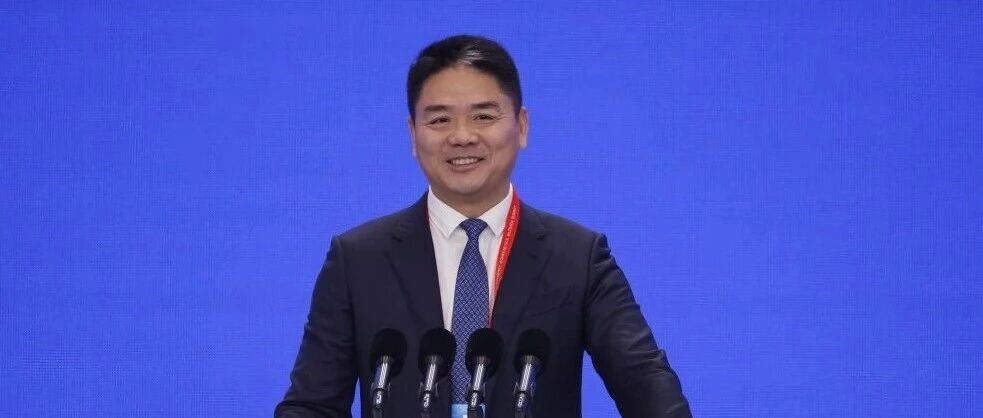
真敢说!刘强东建议给技术垄断企业征 90% 暴利税
程序员的那些事· 2025-11-10 07:05
Group 1 - Liu Qiangdong proposed a 90% excess profit tax on technology monopolies, with funds directed towards pension and education sectors [1] - The tax would primarily target tech giants with market capitalizations exceeding $1 trillion, such as Nvidia, Apple, Google, and Microsoft [1] - The proposal has sparked discussions online, with some expressing concerns that such a high tax rate could stifle innovation and reduce investment in research and development [4][5] Group 2 - Liu Qiangdong envisions a future work model where employees may only need to work one day a week or even just one hour, driven by technological advancements creating new service demands [3] - There is a belief that the rise of AI and robots will not replace human jobs but rather create new opportunities in fields like humanities, arts, tourism, and space exploration [3]


刘强东喊征技术垄断暴利税,该征吗?
经济观察报· 2025-11-07 09:53
Core Viewpoint - The article discusses the potential implementation of a "windfall tax" on technology monopolies, similar to existing taxes in the energy sector, highlighting the trend of increasing tax regulation on tech companies [2][3]. Group 1: Windfall Tax Concept - Windfall tax is a tax levied on excess or unexpected profits, aimed at companies that meet specific government criteria [2]. - The idea of imposing a 90% windfall tax on tech monopolies, as suggested by Liu Qiangdong, is intended to fund public services such as pensions and education [2]. - Currently, there is no specific windfall tax for technology monopolies overseas, but there is a general trend towards stricter tax regulations for tech companies [2]. Group 2: Implications and Considerations - The imposition of windfall taxes could impact the development momentum and dynamism of technology companies, as they have achieved their monopolistic positions through technological advancements [3]. - It is essential to conduct thorough analysis before imposing such taxes, ensuring they are applied only in cases of market dominance abuse and at reasonable rates to avoid continuous shocks to the industry [3]. - Historical examples show that windfall taxes in the energy sector, such as the U.S. oil windfall profit tax in the 1980s, were temporary measures during high oil price periods [4]. Group 3: Historical Context of Windfall Taxes - Previous windfall taxes have primarily targeted the energy sector, with notable instances in Western countries during high oil price periods [4]. - The U.S. enacted the Oil Windfall Profit Tax Act in 1980, imposing tax rates between 30% and 70% based on the type and size of oil companies [4]. - The European Union announced a windfall tax on energy companies in 2022 to curb high energy prices, while China has a special revenue tax on oil companies based on excess income from oil sales [4].
刘强东喊征技术垄断暴利税,该征吗?
Jing Ji Guan Cha Wang· 2025-11-07 09:49
Core Viewpoint - The discussion around imposing a "windfall tax" on technology monopolies is gaining traction, with calls for such taxes to be used for public welfare, including education and pensions [2] Group 1: Windfall Tax Concept - Windfall tax is a tax levied on excess or unexpected profits, aimed at companies that meet specific government criteria [2] - Historically, windfall taxes have been applied primarily in the energy sector, such as the oil windfall tax, which is linked to the income and profit levels of oil companies [3] Group 2: Implications for Technology Companies - The imposition of a windfall tax on technology monopolies could potentially impact their development incentives and market dynamics, necessitating careful analysis before implementation [3] - The tax rate should not be excessively high to avoid continuous shocks to the industry, especially as technology is seen as a core driver of future productivity [3] Group 3: Global Context and Precedents - The European Union has previously announced a windfall tax on energy companies to address soaring energy prices, while China has implemented a special revenue tax on oil companies since 2006 [4] - The U.S. introduced the Oil Windfall Profit Tax Act in 1980, which imposed a tax rate between 30% and 70% on oil companies during periods of high oil prices, later repealed in 1989 [3][4]