
有效市场与有为政府相结合

Search documents
“十五五”经济前瞻:立足比较优势,激活增长动能——对话北京大学国家发展研究院名誉院长、北京大学新结构经济学研究院院长林毅夫
Shang Hai Zheng Quan Bao· 2026-01-28 18:38
Group 1 - The "15th Five-Year Plan" is a critical period for China to achieve its goal of basic socialist modernization by 2035, with a key economic target of maintaining an average growth rate of around 5% [3][4] - Despite global economic challenges, including weak demand and geopolitical tensions, China has significant opportunities, particularly in emerging industries such as solar panels, drones, and lithium batteries [4][5] - Traditional industries can also benefit from new productivity methods like digitalization and green technology, allowing them to enhance efficiency and expand market share [4][5] Group 2 - Companies should identify their comparative advantages in specific industries to effectively leverage new productivity and drive growth [5][6] - The government plays a crucial role in guiding industries based on local comparative advantages to avoid redundant construction and resource misallocation [6] - To boost domestic demand, the government should invest in infrastructure for emerging industries, enhance workforce skills, and implement targeted measures to create demand [8][9][10] Group 3 - Confidence in economic growth is essential for both entrepreneurs and consumers, as it drives investment and consumption, which are vital for economic vitality [12] - China must balance technological self-sufficiency with global cooperation, particularly in high-tech sectors, to maintain its competitive edge [13] - The expectation is that China can sustain a growth rate of around 5% even in a challenging international environment, contributing significantly to global economic growth [14]

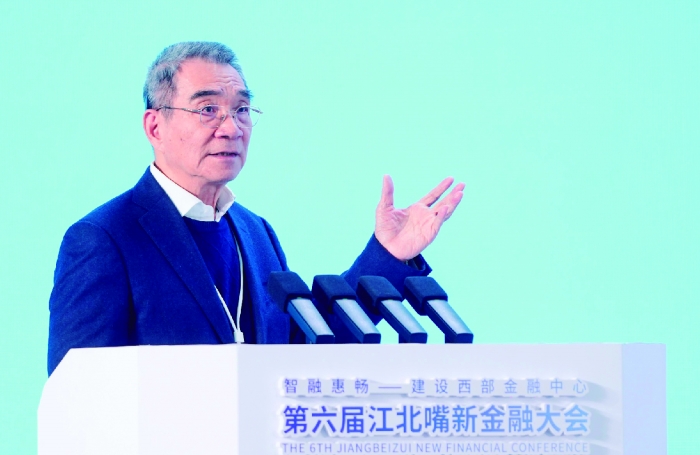
构建“有效市场”与“有为政府”新范式
Guo Ji Jin Rong Bao· 2026-01-19 14:55
Core Viewpoint - The 20th National Congress of the Communist Party of China has established the principle of "combining effective markets with proactive government" as fundamental for economic and social development, aiming to support China's modernization and regional economic upgrades [1]. Group 1: Technological Innovation - The focus on self-reliance in technological innovation aims to create new global competitive advantages, emphasizing a three-pronged development framework of education, technology, and talent [2]. - Key areas include strengthening basic research, addressing critical technologies like integrated circuits, and implementing initiatives such as "Artificial Intelligence+" to empower the real economy [2]. Group 2: Industrial Development - The development of a modern industrial system is centered on new quality productivity, with a focus on intelligent, green, and integrated industries [2]. - Strategic emerging industries such as new energy and aerospace are prioritized, alongside future industries like quantum technology and life sciences [2]. Group 3: Reform and Opening Up - Institutional innovation is highlighted to stimulate new vitality for high-quality development, including the implementation of the Private Economy Promotion Law and deepening state-owned enterprise reforms [2]. - The goal is to create a first-class business environment by aligning with international high-standard trade rules [2]. Group 4: Social Welfare and Ecological Civilization - The commitment to people-centered development and green transformation aims to achieve common prosperity and a beautiful China [3]. - A comprehensive public service system and income distribution adjustment mechanisms are being established, with a focus on carbon neutrality and integrated ecological protection [3]. Group 5: Regional Economic Development - Regional economic development is positioned as a crucial "nuclear explosion point" for China's modernization, effectively linking national strategies to practical outcomes [5][6]. - Regions are encouraged to identify their comparative advantages within the national strategic framework, exemplified by the Yangtze River Delta's collaborative model [6]. Group 6: Market and Government Dynamics - The dual-core elements of market consensus and unique national conditions are essential for regional economic development [4]. - Effective market cooperation and government collaboration are necessary for high-quality regional economic growth, emphasizing the complementary roles of both systems [4]. Group 7: Future Directions - The focus on deepening market-oriented reforms and optimizing government roles is critical for enhancing regional economic cooperation and balancing interests [9][10]. - The aim is to create a dynamic balance between market mechanisms and government interventions, fostering a new ecological model for regional economic development [10].
A股策略周报20250921:风格再均衡,寻找新主线-20251026
SINOLINK SECURITIES· 2025-10-26 09:15
Group 1 - The report indicates that the risks in the market have been alleviated, particularly regarding the U.S. service sector and regional bank concerns, which have contributed to a more stable investment environment [2][10][25] - The U.S. October PMI data showed service PMI at 55.2% and manufacturing PMI at 52.2%, both exceeding market expectations, which alleviated recession fears [10][25] - The TMT sector has seen a shift in trading logic, expanding beyond AI infrastructure to include domestic computing power and consumer electronics, indicating a rebalancing of investment styles [3][13][14] Group 2 - The report highlights the potential for global manufacturing recovery, which is expected to drive physical consumption expansion and create investment opportunities in key resources like copper and lithium [25][27] - China's position as a "seller of shovels" in the global manufacturing landscape is emphasized, particularly in the power sector, where it has advantages in renewable energy equipment exports [25][27] - The report suggests that the combination of effective markets and proactive government policies will be crucial for navigating deflationary pressures and stabilizing domestic prices [44][45] Group 3 - The report outlines a shift in investment focus towards physical assets, particularly in the context of a potential interest rate cut cycle, which could enhance manufacturing activity and resource demand [4][56] - The recommended investment sequence includes upstream resources and capital goods, reflecting China's role in the global supply chain and the expected recovery in domestic consumption [4][56] - The report notes that the market is currently in a phase of seeking new opportunities as risks have subsided, with a focus on sectors that show signs of recovery and growth potential [53][54]
统筹“两只手”持续发挥合力
Jing Ji Ri Bao· 2025-10-18 01:01
Group 1 - The core viewpoint emphasizes the need for a combination of effective markets and proactive government during the "14th Five-Year Plan" period to ensure stable and sustainable economic development [1][2] - The historical context highlights the evolution of the relationship between government and market over the past 40 years, showcasing the importance of adapting this relationship to different economic stages [1] - Current internal and external challenges necessitate a dual approach, as relying solely on government or market mechanisms is insufficient to address these complexities [1][2] Group 2 - The development of new productive forces during the "14th Five-Year Plan" relies on the efficient collaboration between government and market, particularly in high-risk, high-investment innovation sectors [2] - The balance between government intervention and market signals is crucial for fostering innovation while avoiding market distortion [2][3] - The interaction between effective markets and proactive government is essential for enhancing resource allocation efficiency and economic resilience, especially in critical areas like food, energy, and finance [2] Group 3 - Continuous efforts are needed to improve the integration of effective markets and proactive government, including deepening reforms and creating a fair competitive environment [3] - Enhancing governance tools and effectiveness is vital, with a focus on adapting to the digital economy and improving regulatory precision [3] - The ongoing search for a balanced relationship between government and market will contribute to a new chapter in China's modernization [3]
经济日报金观平:统筹“两只手”持续发挥合力
Jing Ji Ri Bao· 2025-10-17 21:43
Group 1 - The core principle for the "14th Five-Year Plan" emphasizes the combination of an effective market and a proactive government, highlighting the need for the market to play a decisive role in resource allocation while the government plays a supportive role [1][2] - The historical context of over 40 years of reform and opening up shows that China's economic miracle is largely due to the continuous exploration and adjustment of the relationship between government and market [1][2] - Current internal and external challenges necessitate a dual approach of effective market and proactive government to ensure stable and sustainable economic growth [1][2] Group 2 - The development of new productive forces during the "14th Five-Year Plan" relies on the efficient collaboration between market mechanisms and government support, especially in high-risk, high-investment innovation sectors [2][3] - The balance between government intervention and market signals is crucial for fostering innovation while avoiding market distortion [2][3] - The interaction between an effective market and a proactive government is essential for enhancing resource allocation efficiency and economic resilience, particularly in critical areas like food, energy, and finance [2][3] Group 3 - Continuous efforts are needed to improve the integration of an effective market and a proactive government, including deepening reforms to eliminate market barriers and maintain fair competition [3] - Enhancing governance tools and effectiveness is vital, with the government needing to adapt to the digital economy and innovate regulatory methods [3] - The ongoing search for a balanced relationship between government and market will contribute to a new chapter in China's modernization [3]