有色金属景气周期

Search documents
又一家万亿市值巨头诞生!
Ge Long Hui· 2026-01-06 11:45
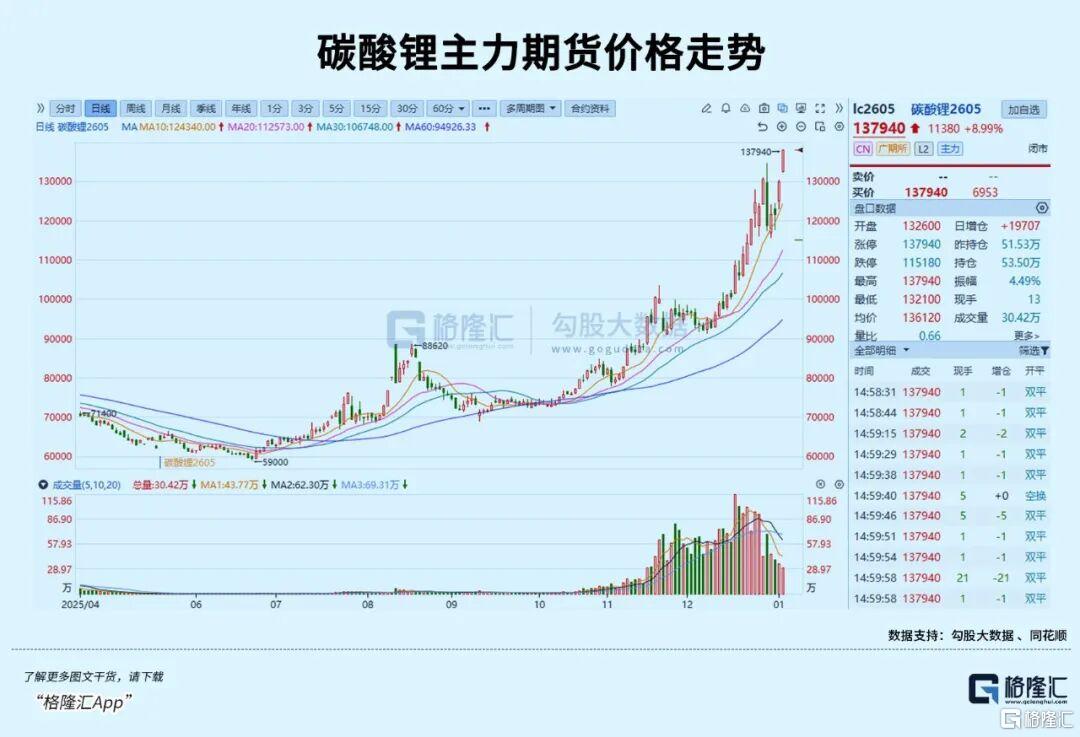
Core Viewpoint - The non-ferrous metals sector has shown remarkable performance, dominating the annual growth rankings in 2025 and continuing its strong upward trend into 2026, driven by various macroeconomic and industry-specific factors [1][2][7]. Group 1: Market Performance - As of January 6, 2026, multiple futures contracts in the non-ferrous metals market have surged, with lithium carbonate futures hitting a limit-up of 8.99%, closing at 137,940 yuan/ton, more than doubling since mid-2025 [2]. - Major contracts for silver, platinum, and palladium have also seen significant increases, with silver rising by 7.06%, platinum by 6.02%, and palladium by 5.16%, while industrial metals like copper, tin, and nickel have risen over 4% [4]. - Zijin Mining, a leading player in the sector, saw its stock price increase by 6.5%, pushing its market capitalization past 1 trillion yuan, making it the only non-ferrous company in A-shares to reach this milestone [4]. Group 2: Catalysts for Price Increases - The strong price increases in non-ferrous metals are characterized by an enhanced trend of interlinked price movements, particularly driven by the surge in lithium-related sectors, especially lithium carbonate [8][10]. - A key factor supporting the rise in lithium prices is the delayed resumption of production at the Jiangxi Jianxiawo lithium mine due to compliance and regulatory issues, which has tightened the supply in the market [10]. - The recent spike in silver prices was catalyzed by geopolitical events, specifically a U.S. military operation in Venezuela, which triggered a surge in safe-haven buying [13]. Group 3: Supply and Demand Dynamics - The copper market is experiencing a tight supply situation, exacerbated by production halts at major mines due to accidents and declining ore grades, which have led to increased extraction costs [13]. - Aluminum prices are nearing historical highs, supported by a combination of steady demand growth and rigid supply constraints, with new capacity growth projected at only 1.8% in 2025 [15]. - Nickel prices are expected to rebound as Indonesia reduces its mining quotas, while recent policy changes in Vietnam regarding rare earths are also expected to support price increases in that sector [15][16]. Group 4: Investment Trends - The current market environment is characterized by a strong resonance between capital and industry cycles, with historical data indicating that periods of monetary easing often correlate with significant price increases in non-ferrous metals [20]. - The demand for non-ferrous metals is being driven by the growth of new technologies, including AI and renewable energy, which are expected to further enhance the sector's attractiveness as a core asset class [21][22]. - Analysts predict that the non-ferrous metals sector will continue to experience a bullish trend in 2026, with copper and lithium being highlighted as key investment areas due to their supply-demand dynamics [22][24].


又一家万亿市值巨头诞生!
格隆汇APP· 2026-01-06 11:23
Core Viewpoint - The non-ferrous metal sector has shown remarkable performance, with significant price increases and a strong bullish trend expected to continue into 2026, driven by macroeconomic factors and supply-demand dynamics [2][10][30]. Group 1: Market Performance - As of January 6, 2026, various futures contracts in the non-ferrous metal market have surged, with lithium carbonate futures rising by 8.99% to 137,940 yuan per ton, more than doubling since mid-2025 [4]. - Major contracts for silver, platinum, and palladium have also seen substantial gains, with silver futures up 7.06%, platinum 6.02%, and palladium 5.16% [7]. - Zijin Mining, a leading player in the sector, saw its stock price increase by 6.5%, pushing its market capitalization above 1 trillion yuan, making it the only non-ferrous company in A-shares to reach this milestone [7]. Group 2: Catalysts for Price Increases - The strong price increases in non-ferrous metals are characterized by a notable trend of interlinked price movements, particularly driven by the surge in lithium-related sectors [12][13]. - The recent spike in silver prices was catalyzed by geopolitical events, specifically a U.S. military operation in Venezuela, which heightened market demand for safe-haven assets [16]. - Supply constraints in the copper market, exacerbated by mining accidents and declining ore grades, have contributed to a bullish outlook for copper prices [17]. Group 3: Supply and Demand Dynamics - The aluminum market is experiencing upward pressure due to limited new production capacity and strong demand, with prices nearing historical highs [18]. - Nickel prices are expected to rebound as Indonesia reduces its mining quotas, while rare earth prices are supported by new regulations in Vietnam that restrict exports [18][19]. - Analysts predict that as rare earth prices approach 600,000 yuan per ton, the strength of orders and company performance will validate current valuations [19]. Group 4: Macro and Policy Influences - Historical data indicates that periods of U.S. dollar weakness and low real interest rates typically lead to price increases in precious metals and copper, suggesting a favorable environment for non-ferrous metals [21][23]. - The current liquidity conditions, driven by a shift towards monetary easing and the growth of new technology sectors, are fundamental factors propelling demand for non-ferrous metals [23][24]. - The Chinese market has seen a significant increase in the valuation of quality assets, with long-term capital inflows into the non-ferrous sector, particularly benefiting companies with strong profit growth and integrated supply chains [26][27]. Group 5: Future Outlook - The non-ferrous metal sector is expected to continue its bullish trend into 2026, supported by strong demand from new technologies and supply constraints [28]. - Analysts from various firms express confidence in the ongoing bull market for non-ferrous metals, particularly copper and lithium, as supply-demand gaps widen [28][29]. - The transition of electrolytic aluminum into a high-quality, scarce asset is anticipated to stabilize prices and maintain high profit margins over the long term [29].