
楼市企稳修复

Search documents
今日视点:积极因素叠加 楼市向企稳修复过渡
Zheng Quan Ri Bao· 2026-02-24 22:47
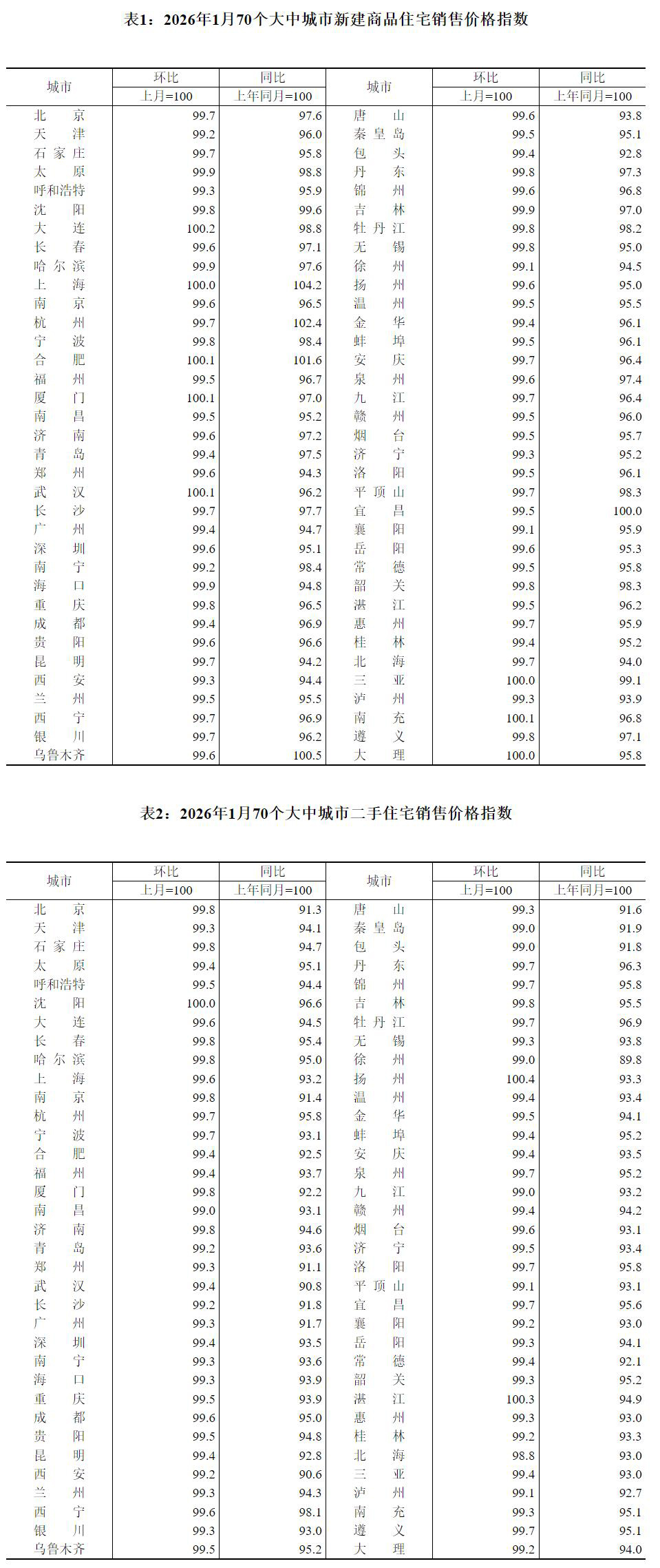
Core Viewpoint - The real estate market in China is showing signs of structural adjustment and stabilization, with a gradual recovery in housing prices across major cities as demand resilience becomes evident [1][2]. Group 1: Market Trends - In January 2026, housing prices in 70 major cities showed a narrowing decline, indicating a positive shift in the market [1]. - The second-tier cities experienced a 0.3% month-on-month decrease in new home prices, a reduction of 0.1 percentage points from the previous month [2]. - First-tier cities saw a 0.5% decline in second-hand home prices, with the drop narrowing by 0.4 percentage points compared to the previous month [2]. Group 2: Policy Impact - Continuous policy efforts and orderly demand release are stabilizing the market fundamentals, with various local governments implementing supportive measures [1]. - The extension of the housing tax rebate policy and the support for urban renewal are contributing to increased market activity, particularly in core cities [2][3]. - The number of cities where new home prices have stopped declining has increased to 12, indicating a broader recovery in the new housing market [3]. Group 3: Regional Developments - Shanghai's second-hand housing market has shown significant activity, with January transactions reaching 22,834 units, the highest in five years for the same period [3]. - New first-tier and key second-tier cities are experiencing a stabilization in new home prices, with cities like Wuhan and Qingdao showing increased market activity [3]. - The trend of improving housing quality and supply is becoming evident, with more cities signaling structural stabilization in housing prices [3].
2026年开年70城房价降幅总体收窄
Feng Huang Wang· 2026-02-16 02:29
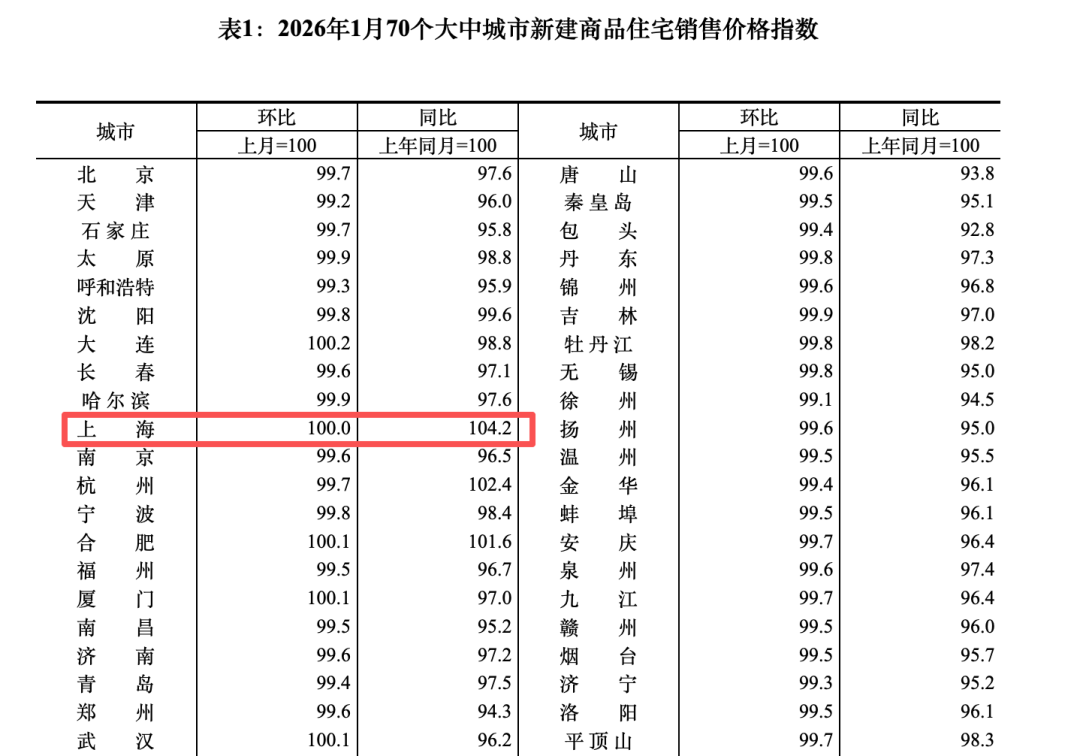
Core Insights - The overall sales prices of residential properties in 70 large and medium-sized cities in January 2026 showed a narrowing decline month-on-month and a year-on-year decrease, indicating a gradual stabilization and recovery in the real estate market [1][4]. New Housing Market - In January, first-tier cities saw a month-on-month decline of 0.3% in new residential property prices, consistent with the previous month, with Shanghai remaining stable while Beijing, Guangzhou, and Shenzhen experienced declines of 0.3%, 0.6%, and 0.4% respectively [2][3]. - Five cities reported positive month-on-month price increases for new homes, a decrease of one city compared to December 2025, including Dalian, Hefei, Xiamen, Wuhan, and Nanchong [2]. - The new housing market is primarily focused on inventory digestion, with fewer new projects launched and developers offering discounts to stimulate sales [2]. Second-Hand Housing Market - The second-hand housing market showed a more positive trend in January, with a month-on-month decline of 0.5% in first-tier cities, a significant narrowing of 0.4 percentage points compared to the previous month [4][5]. - Beijing led the recovery in the first-tier second-hand housing market with a month-on-month decline of only 0.2%, while Shanghai, Guangzhou, and Shenzhen saw declines of 0.4%, 0.7%, and 0.6% respectively [4]. - For the first time in four months, two cities, Yangzhou and Zhanjiang, reported month-on-month price increases in the second-hand housing market, with increases of 0.4% and 0.3% respectively [5]. Year-on-Year Price Changes - Year-on-year, first-tier cities experienced a 2.1% decline in new residential property prices, with Shanghai showing a 4.2% increase, while Beijing, Guangzhou, and Shenzhen saw declines of 2.4%, 5.3%, and 4.9% respectively [3][5]. - The year-on-year decline in second-hand housing prices for first-tier cities was 7.6%, with Beijing, Shanghai, Guangzhou, and Shenzhen experiencing declines of 8.7%, 6.8%, 8.3%, and 6.5% respectively [5]. Market Outlook - Analysts suggest that the real estate market is entering a new phase of "stable operation and differentiated development," where price trends will reflect more regional disparities rather than uniform increases or decreases [6]. - The overall housing market is expected to stabilize gradually, supported by resilient demand and positive signals in the circulation end, although the recovery foundation remains fragile [4][6].

房价止跌信号越来越明显
Mei Ri Jing Ji Xin Wen· 2026-02-13 11:42
Core Viewpoint - The real estate market is showing signs of stabilization, with developers increasing their activity and demand driven by factors such as employment, education, and marriage [2][9]. Price Trends - In January, the sales prices of new residential properties in first, second, and third-tier cities showed a narrowing decline, with five cities experiencing a month-on-month price increase [2][9]. - Specifically, Dalian led with a 0.2% increase, while Beijing, Guangzhou, and Shenzhen saw declines of 0.3%, 0.6%, and 0.4% respectively, and Shanghai remained stable [3][9]. - Year-on-year, the prices in first-tier cities decreased by 2.1%, with Shanghai seeing a 4.2% increase, while Beijing, Guangzhou, and Shenzhen experienced declines of 2.4%, 5.3%, and 4.9% respectively [3][9]. Transaction Volume - In January, the transaction volume of new homes in 50 key cities decreased by 32% month-on-month and 20% year-on-year, with first-tier cities experiencing a decline of 36% and 28% respectively [6][12]. - The total sales amount of the top 20 residential projects in Shanghai reached approximately 11.5 billion yuan, with the leading project, Anlan Shanghai, accounting for 2.18 billion yuan [6][12]. Second-hand Housing Market - The second-hand housing market is showing a more pronounced stabilization, with first-tier cities experiencing a month-on-month price decline of 0.5%, which is a narrowing of the previous month's decline [10][13]. - The transaction area for second-hand homes in January reached approximately 810 million square meters, marking a 16% increase month-on-month and a 33% increase year-on-year [12][13]. - The recovery in the second-hand market is supported by a significant increase in the real estate brokerage industry's activity, indicating a positive shift in both seller and buyer sentiment [13].
1月70城房价环比降幅总体收窄 专家:楼市迎来探底和企稳的良好开局
Mei Ri Jing Ji Xin Wen· 2026-02-13 08:42
Group 1 - The core viewpoint of the article indicates that the real estate market is showing signs of stabilization, with a notable reduction in the decline of housing prices in major cities [1][7] - In January, five cities experienced a month-on-month increase in new residential property prices, with Dalian leading at 0.2% [1][6] - The overall trend suggests a structural adjustment and gradual recovery in the housing market, supported by both policy measures and improved market confidence [1][7] Group 2 - In January, new residential property prices in first-tier cities decreased by 0.3% month-on-month, with Shanghai remaining stable while Beijing, Guangzhou, and Shenzhen saw declines of 0.3%, 0.6%, and 0.4% respectively [2][3] - Year-on-year, new residential property prices in first-tier cities fell by 2.1%, with Shanghai showing a 4.2% increase while other cities experienced declines [2][3] - The supply of new homes in Shanghai dropped significantly by 64% month-on-month, indicating a contraction in the market [3] Group 3 - The second-hand housing market is showing a clearer trend of stabilization, with a month-on-month price decline of 0.5% in first-tier cities, a reduction from previous months [7][10] - The transaction volume of second-hand homes in January reached approximately 810 million square meters, marking a 16% increase month-on-month and a 33% increase year-on-year [10] - The real estate brokerage industry is experiencing a recovery, with a notable increase in the housing market's activity and buyer interest, providing a solid foundation for market recovery [10]
1月70城房价出炉:新房5城环比上涨 ,二手房现积极信号
Nan Fang Du Shi Bao· 2026-02-13 05:52
Core Viewpoint - The real estate market in China is experiencing structural adjustments, with signs of stabilization and recovery, particularly in the second-hand housing market, while new housing prices continue to face downward pressure [4][5]. Group 1: New Housing Market - In January, new residential property prices in first-tier cities decreased by 0.3% month-on-month, with Shanghai remaining stable, while Beijing, Guangzhou, and Shenzhen saw declines of 0.3%, 0.6%, and 0.4% respectively [2]. - Year-on-year, new housing prices in first-tier cities fell by 2.1%, with Shanghai showing a 4.2% increase, while Beijing, Guangzhou, and Shenzhen experienced declines of 2.4%, 5.3%, and 4.9% respectively [2]. - The number of cities with rising new housing prices decreased from 6 to 5, indicating a continued adjustment in the new housing market [4]. Group 2: Second-hand Housing Market - In January, second-hand housing prices in first-tier cities decreased by 0.5% month-on-month, with declines in Beijing, Shanghai, Guangzhou, and Shenzhen of 0.2%, 0.4%, 0.7%, and 0.6% respectively [2]. - Year-on-year, second-hand housing prices in first-tier cities fell by 7.6%, with Beijing, Shanghai, Guangzhou, and Shenzhen experiencing declines of 8.7%, 6.8%, 8.3%, and 6.5% respectively [3]. - Two positive signals were noted in the second-hand housing market: the first increase in prices after months of decline and a noticeable narrowing of price drops across 70 cities, indicating a potential turning point [4]. Group 3: Market Outlook and Policy - The overall real estate market is transitioning towards stabilization, with signs of demand resilience and positive signals in the circulation of properties [5]. - The new housing market is showing disparities, with first-tier cities maintaining stability in prices while new first-tier and second-tier cities experience slight fluctuations [5]. - The real estate policy direction is expected to remain focused on stabilizing the market and expectations, with an emphasis on long-term effects and targeted measures [5].
一线城市二手房价降幅明显收窄
2 1 Shi Ji Jing Ji Bao Dao· 2026-02-13 05:23
Core Insights - The overall decline in housing prices in 70 large and medium-sized cities has narrowed, indicating a potential stabilization in the market [1][3] - The first-tier cities' new residential property prices remained stable month-on-month, while second and third-tier cities showed slight declines [1][3] - The second-hand housing market is showing signs of recovery, with a notable increase in transaction volumes and a shift in seller attitudes [3][4] Price Trends - In January, new residential property prices in first-tier cities decreased by 0.3% month-on-month, with Shanghai remaining flat and other cities like Beijing, Guangzhou, and Shenzhen experiencing declines of 0.3%, 0.6%, and 0.4% respectively [1] - Second-hand housing prices in first-tier cities fell by 0.5% month-on-month, but the decline was less severe than the previous month, with specific decreases in Beijing (0.2%), Shanghai (0.4%), Guangzhou (0.7%), and Shenzhen (0.6%) [1][3] - The transaction volume of second-hand homes in 13 key cities increased by 16% month-on-month and 33% year-on-year, indicating a recovery in market activity [1] Market Dynamics - The housing market is undergoing structural adjustments, with signs of demand resilience and increased activity in transactions, particularly in core cities [3][4] - The first-tier cities are becoming a stabilizing anchor for the national market, while new first-tier and second-tier cities are experiencing improved market conditions [3] - The second-hand housing market is benefiting from a shift in seller mentality, leading to reduced listing times and improved transaction efficiency [3][4] Future Outlook - The real estate policy direction is expected to remain focused on stabilizing the market and expectations, with an emphasis on targeted measures [4] - The market is anticipated to continue its recovery into the first half of 2026, but the sustainability of this recovery will depend on various economic factors and government interventions [4] - The current market conditions are seen as a positive start to 2026, with expectations for continued stabilization through March and April [4]