
房价调整

Search documents
保利越秀“硬刚”5小时,系统一度宕机
Mei Ri Jing Ji Xin Wen· 2026-02-25 22:55
Core Insights - The auction for the Guangzhou racetrack land, a highly anticipated event, attracted over 100,000 viewers, causing the official website to crash [2] - The starting price for this land was set at 18.644 billion yuan, making it the fourth highest total price land in Guangzhou [3] - The land is located in the core area of Zhujiang New Town, covering an area of 194,500 square meters, with a total construction area of 567,000 square meters [11] Auction Details - The auction took place online and lasted nearly 9 hours, with 243 rounds of bidding [7] - Ultimately, Yuexiu Group won the bid for approximately 23.6 billion yuan, setting a new record for floor prices in Guangzhou at about 85,000 yuan per square meter [8] - The competitive bidding involved major developers like Poly, Yuexiu, and Guangzhou Urban Investment, with Poly and Yuexiu being the last two active bidders [7] Market Implications - The acquisition of the racetrack land is expected to impact surrounding properties, potentially leading to price reductions as existing projects may need to lower prices to compete [9][14] - The new land's advantages, such as higher efficiency and modern designs, could further pressure nearby properties to adjust their pricing strategies [11] - The surrounding luxury real estate market has seen prices reaching as high as 300,000 yuan per square meter, indicating a competitive environment [12][14] Competitive Landscape - The Zhujiang New Town area is known for its concentration of luxury properties, with several high-end projects already established [12] - Recent sales in the area have shown significant price fluctuations, with some properties experiencing price drops below 100,000 yuan per square meter [14] - The competitive nature of the market is expected to increase as more projects enter the area, raising concerns about the ability of developers to maintain product quality and profitability [14]



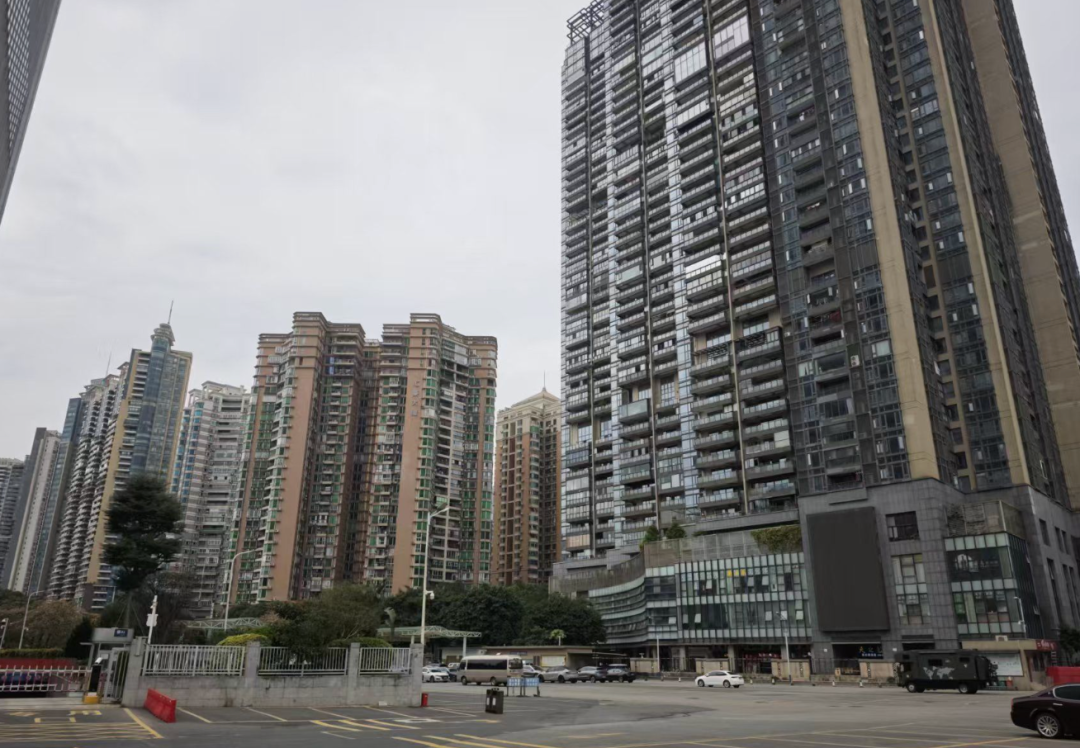
售价环比降幅总体收窄
Xin Lang Cai Jing· 2026-02-25 22:06
Core Insights - The real estate market in China is experiencing a structural adjustment with signs of stabilization and recovery, particularly in core cities [2][3] Group 1: Price Trends - In January, new residential property prices in first-tier cities decreased by 0.3% month-on-month, with Shanghai stable and Beijing, Guangzhou, and Shenzhen declining by 0.3%, 0.6%, and 0.4% respectively [1] - Second-tier cities saw a month-on-month decrease of 0.3% in new residential property prices, while third-tier cities experienced a decline of 0.4% [1] - Year-on-year, new residential property prices in first-tier cities fell by 2.1%, with Shanghai increasing by 4.2% and other cities like Beijing, Guangzhou, and Shenzhen declining by 2.4%, 5.3%, and 4.9% respectively [1] Group 2: Market Dynamics - The second-hand residential property prices in first-tier cities dropped by 7.6% year-on-year, with Beijing, Shanghai, Guangzhou, and Shenzhen experiencing declines of 8.7%, 6.8%, 8.3%, and 6.5% respectively [2] - Analysts indicate that the market is showing signs of bottoming out, with a dual effect of policy support and market confidence restoration contributing to stabilization [2][3] - The new housing market is exhibiting significant disparities, with first-tier cities maintaining stable prices and second-tier cities showing signs of recovery, particularly in cities like Wuhan, Qingdao, and Jinan [2][3] Group 3: Future Outlook - The real estate policy direction is expected to remain focused on stabilizing the market and expectations, with a continued emphasis on targeted measures [3] - The first quarter of 2026 is deemed critical for assessing the sustainability of market recovery and demand release post-Chinese New Year [3]
北大教授姚洋:不是老百姓没钱买房,是房价没跌到位不敢买
Sou Hu Cai Jing· 2026-02-18 10:17
Group 1 - The core argument presented by Professor Yao Yang is that the speed of housing price adjustments is too slow, leading to hesitation among the public regarding home purchases. He believes the fundamental issue is not a lack of funds among ordinary citizens, but rather that housing prices have not fallen to acceptable levels [1][3][5] - The continuous rise in housing prices has diminished the enthusiasm of the public for home buying, resulting in a market activity level that is far below expectations. Despite various government policies aimed at controlling prices, the root problems remain unaddressed, leading to a persistent supply-demand imbalance [5][12][14] - The soaring housing prices have contributed to social inequality, making home ownership increasingly unattainable for middle and low-income families. This situation has forced many families to rent long-term or face homelessness, causing significant distress [9][10][12] Group 2 - Professor Yao Yang challenges traditional economic theories by suggesting that the fluctuations in housing prices are the primary factor influencing buyers' decisions, rather than just their economic conditions. He posits that a decline in prices could stimulate market activity by changing buyer expectations [18][21][23] - The profitability of real estate investments has diminished as housing prices have surged, leading many investors to withdraw from the market. This has created a situation where even those needing housing are overwhelmed by high prices, resulting in increased pressure on families [26][28][30] - Government measures to control the housing market, such as increasing down payment ratios and tightening loan conditions, have had limited effectiveness and have not fundamentally resolved the supply-demand issues. The market is transitioning from a phase of prosperity to one of deep adjustment, presenting future challenges [30][32][35]


2026年开年70城房价降幅总体收窄
Feng Huang Wang· 2026-02-16 02:29
Core Insights - The overall sales prices of residential properties in 70 large and medium-sized cities in January 2026 showed a narrowing decline month-on-month and a year-on-year decrease, indicating a gradual stabilization and recovery in the real estate market [1][4]. New Housing Market - In January, first-tier cities saw a month-on-month decline of 0.3% in new residential property prices, consistent with the previous month, with Shanghai remaining stable while Beijing, Guangzhou, and Shenzhen experienced declines of 0.3%, 0.6%, and 0.4% respectively [2][3]. - Five cities reported positive month-on-month price increases for new homes, a decrease of one city compared to December 2025, including Dalian, Hefei, Xiamen, Wuhan, and Nanchong [2]. - The new housing market is primarily focused on inventory digestion, with fewer new projects launched and developers offering discounts to stimulate sales [2]. Second-Hand Housing Market - The second-hand housing market showed a more positive trend in January, with a month-on-month decline of 0.5% in first-tier cities, a significant narrowing of 0.4 percentage points compared to the previous month [4][5]. - Beijing led the recovery in the first-tier second-hand housing market with a month-on-month decline of only 0.2%, while Shanghai, Guangzhou, and Shenzhen saw declines of 0.4%, 0.7%, and 0.6% respectively [4]. - For the first time in four months, two cities, Yangzhou and Zhanjiang, reported month-on-month price increases in the second-hand housing market, with increases of 0.4% and 0.3% respectively [5]. Year-on-Year Price Changes - Year-on-year, first-tier cities experienced a 2.1% decline in new residential property prices, with Shanghai showing a 4.2% increase, while Beijing, Guangzhou, and Shenzhen saw declines of 2.4%, 5.3%, and 4.9% respectively [3][5]. - The year-on-year decline in second-hand housing prices for first-tier cities was 7.6%, with Beijing, Shanghai, Guangzhou, and Shenzhen experiencing declines of 8.7%, 6.8%, 8.3%, and 6.5% respectively [5]. Market Outlook - Analysts suggest that the real estate market is entering a new phase of "stable operation and differentiated development," where price trends will reflect more regional disparities rather than uniform increases or decreases [6]. - The overall housing market is expected to stabilize gradually, supported by resilient demand and positive signals in the circulation end, although the recovery foundation remains fragile [4][6].
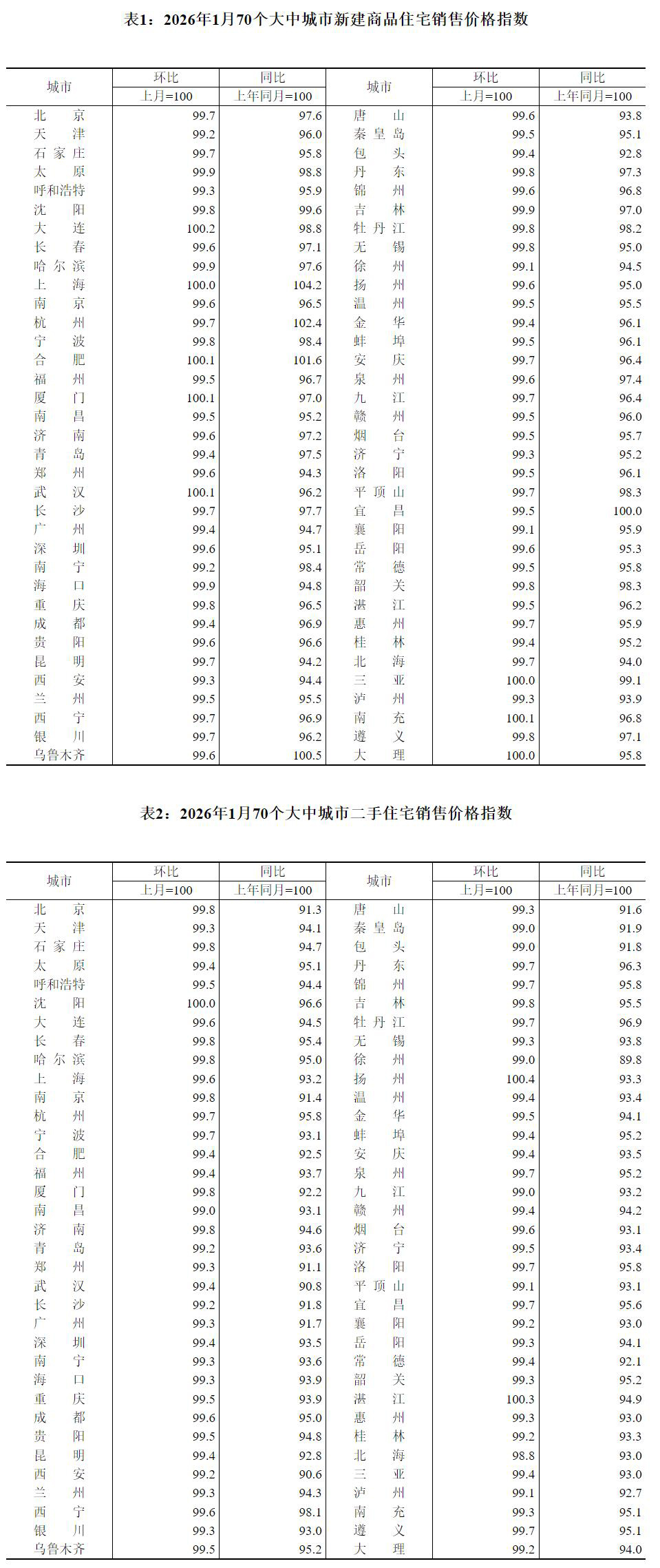
1月70城房价出炉:新房5城环比上涨 ,二手房现积极信号
Nan Fang Du Shi Bao· 2026-02-13 05:52
Core Viewpoint - The real estate market in China is experiencing structural adjustments, with signs of stabilization and recovery, particularly in the second-hand housing market, while new housing prices continue to face downward pressure [4][5]. Group 1: New Housing Market - In January, new residential property prices in first-tier cities decreased by 0.3% month-on-month, with Shanghai remaining stable, while Beijing, Guangzhou, and Shenzhen saw declines of 0.3%, 0.6%, and 0.4% respectively [2]. - Year-on-year, new housing prices in first-tier cities fell by 2.1%, with Shanghai showing a 4.2% increase, while Beijing, Guangzhou, and Shenzhen experienced declines of 2.4%, 5.3%, and 4.9% respectively [2]. - The number of cities with rising new housing prices decreased from 6 to 5, indicating a continued adjustment in the new housing market [4]. Group 2: Second-hand Housing Market - In January, second-hand housing prices in first-tier cities decreased by 0.5% month-on-month, with declines in Beijing, Shanghai, Guangzhou, and Shenzhen of 0.2%, 0.4%, 0.7%, and 0.6% respectively [2]. - Year-on-year, second-hand housing prices in first-tier cities fell by 7.6%, with Beijing, Shanghai, Guangzhou, and Shenzhen experiencing declines of 8.7%, 6.8%, 8.3%, and 6.5% respectively [3]. - Two positive signals were noted in the second-hand housing market: the first increase in prices after months of decline and a noticeable narrowing of price drops across 70 cities, indicating a potential turning point [4]. Group 3: Market Outlook and Policy - The overall real estate market is transitioning towards stabilization, with signs of demand resilience and positive signals in the circulation of properties [5]. - The new housing market is showing disparities, with first-tier cities maintaining stability in prices while new first-tier and second-tier cities experience slight fluctuations [5]. - The real estate policy direction is expected to remain focused on stabilizing the market and expectations, with an emphasis on long-term effects and targeted measures [5].
70城房价环比降幅趋缓 市场预期向好
Jin Rong Shi Bao· 2026-01-20 02:14
Group 1 - The core viewpoint of the articles indicates a general decline in housing prices across major cities in China, with signs of differentiation in the market, particularly in first-tier cities where some areas show signs of stabilization [1][2][3] - In December 2025, the number of cities with rising new residential prices decreased from 8 to 6, while the number of cities with falling prices also slightly decreased from 59 to 58, indicating a more balanced market [1] - First-tier cities experienced a slight decrease in new residential prices, with a 0.3% decline in December, which is a narrowing of the decline by 0.1 percentage points from the previous month [1] Group 2 - The second-hand housing market showed a more pronounced adjustment, with an average price decline of 0.9% in first-tier cities in December 2025, although this decline was less severe than in previous months [2] - The overall decline in housing prices in 2025 was less than in 2024, with a notable increase in demand as buyers began to enter the market more actively due to favorable purchasing conditions [2][3] - In 2025, the total investment in real estate development decreased by 17.2% year-on-year, reflecting significant changes in the supply side of the market [3] Group 3 - The proportion of second-hand housing transactions is increasing, with second-hand homes accounting for approximately 65% of transactions in major cities, up about 4 percentage points from 2024 [4] - The new housing market is shifting to meet improvement needs, while developers are focusing on differentiated supply by offering "better homes" [4] - In 2025, the sales area of new residential properties was 881 million square meters, a year-on-year decrease of 8.7%, indicating ongoing challenges in the market [3]
专家:国内房价调整幅度明显超过国际水平 二手房价格已到底部
Sou Hu Cai Jing· 2026-01-16 10:06
Core Viewpoint - The Chinese real estate market has undergone significant adjustments since 2022, with national housing prices returning to 2016 levels, raising concerns about the future direction of the market and whether it will rebound or continue to hover at the bottom [2] Group 1: Market Performance and Indicators - The adjustment in domestic housing prices has exceeded international averages, with indicators suggesting that the second-hand housing price adjustment has reached a bottom [5][6] - In 2025, the total transaction area of domestic commercial housing was approximately 890 million square meters, equivalent to levels seen in 2009, with a transaction value of about 8.4 trillion yuan, close to 2015 levels [5] - The median rental yield in 30 cities has risen to 2.06%, surpassing the interest rates of fixed deposits, indicating a potential stabilization in the market [6] Group 2: Foreseeable Trends and Predictions - The real estate market in 2026 is expected to continue experiencing a decline in sales, with new construction maintaining low levels and investment pressures remaining significant [9] - It is anticipated that the sales area of new commercial housing will decrease by 6.2% year-on-year in 2026, although the decline is expected to be less severe than in previous years [9] - The core urban areas of first-tier cities are likely to see a stable increase in housing prices over the next three to five years, driven by population inflow and industrial advantages [9][11] Group 3: Legal and Market Dynamics - The number of auctioned residential properties has decreased, which may signal a potential market recovery [7] - In 2025, the number of auctioned residential properties fell by 6.6% year-on-year, with a total transaction value of 253.62 billion yuan, reflecting a downward trend in the auction market [7][8] - Experts suggest that the current housing market has not yet reached its true bottom, with further adjustments expected in the coming years [11]
均价2万+,广州二手房价为近5年最低位
Nan Fang Du Shi Bao· 2026-01-05 16:24
Core Insights - The real estate market in Guangzhou experienced a decline in both transaction volume and prices in 2025, with a 20% drop in transaction revenue and a similar decrease in property prices [1] - The total number of second-hand residential transactions reached 108,812 units in 2025, a slight year-on-year decrease of 1.8%, but still 32% higher than in 2022 [3] - The average transaction price for second-hand homes was 26,420 yuan per square meter, marking a 6.7% decline and the lowest level since 2021 [3] Group 1: Second-Hand Housing Market - In December 2025, the number of second-hand residential transactions was 8,787 units, with a slight month-on-month decrease of 4.4% [3] - The market showed stability in second-hand transactions due to price adjustments, which attracted buyers from the new home market [3] - The average monthly transaction volume for second-hand homes in the first half of 2025 was 9,436 units, the highest in three years [3] Group 2: New Housing Market - In 2025, the total number of new residential transactions was 63,755 units, down 10.6% year-on-year, with an average price of 34,438 yuan per square meter, a 4% decrease [5] - The inventory turnover period for new homes reached 24.5 months, the highest in five years, indicating a slowdown in market activity [5] - The average price in the Tianhe district for new homes increased by 6% to 80,143 yuan per square meter, driven by the introduction of luxury projects [5] Group 3: Market Trends and Outlook - The market is seeing a concentration of transactions in the 90-130 square meter range, indicating a demand for larger, improved living spaces [4] - The Guangzhou leading price index fell to 631.6, a 13.9% year-on-year decrease, with inventory levels reaching a historical high of 138,000 units [4] - The luxury market saw a 25% decrease in transactions for properties priced over 10 million yuan, with an average price of 89,438 yuan per square meter, reflecting cautious buyer sentiment [7]

11月全国70城二手房价同比降幅扩大,广州跌幅达7.2%
Guan Cha Zhe Wang· 2025-12-15 05:32
Core Insights - The number of cities with rising new home prices increased from 6 to 8 in November, indicating a positive trend in the housing market [1][2] - The number of cities with declining new home prices decreased from 64 to 59, suggesting a stabilization in the market [1][2] - Shanghai led the year-on-year price increase among first-tier cities with a 5.1% rise, while other major cities experienced declines [2] New Home Prices - In November, first-tier cities saw a month-on-month decline in new home prices of 0.4%, with Shanghai increasing by 0.1% and Beijing, Guangzhou, and Shenzhen decreasing by 0.5%, 0.5%, and 0.9% respectively [1][2] - Second and third-tier cities experienced month-on-month price declines of 0.3% and 0.4%, with the rate of decline narrowing by 0.1 percentage points [1] Second-Hand Home Prices - Year-on-year, second-hand home prices in first-tier cities fell by 5.8%, with Beijing, Shanghai, Guangzhou, and Shenzhen seeing declines of 6.8%, 4.6%, 7.2%, and 4.8% respectively [2][3] - Month-on-month, second-hand home prices in first-tier cities decreased by 1.1%, with Beijing experiencing the largest drop at 1.3% [3] Market Dynamics - The increase in second-hand home listings, which rose to 2.678 million units, has contributed to downward pressure on prices, with an average listing duration of 94.72 days [3][4] - The demand for second-hand homes remains strong, with 65.8% of potential buyers showing interest, but this has not translated into price increases due to oversupply [4] Policy Outlook - The central government's focus on stabilizing the real estate market is expected to intensify, with policies aimed at controlling supply and promoting affordable housing [5] - The emphasis on localized strategies for inventory reduction and supply optimization is anticipated to support market stability in the coming years [5]

四大行出手!所有房子5折出售,里面暗藏猫腻,房价或将要大跌?
Sou Hu Cai Jing· 2025-11-19 13:35
Core Viewpoint - Banks are increasingly engaging in real estate sales, acting as intermediaries to liquidate properties acquired through loan defaults, driven by economic transformation and rising non-performing loans [4][6][10]. Group 1: Reasons for Banks Selling Properties - Economic transformation has led to many enterprises and individuals facing operational difficulties, resulting in loan defaults and properties being returned to banks as collateral [6]. - Banks are required by law to dispose of these properties within a specific timeframe (two to three years), necessitating quick sales [6][10]. - Traditional auction markets have seen low demand for these properties, prompting banks to establish direct sales channels [8][10]. Group 2: Advantages of Bank-Sold Properties - Properties sold directly by banks often come with clear titles and completed ownership transfers, reducing risks for buyers [10]. - Banks typically price these properties significantly lower than market rates, with discounts starting at 20% and sometimes reaching 50% [10][12]. - In major cities, bank-listed properties are generally priced about 15% below market value, while in lower-tier cities, discounts can reach 30% [12][19]. Group 3: Market Impact and Consumer Considerations - The aggressive pricing strategies of banks may lead to a downward spiral in property values, particularly in weaker markets [21][23]. - Consumers are advised to conduct thorough inspections and verify property conditions and outstanding fees before purchasing [14][16]. - The phenomenon of banks selling properties is not expected to trigger a significant overall decline in housing prices, but localized impacts may occur [16][19]. Group 4: Broader Implications for the Real Estate Market - The current situation reflects a shift in the perception of real estate as an investment, emphasizing the need for rational decision-making among potential buyers [23][24]. - The ongoing sales by banks may serve as a lesson in economic realities, highlighting that properties are primarily for living rather than solely for investment [24].
