欧央行降息

Search documents
德国6月通胀意外降至2%,首次触及欧央行目标
Sou Hu Cai Jing· 2025-06-30 15:46
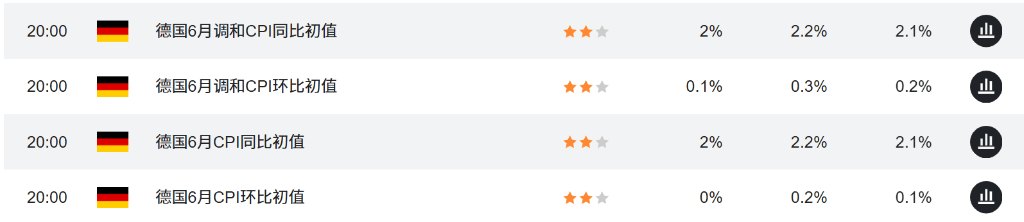
Group 1 - Germany's June inflation rate unexpectedly fell to 2%, reaching the European Central Bank's target level for the first time in nearly a year, which is better than market expectations [1][3] - The harmonized CPI for June showed a year-on-year initial value of 2%, compared to expectations of 2.2% and a previous value of 2.1% [1][3] - The month-on-month initial value of the CPI for June was 0%, down from 0.2% in May and 0.1% in April [1][3] Group 2 - The ECB is expected to pause interest rate cuts in its July meeting, having lowered the deposit rate eight times since June 2024, currently standing at 2% [1] - ECB Vice President Luis de Guindos expressed concerns about the region's economic weakness potentially dragging down inflation, with growth expected to remain flat in the second and third quarters [2] - The overall inflation outlook for the Eurozone is generally favorable, with indications that inflation will stabilize around the ECB's medium-term target of 2% [2]

海外经济政策跟踪:欧央行如期降息,美联储降息仍谨慎
Haitong Securities International· 2025-06-09 14:48
Economic Overview - The U.S. job market remains stable, with May non-farm payrolls increasing by 139,000, exceeding market expectations of 126,000[6] - The unemployment rate slightly rose to 4.24%, the highest since October 2021, while the labor participation rate fell to 62.4%[6] - In Europe, the Eurozone's HICP inflation rate dropped to 1.9% in May, below the expected 2%[17] Market Performance - Major stock markets saw gains last week (June 2-6, 2025): Hang Seng Index up 2.2%, S&P 500 up 1.5%, and emerging markets index up 1.9%[3] - Commodity prices rose significantly, with Brent oil futures increasing by 4.3% and the S&P-GSCI up 4.1%[3] Monetary Policy - The European Central Bank (ECB) cut rates by 25 basis points, marking the eighth reduction since June 2024, with current rates at 2.00% for deposit facilities[27] - The Federal Reserve remains cautious about rate cuts, with officials highlighting uncertainties related to tariffs and inflation risks[26] Inflation Expectations - U.S. inflation expectations have decreased, with 5-year expectations at 2.35% and 10-year expectations at 2.31%, both down 4 basis points from the previous week[14] - The ECB has revised down its CPI and GDP forecasts for 2025-2026, indicating a downward risk to economic growth[27]
重大转折!德国总统,正式签署!
证券时报· 2025-03-22 14:06
Core Viewpoint - Germany's fiscal policy is undergoing a significant shift with the recent approval of a massive fiscal plan aimed at funding defense, infrastructure, and climate investments, potentially leading to continued growth in the German stock market and increased interest in European assets [1][4][5]. Fiscal Policy Changes - The new legislation includes the establishment of a €500 billion special fund for infrastructure investments over the next 12 years, with allocations of €300 billion for the federal government, €100 billion for state governments, and €100 billion for a climate transition fund [5]. - The "debt brake" rules have been adjusted, allowing defense spending exceeding 1% of Germany's GDP to be exempt from these restrictions, and aid to Ukraine is also included in the exemptions [5]. - Federal states are granted additional borrowing capacity equivalent to 0.35% of GDP, approximately €16 billion annually, for investment projects without the need to achieve budget balance [5]. Economic Impact - The substantial funding from the reforms is expected to stimulate economic growth through increased investments in infrastructure, climate protection, and defense, aligning Germany with post-2020 trends of fiscal expansion seen in the U.S. [6]. - Annual government spending is projected to increase by approximately €220 billion, with specific contributions from the special fund, military spending, and state government expenditures [6]. - The fiscal expansion could boost Germany's GDP by 1% to 2% by 2026, with varying impacts based on different economic scenarios [7]. Financial Market Effects - European assets have shown a notable upward trend, with the Stoxx50 index rising by 10.78% and the German DAX index by 14.98% year-to-date [9]. - The increase in government spending will likely lead to a rise in bond yields due to higher supply in the bond market, with German 10-year bond yields potentially surpassing the 3% mark [9]. - The expansionary fiscal policy may also exert upward pressure on inflation, influencing the European Central Bank's monetary policy decisions [9]. Historical Context - The shift in Germany's fiscal policy marks a departure from the austerity measures adopted following the 2008 financial crisis and the subsequent European debt crisis, which had constrained fiscal expansion [10]. - The new fiscal approach could signal a broader shift in Europe towards more aggressive fiscal policies, potentially reversing the trend of economic divergence between Europe and the U.S. [10].