
民生为大

Search documents
《求是》杂志发表习近平总书记重要文章当前经济工作的重点任务
Shan Xi Ri Bao· 2026-02-16 00:16
Core Insights - The article emphasizes the importance of focusing on key tasks for economic work in 2026, highlighting the need to prioritize domestic demand and build a strong domestic market [1] - It outlines a multi-faceted approach to stimulate consumption, investment, innovation, and reform to drive high-quality economic development [2][3][4][5] Group 1: Economic Strategy - The strategy includes promoting consumption and investment through various measures, such as implementing a plan for increasing urban and rural residents' income and optimizing the supply of quality goods and services [1] - It stresses the need for a robust domestic market by leveraging China's large-scale market advantages and enhancing consumer spending [1] Group 2: Innovation and Technology - The article advocates for innovation-driven growth, emphasizing the role of technological advancements in upgrading industries and fostering new productive forces [2] - It calls for the establishment of international technology innovation centers in key regions like Beijing, Shanghai, and the Guangdong-Hong Kong-Macau Greater Bay Area [2] Group 3: Reform and Market Dynamics - The need for comprehensive reforms is highlighted, including the establishment of a unified national market and the deepening of state-owned enterprise reforms [2] - It also mentions the importance of improving the market ecosystem by addressing issues like "involution" competition and enhancing the role of private enterprises [2] Group 4: International Cooperation - The article discusses the importance of maintaining an open economy and promoting cooperation across multiple fields to enhance domestic and international dual circulation [3] - It emphasizes the need for expanding service sector openness and advancing the construction of free trade zones [3] Group 5: Sustainable Development - The commitment to green transformation is underscored, with initiatives aimed at reducing carbon emissions, enhancing energy efficiency, and promoting renewable energy [4] - It highlights the importance of environmental protection and the establishment of a national carbon trading market [4] Group 6: Social Welfare and Employment - The article stresses the importance of prioritizing people's livelihoods, focusing on employment stability, and enhancing social security measures for vulnerable groups [5] - It also mentions the need for educational reforms to increase access to quality education and improve healthcare services [5] Group 7: Risk Management - The article outlines strategies for managing risks in key areas, particularly in the real estate market, emphasizing the need for targeted policies to stabilize the market [5] - It discusses the importance of addressing local government debt risks and optimizing debt restructuring methods [5]
《当前经济工作的重点任务》
Xin Lang Cai Jing· 2026-02-15 22:16
Core Viewpoint - The article emphasizes the key tasks for economic work in 2026, focusing on domestic demand, innovation, reform, and sustainable development to enhance economic resilience and growth. Group 1: Domestic Demand and Investment - The article stresses the importance of a strong domestic market, advocating for measures to boost consumption and investment, including the implementation of a plan to increase urban and rural residents' income and optimize the use of local government special bonds [1][2] - It highlights the need to stabilize investment and increase the scale of central budget investments, while also enhancing the vitality of private investments through new policy tools [1][2] Group 2: Innovation and Technology - The article calls for an innovation-driven approach to foster new growth drivers, emphasizing the role of technological innovation in industrial upgrading and the establishment of international technology innovation centers in key regions [2][3] - It also mentions the importance of protecting intellectual property rights in emerging fields and accelerating the transformation of scientific and technological achievements [2] Group 3: Reform and Market Development - The article outlines the necessity of deepening reforms to enhance high-quality development, including the establishment of a unified national market and the promotion of state-owned enterprise reforms [2][3] - It emphasizes the need to improve the market ecosystem and support the development of platform enterprises and their operators [2] Group 4: International Cooperation and Trade - The article discusses the importance of maintaining an open approach to enhance cooperation and facilitate domestic and international dual circulation, including the promotion of free trade zones and digital trade [3][4] - It highlights the need for more regional and bilateral trade agreements to support economic growth [3] Group 5: Green Development and Sustainability - The article advocates for a comprehensive green transition, focusing on carbon reduction, pollution control, and the development of a new energy system [4][5] - It emphasizes the importance of environmental protection and the establishment of a carbon trading market to support sustainable growth [4] Group 6: Social Welfare and Employment - The article stresses the importance of prioritizing employment and social welfare, including measures to stabilize employment for key groups such as college graduates and migrant workers [4][5] - It also highlights the need for improvements in healthcare, education, and support for vulnerable populations [4] Group 7: Risk Management - The article underscores the importance of risk management in key areas, particularly in stabilizing the real estate market and addressing local government debt risks [5] - It calls for a coordinated approach to risk prevention and development to enhance economic resilience [5]
习近平:当前经济工作的重点任务
国家能源局· 2026-02-15 09:49
Core Viewpoint - The article emphasizes the importance of focusing on key tasks for economic work in 2026, highlighting the need for a strong domestic market, innovation-driven growth, and coordinated development across regions and sectors [4][10]. Group 1: Domestic Market and Consumption - The strategy aims to enhance domestic demand by promoting consumption and investment, leveraging China's vast market advantages [4]. - Initiatives include implementing consumption stimulus actions, increasing urban and rural residents' income, and optimizing the supply of quality goods and services [5]. - The government plans to increase central budget investments and improve the management of local government special bonds to boost project construction [5]. Group 2: Innovation and Technology - The focus is on driving innovation to foster new growth engines, with an emphasis on technology-led industrial upgrades [6]. - Plans include increasing support for basic research, enhancing the role of enterprises in innovation, and developing international technology innovation centers in key regions [6]. - The government aims to promote the application of new technologies and products, particularly in emerging industries like integrated circuits and biotechnology [6]. Group 3: Reform and Market Dynamics - The article outlines the need for reforms to enhance high-quality development, including establishing a unified national market and improving the business environment [9]. - Measures will be taken to revitalize idle resources and deepen state-owned enterprise reforms, while also supporting the growth of small and medium-sized enterprises [9]. - The government will promote market-oriented reforms in various sectors, including finance and energy, to foster sustainable growth [9]. Group 4: International Cooperation and Trade - The strategy emphasizes the importance of opening up to enhance cooperation and facilitate domestic and international dual circulation [10]. - Plans include expanding service sector openness, promoting digital and green trade, and enhancing the investment environment for foreign businesses [10]. - The government aims to sign more trade agreements and support the development of the Belt and Road Initiative [10]. Group 5: Regional Development and Urbanization - The article highlights the need for coordinated development between urban and rural areas, focusing on county-level urbanization and rural revitalization [11]. - It emphasizes improving infrastructure and public resource allocation in rural areas to support economic growth [11]. - The government will support the development of major city clusters and enhance regional cooperation to boost overall competitiveness [11]. Group 6: Green Development and Sustainability - The strategy includes promoting a comprehensive green transition, focusing on carbon reduction, pollution control, and environmental sustainability [12]. - Initiatives will involve advancing energy efficiency in key industries and expanding the use of renewable energy sources [12]. - The government plans to strengthen environmental protection measures and enhance disaster response capabilities [12]. Group 7: Social Welfare and Employment - The article stresses the importance of prioritizing people's livelihoods, with a focus on stabilizing employment for key groups [14]. - Plans include enhancing vocational training, supporting flexible employment, and improving healthcare access [14]. - The government aims to implement policies to encourage childbirth and support families, while also ensuring food and drug safety [14]. Group 8: Risk Management and Financial Stability - The strategy outlines measures to manage risks in key areas, particularly in the real estate market and local government debt [15]. - The government will implement policies to stabilize the housing market and support reasonable financing for real estate companies [15]. - Efforts will be made to address local government debt risks and enhance financial support mechanisms [15].

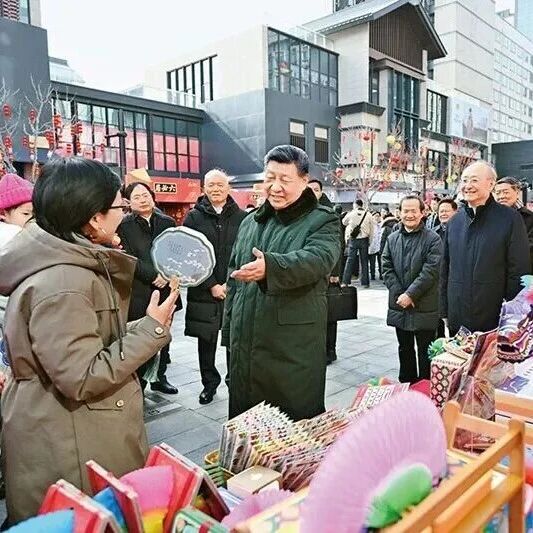
习近平:当前经济工作的重点任务
财联社· 2026-02-15 07:13
Core Viewpoint - The article emphasizes the importance of focusing on key tasks for economic work in 2026, highlighting the need to strengthen domestic demand and build a robust domestic market while promoting consumption and investment [1]. Group 1: Economic Strategy - The article outlines the need to implement actions to boost consumption, including urban and rural income increase plans and optimizing the supply of quality goods and services [1]. - It stresses the importance of stabilizing investment and increasing the scale of central budget investments, while optimizing the use of local government special bonds [1]. Group 2: Innovation and Reform - The article advocates for innovation-driven growth, emphasizing the role of technology in industrial upgrades and the establishment of international technology innovation centers in key regions [2]. - It calls for reforms to enhance market vitality, including the establishment of a unified national market and the promotion of private sector development [2]. Group 3: International Cooperation - The article highlights the need for open international cooperation, promoting trade and investment integration, and expanding service sector openness [3]. - It encourages the development of digital and green trade, as well as the signing of more regional and bilateral trade agreements [3]. Group 4: Sustainable Development - The article stresses the importance of green transformation, advocating for carbon reduction and pollution control while enhancing green development momentum [4]. - It outlines plans for energy system construction and solid waste management to support environmental sustainability [4]. Group 5: Social Welfare - The article emphasizes prioritizing people's livelihoods, focusing on employment stability and improving access to education and healthcare [5]. - It highlights the need for policies to support vulnerable groups, including the elderly and those in flexible employment [5]. Group 6: Risk Management - The article discusses the importance of risk management in key areas, particularly in stabilizing the real estate market and addressing local government debt risks [6]. - It advocates for measures to optimize debt restructuring and mitigate financing platform risks [6].

从山乡蝶变看“民生为大”
Ren Min Ri Bao· 2026-02-14 02:33
Core Viewpoint - The article emphasizes the commitment of the Communist Party to improve the lives of the people, highlighting various initiatives that have led to significant improvements in rural areas and the overall quality of life [1] Group 1: Rural Development Initiatives - The "Four Good Rural Roads" initiative has successfully reached local communities, enhancing accessibility [1] - Environmental improvements in villages have made them more appealing and livable [1] - The "old for new" program has facilitated the adoption of new energy vehicles in rural areas [1] Group 2: Healthcare and Social Services - The establishment of county-level medical communities has made healthcare more accessible for residents [1] - There is a strong focus on consolidating and expanding the achievements in poverty alleviation [1] Group 3: Policy Direction and Goals - The overarching goal is to achieve "Chinese-style modernization" with a strong emphasis on improving people's livelihoods [1] - The effectiveness of policies is measured by the satisfaction of the rural population, indicating a focus on practical outcomes [1] - The commitment to prioritize people's needs and practical actions is expected to lead to greater happiness and improved living conditions for the populace [1]
从山乡蝶变看“民生为大”(今日谈)
Ren Min Ri Bao· 2026-02-14 00:44
Core Viewpoint - The article emphasizes the commitment of the Communist Party to improve the lives of the people, highlighting various initiatives that have led to significant changes in rural areas, thereby enhancing the quality of life for residents [1] Group 1: Policy Initiatives - The "Four Good Rural Roads" initiative has successfully reached local communities, improving accessibility [1] - Environmental improvements in villages have made them more appealing and livable [1] - The "old for new" program has facilitated the adoption of new energy vehicles in rural areas [1] Group 2: Healthcare and Social Services - The establishment of county-level medical communities has made healthcare more accessible for residents, allowing them to receive medical services closer to home [1] - The focus on consolidating and expanding poverty alleviation efforts is crucial for ongoing rural development [1] Group 3: Vision for Development - The overarching goal is to achieve "Chinese-style modernization" with a strong emphasis on improving people's livelihoods [1] - The article stresses the importance of practical results in policies, as the true measure of success is reflected in the happiness of the people [1]
市领导走访慰问困难群众和老党员
Xin Lang Cai Jing· 2026-02-12 18:30
Group 1 - City leaders, including Secretary Yuan Jiajun and Mayor Hu Henghua, visited and extended New Year greetings to disadvantaged communities and elderly party members [1][2][3][4] - The visits aimed to ensure that the government remains attentive to the needs of the people, emphasizing the importance of social welfare and support systems [2][3][4] - Leaders encouraged community members to maintain confidence in their lives and highlighted the role of local party organizations in providing assistance and improving living conditions [2][3][4] Group 2 - The government is committed to enhancing grassroots party organizations and implementing regular support measures to consolidate poverty alleviation efforts [3][4] - There is a focus on developing rural collective economies and optimizing public service resource allocation to improve the livelihoods of residents [3][4] - Local leaders emphasized the need for precise identification of the needs of disadvantaged workers and the implementation of effective support policies [4]
136亿元!今年西藏要做这34项民生实事
Xin Lang Cai Jing· 2026-01-31 08:13
Core Viewpoint - In 2026, the autonomous region will focus on employment, education, healthcare, social security, housing, and cultural sports, allocating a total of 13.6 billion yuan for 34 livelihood projects to ensure that development benefits all ethnic groups fairly. Employment Sector - Five initiatives with a funding scale of 1.854 billion yuan, including an increase in ecological job subsidies from 3,500 yuan to 4,000 yuan per person per year [1] - 0.09 billion yuan allocated for 32 types of skills training for farmers and herdsmen [2] - 0.036 billion yuan for one-time entrepreneurial subsidies for farmers and herdsmen, increasing from 2,000 yuan to 5,000 yuan [3] - 0.046 billion yuan to build 37 "Driver's Homes" along provincial roads, providing rest, dining, hot water, and shower services for drivers [4] - 0.006 billion yuan for 150 beautiful union stations offering legal services and discounted breakfasts, and 0.003 billion yuan for convenience stations providing hot water, meal heating, and emergency medicines for new employment forms [5] Education Sector - Three initiatives with a funding scale of 4.605 billion yuan, including an increase in the annual per-student standard for education funding from 5,700 yuan to 5,940 yuan [6] - 0.5 billion yuan to supplement 5,000 places in compulsory education [7] - 0.08 billion yuan to increase the free education subsidy standard for rural kindergartens from 380 yuan to 1,000 yuan per student per year [8] Healthcare Sector - Ten initiatives with a funding scale of 0.777 billion yuan, including an increase in the basic public health service subsidy standard to 125 yuan [9] - 0.132 billion yuan for free screening of diseases such as tuberculosis and hepatitis [10] - 0.057 billion yuan for one-time hospitalization subsidies for rural pregnant women, with additional rewards for early hospitalization [11] - 0.039 billion yuan for free flu and pneumonia vaccinations for key populations [12] - 0.24 billion yuan for free screening and treatment of local diseases [13] - 0.07 billion yuan for free treatment of congenital heart disease and cataracts for farmers and herdsmen [14] - 0.07 billion yuan for free screening of congenital hypothyroidism and other conditions in newborns [15] - 0.05 billion yuan for early screening services for pregnant women [16] - 0.01 billion yuan for free screening for autism in children, with rehabilitation training subsidies for diagnosed children [17] Social Security Sector - Seven initiatives with a funding scale of 3.572 billion yuan, including an increase in the annual subsidy standard for urban and rural residents' basic medical insurance to 765 yuan [18] - 0.135 billion yuan for heating subsidies for low-income households [19] - 1.171 billion yuan to raise the basic pension for urban and rural residents to 3,660 yuan per year [19] - 0.35 billion yuan for one-time living subsidies for low-income households during the Spring Festival [19] - 0.34 billion yuan to increase the operating cost guarantee for institutions caring for the severely disabled and orphans from 1,800 yuan to 3,600 yuan per person per year [19] - 0.06 billion yuan to expand the rehabilitation assistance for disabled children from ages 0-8 to 0-14 [20] - 0.08 billion yuan for barrier-free renovations for families with severely disabled individuals [21] Housing Security Sector - Three initiatives with a funding scale of 0.601 billion yuan, including 0.359 billion yuan for the renovation and seismic reinforcement of 8,006 rural dilapidated houses [22] - 0.186 billion yuan for affordable housing projects to improve living conditions for urban residents [23] - 0.056 billion yuan to establish a disaster insurance mechanism for residential housing, reducing insurance rates for farmers and herdsmen [24] Cultural and Sports Sector - Three initiatives with a funding scale of 0.038 billion yuan, including 0.026 billion yuan for issuing consumption vouchers for book sales [25] - 0.009 billion yuan for equipping over 100 parks and fitness areas with exercise equipment [26] - 0.003 billion yuan for renovating youth centers to facilitate learning and socializing for young people [27] Other Areas - Three initiatives with a funding scale of 2.153 billion yuan, including 1.478 billion yuan to increase the basic remuneration standards for village committee members [28] - 0.55 billion yuan for operational subsidies for centralized heating in cities and counties [29] - 0.125 billion yuan for subsidies for logistics services and e-commerce platforms for agricultural products [30]
育儿补贴是“投资于人”的生动体现 2025年全国各级财政共发放约1000亿元
Xin Lang Cai Jing· 2026-01-30 13:31
Core Viewpoint - The Ministry of Finance announced a significant investment in child-rearing subsidies for 2025, totaling approximately 100 billion yuan, with the central government allocating 90.4 billion yuan, marking a historic direct cash subsidy to support families [1][2]. Group 1: Financial Allocation and Policy Implementation - In 2025, a total of about 100 billion yuan will be allocated for child-rearing subsidies, with 90.4 billion yuan coming from the central government [1]. - The child-rearing subsidy is described as the first large-scale, universal cash subsidy aimed at improving people's livelihoods since the founding of New China [1]. - The Ministry of Finance has established a clear timeline and roadmap for the implementation of the subsidy policy, ensuring accountability and efficiency in execution [1][2]. Group 2: Policy Features and Management - The subsidy policy is designed to be equitable, with no distinctions made based on urban or rural status, region, income, or the number of children, ensuring all eligible infants can receive equal benefits [1]. - The Ministry of Finance has implemented a management system for the subsidy, promoting inter-departmental information sharing and simplifying application processes to achieve a "zero-run" experience for applicants [2]. - As of now, over 30 million infants have received the child-rearing subsidy, with efforts ongoing to ensure all approved applications are fully processed by the end of March 2026 [2].
开年探“实”
Ren Min Ri Bao· 2026-01-29 23:21
Group 1 - The core message emphasizes the importance of a practical performance outlook, urging all levels of government to focus on real results and effective execution to meet the goals set for the 14th Five-Year Plan [1][15] - The focus on practical implementation is evident in the ongoing construction projects, such as the Wuhan urban circle expressway, which aims for completion by 2027, showcasing a commitment to timely execution [2][3] - The "Two New" policy in Guangxi has led to significant consumer benefits, with a reported 22.8% year-on-year increase in sales due to the implementation of a subsidy program for energy-efficient appliances [4][6] Group 2 - The emphasis on local adaptation and practical solutions is highlighted as a key strategy for regional development, aligning with national goals while addressing local needs [7][11] - The integration of digital technology in agriculture, such as in Anhui's tomato cultivation, demonstrates how data-driven approaches can enhance productivity and quality, with reported yield increases of 30% compared to traditional methods [11] - The ongoing initiatives in various provinces, including the establishment of smart home systems for the elderly and labor rights protections for gig workers, reflect a commitment to improving living standards and addressing social issues [12][14]