双碳引领

Search documents
《求是》杂志发表习近平总书记重要文章当前经济工作的重点任务
Shan Xi Ri Bao· 2026-02-16 00:16
Core Insights - The article emphasizes the importance of focusing on key tasks for economic work in 2026, highlighting the need to prioritize domestic demand and build a strong domestic market [1] - It outlines a multi-faceted approach to stimulate consumption, investment, innovation, and reform to drive high-quality economic development [2][3][4][5] Group 1: Economic Strategy - The strategy includes promoting consumption and investment through various measures, such as implementing a plan for increasing urban and rural residents' income and optimizing the supply of quality goods and services [1] - It stresses the need for a robust domestic market by leveraging China's large-scale market advantages and enhancing consumer spending [1] Group 2: Innovation and Technology - The article advocates for innovation-driven growth, emphasizing the role of technological advancements in upgrading industries and fostering new productive forces [2] - It calls for the establishment of international technology innovation centers in key regions like Beijing, Shanghai, and the Guangdong-Hong Kong-Macau Greater Bay Area [2] Group 3: Reform and Market Dynamics - The need for comprehensive reforms is highlighted, including the establishment of a unified national market and the deepening of state-owned enterprise reforms [2] - It also mentions the importance of improving the market ecosystem by addressing issues like "involution" competition and enhancing the role of private enterprises [2] Group 4: International Cooperation - The article discusses the importance of maintaining an open economy and promoting cooperation across multiple fields to enhance domestic and international dual circulation [3] - It emphasizes the need for expanding service sector openness and advancing the construction of free trade zones [3] Group 5: Sustainable Development - The commitment to green transformation is underscored, with initiatives aimed at reducing carbon emissions, enhancing energy efficiency, and promoting renewable energy [4] - It highlights the importance of environmental protection and the establishment of a national carbon trading market [4] Group 6: Social Welfare and Employment - The article stresses the importance of prioritizing people's livelihoods, focusing on employment stability, and enhancing social security measures for vulnerable groups [5] - It also mentions the need for educational reforms to increase access to quality education and improve healthcare services [5] Group 7: Risk Management - The article outlines strategies for managing risks in key areas, particularly in the real estate market, emphasizing the need for targeted policies to stabilize the market [5] - It discusses the importance of addressing local government debt risks and optimizing debt restructuring methods [5]
《当前经济工作的重点任务》
Xin Lang Cai Jing· 2026-02-15 22:16
Core Viewpoint - The article emphasizes the key tasks for economic work in 2026, focusing on domestic demand, innovation, reform, and sustainable development to enhance economic resilience and growth. Group 1: Domestic Demand and Investment - The article stresses the importance of a strong domestic market, advocating for measures to boost consumption and investment, including the implementation of a plan to increase urban and rural residents' income and optimize the use of local government special bonds [1][2] - It highlights the need to stabilize investment and increase the scale of central budget investments, while also enhancing the vitality of private investments through new policy tools [1][2] Group 2: Innovation and Technology - The article calls for an innovation-driven approach to foster new growth drivers, emphasizing the role of technological innovation in industrial upgrading and the establishment of international technology innovation centers in key regions [2][3] - It also mentions the importance of protecting intellectual property rights in emerging fields and accelerating the transformation of scientific and technological achievements [2] Group 3: Reform and Market Development - The article outlines the necessity of deepening reforms to enhance high-quality development, including the establishment of a unified national market and the promotion of state-owned enterprise reforms [2][3] - It emphasizes the need to improve the market ecosystem and support the development of platform enterprises and their operators [2] Group 4: International Cooperation and Trade - The article discusses the importance of maintaining an open approach to enhance cooperation and facilitate domestic and international dual circulation, including the promotion of free trade zones and digital trade [3][4] - It highlights the need for more regional and bilateral trade agreements to support economic growth [3] Group 5: Green Development and Sustainability - The article advocates for a comprehensive green transition, focusing on carbon reduction, pollution control, and the development of a new energy system [4][5] - It emphasizes the importance of environmental protection and the establishment of a carbon trading market to support sustainable growth [4] Group 6: Social Welfare and Employment - The article stresses the importance of prioritizing employment and social welfare, including measures to stabilize employment for key groups such as college graduates and migrant workers [4][5] - It also highlights the need for improvements in healthcare, education, and support for vulnerable populations [4] Group 7: Risk Management - The article underscores the importance of risk management in key areas, particularly in stabilizing the real estate market and addressing local government debt risks [5] - It calls for a coordinated approach to risk prevention and development to enhance economic resilience [5]
《求是》杂志发表习近平总书记重要文章《当前经济工作的重点任务》
清华金融评论· 2026-02-15 12:13
Group 1: Economic Focus and Domestic Market - The core focus of the economic work is to prioritize domestic demand and build a strong domestic market, leveraging China's vast market advantages [5][6] - There will be a comprehensive approach to boost consumption and expand investment, including implementing special actions to stimulate consumption and increasing basic pensions for urban and rural residents [5][6] - The government aims to optimize the implementation of policies to enhance local autonomy and remove unreasonable restrictions in consumption sectors, thereby unlocking potential in tourism, events, dining, and health services [6] Group 2: Innovation and New Growth Drivers - Emphasis on innovation-driven development to foster new growth engines, with a focus on technological innovation leading industrial upgrades [7] - Plans to enhance support for basic research and strengthen the protection of intellectual property rights in emerging fields [7] - Development of international technology innovation centers in key regions such as Beijing, Shanghai, and the Guangdong-Hong Kong-Macau Greater Bay Area to create world-class innovation hubs [7] Group 3: Reform and High-Quality Development - The government will push for reforms to enhance the vitality of high-quality development, including establishing a unified national market and promoting fair competition [9] - There will be a focus on revitalizing idle resources and implementing further reforms in state-owned enterprises and private sectors to support small and medium enterprises [9] - Measures will be taken to improve the financial ecosystem, including enhancing the role of capital markets and increasing the proportion of direct financing [9] Group 4: Opening Up and International Cooperation - The strategy includes promoting multi-field cooperation and enhancing international trade and investment integration [10] - There will be a focus on expanding service sector openness and optimizing the layout of free trade zones to boost innovation [10] - The government aims to seize opportunities in the modernization processes of developing countries and enhance the quality of the Belt and Road Initiative [10] Group 5: Coordinated Development and Urban-Rural Integration - The approach will involve promoting urbanization centered around county towns and revitalizing rural areas, ensuring balanced resource allocation [11] - Efforts will be made to maintain agricultural productivity and stabilize farmers' income while ensuring food security [11] - The government will continue to consolidate poverty alleviation achievements and integrate them into rural revitalization strategies [11] Group 6: Green Transformation and Carbon Neutrality - The focus will be on achieving a comprehensive green transition, including reducing carbon emissions and enhancing green development momentum [13] - Plans to establish a new energy system and promote the use of renewable energy sources in electricity generation [13] - The government will implement solid waste management actions and strengthen the recycling of resources [13] Group 7: Social Welfare and Employment - The government will prioritize employment policies, focusing on stabilizing job opportunities for key groups such as college graduates and migrant workers [15] - There will be initiatives to enhance vocational training and support flexible employment [15] - Policies will be implemented to improve healthcare access and support for vulnerable populations, including the elderly and disabled [15] Group 8: Risk Management and Financial Stability - The government will work to stabilize the real estate market through targeted measures and support for affordable housing [16] - Efforts will be made to manage local government debt risks and enhance financial support for debt restructuring [16] - A unified long-term mechanism for government debt management will be established to ensure financial stability [16]


习近平:当前经济工作的重点任务
国家能源局· 2026-02-15 09:49
Core Viewpoint - The article emphasizes the importance of focusing on key tasks for economic work in 2026, highlighting the need for a strong domestic market, innovation-driven growth, and coordinated development across regions and sectors [4][10]. Group 1: Domestic Market and Consumption - The strategy aims to enhance domestic demand by promoting consumption and investment, leveraging China's vast market advantages [4]. - Initiatives include implementing consumption stimulus actions, increasing urban and rural residents' income, and optimizing the supply of quality goods and services [5]. - The government plans to increase central budget investments and improve the management of local government special bonds to boost project construction [5]. Group 2: Innovation and Technology - The focus is on driving innovation to foster new growth engines, with an emphasis on technology-led industrial upgrades [6]. - Plans include increasing support for basic research, enhancing the role of enterprises in innovation, and developing international technology innovation centers in key regions [6]. - The government aims to promote the application of new technologies and products, particularly in emerging industries like integrated circuits and biotechnology [6]. Group 3: Reform and Market Dynamics - The article outlines the need for reforms to enhance high-quality development, including establishing a unified national market and improving the business environment [9]. - Measures will be taken to revitalize idle resources and deepen state-owned enterprise reforms, while also supporting the growth of small and medium-sized enterprises [9]. - The government will promote market-oriented reforms in various sectors, including finance and energy, to foster sustainable growth [9]. Group 4: International Cooperation and Trade - The strategy emphasizes the importance of opening up to enhance cooperation and facilitate domestic and international dual circulation [10]. - Plans include expanding service sector openness, promoting digital and green trade, and enhancing the investment environment for foreign businesses [10]. - The government aims to sign more trade agreements and support the development of the Belt and Road Initiative [10]. Group 5: Regional Development and Urbanization - The article highlights the need for coordinated development between urban and rural areas, focusing on county-level urbanization and rural revitalization [11]. - It emphasizes improving infrastructure and public resource allocation in rural areas to support economic growth [11]. - The government will support the development of major city clusters and enhance regional cooperation to boost overall competitiveness [11]. Group 6: Green Development and Sustainability - The strategy includes promoting a comprehensive green transition, focusing on carbon reduction, pollution control, and environmental sustainability [12]. - Initiatives will involve advancing energy efficiency in key industries and expanding the use of renewable energy sources [12]. - The government plans to strengthen environmental protection measures and enhance disaster response capabilities [12]. Group 7: Social Welfare and Employment - The article stresses the importance of prioritizing people's livelihoods, with a focus on stabilizing employment for key groups [14]. - Plans include enhancing vocational training, supporting flexible employment, and improving healthcare access [14]. - The government aims to implement policies to encourage childbirth and support families, while also ensuring food and drug safety [14]. Group 8: Risk Management and Financial Stability - The strategy outlines measures to manage risks in key areas, particularly in the real estate market and local government debt [15]. - The government will implement policies to stabilize the housing market and support reasonable financing for real estate companies [15]. - Efforts will be made to address local government debt risks and enhance financial support mechanisms [15].
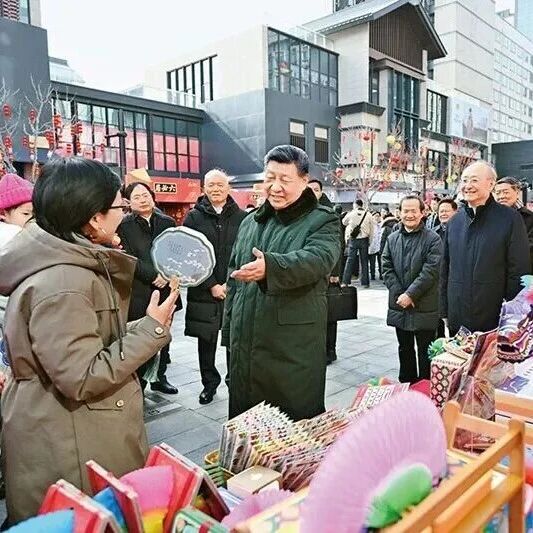
习近平:当前经济工作的重点任务
证券时报· 2026-02-15 07:50
Core Viewpoint - The article emphasizes the importance of focusing on key tasks for economic work in 2026, highlighting the need to strengthen domestic demand and build a robust domestic market while promoting consumption and investment [1][2]. Group 1: Domestic Demand and Investment - The article advocates for a strong domestic market by promoting consumption and investment, utilizing China's vast market advantages [1] - It suggests implementing special actions to boost consumption, including urban and rural income increase plans and optimizing policies to release potential in service consumption [1] - The article calls for stabilizing investment, increasing central budget investment, and optimizing the use of local government special bonds [1] Group 2: Innovation and Technology - The article stresses the need for innovation-driven growth, focusing on technological advancements to lead industrial upgrades and foster new productive forces [2] - It proposes the establishment of international technology innovation centers in key regions and enhancing the role of enterprises in innovation [2] - The article highlights the importance of protecting intellectual property in emerging fields and accelerating the transformation of scientific achievements [2] Group 3: Reform and Market Dynamics - The article emphasizes the need for reform to enhance high-quality development, including establishing a unified national market and addressing "involution" competition [2] - It calls for further deepening state-owned enterprise reforms and improving regulations to support the private economy [2] - The article also mentions the importance of cleaning up overdue corporate payments and promoting win-win development for platform enterprises and their operators [2] Group 4: International Cooperation and Trade - The article highlights the need for openness and cooperation in multiple fields, aiming to enhance domestic and international dual circulation [3] - It suggests promoting institutional openness and expanding self-initiated openness in the service sector [3] - The article encourages the development of digital and green trade while reforming foreign investment promotion mechanisms [3] Group 5: Urban-Rural Integration and Regional Development - The article advocates for coordinated development, promoting urban-rural integration and regional collaboration, particularly focusing on county-level economic development [3] - It emphasizes the importance of maintaining food production and ensuring reasonable prices for essential agricultural products [3] - The article also stresses the need for cross-regional cooperation and enhancing the overall planning of major coastal areas [3] Group 6: Green Transition and Sustainability - The article underscores the importance of leading with "dual carbon" goals to promote comprehensive green transformation [4] - It calls for energy system construction and expanding the application of green electricity [4] - The article highlights the need for solid waste management and improving environmental monitoring systems [4] Group 7: Social Welfare and Employment - The article emphasizes prioritizing employment and implementing actions to stabilize job growth for key groups [4] - It suggests optimizing educational resources and increasing the supply of quality educational opportunities [4] - The article also discusses the importance of healthcare reforms and support for vulnerable populations [4] Group 8: Risk Management - The article stresses the need to manage risks in key areas, particularly in the real estate market, advocating for city-specific policies to stabilize the market [5] - It calls for proactive measures to address local government debt risks and optimize debt restructuring methods [5] - The article highlights the importance of ensuring the stability of the real estate market and promoting affordable housing [5]

习近平:当前经济工作的重点任务
财联社· 2026-02-15 07:13
Core Viewpoint - The article emphasizes the importance of focusing on key tasks for economic work in 2026, highlighting the need to strengthen domestic demand and build a robust domestic market while promoting consumption and investment [1]. Group 1: Economic Strategy - The article outlines the need to implement actions to boost consumption, including urban and rural income increase plans and optimizing the supply of quality goods and services [1]. - It stresses the importance of stabilizing investment and increasing the scale of central budget investments, while optimizing the use of local government special bonds [1]. Group 2: Innovation and Reform - The article advocates for innovation-driven growth, emphasizing the role of technology in industrial upgrades and the establishment of international technology innovation centers in key regions [2]. - It calls for reforms to enhance market vitality, including the establishment of a unified national market and the promotion of private sector development [2]. Group 3: International Cooperation - The article highlights the need for open international cooperation, promoting trade and investment integration, and expanding service sector openness [3]. - It encourages the development of digital and green trade, as well as the signing of more regional and bilateral trade agreements [3]. Group 4: Sustainable Development - The article stresses the importance of green transformation, advocating for carbon reduction and pollution control while enhancing green development momentum [4]. - It outlines plans for energy system construction and solid waste management to support environmental sustainability [4]. Group 5: Social Welfare - The article emphasizes prioritizing people's livelihoods, focusing on employment stability and improving access to education and healthcare [5]. - It highlights the need for policies to support vulnerable groups, including the elderly and those in flexible employment [5]. Group 6: Risk Management - The article discusses the importance of risk management in key areas, particularly in stabilizing the real estate market and addressing local government debt risks [6]. - It advocates for measures to optimize debt restructuring and mitigate financing platform risks [6].

筑牢起步根基 续写发展新篇
Xin Lang Cai Jing· 2026-01-12 16:57
Core Insights - The article emphasizes the comprehensive implementation of the central economic work conference's spirit, focusing on key tasks such as expanding institutional openness, promoting coordinated development, leading with "dual carbon" initiatives, and ensuring bottom-line safety for economic and social development in the 14th Five-Year Plan period [1] Group 1: Deepening Opening Up - Multiple departments are implementing practical measures to expand the depth and breadth of opening up, injecting open momentum into high-quality development [2] - The National Development and Reform Commission (NDRC) has proposed to steadily expand institutional openness and promote high-quality development of the Belt and Road Initiative [3] Group 2: Coordinated Development - The central economic work conference calls for promoting urban-rural integration and regional linkage to address unbalanced development issues [6] - The NDRC emphasizes the need for a people-centered new urbanization and regional strategic implementation to enhance urban-rural integration [7] Group 3: Green Transformation - Various departments are responding to the call for a comprehensive green transformation, focusing on energy structure optimization and industrial green upgrades [9] - The NDRC plans to implement a dual control system for carbon emissions and strengthen evaluation and assessment [10] Group 4: Risk Prevention - The central economic work conference highlights the importance of risk awareness and bottom-line thinking, focusing on local debt, financial markets, and safety production [12] - The People's Bank of China has outlined specific measures for financial risk management, including supporting the resolution of financing platform debt risks [13]
理响中国·聚焦2026中国经济丨实现“十五五”良好开局 如何抓好八项“重点任务”
Yang Guang Wang· 2026-01-12 07:13
Group 1 - The Central Economic Work Conference held in Beijing at the end of 2025 summarized the economic work of 2025 and deployed tasks for 2026, focusing on ensuring a good start for the "14th Five-Year Plan" [1] - The total retail sales of social consumer goods reached 45.6 trillion yuan in 2025, with a growth of 4.0% from January to November [4] - A total of 5 billion yuan is allocated, with 3 billion yuan for supporting the replacement of consumer goods, an increase of 1.5 billion yuan from the previous year [6] Group 2 - The cumulative production and sales of automobiles reached 31.23 million and 31.12 million units, respectively, with year-on-year growth of 11.9% and 11.4% [7] - The express delivery business volume reached 199 billion pieces in 2025, showing a year-on-year growth of 13.7% [8] - The total import and export value of goods reached 4.12076 trillion yuan from January to November 2025, with a year-on-year growth of 3.6% [18] Group 3 - The economic output of China's top 100 counties and cities reached 13.7 trillion yuan, contributing over 10% of the national GDP with less than 2% of the country's land area [21] - The grain planting area reached 1.791 billion mu, an increase of 1.348 million mu from the previous year, maintaining growth for six consecutive years [22] - The grain output reached 1.42975 trillion jin, an increase of 16.75 billion jin from the previous year [23] Group 4 - The national recycling of renewable resources reached approximately 380 million tons in 2025, with a series of measures introduced to promote green consumption [28] - The comprehensive meteorological observation system has been established, improving the monitoring rate of hazardous weather to 83% [28] - The focus on "dual carbon" initiatives is seen as a strategic choice to foster new productive forces and shape new international competitive advantages [29] Group 5 - Policies aimed at improving people's livelihoods include measures to stabilize employment, promote consumption, and enhance social welfare [33] - By mid-September 2025, over 90% of hospital discharges were under a disease-based payment system, with 114 new drugs added to the list, totaling 3,253 [34] - The central government allocated 500 billion yuan from local government debt limits to support investment and debt reduction efforts [39]

凝心聚力开新局 以经济强基筑牢复兴伟业
Xin Hua Wang· 2025-12-18 10:36
Group 1 - The core viewpoint emphasizes that high-quality development is laying a solid foundation for national rejuvenation, with the 2025 Central Economic Work Conference providing clear direction [1] Group 2 - The conference highlights the importance of domestic demand as a driving force, aiming to build a strong domestic market. Retail is rapidly transforming towards quality and service, with successful initiatives like appliance trade-ins and vibrant rural live-streaming sales [3] Group 3 - The conference stresses the need for innovation in foreign trade and expanding an open new pattern. It focuses on win-win cooperation across multiple fields, with cross-border live streaming and the continuous operation of the China-Europe Railway Express [5] Group 4 - The conference underscores the importance of people's livelihoods, aiming to do more practical things for the public. Stability in livelihoods, employment, income growth, and social security are emphasized to ensure a solid safety net [7] Group 5 - The conference advocates for a green transition, leading with the "dual carbon" goal to promote comprehensive green transformation. Green development is reshaping the economic ecology, with solar panels and new energy buses contributing to low-carbon urban transport [9]

中央财办有关负责同志详解2025年中央经济工作会议精神,扩大内需是明年排在首位的重点任务|宏观经济
清华金融评论· 2025-12-17 10:41
Core Viewpoint - The 2025 Central Economic Work Conference emphasizes the need for a stable economic environment while addressing challenges and opportunities for growth, focusing on a resilient and high-quality development path for the economy [4][5]. Economic Performance and Outlook - The overall economic operation is stable, with a projected GDP growth of around 5% for 2025, leading to an economic total of approximately 140 trillion yuan [5]. - Employment remains stable, with significant growth in foreign trade and diversified exports [5]. - The economy is expected to face challenges, including external environmental changes and domestic supply-demand imbalances, but the long-term positive trends and advantages of the Chinese economy remain intact [8]. Modern Industrial System and Innovation - Continuous progress in building a modern industrial system is noted, with advancements in new productive forces and significant achievements in technology innovation, particularly in AI, biomedicine, and robotics [6]. Reform and Opening Up - New steps in reform and opening up are highlighted, including the deepening of the national unified market and active capital market [7]. - Positive progress in risk resolution in key areas, such as local government debt management and the completion of housing delivery tasks, is acknowledged [7]. Social Welfare and Employment - Enhanced social welfare measures, including childcare subsidies and free education for one year before primary school, are being implemented [8]. - The employment situation is stable, with over 12 million new urban jobs created by November, achieving the annual target ahead of schedule [29]. Macroeconomic Policy - The continuation of a proactive fiscal policy and a moderately loose monetary policy is planned for the next year, focusing on maintaining fiscal sustainability and enhancing the effectiveness of financial support for the real economy [9][12]. - Emphasis on expanding domestic demand as a priority task, with measures to boost consumption and investment [13][14]. Regional Development and Coordination - The conference outlines strategies for promoting regional coordinated development, focusing on the integration of urban and rural areas and enhancing the development capabilities of major economic provinces [24][26]. Green Transition and Carbon Neutrality - The commitment to achieving carbon neutrality is reinforced, with plans to advance carbon peak strategies and develop a new energy system [27][28]. Real Estate Market Stability - The need for a stable real estate market is emphasized, with strategies to balance supply and demand, support enterprise transformation, and establish a new development model for the sector [31][33].