气候政策

Search documents
海洋碳研究不足或影响气候政策
Xin Lang Cai Jing· 2026-02-25 18:56
Core Viewpoint - The report by the Intergovernmental Oceanographic Commission of UNESCO highlights a significant lack of understanding regarding how oceans absorb and store carbon, which may lead to inaccuracies in current climate predictions and affect the ability to formulate effective climate change mitigation and adaptation strategies in the coming decades [1] Summary by Relevant Sections - The report titled "Comprehensive Study on Ocean Carbon" indicates that scientific models estimating the ocean's carbon absorption may differ from actual values, with global discrepancies ranging from 10% to 20%, and even larger variations in certain regions [1] - This discrepancy suggests that climate policies are being developed without a full understanding of future changes in ocean behavior. If the ocean's carbon absorption capacity diminishes, more carbon dioxide will remain in the atmosphere, accelerating global warming [1] - Consequently, the formulation of carbon removal strategies and ocean-based climate intervention measures must be grounded in more robust scientific evidence [1]
联合国机构报告:海洋碳研究不足或影响气候政策
Xin Hua She· 2026-02-25 04:36
Core Insights - The report from the Intergovernmental Oceanographic Commission of UNESCO highlights a significant lack of understanding regarding how oceans absorb and store carbon, which may lead to inaccuracies in current climate predictions and affect the ability to develop effective strategies for mitigating and adapting to climate change in the coming decades [1] Group 1 - The report indicates that there is a serious gap in knowledge about oceanic carbon absorption and storage mechanisms [1] - This lack of understanding could result in deviations in climate forecasts [1] - The findings may hinder the formulation of effective climate change mitigation and adaptation strategies for the future [1]
纽森:特朗普只是个过客,加州是稳定可靠的伙伴
Zhong Guo Xin Wen Wang· 2026-02-14 11:24
Group 1 - California Governor Gavin Newsom called on world leaders at the Munich Security Conference to envision a future without Donald Trump, emphasizing that Trump is merely a transient figure in American politics [1] - Newsom highlighted California as a stable and reliable partner in climate policy, contrasting it with the Trump administration's approach [1] - He encouraged leaders to publicly condemn Trump and oppose his government's actions in climate and other areas [1] Group 2 - Newsom expressed personal attacks from Trump, describing the former president's behavior as immature despite his age [1] - A meeting is scheduled between Newsom and German Chancellor Merz to formally establish a new partnership between California and Ukraine [1]
撤销“温室气体危害认定”,引发强烈法律政治反弹,美国气候政策发生“最重大逆转”
Huan Qiu Shi Bao· 2026-02-13 23:08
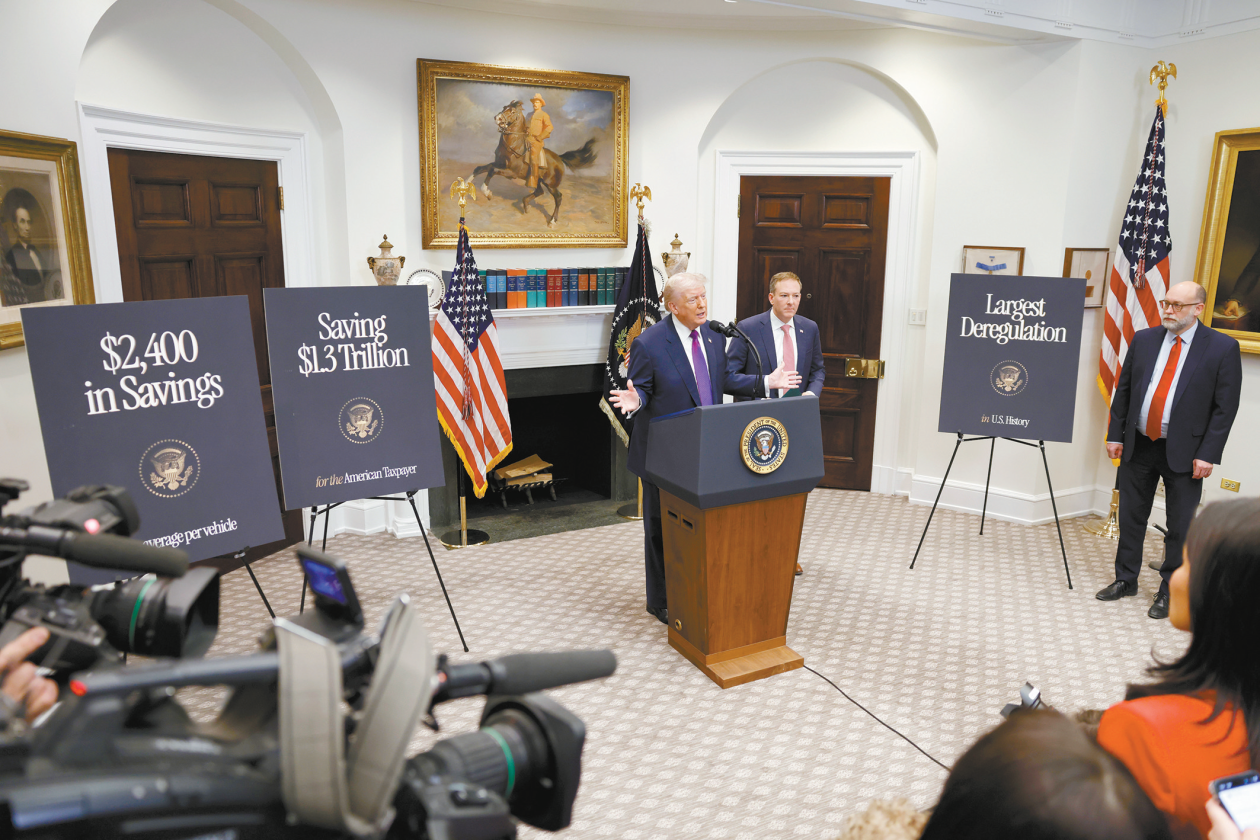
Core Viewpoint - The Trump administration's decision to revoke the 2009 scientific finding on greenhouse gas emissions is seen as a significant rollback of climate policies, prioritizing fossil fuel interests over public health and environmental protection [1][2][3]. Group 1: Government Actions - The revocation of the "endangerment finding" is described as the largest deregulation effort in U.S. history, expected to eliminate over $1.3 trillion in regulatory costs and reduce the purchase cost of each vehicle by more than $2,400 [2]. - The action is viewed as a culmination of efforts by conservative groups and industries to weaken greenhouse gas regulations, marking a major shift in U.S. climate policy [3][6]. - The decision is anticipated to lead to a 10% increase in U.S. greenhouse gas emissions over the next 30 years, potentially resulting in 58,000 premature deaths and 37 million asthma attacks by 2055 [4]. Group 2: Industry Reactions - Some business groups support the Trump administration's actions, while others remain silent or express concerns about the negative impact on the electric vehicle manufacturing sector [5]. - The "Zero Emission Transportation Association" criticized the revocation, stating it undermines investments made by companies in the next generation of vehicles [5]. Group 3: Political Implications - The decision is expected to influence the upcoming midterm elections, with the Republican party hoping to gain votes by framing the rollback as a means to boost economic growth [6]. - The ongoing fluctuations in U.S. climate policy reflect a broader political struggle between the Republican and Democratic parties, with climate change rarely being a top concern for voters compared to economic issues [6][7].

特朗普宣布:正式撤销!奥巴马迅速发声
Zhong Guo Ji Jin Bao· 2026-02-13 03:17
Core Viewpoint - The Trump administration has officially revoked the 2009 "Endangerment Finding" by the Environmental Protection Agency (EPA), which is a foundational element of U.S. climate regulation, potentially saving $1.3 trillion in regulatory costs and lowering car prices [1]. Group 1: Regulatory Changes - The revocation of the "Endangerment Finding" signifies a major rollback in U.S. climate policy, undermining the legal basis for regulating greenhouse gas emissions from vehicles, power plants, and factories [1]. - This action is seen as a significant step back for climate policy under the Trump administration, contrasting sharply with the previous administration's stance [1]. Group 2: Implications for Public Health and Safety - Former President Obama criticized the move, stating that it will weaken regulations on vehicle emissions and power plant emissions, making the U.S. "less safe and less healthy" [1]. - The revocation is expected to diminish the country's ability to address climate change effectively, while simultaneously benefiting the fossil fuel industry [1].
特朗普宣布美国环境保护署“温室气体危害认定”正式撤销
Yang Shi Xin Wen· 2026-02-12 19:12
Core Viewpoint - The Trump administration has officially revoked the 2009 "Endangerment Finding" by the Environmental Protection Agency (EPA), which is a foundational element of U.S. climate regulation, potentially saving $1.3 trillion in regulatory costs and lowering car prices [1]. Group 1: Regulatory Changes - The revocation of the "Endangerment Finding" signifies a major rollback in U.S. climate policy, undermining the legal basis for regulating greenhouse gas emissions from vehicles, power plants, and factories [1]. - This action represents a significant shift in the Trump administration's approach to climate policy, moving away from the regulatory framework established under the Obama administration [1]. Group 2: Economic Implications - The Trump administration claims that the repeal will lead to a reduction in regulatory costs amounting to $1.3 trillion, which could have broader economic implications [1]. - The administration argues that this regulatory rollback will contribute to lower automobile prices, potentially impacting consumer behavior and the automotive market [1].
特朗普罕见认错,转头被曝出有大动作,不到24小时,俄外长开炮
Sou Hu Cai Jing· 2026-02-12 03:16
Group 1 - Trump admitted to a significant mistake in selecting the Federal Reserve Chairman, acknowledging that he chose Jerome Powell over his preferred candidate, Kevin Warsh, due to pressure from the Treasury Secretary [3][5] - The admission appears to be politically motivated, aimed at paving the way for Warsh's nomination as the next Federal Reserve Chairman, as Trump seeks to gain Senate support and appease voters dissatisfied with Powell [5][7] - Trump's upcoming plan to overturn the Obama-era climate regulation, which is foundational for federal oversight of greenhouse gas emissions, could lead to a significant regression in U.S. climate policy and impact global climate governance [7][9] Group 2 - The 2009 climate regulation was established to address the dangers of greenhouse gas emissions and has broad implications for industries worth trillions of dollars [7] - Despite Trump's efforts to deregulate the fossil fuel industry, some groups within that sector are hesitant to support the repeal of the regulation, fearing increased state-level oversight could complicate their operations [9] - Trump's actions and statements reflect a broader pattern of U.S. foreign policy that has been criticized for failing to uphold commitments and exacerbating global instability, as highlighted by Russian Foreign Minister Lavrov [11][16]

2025年年中煤炭报告
Sou Hu Cai Jing· 2026-02-09 03:22
Core Insights - The International Energy Agency (IEA) reports that the global coal market is entering a "plateau" phase after years of growth, with China remaining a significant variable in this transition [1][2]. Demand Trends - Global coal demand reached a record high of 8.79 billion tonnes in 2024, growing by 1.5% year-on-year, primarily driven by emerging economies in Asia, particularly China and India [2][40]. - In 2025, global coal demand is expected to remain stable, with a slight decrease of less than 1% in the first half of the year, and an overall forecasted increase of 0.2% for the full year [19][22]. - China's coal consumption accounts for 56% of global demand, with its power sector consuming one-third of the world's coal [18][44]. - India is projected to see a 1.3% increase in total coal demand for 2025, driven by a rebound in coal-fired power generation in the second half of the year [49]. Production Dynamics - Global coal production reached a record 9.15 billion tonnes in 2024, with China, India, and Indonesia being the main contributors [3][25]. - In 2025, production is expected to exceed 9.2 billion tonnes, despite high inventories and sluggish demand [27][28]. - A decline in production is anticipated in 2026 due to weak demand and high stocks, marking the first annual reduction since 2022 [28][29]. Trade Developments - Global coal trade volume surpassed 1.5 billion tonnes in 2024, driven by increased imports from China [30]. - In 2025, a significant reduction in coal imports from China is expected, leading to a decline in global trade volumes for the first time in this century [32][35]. - The largest reductions in trade are anticipated from Indonesia and Colombia, while Australia may perform better if metallurgical coal mines resume operations [34][36]. Price Movements - Coal prices have significantly decreased from the peaks during the 2022 energy crisis, with thermal coal prices in the first half of 2025 dropping to their lowest levels since 2021 [5][37]. - Despite the normalization of prices, market volatility remains higher than pre-2020 levels due to geopolitical factors and reliance on weather for electricity generation [5][37].

环境新规冲击欧洲化工行业
Zhong Guo Hua Gong Bao· 2026-02-06 03:55
Group 1 - The European chemical industry faces increased pressure due to new climate and circular economy regulations set to be implemented by the EU in 2026, raising compliance costs and weakening competitiveness [1] - The EU Carbon Border Adjustment Mechanism (CBAM) will officially take effect on January 1, 2026, covering fertilizers and hydrogen, with a potential expansion to the refining and chemical sectors by 2028 [1] - The EU Emissions Trading System (EU ETS) will gradually eliminate free emission allowances by 2034, posing long-term challenges for chemical and petrochemical producers [1] Group 2 - The fertilizer industry is particularly impacted by CBAM, with significant fees for imports from Turkey, Egypt, and Morocco, which could undermine the international competitiveness of EU fertilizer companies [2] - The EU's target to reduce greenhouse gas emissions by 90% by 2040 compared to 1990 levels is accompanied by flexible provisions, leading to concerns about the balance between economic realities and climate goals [2] - The Circular Economy Act (CEA) aims to double the EU's circular economy rate by 2030, transitioning the industry from a linear to a circular economic model, with the European Chemical Industry Council proposing an action plan to address regulatory coordination and innovation [2] Group 3 - The EU Packaging and Packaging Waste Regulation (PPWR) requires that by 2030, all EU packaging be recyclable or reusable, adding uncertainty to the industry due to unclear implementation details [3] - The European plastic recycling industry faces challenges from insufficient infrastructure and technological bottlenecks, exacerbated by policy uncertainties that hinder projects like chemical recycling [3] - The EU's stringent environmental regulations and approval processes are seen as key factors undermining the global competitiveness of its petrochemical industry, with high compliance and carbon tax costs creating an uneven playing field [4] Group 4 - The current global petrochemical industry is experiencing a downturn due to weak demand and overcapacity, further complicating the operational challenges faced by EU petrochemical companies [4] - Despite the EU's commitment to save the chemical industry at least €363 million annually in compliance costs, companies continue to call for improved regulatory efficiency [4]
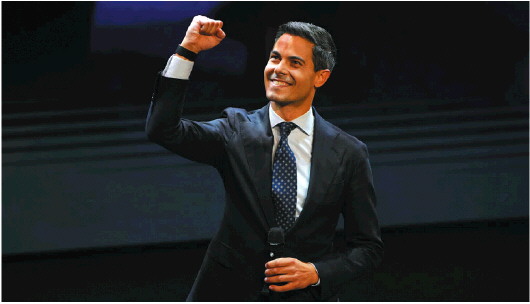
他能成为荷兰最年轻的首相吗
Qi Lu Wan Bao· 2025-11-09 17:42
Core Points - The recent Dutch parliamentary elections resulted in the unexpected rise of the Six Six Party, which became the largest party, with Rob Jetten as a leading candidate for Prime Minister [2][3] - Jetten's party gained significant seats compared to the previous election, increasing from 9 to an expected 27 seats, while traditional parties faced setbacks [3][4] - The political landscape in the Netherlands has shifted, with voters expressing fatigue over political polarization and seeking solutions to pressing issues like housing and immigration [5][6] Election Results - The Six Six Party, led by Jetten, is projected to win 27 seats, narrowly ahead of the Freedom Party with 25 seats, and the People's Party for Freedom and Democracy with 23 seats [2][3] - The total votes for the Six Six Party were approximately 1.77 million, while the Freedom Party received around 1.75 million votes [2] Political Context - The previous coalition government, which included the Freedom Party, collapsed due to disagreements over immigration policies, leading to the early elections [4][5] - Jetten's rise is attributed to a combination of factors, including public dissatisfaction with extreme political views and a focus on more moderate, centrist policies [6][7] Jetten's Leadership - Rob Jetten, at 38, represents a new generation of centrist leadership, combining elements from both left and right policies [6][8] - His campaign effectively addressed key voter concerns, particularly housing shortages, proposing the construction of new cities and significant government investment in housing [6][9] Coalition Formation Challenges - Forming a stable coalition will be a significant challenge, as it is anticipated that at least four parties will need to collaborate, with Jetten reaching out to potential allies [10] - The Freedom Party is likely to be excluded from the new coalition, as other parties have expressed unwillingness to partner with them [10]