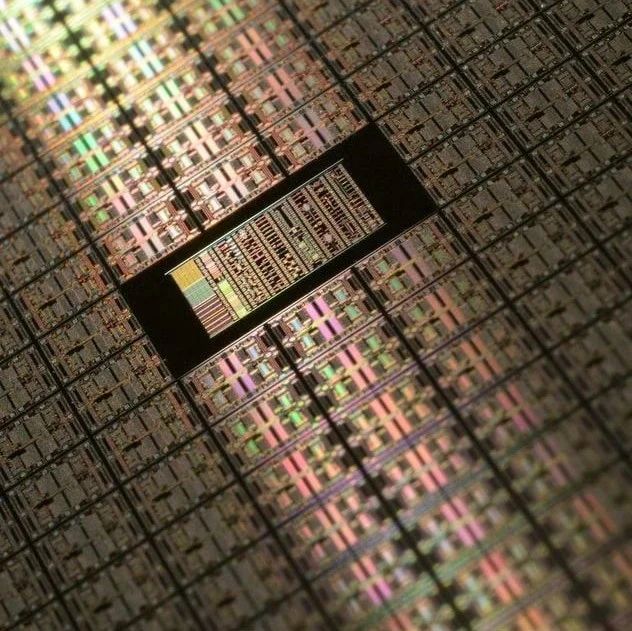
氮化镓(GaN)技术

Search documents
GaN技术如何重塑人形机器人动力系统架构
机器人大讲堂· 2026-03-11 04:04
Core Insights - The global humanoid robot market is projected to see significant growth, with shipments expected to reach approximately 18,000 units in 2025 (up 508% year-on-year) and 51,000 units in 2026 (an annual growth rate of about 183.33%) [1] - By 2029, the global humanoid robot market size is forecasted to reach $20.6 billion, with China accounting for 75 billion yuan, and a compound annual growth rate (CAGR) exceeding 93% from 2025 to 2029 [1] - Long-term projections suggest that by 2050, the global market could reach $7.5 to $7.6 trillion, with China contributing $1 trillion and a total of over 1 billion units in operation, positioning it as the largest market globally [1] Group 1: Power Architecture of Humanoid Robots - The core modules of humanoid robot power architecture include battery charging and storage, battery management, power protection, power conversion, joint drive, and intelligent energy replenishment, which are essential for stable movement, precise control, and long-lasting endurance [4] - The power specifications are based on a safety extra-low voltage (SELV) system, with a mainstream 48V bus gradually transitioning towards 72V applications, emphasizing safety, low energy consumption, lightweight design, and high power density [6] - The working process involves a 48V-72V battery pack as the main power input, managed by a Battery Management System (BMS) for monitoring and safety, with multiple DC/DC converters supplying matched voltage to various components [6] Group 2: Challenges in Miniaturization and Heat Management - The humanoid robot industry faces a critical technological paradox between the pursuit of extreme miniaturization of joints and the heat dissipation requirements during high power density operation [7] - The strict size limitations for humanoid robot joints require diameters to be kept under 100mm, with finer joints needing to be below 50mm, complicating the integration of independent cooling components [11] - The challenges of heat management arise from the compact design, which leads to rapid heat accumulation and potential overheating, necessitating systemic improvements in structure, materials, drive, and thermal management [12] Group 3: Advantages of GaN Technology - Gallium Nitride (GaN) HEMT devices outperform traditional silicon-based MOSFETs in key performance metrics, providing significant advantages for humanoid robots [14] - GaN devices can achieve switching frequencies of 1-10 MHz, significantly higher than the typical 100 kHz of silicon solutions, allowing for a reduction in passive component size by over 70% and improved motion control precision [14] - The efficiency and thermal performance of GaN devices enable peak efficiencies exceeding 99% in 48V-72V systems, reducing losses by 60%-80% compared to traditional solutions, thus enhancing endurance and continuous output capabilities [14] Group 4: GaN Solutions for Humanoid Robots - The company is developing a comprehensive domestic robot power system chip matrix that covers four core categories: joint drive, joint control, BMS protection, and charging management, utilizing GaN integrated circuits and AI simulation as the technological foundation [15] - The BMS power chip CT-10B30 enables AI monitoring throughout the battery lifecycle, ensuring stable operation and precise management of bus voltage and current [20] - The joint control chip CT-2001 integrates low-latency control algorithms, achieving a delay as low as 0.2ns, which is ideal for high-density motor layouts [21]


罗姆获台积电授权,内部生产GaN
半导体芯闻· 2026-02-04 10:17
Core Viewpoint - TSMC plans to exit the GaN foundry business by July 2027, prompting ROHM to acquire GaN technology licensing from TSMC and initiate in-house production of 650V GaN power devices [1] Group 1: Company Actions - ROHM's president announced on February 4, 2026, that the company is moving towards self-production of GaN devices after acquiring a license from TSMC [1] - ROHM has outsourced the front-end processing of its 650V products to TSMC and is exploring various options, including internal R&D and collaborative development with VIS [1] - ROHM plans to start an 8-inch production line at its Hamamatsu factory and may outsource some production to VIS if demand surges [1] Group 2: Industry Impact - Companies that previously outsourced production to TSMC, such as Navitas Semiconductor, are now working on shifting their production [1] - TSMC's subsidiaries, including Vanguard International Semiconductor (VIS) and GlobalFoundries (GF), will receive licensing for TSMC's 650V and 80V GaN technologies [1]

刚刚,安森美携手英诺赛科
半导体芯闻· 2025-12-03 10:28
Core Viewpoint - Onsemi and Innoscience have signed a Memorandum of Understanding (MoU) to explore opportunities for accelerating the deployment of Gallium Nitride (GaN) power devices, starting with 40-200V power devices, to significantly expand their customer base [1][2]. Group 1: Collaboration Benefits - The collaboration aims to overcome existing barriers to GaN deployment, focusing on mainstream market applications such as industrial, automotive, telecommunications, consumer electronics, and AI data centers [2][3]. - Benefits for Onsemi's customers include faster time-to-market through rapid prototyping and design integration, scalable manufacturing capabilities to meet high demand, and reduced system costs due to optimized packaging and simplified thermal management [2][3]. Group 2: Market Potential and Growth - GaN technology is expected to play a crucial role in improving electronic products by enabling smaller, more efficient power systems, thereby saving energy and reducing CO2 emissions [3]. - The GaN market is projected to reach $2.9 billion by 2030, with Onsemi expected to capture 11% of the global power semiconductor market, growing at a compound annual growth rate (CAGR) of 42% from 2024 to 2030 [3][4]. Group 3: Product Portfolio Expansion - The partnership will enhance Onsemi's comprehensive smart power product portfolio, which currently includes silicon, silicon carbide (SiC), and GaN technologies, allowing for optimal power systems across various applications [4]. - This integrated product offering positions Onsemi as a leading supplier of fully integrated power systems, maximizing performance and energy efficiency amid rising global electrification and AI energy demands [4].

英诺赛科,跃居全球第一
半导体行业观察· 2025-10-30 01:07
Core Insights - Gallium Nitride (GaN) has emerged as one of the most disruptive semiconductor technologies in the past decade, with a projected market size of $3 billion by 2030 [2] - The consumer and mobile sectors are expected to account for over 50% of the power GaN device market by 2030, driven by rapid charger adoption [2] - The automotive market is anticipated to be the next wave of expansion, with a projected compound annual growth rate (CAGR) of up to 73% from 2024 to 2030 [2] - Data centers are seeking energy-efficient solutions, with NVIDIA collaborating with wide bandgap chip manufacturers to integrate SiC and GaN technologies into their HVDC power systems [3] - The power GaN ecosystem is entering a decisive phase of consolidation and expansion, highlighted by significant acquisitions such as Infineon's $830 million acquisition of GaN Systems [6] Market Trends - The automotive and mobility sectors are expected to see significant growth, with GaN devices being widely used in LiDAR systems and on-board chargers [2] - The telecommunications market is projected to grow at an impressive CAGR of 53% from 2024 to 2030, driven by the adoption of GaN technology [3] - Innoscience is expected to maintain market leadership with a projected market share of 30% in 2024, supported by design orders in various sectors [6] Company Developments - Renesas Electronics, through its subsidiary Transphorm, is expected to achieve GaN revenue exceeding $100 million by 2026 [9] - Infineon is solidifying its position in the GaN space through its CoolGaN™ products and the acquisition of GaN Systems, while also collaborating with NVIDIA on a pilot production line [9] - Navitas is expanding its business from consumer markets to high-power markets, leveraging its GaNSafe technology [9] - EPC is innovating with a broad e-mode product portfolio, reinforcing its position as a key low-voltage GaN supplier [10] Competitive Landscape - Foundries are playing a crucial role in the GaN ecosystem, with companies like Polar Semi and PSMC entering the competition [10] - GlobalFoundries, X-FAB, and Vanguard are expanding their GaN product offerings, while Samsung is preparing to launch GaN products in 2026 [10] - Onsemi is expected to enter the GaN market soon, supported by its strong position in silicon and SiC [10]

GaN市场,迎来新巨头
半导体行业观察· 2025-10-08 02:09
Core Insights - Gallium Nitride (GaN) has emerged as one of the most disruptive semiconductor technologies of the decade, with a projected market size of $3 billion by 2030 [2] - Consumer electronics, particularly fast charging, are early adopters driving sales growth and ecosystem maturity, expected to account for over 50% of the total power GaN device market by 2030 [2] - The power GaN market is entering a decisive phase, driven by accelerated investments, strategic acquisitions, and ongoing innovation across the value chain [2] Automotive Market Expansion - The next wave of expansion is anticipated in the automotive market, with a remarkable compound annual growth rate (CAGR) of 73% from 2024 to 2030, driven by the shift towards electrification and advanced driver-assistance systems [4] - GaN devices are now widely used in LiDAR systems, and onboard chargers (OBC) are expected to be the next sales driver [4] - Non-automotive DC chargers and traction inverters are maturing with the emergence of more reference designs [4] Data Center and AI Applications - Hyperscale data centers are seeking energy-efficient solutions to manage increasing workloads, with NVIDIA collaborating with leading wide bandgap chip manufacturers to integrate SiC and GaN technologies into its 800V high-voltage direct current (HVDC) power systems [4] - GaN's unique advantages in power conversion efficiency and circuit board space optimization are making it essential for AI servers and networking equipment [4] - The telecommunications sector is also expected to see significant growth, with a projected CAGR of 53% from 2024 to 2030 [4] Competitive Landscape - The power GaN ecosystem is transitioning from a mature phase to one shaped by consolidation and vertical integration, driven by integrated device manufacturers (IDMs) [6] - Infineon has strengthened its position in GaN through the $830 million acquisition of GaN Systems, while Renesas acquired Transphorm for $339 million [6] - Innoscience leads the market with a 30% share in 2024, focusing on fast charging, automotive, data centers, and home appliances [6] - Other key players include Navitas, Power Integrations, and EPC, each expanding their product offerings and market presence [6][7] New Entrants and Future Outlook - New entrants like Samsung and onsemi are expected to intensify competition in the GaN market, with onsemi preparing to enter the GaN space soon [7] - The report confirms that the power GaN ecosystem is evolving into a strategically driven market, with increasing competition solidifying GaN's role as a core pillar of next-generation power electronics [7]



集邦咨询:2030年GaN功率器件市场规模将攀升至35.1亿美元
Zheng Quan Shi Bao Wang· 2025-08-11 11:08
Group 1 - Gallium Nitride (GaN) has become a significant growth point in the power electronics market, driven by its superior material properties that enable high-frequency, high-efficiency, and miniaturized power applications [1] - TrendForce forecasts that the GaN power device market size will grow from $390 million in 2024 to $3.51 billion by 2030, with a compound annual growth rate (CAGR) of 44% [1] - Initially, GaN technology emerged in fast chargers for consumer electronics, but its application is rapidly expanding into high-end industrial and automotive sectors, including AI data centers, humanoid robots, automotive OBCs, and photovoltaic micro-inverters [1] Group 2 - Humanoid robots are transitioning from research labs to commercial applications, with GaN expected to be a key solution for precise, responsive, and compact motor control systems [2] - In the automotive market, GaN is becoming an important emerging technology option, significantly improving the power density and efficiency of on-board chargers (OBCs) [2] - Despite challenges, GaN technology shows great application potential for traction inverter components, enhancing the performance and range of electric vehicles [2] Group 3 - The GaN power market has officially entered a golden growth period driven by cost-effectiveness and concurrent applications across multiple fields [3] - Significant deployment of GaN technology is anticipated in key areas such as data centers, electric vehicles, robotics, and renewable energy in the coming years [3]
英诺赛科与美的厨热达成GaN战略合作
行家说三代半· 2025-04-30 04:25
英诺赛科: 与美的电器达成合作 4月29日, 英诺赛科发布公告,宣布与 美的厨房及热水器事业部 达成战略合作, 成功在家电领域实现突破。 插播: 英诺赛科、能华半导体、致能半导体、京东方华灿光电、镓奥科技、 鸿成半导体、中科无 线半导体等已确认参编《2024-2025氮化镓(GaN)产业调研白皮书》,参编咨询请联系许若冰 (hangjiashuo999)。 近期,两家国产GaN厂商接连突破技术应用边界——英诺赛科与美的达成战略合作深化家电领域布局,氮矽科 技则以高频芯片切入美容仪市场,标志着GaN技术正加速向多元化民用场景渗透,推动消费电子与家电产业 效 能升级。 公告称, 本战略合作备忘录的订立是基于双方共同的商业利益和对未来市场机遇的充分认识。结合英诺赛科在 氮化镓领域和美的在家电、电机驱动等下游应用领域的优势,达成长期战略合作,双方共同投入资源,聚焦氮 化镓在家电等领域应用拓展,开展创新研发,推动氮化镓新产品和方案在 家电、厨电 等应用领域落地,引领 家电行业的技术升级及迭代。 目前,英诺赛科700V高压氮化镓产品已成功于 美的抽油烟机实现量产 ,未来将进一步应用到美的 空调、冰 箱、洗衣机及净饮机 等 ...

三大公司,竞购破产的GaN工厂
半导体行业观察· 2025-03-14 00:53
Core Viewpoint - The article discusses the ongoing bidding process for the production site of the bankrupt Belgian chip manufacturer Belgan, highlighting the potential for job creation and the strategic importance of the semiconductor industry in the region [2][3]. Group 1: Bidding Process - Three candidates are competing to acquire Belgan's production facility in Oudenaarde, which is expected to create over 250 jobs [2]. - The bidding process is linked to a long-term economic activity that aims to restart chip production or initiate another project [2]. - The identity of the bidders includes two Asian organizations and one European organization, with Silex Microsystems, a subsidiary of China's SMEI Group, being one of the candidates [2][3]. Group 2: Belgan's Background and Financials - Belgan, Belgium's only industrial chip manufacturer, went bankrupt after failing to transition to energy application chip production, resulting in 440 job losses [3]. - The company's revenue declined from approximately €120 million in 2021 to just under €75 million in 2022, before recovering to over €81 million in 2023, which was still insufficient to cover its expenses [3]. - The facility includes two clean rooms, measuring 700 square meters and 3,657 square meters, essential for sensitive processes like chip production [3]. Group 3: Future Plans and Asset Sales - The new business plans for the site may or may not utilize GaN chip technology and initially require only 100 employees [4]. - The curator is expected to reveal more information about substantial projects from investors in the coming weeks [4]. - Belgan's assets have been largely liquidated, raising €23 million, with remaining assets valued at approximately €5 million yet to be sold [4].