水下机器人

Search documents
超40家VC押注,深之蓝冲击“中国水下机器人第一股”
机器人圈· 2026-01-04 09:47
Core Viewpoint - The article highlights the progress of Deep Blue Technology Co., Ltd. towards its IPO, aiming to become the first publicly listed underwater robotics company in China, with a fundraising target of 1.5 billion yuan [2]. Group 1: Company Overview - Deep Blue Technology has transitioned to "acceptance of guidance" status in its IPO process, with CICC as the guiding institution, after submitting its IPO guidance record in October 2023 [2]. - The company was founded by Wei Jiancang, who identified a gap in the domestic underwater robotics market in 2013, leading to the development of indigenous underwater robots [2]. - The product matrix includes cable-controlled underwater robots, autonomous vehicles, and underwater gliders, which have been successfully utilized in critical fields such as marine scientific research and emergency rescue [3]. Group 2: Financial Performance - Deep Blue Technology has seen strong revenue growth, with revenues of 141 million yuan, 235 million yuan, and 251 million yuan from 2022 to 2024, reflecting a compound annual growth rate of 33.23% [5]. - As of mid-2025, the company reported revenues of 141 million yuan, matching its total revenue for 2022, indicating significant market penetration in both consumer and industrial sectors [5]. - Despite cumulative undistributed profits of -622 million yuan by mid-2025, the net loss has been narrowing, from 134 million yuan in 2022 to 6.7 million yuan in the first half of 2025, with expectations of profitability by 2026 [5]. Group 3: Market Dynamics - The global underwater robotics market is experiencing explosive growth, with China's market size increasing from 1.24 billion yuan in 2018 to 6.27 billion yuan in 2022, projected to exceed 30 billion yuan by 2027 [6]. - The underwater robotics market is categorized into defense, industrial, and consumer segments, with high barriers to entry in the defense and industrial sectors, while the consumer market is highly competitive [6]. - Key technological areas for future competition include acoustic sensors and navigation systems, which are critical for operational stability and core competitiveness in the underwater robotics industry [6]. Group 4: Industry Outlook - The rise of Deep Blue Technology reflects the growing interest and investment in the underwater robotics sector, which is supported by government initiatives and capital market trends [4]. - The company’s IPO is seen as a significant milestone that will contribute to the development of the domestic underwater robotics industry, transitioning from a follower to a leader in the global market [6].


超40家VC押注,80后创始人冲刺水下机器人第一股
投中网· 2026-01-04 06:35
Core Viewpoint - The article highlights the growing interest and investment in the underwater robotics sector, particularly focusing on the company Deep Blue Technology, which is on the verge of becoming the first publicly listed underwater robotics company in China with an IPO plan to raise 1.5 billion yuan [5][7]. Company Overview - Deep Blue Technology has transitioned to the "Acceptance of Guidance" status for its IPO, with the guidance provided by China International Capital Corporation [6]. - The company aims to raise 1.5 billion yuan through its IPO, which, if successful, will mark a significant milestone as the first underwater robotics stock in China [7]. - Founded by Wei Jiancang, who has a strong technical background, Deep Blue Technology focuses on developing domestic underwater robotics capabilities, addressing a market that has been largely overlooked in China [9]. Product and Market Position - Deep Blue Technology has developed a diverse product line, including cable-controlled underwater robots, autonomous underwater vehicles, and underwater gliders, which are utilized in marine scientific research, hydropower, and emergency rescue operations [9][10]. - The company also has a consumer brand, Sublue, offering underwater sports products that have gained international traction, being sold in over 70 countries [10]. Financial Performance - The company has shown strong revenue growth, with revenues of 141 million yuan in 2022, projected to reach 235 million yuan in 2023 and 251 million yuan in 2024, reflecting a compound annual growth rate of 33.23% [13]. - As of mid-2025, the company reported revenues of 141 million yuan, matching the total for 2022, indicating a critical phase of revenue scale expansion [13]. - Despite high R&D costs leading to accumulated losses of 622 million yuan by mid-2025, the net loss has significantly decreased from 134 million yuan in 2022 to 6.78 million yuan in the first half of 2025 [13][14]. Industry Trends - The underwater robotics market in China has grown from 1.24 billion yuan in 2018 to 6.27 billion yuan in 2022, with expectations to exceed 30 billion yuan by 2027 [14]. - The global deep-sea robotics market is projected to reach 420 billion yuan by 2028, with the engineering service market potentially reaching 15 trillion yuan [14]. - The industry is characterized by high barriers to entry in defense and industrial-grade robotics, while the consumer market remains competitive but more mature internationally [14]. Investment Landscape - Over 40 investors, including Lei Jun, have shown interest in Deep Blue Technology, which has completed over ten rounds of financing, raising more than 1.3 billion yuan to date [8][10]. - The company has a strong and diversified shareholder structure, with the founder holding 23.64% of the shares, and institutional investors including Shenchuang Investment and others holding significant stakes [10].

超40家VC押注,80后创始人冲刺水下机器人第一股
3 6 Ke· 2026-01-03 06:04
Core Viewpoint - The underwater robotics sector is gaining significant attention and investment, with companies like Deep Blue Ocean Technology poised to become leaders in this emerging market, particularly as they prepare for an IPO aimed at raising 1.5 billion yuan [1][2]. Company Overview - Deep Blue Ocean Technology has transitioned to the "Acceptance of Guidance" stage for its IPO, with the goal of listing on the Sci-Tech Innovation Board after completing eight rounds of guidance [1]. - The company plans to raise 1.5 billion yuan through its IPO, potentially making it the first publicly listed underwater robotics company in China [2]. - Founded by Wei Jiancang, who has a strong technical background, Deep Blue aims to enhance China's capabilities in underwater robotics, which has been largely underdeveloped compared to Western countries [3]. Product and Market Position - Deep Blue has developed a diverse product line, including cable-controlled underwater robots, autonomous underwater vehicles, and underwater gliders, which are utilized in marine scientific research, hydropower, and emergency rescue operations [3]. - The company also operates a consumer brand, Sublue, offering underwater sports products that have gained international traction, being sold in over 70 countries [4]. Financial Performance - Deep Blue has shown strong revenue growth, with projected revenues of 1.41 billion yuan in 2022, 2.35 billion yuan in 2023, and 2.51 billion yuan in 2024, reflecting a compound annual growth rate of 33.23% [6]. - Despite high R&D costs leading to accumulated losses of 622 million yuan by mid-2025, the company has significantly reduced its net losses from 134 million yuan in 2022 to 6.78 million yuan in the first half of 2025 [6]. Industry Trends - The underwater robotics market in China has expanded from 1.24 billion yuan in 2018 to 6.27 billion yuan in 2022, with expectations to exceed 30 billion yuan by 2027 [7]. - The global underwater robotics market is projected to reach 420 billion yuan by 2028, with significant growth in engineering service markets expected to reach 15 trillion yuan [7]. - The industry is categorized into defense, industrial, and consumer segments, with defense and industrial markets having high entry barriers, while the consumer market is more competitive but has a more mature overseas presence [7].

深之蓝冲击“中国水下机器人第一股”,雷军系资本押注
机器人大讲堂· 2025-12-31 14:55
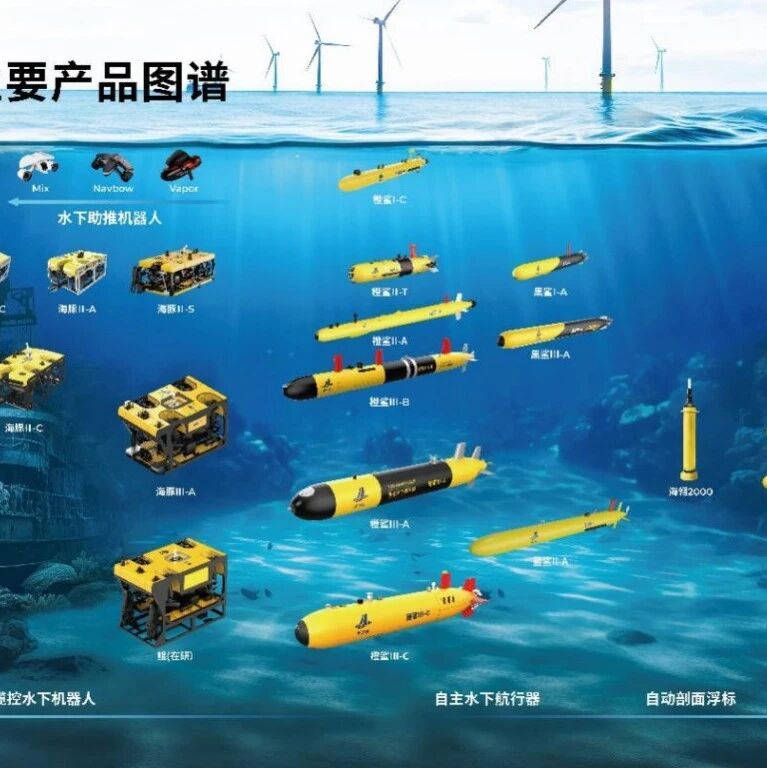
Core Viewpoint - Deep Blue Technology Co., Ltd. has submitted its IPO application to the Shanghai Stock Exchange, aiming to raise 1.5 billion yuan, potentially becoming the "first underwater robotics stock in China" [1]. Group 1: Business Overview - Deep Blue is a leading provider of underwater robotics and solutions, focusing on the research, production, sales, and service of cable-controlled underwater robots, autonomous underwater vehicles, underwater gliders, automatic profiling buoys, and underwater propulsion robots [5]. - The fundraising plan allocates 860 million yuan for expanding the underwater robot production base, 400 million yuan for upgrading the technology research and experimental center, and 240 million yuan for working capital [5][7]. Group 2: Product Matrix - The product matrix of Deep Blue is built on different technological paths and application depths, addressing the extreme challenges faced by underwater robots, such as communication, pressure resistance, and energy supply [8]. - The company has developed consumer-grade underwater propulsion devices under the SUBLUE brand, achieving a global market share of approximately 60% in this segment, contributing about 25% of the company's stable revenue [12][20]. Group 3: Financial Performance - From 2022 to June 2025, Deep Blue achieved a cumulative revenue of 768 million yuan, with a compound annual growth rate exceeding 33%. However, the company also reported a cumulative net loss of 294 million yuan during the same period [21]. - The company's losses are primarily attributed to high R&D investments totaling 192 million yuan over three and a half years and significant expenses related to scaling operations [24]. Group 4: Investment and Control - Since its establishment in 2013, Deep Blue has completed over 10 rounds of financing, raising more than 1.3 billion yuan, attracting investments from over 30 well-known institutions [25][29]. - The founder, Wei Jiancang, maintains a controlling stake of 41.34% in the company, reflecting a strong commitment to its strategic direction [29]. Group 5: Future Challenges - The company acknowledges that going public is just the beginning of more intense competition, especially as major players like Saab and Oceaneering have established significant barriers in the high-end market [30]. - Deep Blue faces challenges in transitioning from technological breakthroughs to achieving profitability, including improving inventory turnover and managing accounts receivable risks [30].
天津冲出一家水下机器人IPO,国防科大80后校友任董事长,预计最早2026年盈利
格隆汇APP· 2025-12-30 11:04
Core Viewpoint - A new underwater robotics company from Tianjin is planning an IPO, with the chairman being an 80s alumnus from National University of Defense Technology, and it is expected to achieve profitability by 2026 [1] Group 1 - The underwater robotics company is positioned to enter the market with innovative technology aimed at various applications [1] - The chairman's background in defense technology suggests a strong foundation in advanced engineering and potential government contracts [1] - The anticipated timeline for profitability indicates a strategic approach to scaling operations and market penetration [1]

天海防务:目前暂不涉及ROV产品的直接研发与生产
Zheng Quan Ri Bao Wang· 2025-11-17 12:09
Core Viewpoint - Tianhai Defense focuses on the application and system integration of underwater robots rather than direct research and production of ROV products [1] Group 1: Company Focus - The company emphasizes the integration and application of underwater robots in existing marine engineering and special unmanned vessel businesses [1] - Underwater robots are defined variably based on operational depth and functional use, indicating a broad scope of application [1] Group 2: Business Model - The current business model is centered on system integration and equipment application, with no direct involvement in the ROV product development and manufacturing [1] - The company has practical foundations and application scenarios for ROV, utilizing ROV equipment in designed ship platforms, saturation diving vessels, and special unmanned vessels [1]

光峰科技积极推进AR与水下激光雷达新业务
Zheng Quan Ri Bao Wang· 2025-10-30 13:13
Core Insights - Shenzhen Guangfeng Technology Co., Ltd. reported a revenue of 392 million yuan for Q3 2025, with a cumulative revenue of 1.353 billion yuan for the first three quarters [1] - The company achieved a year-on-year increase of 109.19% in net cash flow from operating activities, reaching 150 million yuan [1] - Guangfeng Technology is in a critical business transformation phase, focusing on independent research and development of core components and technology reserves [1] Business Development - The company has made significant breakthroughs in upstream core components, integrating fundamental design with terminal applications, particularly in the fields of AR glasses and robotics [1] - Guangfeng Technology is enhancing its design, customization, and mass production capabilities for upstream core components, actively engaging with domestic and international AR glasses brands [1] - The launch of the D1 underwater laser radar product marks the industry's entry into the "10-meter underwater measurement era," attracting attention from pool robot manufacturers [2] Market Positioning - The company is strategically advancing the product rollout of AR optics and underwater laser radar, leveraging breakthroughs in upstream core components [2] - With the gradual realization of forward-looking layouts and continuous market demand, Guangfeng Technology is expected to enter a new phase of high-quality growth [2]

“极蛙”机器人在北极成功“探冰”
Ke Ji Ri Bao· 2025-10-21 23:55
Core Insights - The "Extreme Frog" Autonomous Underwater Vehicle (AUV) developed by Chinese researchers successfully completed sub-ice tasks in the Arctic Ocean, providing critical technical support for studying the ice-bottom environment [1] Group 1: Technology and Capabilities - The "Extreme Frog" AUV features two modes of movement: underwater cruising and crawling, allowing it to switch flexibly in complex environments [1] - It is equipped with various sensors and imaging devices, including underwater stereo cameras and multi-beam sonar [1] - The AUV demonstrated stable performance during two dives in both low and high-density ice areas, validating its control capabilities and enabling comprehensive surveys of the underwater hydrological environment and ice morphology [1] Group 2: Research and Application - The leader of the Arctic scientific expedition team, Professor Chen Zhuoqi, highlighted the stable performance of the "Extreme Frog" AUV in polar environments, showcasing the application potential and scientific value of domestically developed submersibles in extreme conditions [1] - During the expedition, four team members conducted underwater operations in the Arctic's high-latitude ice areas, utilizing the AUV for joint detection of ice-bottom topography and underwater environments [1] - Compared to traditional unmanned submersibles, the "Extreme Frog" AUV offers significant advantages such as lightweight design, high maneuverability, and multi-modal movement, making it suitable for diverse observational needs [1]
中密控股(300470.SZ)产品暂未应用于水下机器人
Ge Long Hui· 2025-09-10 09:01
Group 1 - The company, Zhongmi Holdings (300470.SZ), stated that its products are not currently applied in underwater robotics [1] - The company's products have established applications in the marine oil and gas extraction and transportation sectors [1]

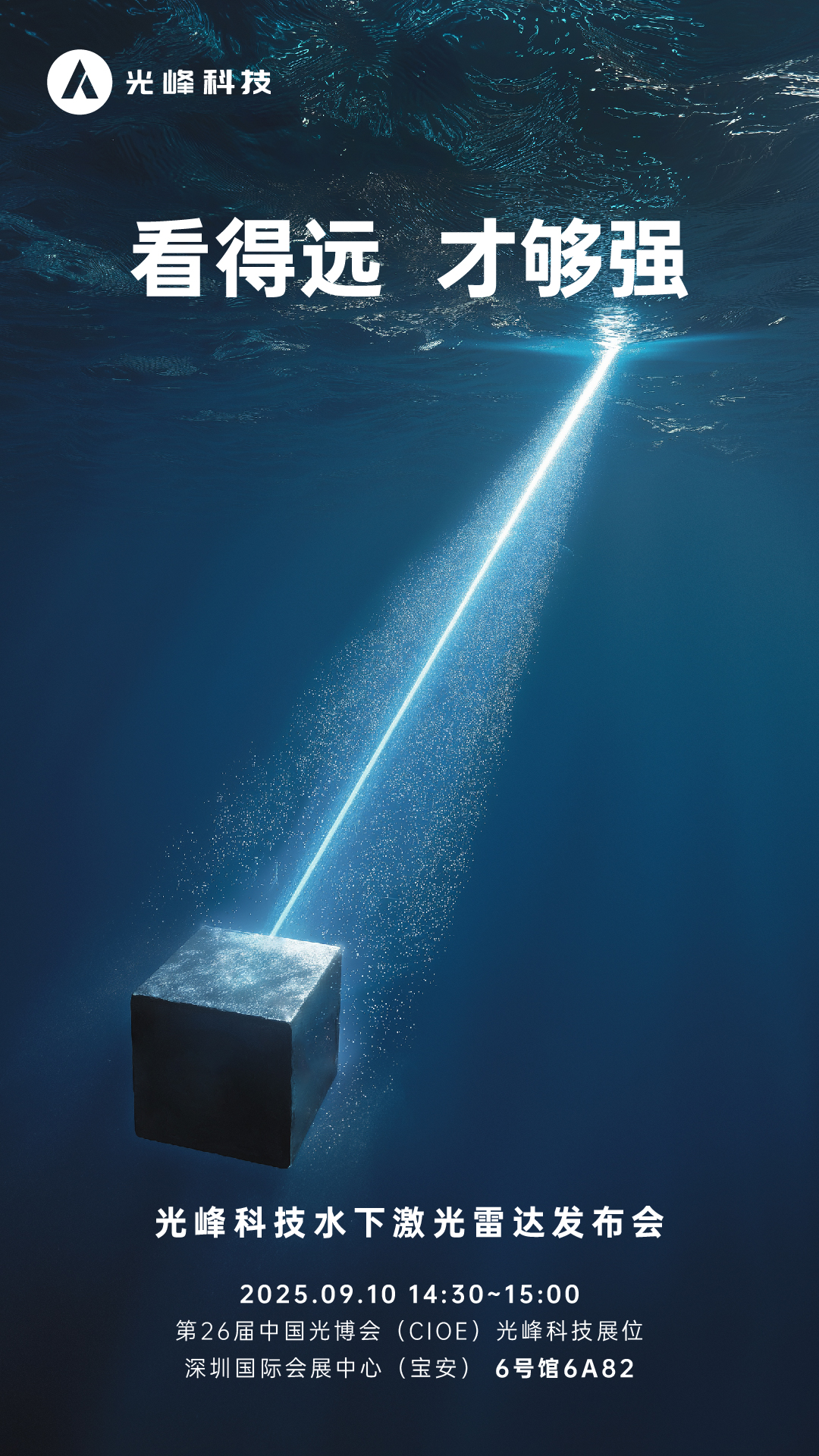
光博会预告:光峰科技将发布水下激光雷达,开启水下机器人新时代
Xin Lang Zheng Quan· 2025-09-04 03:49
Core Viewpoint - The rapid development of the robotics business is driving new growth opportunities for lidar technology, particularly in underwater scenarios, with significant innovations expected from Guangfeng Technology's upcoming underwater lidar product launch at the 26th China International Optoelectronic Exposition [1][4]. Industry Summary - The application of lidar in the robotics sector has seen explosive growth, with major manufacturers reporting substantial increases in product sales. For instance, SUTENG's latest financial report indicates that its robot product sales reached 34,400 units in Q2 2025, a year-on-year increase of 631.9% and a quarter-on-quarter increase of 189.1%. Similarly, Hesai Technology reported a delivery volume of 48,500 units in the robotics field, marking a year-on-year growth of 743.6% and projecting over 200,000 lidar shipments in 2025 [1][3]. Market Potential - The primary orders for lidar in the robotics field currently stem from lawn mowing robots, benefiting from the adaptation of automotive lidar technology. However, there is a notable growth in pool cleaning robots, with the global number of pools expected to rise from 28.88 million in 2021 to 36.92 million by 2026, reflecting a compound annual growth rate of approximately 5%. The demand for pool cleaning robots is projected to reach around 10.34 million units by 2026, with a penetration rate of 28% [3]. Technical Challenges - The underwater application of lidar faces several technical challenges, including significant attenuation of infrared lasers in water, with 905nm infrared light losing over 60% of its energy after traveling just 1 meter in clear water. Additionally, the effective measurement range is limited to under 5 meters due to the absorption and scattering of light in water, compounded by environmental light interference and water turbidity issues that complicate signal processing [3]. Company Innovation - Guangfeng Technology's upcoming underwater lidar product is highly anticipated to address these underwater perception challenges, providing more accurate and reliable sensing solutions for underwater robots like pool cleaning devices. This innovation is expected to unlock a billion-level incremental market space [4].