
汉堡通胀

Search documents
真搞不懂了,美国财长耶伦说中国得感谢特朗普,因为他正把美国搞成一个香蕉共和国
Sou Hu Cai Jing· 2025-11-24 17:18
Core Viewpoint - The article highlights concerns from U.S. Treasury Secretary Janet Yellen regarding the potential transformation of the U.S. economy into a "banana republic" due to the policies of former President Trump, particularly focusing on tariffs and the independence of the Federal Reserve [1][6]. Group 1: Tariff Policies - Trump's proposed tariffs, including a 10% basic tariff on nearly all imports and a shocking 125% tariff on Chinese goods, have raised significant market anxiety and are seen as reckless decisions [1]. - Former Treasury Secretary Lawrence Summers described these tariffs as the "largest self-inflicted wound" to the U.S. economy, estimating a loss of nearly $2,000 per year for the average American middle-class family [1]. - The increase in tariffs has led to rising costs for everyday items, exemplified by the term "hamburger inflation," which reflects the soaring prices of goods due to disrupted global supply chains [3]. Group 2: Economic Impact - Consumer confidence has plummeted, with the University of Michigan's consumer confidence index hitting a three-year low, as over 70% of Americans express unprecedented anxiety about their financial situations [3]. - The share of manufacturing value added in the U.S. economy has declined from 16.5% in the 1990s to 10.3% currently, contrasting sharply with other countries like China (26.2%) and South Korea (24.3%) [3]. Group 3: Federal Reserve Independence - Trump's public demands for the Federal Reserve to lower interest rates and threats to replace dissenting officials undermine the central bank's independence, which is crucial for maintaining the credibility of the U.S. dollar [6]. - Since the announcement of new tariffs in April, the U.S. dollar has depreciated by over 4% against a basket of major currencies, indicating market concerns about the dollar's credibility [6]. Group 4: Global Economic Positioning - While the U.S. adopts a more isolationist approach, China is actively engaging in trade agreements, such as its application to join the CPTPP and the implementation of the RCEP, promoting regional trade liberalization [7]. - The contrasting strategies of the U.S. and China signal a shift in global economic dynamics, with China being perceived as a "safe haven" amid rising uncertainties [7].

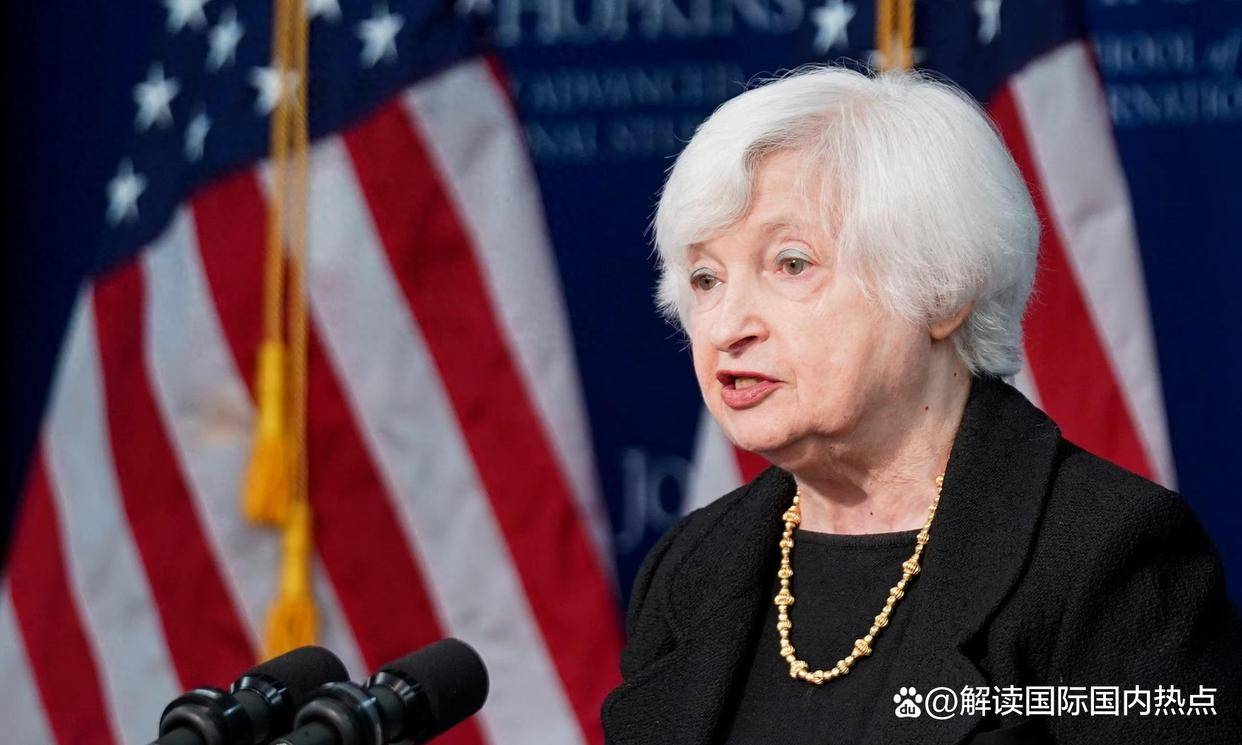
耶伦:中国真该谢谢特朗普,美国这下搞不好要成“香蕉共和国”了
Sou Hu Cai Jing· 2025-11-23 10:55
Core Viewpoint - Janet Yellen's statement likening the U.S. to a "banana republic" highlights concerns over the erosion of the Federal Reserve's independence and the potential consequences for the U.S. economy [5][11][39] Group 1: Economic Policy and Federal Reserve Independence - Yellen's use of the term "banana republic" reflects a serious warning about the state of U.S. economic governance and creditworthiness [5][9] - The independence of the Federal Reserve, which is crucial for maintaining the credibility of the U.S. dollar, is perceived to be under threat due to political pressures from former President Trump [9][11] - Trump's calls for immediate interest rate cuts and threats to dismiss Federal Reserve officials represent a significant departure from traditional norms of central bank independence [9][11] Group 2: Trade Policies and Economic Impact - Trump's imposition of tariffs, including a 10% basic tariff on nearly all imports and a staggering 125% on Chinese goods, has been criticized as reckless and damaging to the U.S. economy [15][17] - The tariffs are estimated to cost American middle-class families nearly $2,000 each, contributing to rising consumer prices and inflation [17][19] - The manufacturing sector's contribution to the U.S. economy has declined from 16.5% in the 1990s to 10.3% currently, indicating a failure to bring manufacturing back to the U.S. despite aggressive trade policies [21] Group 3: Global Economic Standing and Currency Valuation - Since the announcement of new tariffs in April, the U.S. dollar has depreciated by over 4% against a basket of major currencies, signaling market concerns about the dollar's credibility [27] - Central banks worldwide are reducing their dollar reserves, indicating a trend towards "de-dollarization" as a response to U.S. policy unpredictability [29] - The contrasting approaches of the U.S. and China in trade and economic policy are leading to a perception of China as a more stable and predictable economic partner [35][37]
“汉堡通胀”席卷美国,专家:关税导致成本上涨已转嫁至美消费者
Huan Qiu Shi Bao· 2025-09-14 22:52
Group 1: Hamburger Inflation and Beef Prices - The rising beef prices are becoming a new focus in the U.S., similar to the previous "egg shortage" due to avian flu, with concerns over supply shortages driven by tariff policies [1][2] - The median price of hamburgers in the U.S. reached $14.47 in August, a 3.4% increase from the previous year, reflecting a continuous upward trend in hamburger prices over the past 12 months [2] - Beef prices have been rising for eight consecutive months, with ground beef currently priced at $6.34 per pound (approximately 101.28 RMB/kg) [2] Group 2: Broader Ingredient Cost Increases - The increase in hamburger prices is not solely due to beef costs; other ingredients like cheese and bread are also contributing to the price hikes [3] - The consumer price index (CPI) for August showed a year-on-year increase of approximately 2.9%, indicating a potential resurgence in inflation despite a previous decline from a peak of 9% in 2022 [3] Group 3: Coffee Price Increases - Retail coffee prices surged nearly 21% year-on-year in August, marking the largest annual increase since October 1997, driven by tariffs on major coffee-exporting countries [3][4] - Companies like J.M. Smucker have announced multiple price increases for retail coffee this year, indicating that the cost pressures are being passed on to consumers [4] Group 4: Consumer Confidence and Economic Outlook - The consumer confidence index has dropped by 21% compared to the previous year, reflecting growing concerns about the economic situation [5][7] - Experts predict that inflation may accelerate in the next 6 to 12 months due to the full effects of tariff policies becoming apparent [7]