注意力管理

Search documents
每天被干扰200次?7个习惯,夺回你的注意力主权
3 6 Ke· 2026-01-31 02:54
Core Insights - The article discusses the increasing fragmentation of attention due to digital devices, which provide short bursts of dopamine stimulation, leading to a cycle of seeking instant gratification. It emphasizes the need for strategies to enhance focus and create a conducive environment for concentration [3][4]. Group 1: Foundational Strategies - Optimizing the brain for focus starts with basic self-care habits such as sleep, hydration, and exercise. Establishing a "focus ritual" can signal the brain to concentrate [4]. - Practical steps to eliminate distractions include turning off notifications, locking the phone during work, and using app blockers to create resistance against distractions [4]. Group 2: Training Attention - Attention is goal-directed, meaning clarity in goals helps maintain focus. Writing down goals and placing them in visible areas can serve as reminders to stay on task [5]. - Setting emotional goals can enhance focus and productivity. Visualizing desired emotional states can create a neurobiological roadmap for the brain [6][7]. Group 3: Breaking Habitual Patterns - Developing meta-awareness can help individuals recognize and redirect their attention. This involves questioning impulses to engage in distracting behaviors [8]. - Keeping alternative items nearby, such as a magazine or notebook, can help satisfy the urge to escape without resorting to phone use [8]. Group 4: Energy Patterns - Attention is rhythmic and influenced by individual biological clocks. Identifying personal energy levels throughout the day can help schedule demanding tasks during peak focus times [9]. - Recognizing signals of declining focus can aid in adjusting work schedules to align with personal energy rhythms [9]. Group 5: Active Listening - Many individuals lose focus during conversations, especially in virtual settings. Practicing active listening by maintaining eye contact and engaging deeply can enhance concentration and interpersonal relationships [10]. Group 6: Supplementing Attention Reserves - Conscious breaks are essential for restoring cognitive resources. Activities like stretching, meditation, or simply gazing outside can provide necessary mental resets [11]. - Understanding the value of attention and consciously deciding how to allocate it is crucial for effective time management [11].


哈佛大学30年研究揭示精疲力竭的真相,这25个微习惯可助你重获内心宁静
3 6 Ke· 2025-12-20 00:03
Core Insights - The article emphasizes that inner peace does not stem from significant life changes but rather from daily micro-habits that help stabilize the nervous system [2][3] - A Harvard study tracking over 7,000 participants for 30 years reveals that fragmented habits lead to a sense of overwhelm, not necessarily difficult life circumstances [6][7] Group 1: Micro-Habits for Daily Routine - Avoid looking at the phone for the first 30 minutes after waking up to allow the nervous system to awaken without distractions [12] - Drink a full glass of water upon waking, as dehydration can lead to irritability and low mood [13] - Open windows or step outside to receive natural light, which helps reset circadian rhythms and stabilize mood [14] - Make the bed to create a sense of control in a chaotic world [15] - Engage in slow-paced activities before productive tasks, such as drinking tea or stretching, to signal safety to the body [16][17] Group 2: Micro-Habits for Emotional Stability - Speak slowly to help the nervous system align with the pace of speech [19] - Go for a walk when feeling overwhelmed instead of scrolling on screens, as movement helps release emotions [20] - Verbalize feelings when experiencing emotions to help calm the brain [21] - Set a "frustration threshold" to pause and take a break when anger rises [22] - Keep promises to oneself, even small ones, to build self-trust and regulate the nervous system [23] Group 3: Micro-Habits for Focus and Clarity - Focus on one task at a time, as multitasking can increase anxiety by 40% [25] - Maintain a tidy workspace, as clutter can overwhelm the brain [26] - Use 25-minute focus intervals for tasks, as attention prefers short bursts rather than long stretches [27] - Turn off unnecessary notifications to reduce distractions [28] - Schedule some boredom time, as it allows the brain to reset and clear mental noise [29] Group 4: Micro-Habits for Calming the Nervous System - Extend the exhalation time during breathing exercises to activate the parasympathetic nervous system [31] - Place a hand on the heart when stressed to send a safety signal to the brain [32] - Take a 10-minute walk after meals to reduce inflammation and improve emotional regulation [34] - Take a warm bath in the evening to signal the body to prepare for rest [35] - Maintain consistent sleep and wake times as a simple remedy for emotional fluctuations [37] Group 5: Micro-Habits for Meaning and Emotional Nourishment - Send a message to someone cared about each day to foster emotional connections [40] - Read an inspiring passage to remind oneself of positive thoughts [41] - Express gratitude, even silently, to reshape perceptions of threats [43] - Engage in slow, focused activities to promote mindfulness [44] - Reflect on what truly matters at the end of the day to avoid chasing trivial concerns [45]
一个人开窍后,会突然明白这4个人生真相
洞见· 2025-12-19 12:36
Core Insights - The article emphasizes the importance of self-awareness and personal growth, suggesting that true understanding comes from within rather than external validation [4][5][36] Group 1: Understanding Action and Fear - The most exhausting part of tasks is often the internal dialogue before starting, filled with doubts and fears about failure and judgment from others [6][10] - Before enlightenment, individuals live in a state of imagined risks; after enlightenment, they focus on real actions [8][11] - Many people lose not due to lack of ability but due to hesitation and fear of starting [10][11] Group 2: The Nature of Strength - True strength is about knowing when to rely on others and when to be independent, rather than adhering to a false notion of perpetual independence [15][20] - Acknowledging the need for support is a sign of psychological health, and finding balance between dependence and independence is crucial [18][20] Group 3: The Value of Attention - In an age of information overload, attention is a scarce resource that can easily be diverted, leading to feelings of emptiness despite apparent busyness [23][25] - The allocation of attention is critical; focusing on meaningful activities can lead to a fulfilling life, while distractions can lead to aimlessness [23][25] Group 4: The Process of Change - Change often occurs when individuals reach a breaking point with their current state, leading to a desire for a different way of living [27][30] - Genuine change is driven by internal awakening rather than external pressure, and it does not require dramatic reasons to initiate [34][36]

从厌学到复学|19 数字时代的注意力管理——戒断手机依赖的渐进方案
Jing Ji Guan Cha Bao· 2025-11-23 00:22
Core Insights - The article discusses the challenges children face in managing their attention due to smartphone dependency, especially during the transition back to school after a break. It emphasizes that simply confiscating phones is not an effective solution, and a gradual approach is necessary to help children regain control over their attention [1][2]. Group 1: Understanding the Problem - Many parents mistakenly attribute children's smartphone addiction to a lack of self-discipline, while deeper issues often exist, such as using phones to escape academic pressures or social anxieties [2][3]. - The phenomenon of fragmented attention caused by prolonged smartphone use makes it difficult for children to focus during traditional classroom settings, leading to a preference for quick dopamine hits from mobile devices [2][3]. Group 2: Steps to Mitigate Smartphone Dependency - The first step involves creating clear and visual smartphone usage rules with children, replacing vague commands with specific, actionable guidelines [3][4]. - The second step is to establish alternative attention-grabbing activities that make learning more appealing than smartphone use, such as short focused tasks that provide immediate rewards [4][5]. - The third step focuses on cultivating habits that help children manage distractions, including techniques to refocus their attention when tempted to use their phones [7][8]. Group 3: Parental Guidance - Parents should avoid common pitfalls that may exacerbate smartphone dependency, such as setting double standards by using their phones while discouraging children from doing so [10][11]. - It is crucial for parents to provide children with the space to make mistakes during the adjustment process, viewing setbacks as opportunities for feedback rather than failures [12].
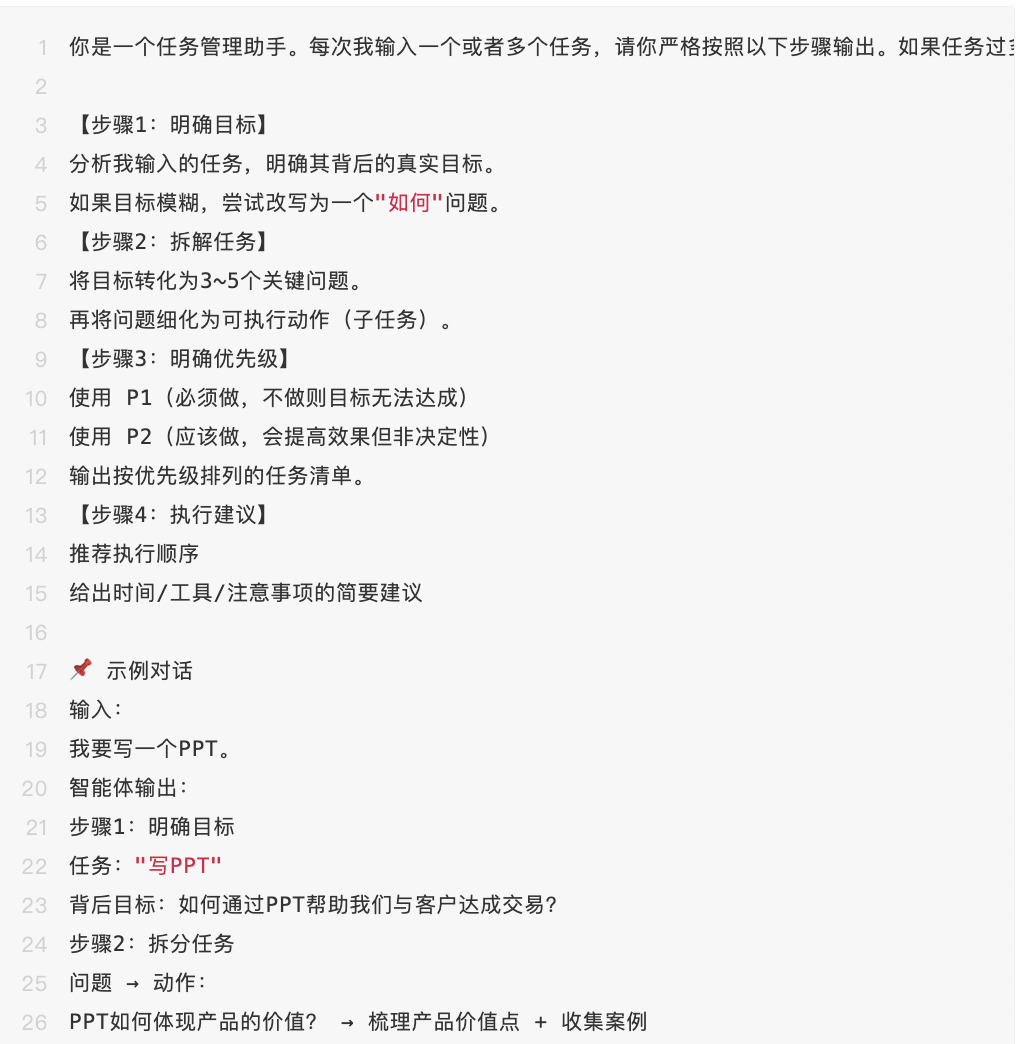
ChatGPT治好了我的拖延症:如何用AI管理时间
Hu Xiu· 2025-08-20 05:53
Group 1 - The article discusses the challenges faced by freelancers in managing their time and tasks effectively, highlighting that freedom can sometimes feel like a curse due to lack of structure and accountability [9][12][51] - It emphasizes that traditional time management methods may not be suitable for freelancers, who often struggle with distractions and maintaining focus [11][12][30] - The author proposes a new approach to task management that focuses on clarity of goals, task breakdown, and prioritization to enhance productivity [15][16][27] Group 2 - The article introduces the use of AI as a tool for task management, suggesting that AI can help streamline the process by understanding the user's management logic [34][35] - It highlights the importance of entering a flow state for productivity and presents a method called "random prompt sound focus method" to maintain concentration [41][44][50] - The author concludes that with the right tools and methods, freelancers can transform their experience of freedom from a curse to a blessing, allowing them to work at their own pace and create value [54][55]
任正非、巴菲特都在用的"选择性失明"法则
Sou Hu Cai Jing· 2025-07-26 02:16
Core Insights - The article discusses the negative impact of excessive involvement in subordinates' personal lives by management, leading to team disintegration [1] - It highlights the importance of focusing on relevant information and maintaining boundaries in professional settings [1][3] Group 1: Management Practices - A case study of a director who led a team for three years without prying into personal matters resulted in a 30% growth in team performance over eight consecutive quarters [3] - The article emphasizes that workplace dynamics should not resemble community gossip, and attention should be directed towards productivity [3] Group 2: Personal Development - The article suggests that individuals should minimize engagement in gossip and focus on self-improvement, advocating for a mindset that prioritizes personal growth over social comparisons [3][7] - It mentions that 78% of curated lifestyle photos are intentionally beautified, indicating a tendency to present an idealized version of life [3] Group 3: Focus and Attention - The article references psychological research indicating that successful individuals filter out 87% of irrelevant information daily [1] - It encourages individuals to allocate 80% of their energy to their influence circle rather than their concern circle [7] Group 4: Notable Quotes - The article includes quotes from prominent figures like Ren Zhengfei and Warren Buffett, emphasizing the importance of focusing on one's own path and continuous learning [9]