流动性交易

Search documents
加拿大皇家银行财富管理亚洲高级策略师段乃榕:黄金交易波动将持续 央行购金为金价提供长期支撑
2 1 Shi Ji Jing Ji Bao Dao· 2026-04-01 01:08
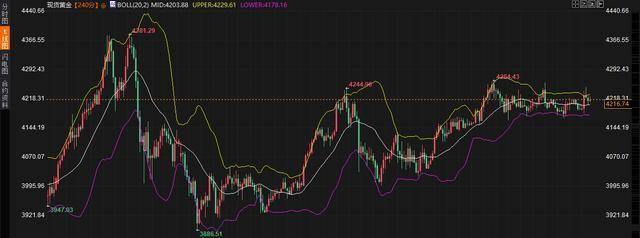
Core Viewpoint - The international precious metals market is experiencing a complex pricing shift from "geopolitical risk" to "liquidity trading," with significant volatility in gold and silver prices observed in Q1 2026 [1][10]. Group 1: Price Volatility and Influencing Factors - As of March 31, 2026, gold prices opened at approximately $4,538 per ounce, while silver prices were around $69.35 per ounce, reflecting a notable decline from recent highs [1][11]. - Gold and silver futures have seen declines of approximately 13% and 24% respectively over the past month, indicating that safe-haven sentiment has not translated linearly into price increases due to a stronger dollar and rising interest rate expectations [1][11]. - A record outflow of $11 billion from commodity ETFs has been reported since March, with over $7 billion redeemed from gold ETFs and about $1.4 billion from silver ETFs [1][11]. Group 2: Liquidity Impact and Market Dynamics - The primary driver of recent price fluctuations in precious metals is liquidity impact, with speculative and leveraged funds rapidly exiting the market [2][13]. - The trading volume of gold ETFs surged threefold and silver ETFs increased ninefold in the first two months of 2026 compared to the average in 2025, highlighting the presence of crowded trades [2][14]. - Asian investors are observed to be selling gold and silver to meet liquidity needs, contributing to short-term price volatility [3][15]. Group 3: Long-term Support and Central Bank Purchases - Despite recent volatility, central bank purchases are expected to provide long-term support for gold prices, with a reported net purchase of 863 tons globally in 2025 [12][17]. - Emerging market central banks, particularly in Poland and China, are increasing their gold holdings as part of a de-dollarization trend, which is expected to underpin gold prices in the long run [12][18]. Group 4: Investment Strategies and Price Predictions - For investors looking to enter the market, a buying range of $4,200 to $4,400 per ounce for gold is suggested, with resistance anticipated around $4,900 [12][21]. - The overall market is expected to exhibit more wave trading characteristics this year, with a target price for gold set at around $5,000 and trading expected to range between $4,500 and $5,500 [21].


美联储降息后,美元美债齐跌,黄金也不涨,市场为什么全乱了?
Sou Hu Cai Jing· 2025-12-14 04:41
Group 1 - The Federal Reserve has initiated a significant operation by starting the purchase of Treasury bills, injecting nearly $40 billion into the banking system, which has altered short-term liquidity and caused short-term interest rates to decline sharply [1] - The bond market has experienced a "bull steepening" of the yield curve, with two-year rates dropping more significantly than ten-year rates, indicating a shift from "expected trading" to "liquidity trading" [1] - The dollar's weakness is attributed to the erosion of interest rate differentials, as short-term rates decline, reducing the dollar's attractiveness against the euro and yen, with a critical technical level at 98.50 [5] Group 2 - Gold prices have declined due to two short-term factors: profit-taking after the anticipated rate cuts and a mismatch in market reactions, as liquidity injections are not driven by fears of economic collapse [7][9] - The long-term support for gold remains intact, with nominal and real interest rates declining, which lowers the opportunity cost of holding non-yielding assets, while geopolitical tensions continue to support gold's underlying logic [9] - The recent market dislocation serves as a reminder for both policymakers and the market, highlighting the risks associated with unconventional operations and the need for time to adapt to changes in liquidity [15][16]