
消费市场潜力

Search documents
中国人口是美国的几倍,为什么消费力却比不过?内行人道出了内情
Sou Hu Cai Jing· 2026-01-12 22:48
Core Insights - The disparity between China's consumption potential and actual performance raises concerns, as the total consumption amount is less than half of that of the United States despite having a population four times larger [1] Group 1: Economic Factors - High housing prices significantly constrain consumer spending, with individuals in major cities allocating a large portion of their income to mortgage payments, leaving little for discretionary spending [3] - The ingrained savings habit among Chinese consumers, driven by a traditional mindset of caution and uncertainty about the future, leads to lower overall consumption levels [3][4] - Income distribution inequality limits the size of the consumer base, as a relatively small proportion of the population belongs to the middle class, which is a key driver of consumption [4] Group 2: Social and Cultural Influences - The heavy burden of education and healthcare costs diverts funds that could otherwise be used for consumption, with families facing significant financial pressure from these areas [6] - Urban-rural income disparity remains a critical issue, as rural populations have significantly lower average incomes, limiting their consumption capacity [7] - Differences in consumption attitudes between Chinese and American consumers affect spending behavior, with Chinese consumers focusing more on savings and investments rather than immediate consumption [4][7] Group 3: Market Dynamics - The structure of household debt in China is primarily focused on mortgages, while American households also engage in consumer loans, leading to different consumption patterns [7] - The investment mindset in China tends to favor real estate and stocks, while American consumers invest in experiences and quality of life improvements, impacting overall consumption [7] - Young consumers in China are beginning to shift their spending habits towards valuing quality of life, which could influence future consumption trends [8][10] Group 4: Policy and Future Outlook - Addressing the issue of insufficient consumption requires comprehensive efforts, including stabilizing housing prices, improving social security systems, and reducing income inequality [10] - Positive signals are emerging, such as decreasing housing expectations and government initiatives to stimulate domestic demand, which could potentially enhance consumer spending [10] - The potential for China's consumption market to drive economic growth is significant, contingent upon releasing suppressed consumer demand and changing long-standing cultural habits [12]

遇见进博会丨新老朋友共赢未来
Xin Hua She· 2025-11-07 12:46
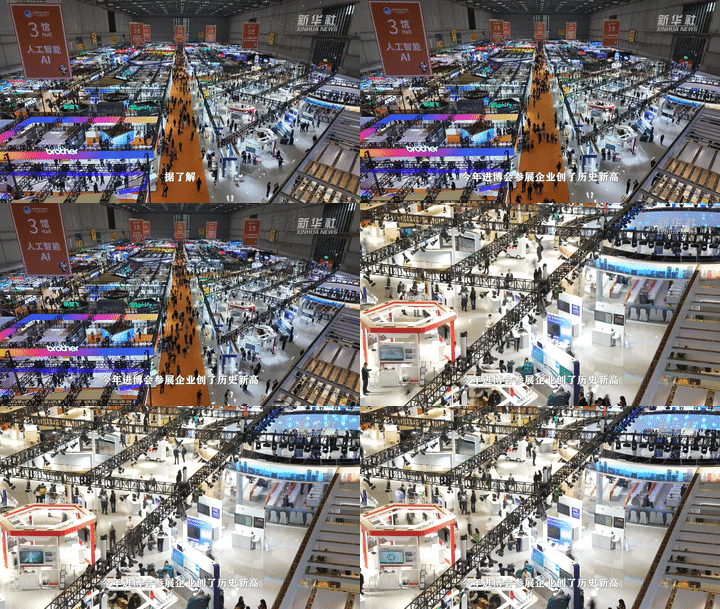
Group 1 - The number of participating companies at this year's China International Import Expo (CIIE) has reached a historical high, showcasing both long-time participants and new entrants [1] - Innovative products are continuously emerging at the CIIE, indicating that China's large market is gradually becoming a global testing ground for innovation, profitability, and application [3] - The "silver economy" driven by an aging population, China's dual carbon goals in response to climate change, ongoing improvements in the business environment, and the vast potential of a 1.4 billion consumer market are paving the way for corporate development [5] Group 2 - Established companies are deepening their engagement while new partners are actively joining, exploring business opportunities and collaborating for development at the CIIE and within the Chinese market [7]
聚焦进博会|中国消费市场潜力无限,欧洲企业承诺加大投入
Di Yi Cai Jing· 2025-11-05 15:54
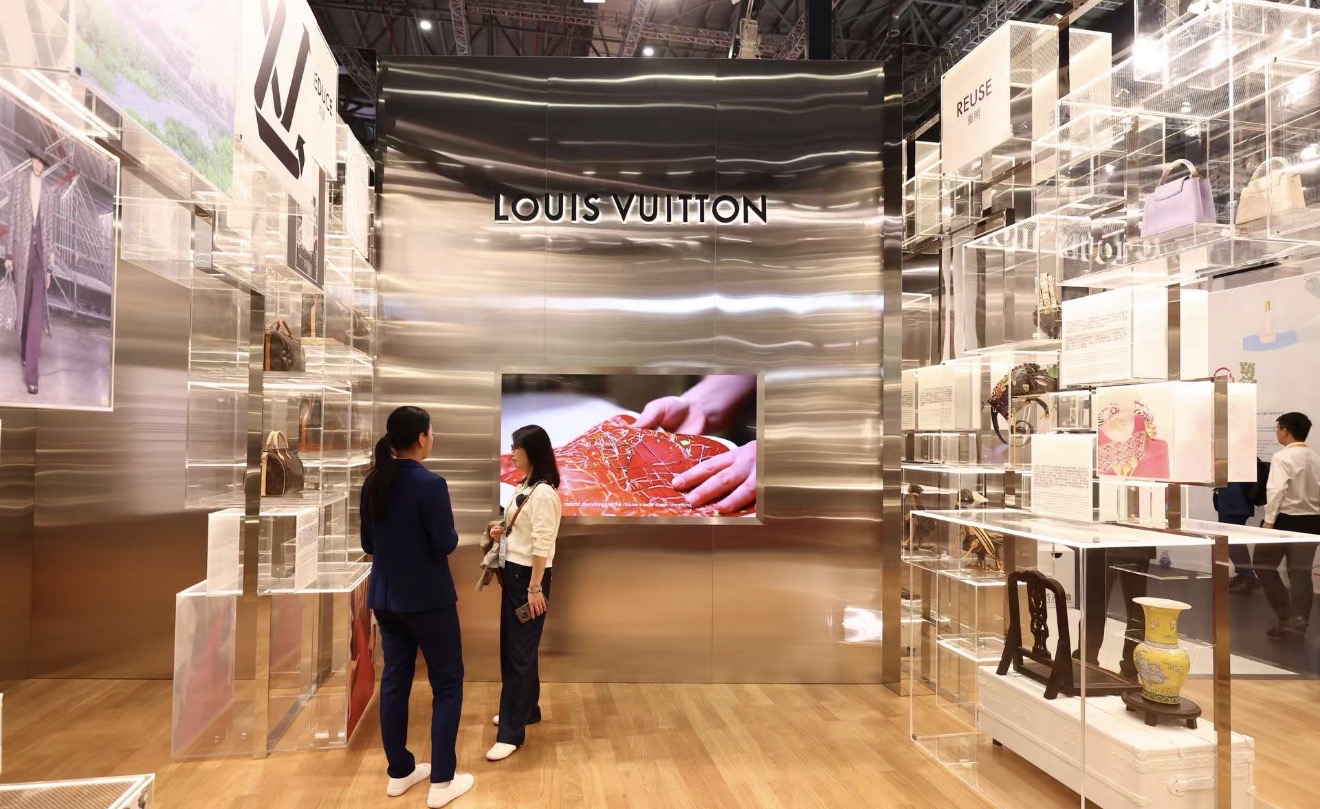
Group 1: Market Opportunities - The China International Import Expo (CIIE) serves as a platform for multinational companies to observe trends in the Chinese market and recognize the growing opportunities in the consumer sector [1][9] - European companies participating in the expo express that the Chinese market is increasingly opening up, providing growth opportunities for consumer brands [1][3] Group 2: Emerging Consumer Demographics - The rise of a new generation of consumers in China is noted, with companies like LVMH emphasizing the importance of understanding the consumption habits and needs of younger demographics [3] - LVMH has increased investments in e-commerce and launched product lines that incorporate local cultural elements to attract young consumers [3] Group 3: Investment in Technology and Innovation - L'Oréal has significantly invested in the Chinese market, particularly in the tech beauty sector, including the establishment of a smart operations center in Suzhou [5] - The company is also collaborating with Fudan University to create a "Skin Science Joint Laboratory," aiming to bridge the gap between beauty and healthcare [5] Group 4: Emerging Industries as Investment Destinations - Stuttgart's mayor highlights the expo as a platform for German companies to enter the Chinese market, particularly in advanced sectors like quantum computing and life sciences [6] - Medical device companies, such as Meidrix, see significant potential in China's sports medicine and rehabilitation market, aiming to introduce more health products through the expo [7] Group 5: Bilateral Investment Trends - The expo reflects the ongoing trend of bilateral investments between China and Germany, with many Chinese companies acquiring German firms and vice versa [9] - The continued openness of China is viewed as a win-win situation, encouraging long-term investment from German companies [9]
决胜“十四五” 打好收官战 | 加力稳外资!我国全力打造全球投资强“磁场”
Xin Hua She· 2025-08-05 08:08
Core Viewpoint - China is actively enhancing its attractiveness to foreign investment, achieving significant milestones in foreign capital absorption and establishing itself as a global investment hub [1][2][3] Group 1: Foreign Investment Growth - Since the beginning of the 14th Five-Year Plan, China has absorbed over 700 billion USD in foreign investment, surpassing its target six months ahead of schedule [1] - In the first half of this year, 30,014 new foreign-invested enterprises were established, marking an 11.7% year-on-year increase [2] - By the end of June, the total number of newly established foreign enterprises reached 229,000, an increase of 25,000 compared to the 13th Five-Year Plan period [2] Group 2: Investment Structure Optimization - High-tech industries attracted 127.87 billion RMB in actual foreign investment in the first half of this year, with significant growth in sectors such as e-commerce services (127.1%), chemical pharmaceuticals (53%), and aerospace manufacturing (36.2%) [4] - By 2024, the proportion of foreign investment in high-tech industries is expected to reach 34.6%, an increase of 6 percentage points from 2020 [4] Group 3: Policy Support and Business Environment - The Chinese government has implemented a series of policies to stabilize foreign investment, including the "20 measures to stabilize foreign investment" and the establishment of a foreign investment roundtable meeting system [2][7] - The negative list for foreign investment access has been continuously reduced, with all restrictions in the manufacturing sector eliminated [7] - The investment environment is characterized by a market-oriented, legal, and international approach, enhancing the speed and quality of service for foreign enterprises [7] Group 4: Multinational Companies' Commitment - Multinational companies are increasingly viewing China as an ideal investment destination, citing its key position in global supply chains and market potential as core drivers for continued investment [2][6] - Research funding from multinational companies in China has increased by 86.5% from 2013 to 2023, indicating a shift towards innovation-driven investment [6]