消费者隐私保护

Search documents
优衣库被曝偷拍,“防盗并未给侵权提供正当性依据”
2 1 Shi Ji Jing Ji Bao Dao· 2025-12-23 10:54
Core Viewpoint - Uniqlo has been reported to engage in "surveillance" of customers in some stores under the pretext of theft prevention, leading to consumer discomfort and public outcry on social media [1][5] Group 1: Legal and Ethical Implications - The act of tracking specific customers without consent may violate consumer privacy rights and personal information rights, distinguishing between "legal monitoring" and "excessive surveillance" [3][4] - If the surveillance is deemed excessive and infringes on rights, the company may be held liable for the actions of its management, which reflects the company's intent [3][4] - Employees have the right to refuse to execute unlawful directives, as engaging in such surveillance could lead to shared liability for "joint infringement" [4] Group 2: Internal Practices and Consumer Impact - The photos taken during these surveillance activities are reportedly shared internally, referred to as "sending signals," which could further infringe on the rights of those photographed [5] - Uniqlo's brand, known for its "high cost-performance" positioning, faces potential backlash in the Chinese market, which is crucial for its revenue, especially as sales in mainland China have seen a decline [5][6] - The company is advised to adopt alternative theft prevention measures, such as electronic tags and professional security personnel, while ensuring that monitoring practices comply with legal standards [6]


陷“偷拍防盗”风波背后 优衣库在华业绩现“双降”
Xin Jing Bao· 2025-12-22 12:33
Group 1 - Uniqlo has been accused of secretly filming customers under the pretext of theft prevention, leading to discussions about consumer privacy and corporate management boundaries [1] - If the allegations are true, Uniqlo's actions may constitute an infringement of consumer rights, as consumers have the right to personal dignity and protection of personal information [1] - The company has experienced a decline in its competitive advantage in the Chinese market due to intensified competition and changing consumer attitudes [1] Group 2 - Fast Retailing Group reported a decline in revenue and operating profit for the Greater China region in the fiscal year 2025, with revenue falling to 650.2 billion yen (approximately 4% decrease) and operating profit down 12.5% to 89.9 billion yen [2] - The Greater China region, previously a key growth driver, has seen a reversal in revenue and profit trends, reflecting pressures from market competition, rising costs, and weakening demand [2] - Uniqlo's market share in the Greater China region remains significant, accounting for about 19% of the group's total revenue, surpassing North America (approximately 8%) and Europe (approximately 10.9%) [2] Group 3 - As of August 2024, Uniqlo had 926 stores in mainland China, which is projected to decrease to 902 stores by August 2025 [3]
织密消费者隐私“防护网” 夯实数字金融发展根基
Zheng Quan Ri Bao· 2025-11-30 15:29
Core Viewpoint - Digital finance, leveraging advanced technologies like big data, AI, cloud computing, and blockchain, is enhancing the efficiency, accessibility, and inclusiveness of financial services. However, the collection and utilization of sensitive consumer information pose significant privacy risks, necessitating robust privacy protection measures for sustainable development in the sector [1][2]. Group 1: Privacy Protection Framework - China has established a preliminary legal framework for privacy protection in digital finance, providing institutional compliance for the sector [1]. - To strengthen consumer privacy protection, collaboration among various stakeholders is essential, including regulatory bodies, financial institutions, and technology companies [1][2]. Group 2: Responsibilities of Stakeholders - Financial institutions and tech companies must prioritize consumer privacy while pursuing technological innovation and commercial interests, enhancing internal data governance and employing advanced encryption and anonymization techniques [2]. - Industry associations should promote self-regulation by creating industry agreements and conducting training to elevate privacy protection awareness and capabilities among members [2]. Group 3: Consumer Awareness - Consumers are encouraged to enhance their privacy protection awareness and skills, familiarize themselves with relevant laws, and exercise caution when authorizing personal information [2]. - The emphasis on tightening privacy protection is crucial for ensuring that technological innovations in digital finance operate within compliant frameworks, ultimately benefiting the real economy and meeting the growing needs of the public [2].
迪卡侬回应“试衣间门缝惊现摄像头”:现场复核确认仅拍通道
Nan Fang Du Shi Bao· 2025-07-18 03:26
Core Viewpoint - The incident regarding a camera found in the fitting room of Decathlon's Hefei store has raised concerns about consumer privacy, prompting the company to respond and clarify the situation [1][2]. Group 1: Company Response - A Decathlon representative stated that the camera is fixed and only points towards the emergency exit, used for public area safety management, with no remote control or zoom capabilities [1]. - The company confirmed that the camera's coverage is limited to the passageway and does not capture the fitting room area [1]. - In response to consumer feedback, Decathlon has made immediate improvements to the fitting room and camera setup, including adding an external black rubber shell to the camera to ensure it only focuses on the safety exit [1]. Group 2: Consumer Concerns - A social media post highlighted that a significant gap between the fitting room door and the ceiling allowed visibility of a camera positioned above the fitting room corridor, raising alarms about potential privacy violations [2]. - The post sparked widespread discussion among netizens, many of whom expressed concerns about the risk of personal privacy exposure [2].
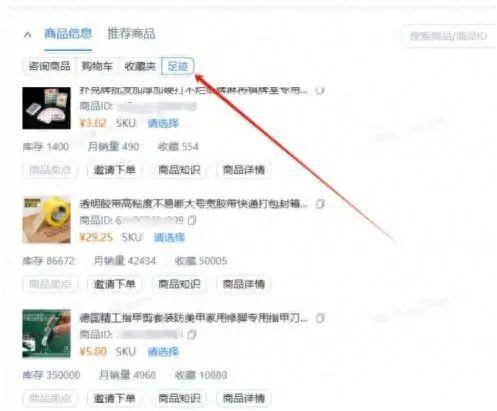
商家可查看买家浏览记录?淘宝客服回应
Sou Hu Cai Jing· 2025-06-04 10:27
Core Viewpoint - Recent reports suggest that Taobao sellers may have access to buyers' browsing history across different stores, raising concerns about privacy and data security [1][3]. Group 1: Seller Access to Browsing History - A user reported that a Taobao seller provided screenshots of her browsing history, including items from other stores, during a conversation about a product issue [1][3]. - Some sellers claim that they can only see browsing history related to their own products, while others, particularly those in the "Tao Factory," can view browsing history of all products within that platform [3][4]. - A Taobao customer service representative confirmed that sellers can only view browsing history of their own products for the past 30 days, and any access beyond that would be considered a privacy violation [4]. Group 2: Privacy Concerns and Official Responses - The privacy of consumer information is regarded as a top priority by the platform, and sellers are not permitted to view any browsing history outside their own store [4]. - Alibaba has stated that sellers cannot access shopping cart information under any circumstances, addressing concerns raised by users about potential privacy breaches [4].