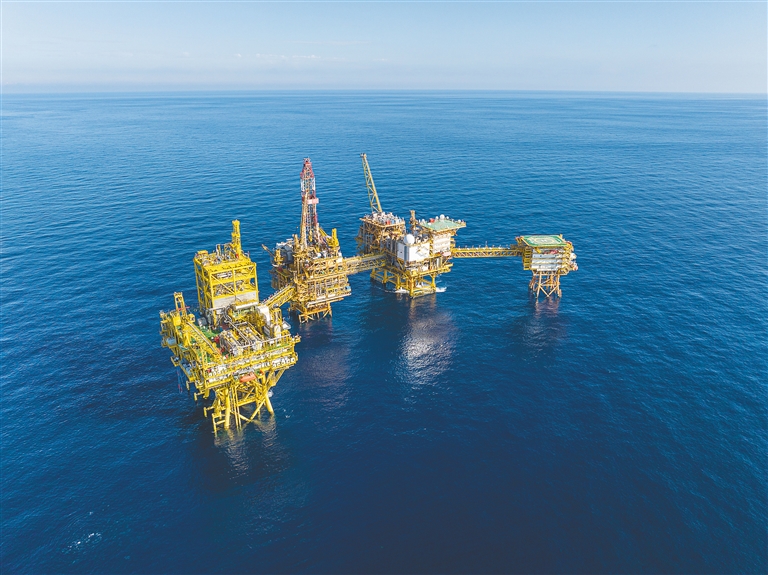
深海油气开发

Search documents
博迈科:看好FPSO订单持续释放-20260325
HTSC· 2026-03-25 13:40
Investment Rating - The report maintains a "Buy" rating for the company [8] Core Views - The company achieved a revenue of 1.9 billion RMB in 2025, a year-on-year decrease of 28.02%, with a net profit attributable to the parent company of 61.45 million RMB, down 38.89% year-on-year. The fourth quarter saw a revenue of 578 million RMB, a year-on-year decrease of 34.49% but a quarter-on-quarter increase of 106.48% [1] - The company's net profit for 2025 was below previous expectations due to asset impairment related to a Russian LNG project. However, the outlook for deep-sea oil and gas development is expected to improve, benefiting the company as a leading FPSO topside module manufacturer [1][3] - The global FPSO market demand is anticipated to grow, with 4 FPSO orders expected in 2025 and 8 in 2026, driven by projects in South America and West Africa [3] Financial Performance - The company's gross margin for 2025 was 19.48%, an increase of 3.24 percentage points year-on-year, attributed to improved operational efficiency through an integrated management platform [2] - The company maintained a good control over expenses, with a period expense ratio of 6.70%, down 1.02 percentage points year-on-year [2] - The company has a robust order backlog, including contracts for FPSO projects in Suriname and Guyana, which is expected to support performance in 2026 [4] Strategic Partnerships - The company signed a cooperation agreement with SBM Offshore N.V. to explore potential collaboration in engineering design and general contracting, enhancing its position from subcontractor to strategic partner [5] Profit Forecast and Valuation - The company’s net profit forecasts for 2026 and 2027 are 149 million RMB and 330 million RMB, respectively, with an estimated net profit of 456 million RMB for 2028. The target price is set at 23.88 RMB, based on a 2.0 times PB valuation for 2026 [6]

博迈科(603727):看好FPSO订单持续释放
HTSC· 2026-03-25 08:09
Investment Rating - The report maintains a "Buy" rating for the company with a target price of RMB 23.88 [8]. Core Views - The company achieved a revenue of RMB 1.9 billion in 2025, a decrease of 28.02% year-on-year, with a net profit attributable to shareholders of RMB 61.45 million, down 38.89% year-on-year. The fourth quarter saw a revenue of RMB 578 million, with a year-on-year decline of 34.49% but a quarter-on-quarter increase of 106.48% [1][8]. - The company’s gross margin improved significantly to 19.48% in 2025, an increase of 3.24 percentage points year-on-year, attributed to the integration of construction and production management platforms that enhanced operational efficiency [2]. - The demand for FPSO (Floating Production Storage and Offloading) units is expected to rise due to ongoing high demand in deep-sea oil and gas development, driven by geopolitical tensions and the need for energy security [3]. - The company has a robust order backlog, including contracts for FPSO projects in Suriname and Guyana, which will support its performance in 2026 [4]. - A strategic partnership with SBM Offshore N.V. is expected to enhance the company's capabilities and allow it to participate in more high-end projects, capitalizing on the favorable market conditions for FPSO equipment [5]. Financial Forecasts and Valuation - The company’s net profit forecasts for 2026 and 2027 are RMB 149 million and RMB 330 million, respectively, with an expected net profit of RMB 456 million in 2028. The corresponding book values per share (BPS) are projected to be RMB 11.94, RMB 13.11, and RMB 14.73 for the years 2026, 2027, and 2028 [6]. - The report assigns a price-to-book (PB) ratio of 2.0 for 2026, reflecting the company's position as a leading FPSO module manufacturer benefiting from increasing demand in deep-sea oil and gas development [6].
媒体报道︱深海油气成我油气产量重要增长极
国家能源局· 2026-03-13 04:50
Core Viewpoint - The recent data from China's offshore oil and gas sector indicates significant potential in deep-sea oil and gas production, with projections for substantial increases in output by 2025 [2][3]. Group 1: Production Projections - By 2025, China's largest offshore gas field, "Deep Sea No. 1," is expected to exceed an oil equivalent production of 4.5 million tons, comparable to medium-sized onshore oil fields, with advanced production operation and maintenance technologies [2]. - The cumulative oil and gas production from the offshore gas fields around Hainan Island, including "Deep Sea No. 1," is projected to surpass 10 million tons of oil equivalent by 2025, doubling the production compared to the end of the 13th Five-Year Plan, with deep-sea fields contributing over 90% of the new production in the region [2]. - The Bohai Oilfield, China's largest offshore oil field, is anticipated to achieve a cumulative oil and gas production of over 40 million tons of oil equivalent by 2025, marking a historical high [2]. Group 2: Exploration and Development Efforts - According to the "China Marine Energy Development Report 2025," China's offshore oil production is expected to reach approximately 6.8 million tons, reflecting a year-on-year increase of about 250,000 tons, accounting for 80% of the national oil production increase [2]. - As of the end of Q3 2025, China has made five new discoveries in its maritime areas, successfully evaluated 22 oil and gas structures, and launched 11 new projects, indicating a robust exploration effort [2]. - Significant breakthroughs have been achieved in the Beibu Gulf Basin, including the discovery of China's first deep and ultra-deep clastic rock oil field with a billion-ton capacity, the Huizhou 19-6 oil field [2]. Group 3: Technological Advancements - "Deep Sea No. 1" is noted for being the most challenging offshore gas field developed by China, with a maximum operational water depth exceeding 1,500 meters and a geological temperature reaching 138 degrees Celsius, boasting proven geological reserves of over 150 billion cubic meters of natural gas [3]. - The field's core facilities, including the "Deep Sea No. 1" energy station and the "Four Stars in a Row" platform group, possess the capability for deep-sea oil and gas processing, enabling on-site separation and transportation of natural gas and crude oil [3]. - Daily production from "Deep Sea No. 1" includes 15 million cubic meters of natural gas and over 1,600 tons of condensate oil, with plans to achieve an annual natural gas production of 5 billion cubic meters by 2025, surpassing the designed capacity peak [3].


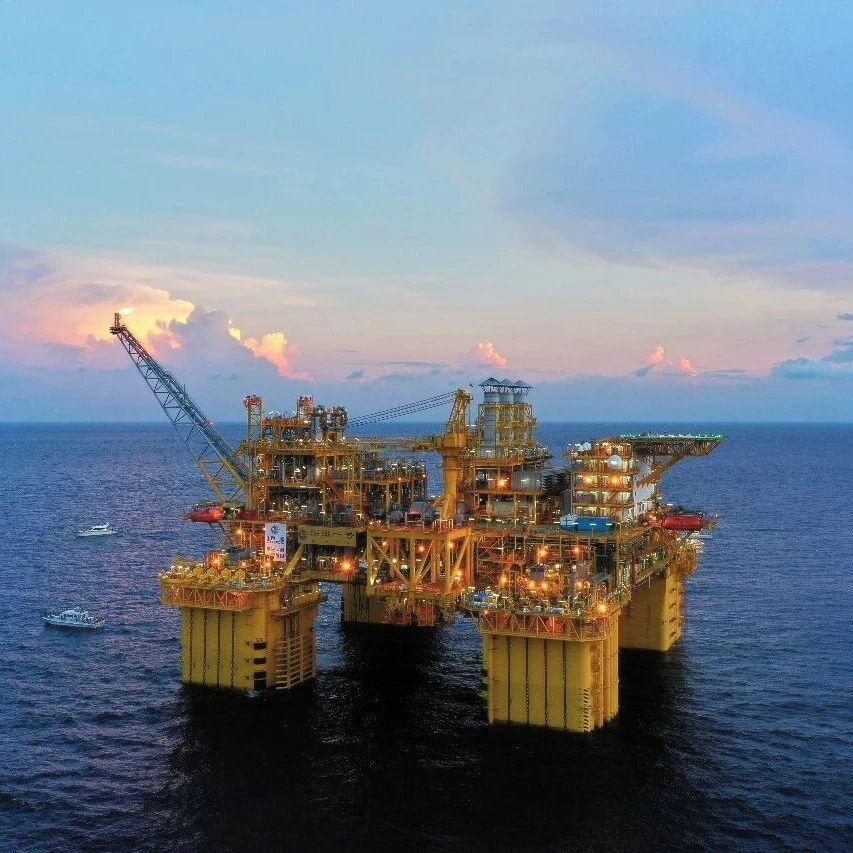
中集集团午后涨超9% 逼近历史前高 公司为海工建造总包龙头
Zhi Tong Cai Jing· 2026-02-24 06:16
Core Viewpoint - CIMC Group (000039) (02039) has seen a significant stock price increase, reaching a high of 11.45 HKD, approaching its historical peak of 11.651 HKD, driven by positive developments in its offshore engineering segment [1] Company Summary - CIMC Group's offshore engineering segment holds orders worth approximately 5.55 billion USD, with production scheduled until 2027/2028 [1] - The company anticipates a substantial improvement in profitability for its offshore business by 2025 [1] Industry Summary - According to EMA, the global upstream oil and gas sector is projected to invest 126 billion USD from 2025 to 2029, with over 70% of this funding directed towards the construction of facilities, particularly FPSOs [1] - Haitong Securities has indicated that the structural shift towards deep-sea oil and gas development presents significant opportunities for FPSOs as core production facilities [1] - Chinese FPSO supply chain companies are expected to benefit greatly from the current investment boom in deep-sea projects due to ongoing upgrades in technology and manufacturing capabilities [1]

“深海一号”气田产量达到陆地中型油田规模
Ren Min Ri Bao Hai Wai Ban· 2026-01-04 01:10
Core Insights - The "Deep Sea No. 1" gas field, China's largest offshore gas field, has recently completed its 100th oil export since production began, indicating significant operational milestones for the company [1] - By 2025, the total oil and gas production from the "Deep Sea No. 1" field is expected to exceed 4.5 million tons of oil equivalent, comparable to the output of a medium-sized onshore oil field [1] Production and Capacity - "Deep Sea No. 1" is characterized by the deepest operational water depth of over 1,500 meters and the highest formation temperature of 138 degrees Celsius, making it the most challenging offshore gas field to explore and develop in China [1] - The gas field has proven geological reserves of over 150 billion cubic meters of natural gas and is being developed in two phases [1] - Currently, "Deep Sea No. 1" produces 15 million cubic meters of natural gas and over 1,600 tons of condensate oil daily [1] Regional Impact - By 2025, the entire offshore gas field cluster around Hainan Island, including "Deep Sea No. 1," is projected to cumulatively produce over 10 million tons of oil equivalent, effectively doubling the production compared to the end of the 13th Five-Year Plan [1] - Deep sea oil and gas production is expected to be a significant growth driver, accounting for over 90% of the region's new oil and gas output [1]
“深海一号”产量达中型油田规模
Xin Lang Cai Jing· 2026-01-03 22:19
Core Viewpoint - China's largest offshore gas field, "Deep Sea No. 1," has successfully completed its 100th oil shipment since production began, with total oil and gas output expected to exceed 4.5 million tons of oil equivalent by 2025, comparable to the output of a medium-sized onshore oil field [1] Group 1: Production and Capacity - "Deep Sea No. 1" is the most challenging offshore gas field developed independently by China, featuring the deepest operational water depth exceeding 1,500 meters and the highest formation temperature reaching 138°C [1] - The gas field has proven geological reserves of over 150 billion cubic meters of natural gas and is being developed in two phases, allowing for the separation and export of natural gas and crude oil on-site [1] - Currently, "Deep Sea No. 1" produces 15 million cubic meters of natural gas and over 1,600 tons of condensate oil daily [1] Group 2: Technological Advancements - After more than four years of exploration, the operational team of "Deep Sea No. 1" has established a complete technical system for the production and operation of ultra-deepwater gas fields, indicating that China's deep-sea gas field production and operation technology has reached a world-class level [1] Group 3: Regional Impact - By 2025, the cumulative oil and gas production of the offshore gas field cluster around Hainan Island, including "Deep Sea No. 1," is expected to exceed 10 million tons of oil equivalent, doubling the output compared to the end of the 13th Five-Year Plan [1] - Deep-sea oil and gas is becoming a significant growth driver, accounting for over 90% of the region's new oil and gas production [1]
中国海上最大气田产量达到陆地中型油田规模
Zhong Guo Xin Wen Wang· 2026-01-02 05:49
Group 1 - The core point of the article is that China National Offshore Oil Corporation (CNOOC) has announced the successful production milestone of its largest offshore gas field, "Deep Sea No. 1," which has reached an oil equivalent production scale comparable to that of medium-sized onshore oil fields [1][3] - "Deep Sea No. 1" is characterized as the most challenging offshore gas field in China, with the deepest operational water depth exceeding 1500 meters and the highest formation temperature reaching 138 degrees Celsius. The proven geological reserves of natural gas exceed 150 billion cubic meters [1][3] - The gas field has achieved a daily output of 15 million cubic meters of natural gas and over 1,600 tons of condensate oil, with a unique oil storage and transportation system utilizing shuttle tankers for export [3] Group 2 - CNOOC projects that the cumulative oil and gas production from the Hainan Island offshore gas field cluster, including "Deep Sea No. 1," will exceed 10 million tons of oil equivalent by 2025, effectively doubling the production compared to the end of the 13th Five-Year Plan [3] - Deepwater oil and gas production is expected to become a significant growth driver, accounting for over 90% of the region's new oil and gas output [3] - The company plans to widely promote the production and operational technology system developed from "Deep Sea No. 1" to provide more robust energy security for national economic and social development [3]
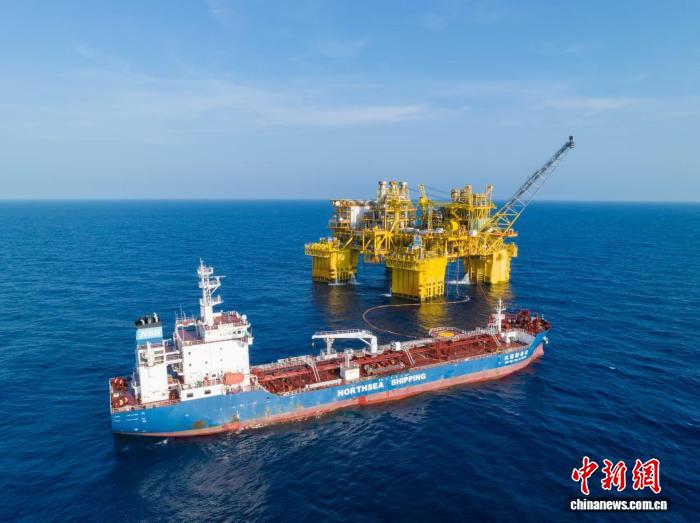
“深海一号”产量达到陆地中型油田规模
Xin Hua Wang· 2026-01-02 03:08
Core Insights - China National Offshore Oil Corporation (CNOOC) announced the completion of the 100th oil export from the "Deep Sea No. 1" gas field, which is the largest offshore gas field in China, with a total oil and gas production expected to exceed 4.5 million tons of oil equivalent by 2025 [1] Group 1: Project Overview - "Deep Sea No. 1" is the most challenging offshore gas field in China, featuring the deepest operational water depth exceeding 1,500 meters and the highest formation temperature reaching 138 degrees Celsius [1] - The gas field has proven geological reserves of over 150 billion cubic meters of natural gas and is developed in two phases [1] Group 2: Production Capacity - Currently, "Deep Sea No. 1" produces 15 million cubic meters of natural gas and over 1,600 tons of condensate oil daily [1] - Some condensate oil is stored in the platform's four pillars and exported via shuttle tankers once a certain volume is reached, which is one of the three world-first technologies of the "Deep Sea No. 1" energy station [1] Group 3: Future Plans - CNOOC plans to widely promote the production and operation technology system developed from "Deep Sea No. 1" to provide more robust energy support for national economic and social development [1]
看好降息周期下FPSO订单加速释放
2025-11-16 15:36
Summary of Conference Call Notes Industry Overview - The deep-sea oil and gas development is becoming increasingly cost-competitive, particularly in South America, which is driving a global shift towards deep-sea exploration. By 2024, deep-sea development will account for only 7% of total oil and gas development, yet over 70% of new reserves discovered in the past decade are located in deep-sea areas [1][3]. Key Points and Arguments - **FPSO Importance**: Floating Production Storage and Offloading (FPSO) units are essential for deep-sea oil and gas extraction, providing initial processing capabilities for resources far from shore. Large FPSOs are particularly advantageous in low-cost extraction scenarios in Brazil and Guyana, marking a strategic opportunity for the industry [1][4][5]. - **Impact of Interest Rates**: High-interest rates previously compressed FPSO contractors' profit margins and delayed order releases. The initiation of a Federal Reserve rate-cutting cycle is expected to improve financing conditions, potentially accelerating FPSO order releases and activating projects that have already passed Final Investment Decision (FID) [1][6]. - **Shift in Global Industry Focus**: The global deep-sea oil and gas industry is shifting its focus to Southeast Asia and South America, leading to a supply chain transition towards the Asia-Pacific region. Chinese companies are benefiting from upgrades in technology and manufacturing capabilities, allowing them to handle more complex high-end equipment manufacturing projects [1][7][8]. Beneficiary Companies - Companies expected to benefit from the acceleration of FPSO orders include: - **China International Marine Containers (CIMC)**: High proportion of offshore business, expected to break even in 2025 and achieve a profit increase of approximately 1 billion in 2026 [1][9]. - **China Shipbuilding Industry Corporation**: Responsible for hull construction in some IPSO projects [2][9]. - **Bohai Shipbuilding Heavy Industry**: Focused on the construction of upper modules [2][9]. - **Neway Valve**: Expected to benefit as a white horse company in the IPSO order release [2][9]. - Additionally, equipment suppliers related to FPSO, such as leading oil tree companies, are also expected to benefit from the release of orders [2][9]. Additional Insights - The transition of the global oil and gas development structure towards deep-sea operations is primarily driven by cost changes, with deep-sea oil and gas costs in South America now lower than some high-cost onshore regions, such as Canadian oil sands and North American shale gas [3]. - The strategic importance of FPSOs is underscored by their ability to economically store and process resources in deep-sea environments, where direct pipeline transport is not feasible [5]. - The technological advancements and manufacturing upgrades in Chinese enterprises position them favorably in the current offshore investment cycle, enhancing their profitability and ability to capture growth opportunities [8].
年产气量超45亿立方米“深海一号”系我国产量最大的海上气田
Hai Nan Ri Bao· 2025-11-05 01:43
Core Insights - "Deep Sea No. 1" is China's largest offshore gas field, with an annual production capacity exceeding 4.5 billion cubic meters [5][8] - The project has achieved a daily gas production of up to 15 million cubic meters, marking a significant milestone in deep-sea oil and gas development in China [6][8] Production Capacity - The "Deep Sea No. 1" gas field has a total of 23 underwater gas wells that are now operational, contributing to its status as the largest offshore gas field in China [5][6] - The gas produced is transported to various regions, including Hainan Free Trade Port and the Guangdong-Hong Kong-Macao Greater Bay Area, benefiting numerous households and industries [5][8] Technical Achievements - The project faced extreme geological conditions, with the highest formation temperature reaching 138 degrees Celsius and maximum pressure exceeding 69 MPa, presenting significant technical challenges [6][9] - "Deep Sea No. 1" has become the deepest and most challenging deep-water gas field developed independently in China, showcasing advanced technology and engineering capabilities [6][9] Innovative Development Model - The project utilized a pioneering development model combining underwater production systems, shallow water jacket platforms, and deep-water semi-submersible platforms, which is a first in the industry [7] - The infrastructure includes a vast network of underwater pipelines and platforms, spanning over 170 kilometers and operating at depths exceeding 1,500 meters [7][8] Future Prospects - The successful implementation of "Deep Sea No. 1" is expected to enhance the development of other complex deep-water oil and gas reserves, contributing to China's energy supply and supporting the transition to a greener energy structure [7][9]