
深港联动

Search documents
前海新增7家持牌机构 占全市新增总量6成
Nan Fang Du Shi Bao· 2025-12-15 23:13
Core Viewpoint - Qianhai is leveraging its position as a financial hub to attract foreign investment, particularly from Hong Kong, aiming for significant advancements in financial openness and resource aggregation by 2025 [2][3]. Group 1: Financial Institutions - Seven key licensed financial institutions have been established in Qianhai, accounting for 60% of the city's new additions, including banks, securities, and futures companies [3]. - Notable new entrants include Fubon Bank (Hong Kong) Shenzhen Branch, which is the first branch of Fubon Bank in mainland China, enhancing the international financial landscape in Qianhai [3]. Group 2: Insurance and Private Equity - Four insurance fund projects initiated by companies like Ping An and Taiping have been launched in Qianhai, representing 80% of the city's new insurance projects, with a total scale of 47.8 billion yuan [4]. - The newly established private equity and venture capital funds in Qianhai account for 30% of the city's total new additions, with a management scale of 40% [4]. Group 3: Financial Technology - Qianhai has established a financial technology research and development center by Future Asset Group, marking a significant step in the smart finance sector [5]. - Major financial institutions such as HSBC and East Asia Bank have set up fintech subsidiaries in Qianhai, facilitating deep integration between Hong Kong capital and mainland innovation [5]. Group 4: Policy and Ecosystem - A total of 518 financial institutions have settled in Qianhai, with foreign capital accounting for approximately 30%, creating a diverse financial ecosystem [6]. - The financing leasing sector has surpassed 250 billion yuan in asset scale, with significant projects like the leasing of China's first domestically produced C919 aircraft [6]. Group 5: Voices and Perspectives - Experts highlight that Qianhai's success in attracting quality financial resources is due to its integrated approach of policy foundation, Hong Kong-mainland collaboration, and industry-finance synergy [7]. - Qianhai is viewed as a practical policy environment that serves as a model for financial openness and a testing ground for RMB internationalization [7].


前海金融“强磁场”效应显现 新增持牌机构占全市六成
Nan Fang Du Shi Bao· 2025-12-15 14:47
Core Insights - Qianhai has emerged as a significant financial hub, attracting over 500 financial institutions, making it one of the highest concentrations of Hong Kong and foreign financial entities in China [1][3][8] - By 2025, Qianhai aims to deepen financial openness, focusing on high-quality financial resource aggregation and the construction of a distinctive financial ecosystem [1][3] Financial Institutions and Investments - Seven key licensed financial institutions have recently settled in Qianhai, including Fubon Bank (Hong Kong) and Huatai Securities, accounting for 60% of the city's new additions [3][4] - The total scale of four insurance fund projects initiated by companies like Ping An and Taiping in Qianhai reaches 47.8 billion yuan, representing 80% of the city's new insurance fund projects [4] Financial Technology Development - Qianhai has established a financial technology R&D center by Future Asset Group, indicating a strategic extension into smart finance [5] - Major financial institutions such as HSBC and East Asia Bank have set up fintech subsidiaries in Qianhai, enhancing the integration of Hong Kong capital with mainland tech innovation [5] Policy and Regulatory Framework - The implementation of the "30 Measures for Financial Support in Qianhai" has achieved over 90% execution, leading to six national firsts and eight initial results [7] - The establishment of the first foreign-controlled securities company in Qianhai reflects the region's commitment to innovative financial practices and deepening cross-border cooperation [7] Ecosystem and Collaboration - Qianhai has attracted 518 financial institutions, with about 30% being foreign, creating a symbiotic ecosystem that includes leading fintech companies and international insurance groups [8] - The integration of finance and industry in Qianhai is exemplified by the leasing of China's first domestically produced C919 aircraft, showcasing collaborative breakthroughs [8] Systematic Upgrades and Future Outlook - Qianhai's financial development has transitioned from isolated breakthroughs to systematic upgrades, focusing on institutional innovation and deepening Hong Kong-Shenzhen collaboration [9] - The region is positioned as a critical support for the high-quality development of Shenzhen and the new financial openness framework of the Guangdong-Hong Kong-Macao Greater Bay Area [9]
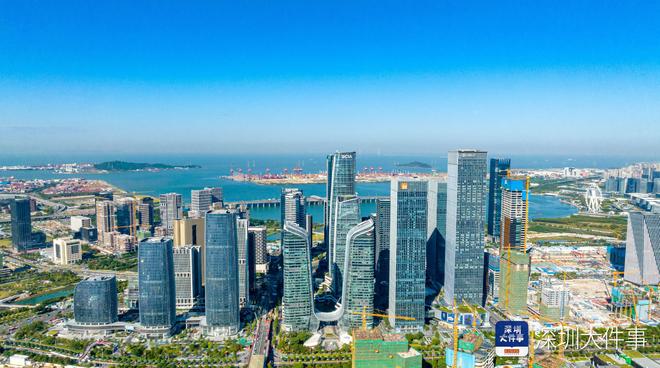
深圳推动深港两地文化产业重点领域提质增效
Zhong Guo Fa Zhan Wang· 2025-10-13 17:21
Core Viewpoint - The "Measures for Promoting High-Quality Development of the Cultural Industry" implemented by the Qianhai Authority aims to enhance cultural product supply, foster cultural exchange between Shenzhen and Hong Kong, and elevate cultural soft power through systematic support policies across 17 sectors including tax, film, performing arts, and cultural tourism [1] Tax Incentives and Consumer Boost - The Measures reduce tax burdens for cultural enterprises and talent, with eligible companies taxed at a reduced rate of 15% [2] - Hong Kong residents working in the Qianhai area will have their personal income tax burden exceeding that of Hong Kong exempted [2] - Support for eligible high-end and scarce foreign talents includes tax subsidies based on the tax difference between mainland China and Hong Kong [2] - The Measures encourage cultural consumption activities in A-level scenic spots and hotels, providing up to 1 million yuan annually for qualifying entities [2] - A budget of up to 5 million yuan is allocated annually for promotional measures like issuing consumption vouchers [2] Focus on Film, Animation, and Cultural IP - The Measures provide significant support for film projects, offering up to 300,000 yuan annually for eligible co-production projects between Shenzhen and Hong Kong [3] - Productions shot in Qianhai can receive an additional reward of 50,000 yuan [3] - In the animation and gaming sector, up to 300,000 yuan is available for hosting themed exhibitions and supporting game technology R&D [3] - The Measures also incentivize IP project incubation and transformation, with rewards of up to 200,000 yuan for qualifying enterprises [3] Promoting Cultural Export and Hong Kong Collaboration - The Measures support cultural enterprises going abroad, with annual funding of up to 300,000 yuan for eligible gaming companies and 100,000 yuan for advertising and micro-short film companies [4] - Cultural export service platforms will be established in Qianhai to assist companies with market research and legal consulting [4] - Support is also extended to Hong Kong performing arts groups, with up to 200,000 yuan available for eligible groups performing in Qianhai [4] Tourism Industry as a Key Link - The Measures provide a one-time reward of 150,000 yuan for travel agencies operating in Qianhai [5] - Support for developing boutique tourism routes between Shenzhen and Hong Kong includes up to 150,000 yuan annually for qualifying travel agencies [5] - Incentives are also available for organizing overseas tourism groups to Shenzhen and promoting inbound tourism products [5]
抱团出海+价值深耕,跨境电商加速迭代
2 1 Shi Ji Jing Ji Bao Dao· 2025-06-19 06:48
Core Insights - The future of cross-border e-commerce requires a shift from chasing explosive products to focusing on brand building and value creation [1][4] - The industry is transitioning from "individual breakthroughs" to "group collaboration" amidst increasing regulatory scrutiny in Southeast Asia and other regions [2][3] Group 1: Industry Trends - Cross-border e-commerce in China is evolving towards collaborative efforts, with the aim of becoming a leader in global trade [2] - The 2024 cross-border e-commerce import and export volume in Shenzhen is projected to reach 372 billion yuan, maintaining its position as the national leader for three consecutive years [3] - The overall cross-border e-commerce import and export scale in China is expected to reach approximately 2.71 trillion yuan in 2024, reflecting a year-on-year growth of 14% [4] Group 2: Market Dynamics - The focus of cross-border e-commerce is shifting from low-value products to high-value, branded goods, with platforms like Temu, Shein, and AliExpress leading this change [5][6] - The resilience of Chinese cross-border e-commerce is evident as companies adapt to rising prices due to tariffs, emphasizing brand value over mere pricing [6][7] - Companies are increasingly recognizing the importance of brand establishment, with successful brands showing faster growth compared to non-branded sellers [5][6] Group 3: Regional Collaboration - The collaboration between Shenzhen and Hong Kong is expected to create a new paradigm of "complementary advantages and mutual empowerment" in the cross-border e-commerce sector [3] - The establishment of the global cross-border e-commerce association aims to foster a new trade landscape, enhancing cooperation in talent, finance, and logistics [2][3]