
混合模式

Search documents
美团收购叮咚买菜:一场关于城市密度的并购
Jing Ji Guan Cha Wang· 2026-02-20 15:12
Core Insights - Meituan announced the acquisition of Dingdong Maicai's China business for approximately $717 million, marking a significant move in the instant retail sector [1][2] - The acquisition signals a shift in the industry towards consolidation, as various business models explored by entrepreneurs are being absorbed into platform-level infrastructure [2][13] - Instant retail is evolving from a startup-driven model to a platform-based infrastructure, focusing on time-sensitive consumer needs rather than just price and variety [2][23] Instant Retail Importance - Despite the maturity of e-commerce in China, there remains a significant portion of retail (approximately 73.9%) occurring in local offline settings, highlighting the ongoing relevance of physical retail [3][4] - Instant retail addresses the time-sensitive nature of consumer demand for everyday items, which traditional e-commerce struggles to fulfill promptly [4][5] Market Growth - The instant retail market in China is projected to reach 781 billion yuan in 2024, with a growth rate exceeding 20%, significantly outpacing traditional retail growth [5][6] - By 2026, the market is expected to surpass 1 trillion yuan, indicating a robust growth trajectory for instant retail [5] Consumer Behavior Changes - The value of consumer time is increasing, leading to a willingness to pay a premium for faster delivery, thus driving the growth of instant retail [7][8] - The evolution of consumer needs has led to a structural division in retail, with e-commerce focusing on planned purchases and instant retail catering to immediate needs [8][9] Evolution of Instant Retail - Instant retail has evolved through four stages: from the establishment of delivery networks via food delivery, to the integration of online and offline retail, followed by the rise of front warehouses, and now to a platform-based model [9][12] - The current phase emphasizes the integration of local stores and warehouses into a unified delivery system, expanding the range of products available for instant delivery [12][13] Competitive Landscape - The competition in instant retail is shifting from a focus on business models to a focus on order density within urban areas, where efficiency and speed are paramount [14][15] - Different operational models coexist, including platform connection models, self-operated front warehouse models, and hybrid models, each addressing the challenge of achieving high order density [15][16] Future Directions - The future of instant retail is likely to see a transition from traffic-based competition to density-based competition, emphasizing the importance of local network efficiency [19][20] - Instant retail may also blur the lines between e-commerce and local services, creating a unified consumption system based on time sensitivity [21][22] - Overall, the evolution of instant retail could redefine platform competition, focusing on who can effectively manage urban delivery networks rather than simply accumulating user numbers [22][24]


理想汽车春节后将推“门店合伙人”计划
Mei Ri Jing Ji Xin Wen· 2026-02-10 10:57
Group 1 - The core point of the article is that Li Auto plans to implement a "store partner" program after the 2026 Spring Festival to enhance store operational efficiency and market responsiveness [1] - The "store partner" program will grant store managers greater decision-making authority and optimize the assessment mechanism, transitioning from a single sales evaluation to a comprehensive evaluation system that includes sales, profit, and customer satisfaction [1] - Li Auto will also close some low-efficiency stores that were opened during the expansion phase, which is currently under evaluation [3] Group 2 - Other new energy vehicle brands, such as Tesla, Xpeng, and NIO, are also optimizing their channel layouts by closing underperforming stores [3][4] - The adjustment in channels is driven by cost pressures, with many new energy brands shifting from direct sales models to agency or dealer models to reduce operational costs [5] - Traditional automotive brands are also facing similar pressures and are exploring channel transformations, including the adoption of a mixed model that combines direct sales and dealer networks [6][7] Group 3 - The trend of channel adjustment indicates a convergence between traditional and new energy vehicle brands, with both adapting their store models based on resources and market demands [7] - The future channel model is expected to be a hybrid approach, featuring flagship stores, satellite stores, and temporary touchpoints to enhance efficiency and reduce costs [7] - The industry is likely to evolve from an integrated 4S store model to a more diversified operational model, with an increase in the total number of outlets while reducing the number of traditional 4S stores [7]


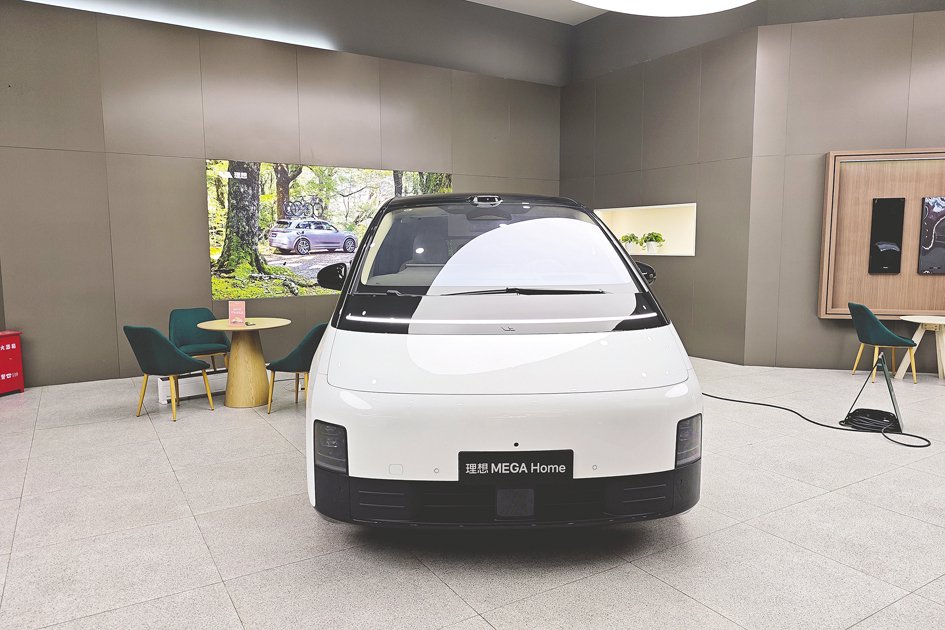
理想春节后将推“门店合伙人”计划!车企向渠道求效率 行业将逐步向“1+N”模式拓展
Mei Ri Jing Ji Xin Wen· 2026-02-10 07:14
Group 1 - The core point of the article is that Li Auto will implement a "store partner" program after the 2026 Spring Festival to enhance store operational efficiency and market responsiveness [2] - The "store partner" program will grant store managers greater decision-making authority and optimize the assessment mechanism, transitioning from a single sales-focused evaluation to a comprehensive evaluation system that includes sales, profit, and customer satisfaction [2] - Li Auto is also planning to close some low-efficiency stores that were opened during the expansion phase, which is currently under evaluation [2] Group 2 - New energy vehicle companies like Tesla, Xpeng, and NIO are also optimizing their channel layouts by closing underperforming stores, indicating a trend of channel contraction across the industry [3] - The closure of low-efficiency stores allows companies to reallocate resources to more promising areas, thereby enhancing overall operational efficiency and market competitiveness [3] - The adjustment in channels is partly due to the pressure on dealerships to achieve profitability, leading to some dealers exiting the market after failing to meet expectations [4] Group 3 - The shift in channel strategies includes moving from direct sales models to agency or dealership models to reduce operational costs [4][5] - Traditional automotive brands are also facing challenges and are exploring channel transformations, such as implementing "one-price" models and separating sales and delivery functions [6] - The industry is moving towards a mixed channel model, combining flagship stores, satellite stores, and temporary touchpoints to maximize efficiency and reduce costs [7]
Endowus报告:香港及新加坡两地47%投资者计划配置私募股权
智通财经网· 2025-11-19 08:44
Core Insights - The report reveals that private wealth investors in Hong Kong are more actively seeking alternative investment allocations compared to their counterparts in Singapore [1] - There is a shift towards personalized wealth strategies that align with life goals and planning, balancing returns, liquidity, wealth transfer, and personal values [1] Group 1: Investment Trends - 47% of investors in both regions plan to allocate to private equity, with significant interest in structured products (42%), tangible assets (41%), and private credit (40%), indicating that alternative investments have become a core part of modern portfolios [1] - In Hong Kong, nearly half (42%) of professional investors have incorporated alternative investments into their overall wealth strategy, showing a higher adoption rate compared to Singapore [1] Group 2: Investor Behavior - 60% of investors are seeking more diversified income sources, particularly among middle-aged individuals preparing for retirement [1] - 40% of private wealth investors list inheritance and estate planning as a primary goal, reflecting a shift from mere wealth accumulation to personalized wealth strategies that align with life objectives [1] Group 3: Advisory Services - 70% of private wealth investors adjust their investment portfolios at least once a quarter, indicating a demand for more professional and personalized advisory services despite the availability of online self-service options [2] - There is a rising demand for a "hybrid model" that combines seamless digital experiences with personalized professional advice, especially crucial for navigating complex alternative investments and market volatility [2]
哈佛CS博士月入4000,抢GPU搞科研,硅谷百万年薪挖人,学界疯狂逃离
3 6 Ke· 2025-10-09 03:50
Core Insights - The AI talent war is creating an unprecedented crisis in academia, as PhD students are lured away by lucrative salaries in the tech industry, leading to concerns about the future of academic research and teaching [1][23][25] Salary Disparity - PhD students in academia, such as those at Harvard, receive monthly stipends of only $4,205, translating to approximately $50,000 annually, while AI companies in Silicon Valley offer starting salaries that can reach $1 million [2][23] - Carnegie Mellon University raised its minimum stipend from $27,000 to $30,000, but this increase remains uncompetitive compared to industry salaries [2][23] Industry Competition - Major tech companies are aggressively recruiting top talent, with reports of Meta offering $100 million signing bonuses to attract OpenAI's leading experts [4][23] - Companies are also providing substantial salary premiums, sometimes up to $200,000, for engineers with AI or machine learning experience [4][23] Computational Resource Gap - PhD students often struggle to access necessary computational resources, such as GPUs, while tech giants like Microsoft and Alphabet invest hundreds of billions in AI infrastructure [7][10] - The disparity in GPU usage between industry and academia is widening, limiting academic researchers' ability to participate in cutting-edge model development [8][10] Talent Drain - PhD students are crucial to the academic ecosystem, serving as primary researchers and teaching assistants, but their migration to industry threatens the sustainability of academic programs [11][23] - Concerns are growing that if PhD students leave academia prematurely, it could lead to a significant decline in the number of future independent scholars [11][23] Hybrid Models - Some companies, like Meta, are offering hybrid roles where PhD students can work in industry while pursuing their degrees, creating a potential compromise between academia and industry [17][21] - This model is gaining traction, but some institutions, such as Stanford, remain cautious about the implications of dual commitments [21][23] Academic Anxiety - Professors are increasingly worried about the retention of PhD students, with many feeling pressure to ensure that their students do not leave for higher-paying industry jobs [22][23] - The uncertainty surrounding funding and the stability of PhD programs is exacerbating these concerns, as fluctuating federal research funding leads to reduced PhD admissions [14][23]
